Synergy Efficiency Scheme Of Cardan Drive Shaft And Sandwich Panel Machinery
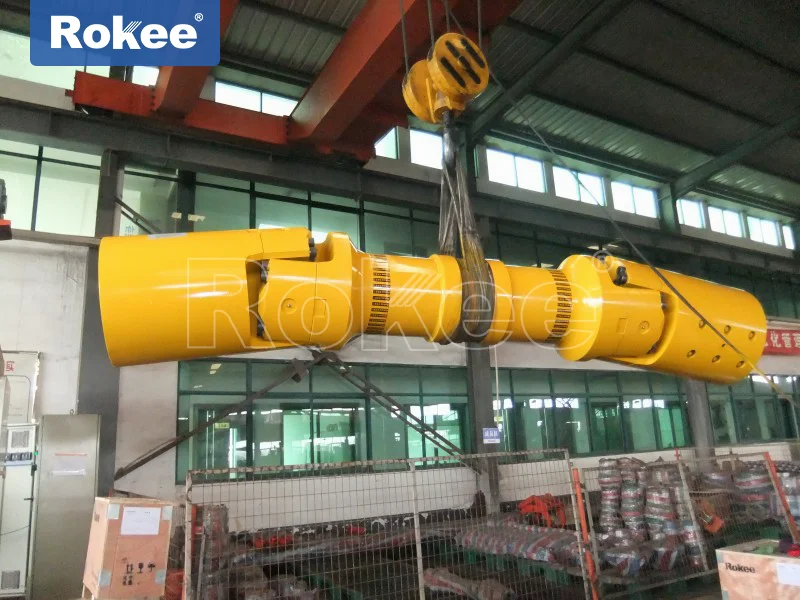
In the modern manufacturing industry, the pursuit of efficiency, stability and sustainability has become the core driving force for the upgrading of production equipment. Sandwich panel machinery, as a key equipment in the field of building materials manufacturing, is responsible for the continuous production of high-quality composite panels that are widely used in building enclosures, roofing and thermal insulation projects. Its operational efficiency and production stability directly determine the production capacity and product quality of enterprises. The cardan drive shaft, as an indispensable mechanical transmission component, plays a vital role in transmitting torque and rotational motion between non-coaxial components, especially in scenarios where there are angular deviations or relative movements between the driving and driven shafts. The organic combination and synergetic operation of these two types of equipment are not only the key to improving production efficiency, but also an important way to reduce energy consumption, extend equipment service life and ensure product consistency.
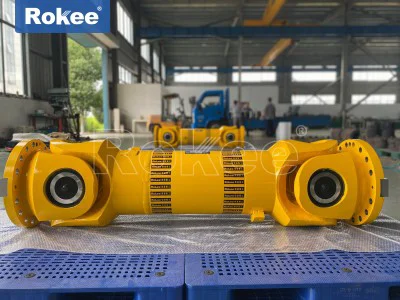
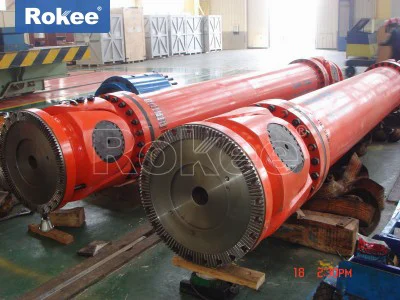
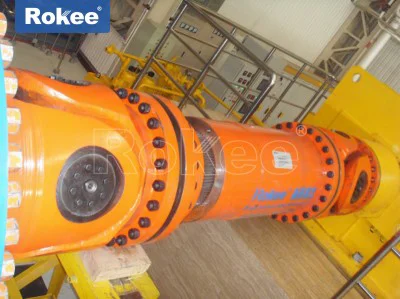
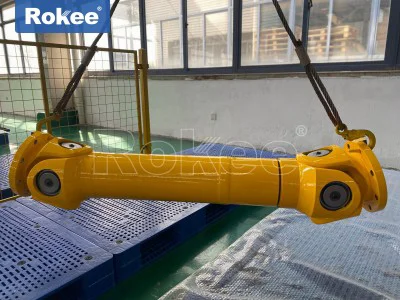
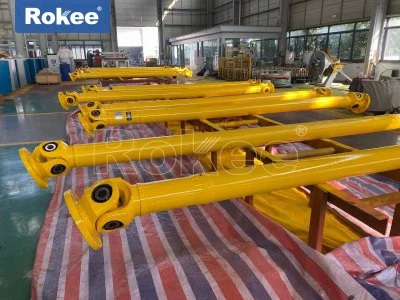
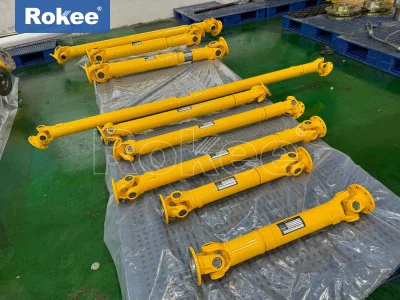
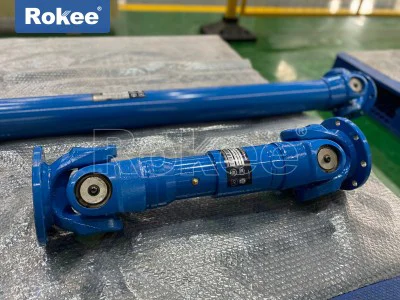
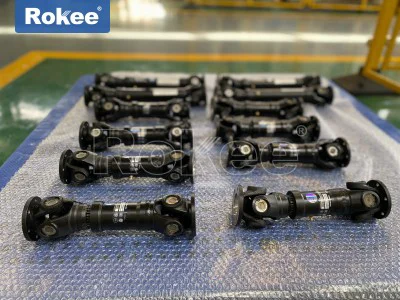
To understand the synergy between cardan drive shafts and sandwich panel machinery, it is first necessary to clarify the core working principles and operational characteristics of each. Sandwich panel machinery is a highly automated industrial system that integrates multiple functional modules, realizing the full-process automated production from raw material preparation to finished product cutting. Its core production process usually includes metal coil unwinding, surface pretreatment, forming, core material filling or foaming, composite bonding, fixed-length cutting, stacking and packaging. Each link is closely connected, and the coordination between modules directly affects the continuity and stability of the production line. In this process, multiple transmission components are required to drive the operation of each functional module, such as the unwinding mechanism, forming rollers, foaming system and cutting device. These components often have non-coaxial installation due to the layout of the production line and the needs of functional design, and there may be angular deviations or relative displacement during operation, which puts forward high requirements for the flexibility and reliability of the transmission system. The cardan drive shaft, also known as the universal joint drive shaft, is designed to solve the problem of torque transmission between non-coaxial shafts. Its core structure usually includes two fork-shaped joints and a cross shaft, or a ball cage structure, which can compensate for axial, radial and angular deviations between the driving and driven shafts within a certain range, ensuring the continuous and stable transmission of torque even when the shafts are deflected. This unique transmission performance makes the cardan drive shaft an ideal choice for the transmission system of sandwich panel machinery, laying a foundation for the synergy between the two.
The synergy efficiency between cardan drive shafts and sandwich panel machinery is reflected in the entire production process, and its core is to realize the matching of transmission performance and production demand, so that the cardan drive shaft can accurately transmit the power required by each module of the sandwich panel machinery, while minimizing energy loss and equipment wear. In the unwinding stage of sandwich panel production, the metal coil (usually color-coated steel plate, aluminum magnesium manganese plate or stainless steel coil) needs to be stably unfolded under the drive of the unwinding mechanism, and the tension must be kept constant to avoid material deformation or deviation. The cardan drive shaft connected to the unwinding motor can compensate for the installation deviation between the motor and the unwinding shaft, ensuring that the torque is transmitted evenly, so that the unwinding speed is consistent with the subsequent forming speed. If the transmission is unstable, it will lead to uneven tension of the metal coil, resulting in wrinkles on the surface of the panel, affecting the subsequent forming quality. In the forming stage, the metal sheet needs to be gradually formed into the desired profile through multiple sets of precision rollers. The drive system of the forming unit requires high torque and stable speed transmission. The cardan drive shaft can adapt to the angular deviation between the drive motor and the forming roller shaft, ensuring that each forming roller rotates synchronously, and the pressure applied to the metal sheet is uniform, thus improving the forming accuracy and surface quality of the panel. In the core material processing and composite stage, whether it is the polyurethane foaming system or the rock wool feeding system, it needs to be coordinated with the movement of the surface metal sheet. The cardan drive shaft transmits power to the foaming machine, glue applicator and composite pressure roller, ensuring that the foaming speed, glue coating amount and composite pressure are matched with the production line speed, avoiding problems such as uneven core material distribution, insufficient bonding or excessive glue waste. In the fixed-length cutting stage, the flying saw system or laser cutting device requires high-speed and precise movement, and the cardan drive shaft can transmit the torque of the servo motor to the cutting mechanism stably, ensuring the cutting accuracy and avoiding the deviation of the cutting length, which is crucial for improving the qualified rate of finished products.
However, in practical production, there are still many factors that affect the synergy efficiency between cardan drive shafts and sandwich panel machinery, leading to reduced production efficiency, increased energy consumption and even equipment failure. One of the main problems is the mismatch between the specifications and performance of the cardan drive shaft and the sandwich panel machinery. Different types of sandwich panel machinery have different requirements for torque, speed and transmission accuracy. For example, continuous sandwich panel production lines with high production speed require cardan drive shafts with high torque bearing capacity and stable transmission performance, while small batch production equipment may have lower requirements for torque but higher requirements for flexibility. If the selected cardan drive shaft has insufficient torque capacity, it will easily lead to shaft breakage or deformation during high-load operation; if the transmission accuracy is not up to standard, it will cause speed fluctuations of each module, affecting the coordination of the production line. Another common problem is the wear and tear of the cardan drive shaft during long-term operation. The cardan joint, cross shaft and bearings are key wearing parts. Under the action of high torque and frequent angular changes, these parts will gradually wear, leading to increased transmission clearance, vibration and noise during operation. This not only affects the transmission efficiency, but also may cause resonance of the sandwich panel machinery, affecting the stability of the production line and the quality of the finished products. In addition, improper installation and maintenance of the cardan drive shaft will also affect the synergy effect. For example, incorrect alignment during installation will increase the additional load of the cardan drive shaft and the transmission system of the sandwich panel machinery; insufficient lubrication or improper lubricating oil selection will accelerate the wear of the cardan joint, reducing the service life of the equipment and the stability of the transmission.
To solve the above problems and improve the synergy efficiency between cardan drive shafts and sandwich panel machinery, a targeted optimization scheme needs to be formulated from the aspects of selection, installation, operation, maintenance and intelligent management. First of all, in the selection stage, it is necessary to carry out scientific matching according to the actual working conditions of the sandwich panel machinery. The torque, speed, angular deviation range and working environment of the cardan drive shaft should be consistent with the requirements of the sandwich panel machinery. For high-speed and heavy-load continuous production lines, double cardan drive shafts or ball cage cardan drive shafts with high transmission accuracy and strong load-bearing capacity can be selected to eliminate speed fluctuations and ensure stable transmission. For equipment with frequent angle changes, cardan drive shafts with good flexibility and wear resistance should be selected, and the material of the cardan joint and cross shaft should be optimized, such as using heat-treated alloy steel to improve the hardness and wear resistance of the parts. At the same time, the length of the cardan drive shaft should be reasonably designed according to the installation distance between the driving and driven shafts to avoid excessive length leading to increased vibration or insufficient length affecting the compensation of angular deviation.
In the installation process, strict alignment and debugging are the key to ensuring the synergy efficiency. Before installation, the installation positions of the driving and driven shafts of the sandwich panel machinery should be accurately measured to determine the angular deviation and axial distance between the two shafts, and the cardan drive shaft should be installed according to the measured data to ensure that the alignment error is within the allowable range. For the cardan drive shaft with length compensation function, the length should be adjusted reasonably to adapt to the axial displacement of the equipment during operation. After installation, a test run should be carried out to check the transmission stability, vibration and noise of the cardan drive shaft. If there is abnormal vibration or noise, the installation position should be adjusted in time to eliminate the additional load. In addition, the connection between the cardan drive shaft and the driving/driven shafts should be firm to avoid loosening during operation, which may lead to transmission failure.
In the operation process, it is necessary to formulate scientific operation specifications to avoid improper operation affecting the synergy effect. The sandwich panel machinery should be started and stopped according to the specified procedures, and the load should be gradually increased to avoid sudden load impact on the cardan drive shaft. During the operation, the operation status of the cardan drive shaft should be monitored in real time, including vibration, noise, temperature and other indicators. If abnormal phenomena are found, the machine should be stopped in time for inspection to avoid further damage to the equipment. At the same time, the operation speed of the production line should be reasonably adjusted according to the performance of the cardan drive shaft to ensure that the transmission speed and torque of the cardan drive shaft are within the rated range, avoiding overloading or overspeed operation.
Regular maintenance and maintenance is an important guarantee to extend the service life of the cardan drive shaft and sandwich panel machinery and maintain their synergy efficiency. A regular maintenance plan should be formulated, including regular inspection of the wear status of the cardan joint, cross shaft and bearings, and timely replacement of worn parts. The lubrication system should be checked regularly, and lubricating oil should be added or replaced according to the specified cycle and type to ensure good lubrication of each moving part, reduce friction and wear. For the cardan drive shaft used in harsh environments (such as high temperature, dust, humidity), protective measures should be taken, such as installing protective covers to prevent dust, moisture and other impurities from entering the cardan joint, affecting the transmission performance. In addition, the sandwich panel machinery should also be regularly maintained, including the inspection and adjustment of the forming rollers, foaming system and cutting device, to ensure that each module is in good working condition, so as to coordinate with the cardan drive shaft to achieve efficient operation.
With the development of intelligent manufacturing technology, introducing intelligent management systems into the synergy between cardan drive shafts and sandwich panel machinery can further improve the operational efficiency and stability. Sensors can be installed on the cardan drive shaft and key parts of the sandwich panel machinery to collect real-time data such as torque, speed, vibration, temperature and wear, and transmit the data to the central control system. The central control system can analyze and process the data, monitor the operation status of the equipment in real time, predict potential faults, and issue early warning signals. For example, when the wear of the cardan joint exceeds the allowable range, the system can remind the staff to replace it in time; when the transmission torque fluctuates abnormally, the system can automatically adjust the operation parameters of the production line to avoid equipment damage. In addition, the intelligent system can also realize the adaptive adjustment of the cardan drive shaft according to the production load and working conditions, such as automatically adjusting the transmission speed and torque to match the production demand, maximizing energy saving and efficiency improvement. At the same time, the data collected by the intelligent system can also provide a basis for the optimization of the synergy scheme, helping enterprises to continuously improve the operational efficiency of the production system.
The synergy efficiency between cardan drive shafts and sandwich panel machinery is also closely related to the optimization of the production process. By optimizing the production process of sandwich panels, the load fluctuation of the equipment can be reduced, and the stable operation of the cardan drive shaft can be promoted. For example, in the unwinding stage, an automatic centering device and a tension control system can be added to reduce the tension fluctuation of the metal coil, so that the cardan drive shaft can transmit torque stably; in the forming stage, a gradient forming technology can be adopted to gradually deform the metal sheet, reducing the impact load on the forming rollers and the cardan drive shaft; in the composite stage, the temperature and pressure control system can be optimized to ensure the uniform curing of the adhesive and the uniform distribution of the core material, reducing the load fluctuation of the composite pressure roller drive system. In addition, the layout of the production line can be optimized to minimize the angular deviation and installation distance between the driving and driven shafts, reducing the transmission loss of the cardan drive shaft and improving the transmission efficiency.
Energy conservation and environmental protection are important trends in the development of modern manufacturing industry, and the synergy efficiency scheme between cardan drive shafts and sandwich panel machinery should also take energy conservation and environmental protection into account. By improving the transmission efficiency of the cardan drive shaft, reducing energy loss, and matching the operation of the sandwich panel machinery, the overall energy consumption of the production line can be reduced. For example, selecting cardan drive shafts with high transmission efficiency and low friction coefficient can reduce the energy loss during torque transmission; optimizing the lubrication system, using environmentally friendly lubricating oil, and reducing lubricating oil waste can achieve environmental protection goals. At the same time, the service life of the equipment can be extended through scientific maintenance and maintenance, reducing the waste of equipment resources and realizing the sustainable operation of the production system.
In practical application, the synergy efficiency scheme between cardan drive shafts and sandwich panel machinery needs to be adjusted and optimized according to the specific production conditions and enterprise needs. Different types of sandwich panel machinery (such as continuous production lines, intermittent production lines, polyurethane sandwich panel production lines, rock wool sandwich panel production lines) have different requirements for the cardan drive shaft, and the synergy scheme should be formulated according to the characteristics of the equipment. For example, continuous production lines require long-term stable operation of the cardan drive shaft, so more attention should be paid to the wear resistance and fatigue resistance of the cardan drive shaft; intermittent production lines have frequent start-up and stop, so the cardan drive shaft should have good impact resistance. In addition, the working environment of the enterprise (such as temperature, humidity, dust) also needs to be considered when formulating the scheme, so as to ensure that the synergy scheme is practical and feasible.
In conclusion, the synergy between cardan drive shafts and sandwich panel machinery is an important way to improve the production efficiency, product quality and stability of the sandwich panel manufacturing industry. By understanding the working mechanism of the two, identifying the factors affecting the synergy efficiency, and formulating targeted optimization schemes from the aspects of selection, installation, operation, maintenance, intelligent management and process optimization, the overall operational efficiency of the production system can be maximized, energy consumption can be reduced, equipment service life can be extended, and the sustainable development of the enterprise can be promoted. With the continuous progress of mechanical manufacturing technology and intelligent technology, the synergy efficiency between cardan drive shafts and sandwich panel machinery will be further improved, bringing more development opportunities for the sandwich panel manufacturing industry. Enterprises should pay full attention to the synergy between the two, continuously explore and practice, and form a set of synergy efficiency schemes suitable for their own development, so as to enhance their core competitiveness in the market.