Common Problems And Solutions Of Universal Shaft Coupling In Sandwich Panel Lines
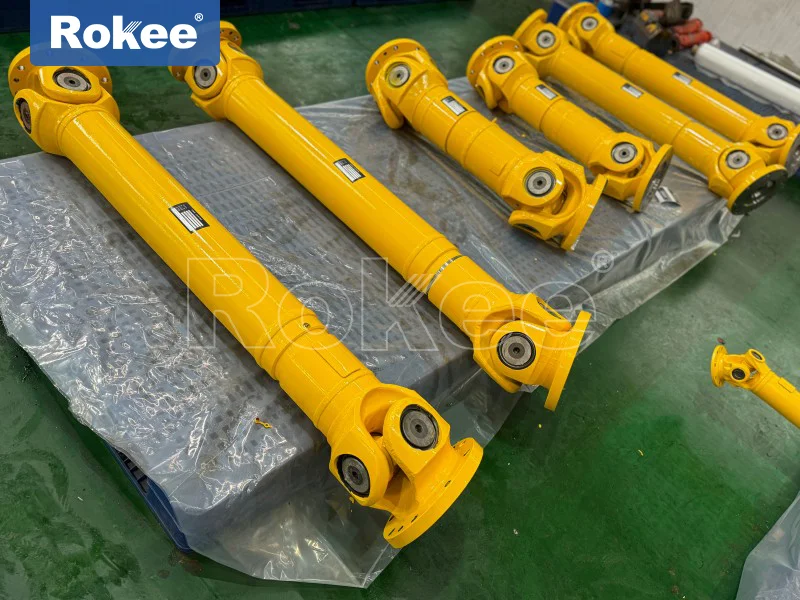
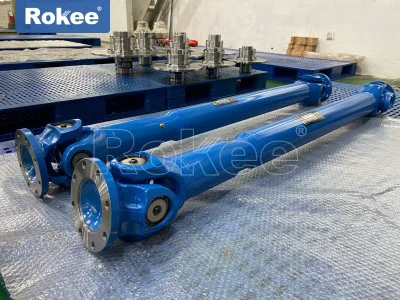
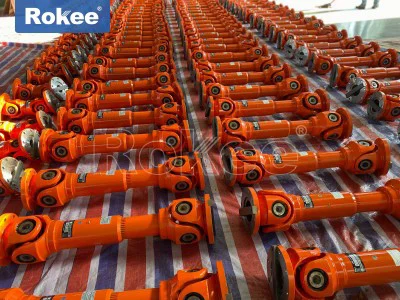
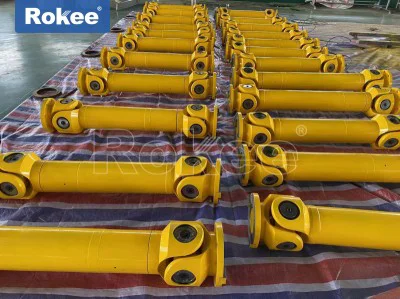
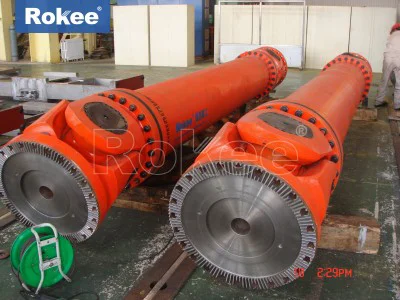
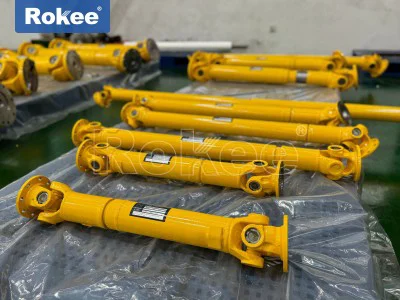
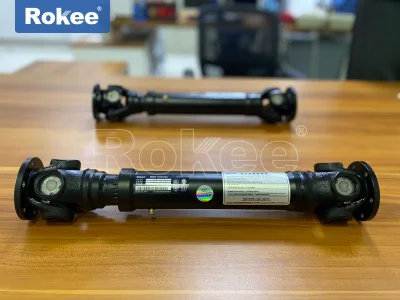
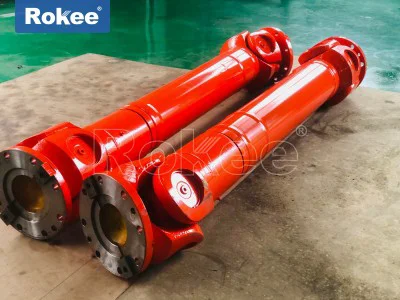
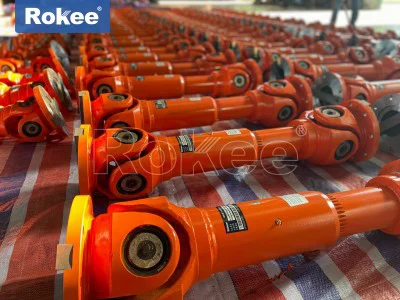
In the modern production process of sandwich panels, the universal shaft coupling plays an indispensable role as a key power transmission component, connecting various core equipment such as uncoilers, roll forming machines, and cutters in the production line. It is specifically designed to compensate for angular, axial, and radial displacements between connected shafts, ensuring stable and efficient torque transmission even under the complex working conditions of sandwich panel production. However, due to the long-term operation under high load, continuous vibration, and harsh working environment (such as dust, temperature changes, and frequent start-stop cycles), universal shaft couplings are prone to various faults, which not only affect the normal operation of the production line but also lead to reduced production efficiency, increased maintenance costs, and even potential safety hazards. Therefore, it is of great practical significance to systematically analyze the common problems of universal shaft couplings in sandwich panel lines, explore their root causes, and propose scientific and feasible solutions to ensure the stable and continuous operation of the entire production line.
One of the most common problems encountered by universal shaft couplings in sandwich panel lines is the wear of the cross shaft journal, which is a key component that bears the main torque and ensures the flexibility of the coupling. In the actual production process, the surface of the cross shaft journal often appears scratches, depressions, or uneven wear, and in severe cases, it will lead to excessive bearing clearance, resulting in abnormal noise and vibration during operation, and even affect the transmission accuracy of the entire production line. The root causes of this problem are diverse, but the most prominent ones are insufficient lubrication, seal failure, and long-term overload operation. In the sandwich panel production line, the universal shaft coupling needs to operate continuously for a long time, and the friction between the cross shaft journal and the needle bearing is inevitable. If the lubrication is not timely or the lubricating grease deteriorates, the oil film between the friction pairs will be damaged, leading to increased friction and accelerated wear of the journal. At the same time, the production environment of sandwich panels is usually accompanied by a large amount of dust and debris. If the seal of the bearing seat fails, these impurities will enter the bearing interior, causing abrasive wear on the cross shaft journal, further exacerbating the damage. In addition, during the production process, if the production load exceeds the design capacity of the coupling, the cross shaft journal will bear excessive pressure for a long time, leading to plastic deformation and uneven wear of the journal surface. To solve this problem, targeted measures need to be taken from the aspects of lubrication management, seal maintenance, and load control. First of all, a regular lubrication system should be established, and appropriate lubricating grease (such as lithium-based lubricating grease) should be added according to the operating conditions of the coupling to ensure sufficient lubrication between the cross shaft journal and the bearing. The lubrication cycle should be adjusted according to the working environment: for ordinary working conditions, lubrication should be performed every 300 to 500 hours or every 3 months; for harsh conditions such as high temperature, high dust, and high load, the lubrication cycle should be shortened to 100 to 200 hours or once a month. When lubricating, the old lubricating grease should be completely squeezed out to avoid the mixing of old and new grease affecting the lubrication effect. Secondly, the sealing performance of the bearing seat should be regularly inspected, and the damaged sealing ring should be replaced in a timely manner. It is recommended to use oil-resistant and high-temperature-resistant rubber or polyurethane sealing rings to enhance the sealing effect and prevent the entry of dust and impurities. For the bearing seat with excessive fit clearance with the sealing ring, it should be repaired or replaced to ensure a tight fit between the sealing ring and the bearing seat. Finally, the operating load of the production line should be strictly controlled to avoid long-term overload operation of the coupling. Regularly check the load status of the equipment, and adjust the production parameters in time when abnormal loads are found to ensure that the torque borne by the cross shaft journal is within the design range. If the wear of the cross shaft journal is slight, chrome plating can be used for repair; if the wear is severe, the cross shaft should be replaced in time to avoid further damage to other components.
Another common problem is the fracture of the universal joint yoke, which is a serious fault that can lead to sudden interruption of power transmission, resulting in the shutdown of the entire sandwich panel production line and even causing damage to other connected equipment. The universal joint yoke is the key component connecting the cross shaft and the transmission shaft, and it needs to bear large torque and bending stress during operation. The main causes of its fracture include unqualified material, improper heat treatment, excessive coaxiality deviation during installation, and long-term operation under impact load. In some cases, to reduce costs, some manufacturers use low-quality materials that do not meet the design requirements to produce universal joint yokes, or the heat treatment process is not up to standard, resulting in insufficient strength and toughness of the yoke, making it prone to fatigue cracks and even fracture under long-term stress. During the installation process, if the coaxiality of the two connected shafts deviates too much, the universal joint yoke will bear additional bending stress during operation, and over time, fatigue cracks will occur at the stress concentration part, eventually leading to fracture. In addition, the sandwich panel production line often has frequent start-stop and load changes, which will cause impact load on the universal joint yoke, and long-term operation under such conditions will also accelerate the generation and expansion of cracks, leading to fracture. To solve this problem, it is necessary to start from the aspects of material selection, installation accuracy, and load reduction. First of all, high-quality forged steel should be selected to produce the universal joint yoke, and strict quality inspection should be carried out to ensure that the material meets the design requirements. At the same time, the correct quenching and tempering heat treatment process should be adopted to improve the strength and toughness of the yoke, enhance its resistance to fatigue and impact. Secondly, during the installation process, the coaxiality and angular displacement of the two connected shafts should be strictly controlled to ensure that they are within the specified range. It is recommended to use laser alignment instruments or dial gauges to improve the installation accuracy, avoid excessive coaxiality deviation, and reduce the additional bending stress borne by the universal joint yoke. For the occasions with large impact load, buffer devices can be added to absorb the impact energy and reduce the impact on the universal joint yoke. Finally, regular non-destructive testing should be carried out on the universal joint yoke, such as ultrasonic testing or magnetic particle testing, to detect fatigue cracks in time. Once cracks are found, the universal joint yoke should be replaced immediately to avoid sudden fracture during operation.
Bearing overheating is also a common problem of universal shaft couplings in sandwich panel lines, which seriously affects the service life of the coupling and the stability of the production line. During the operation of the coupling, if the temperature of the bearing seat is abnormally high (usually exceeding 40℃ above the ambient temperature), accompanied by the melting and overflow of lubricating grease, it indicates that the bearing is overheating. The main causes of bearing overheating include improper lubrication, excessive bearing installation tightness, and bearing damage. If the amount of lubricating grease added is too much, it will lead to poor heat dissipation, and the heat generated during the operation of the bearing cannot be dissipated in time, resulting in an increase in temperature; if the amount of lubricating grease is too small, an effective oil film cannot be formed between the friction pairs, leading to increased friction and heat generation. During the installation process, if the bearing is installed too tightly, the radial clearance is too small, which will increase the friction resistance between the bearing components, generate a lot of heat, and cause the bearing to overheat. In addition, if the bearing is damaged, such as broken needles or deformed cages, the operation of the bearing will be unstable, friction will increase sharply, and a lot of heat will be generated in a short time, leading to overheating. To solve the problem of bearing overheating, corresponding measures should be taken according to the specific causes. First of all, the amount of lubricating grease should be strictly controlled according to the standard, and generally, it is appropriate to fill 1/2 to 2/3 of the bearing cavity. Too much or too little lubricating grease should be avoided to ensure both sufficient lubrication and good heat dissipation. Secondly, the installation clearance of the bearing should be re-adjusted to ensure that it meets the design requirements, reduce the friction resistance between the bearing components, and avoid overheating caused by excessive installation tightness. If the bearing is damaged, it should be replaced with a new bearing in time, and the fit accuracy between the bearing seat and the cross shaft journal should be checked to ensure that there is no excessive fit clearance or interference, which affects the normal operation of the bearing. In addition, the temperature of the bearing seat should be regularly monitored during the operation of the production line. Once the temperature exceeds the normal range, the machine should be shut down immediately for inspection, and the cause should be found out and solved to avoid further damage to the bearing and other components.
Transmission abnormal noise is another common fault that affects the operation of universal shaft couplings in sandwich panel lines. During the operation of the coupling, if there are abnormal sounds such as "click, click" or "buzz", and the abnormal noise becomes more obvious when the speed changes, it indicates that there is a problem with the coupling. The main causes of transmission abnormal noise include excessive clearance between the cross shaft and the bearing, loose connection between the universal joint yoke and the shaft, and excessive included angle between the two shafts. When the cross shaft and the bearing are worn, the clearance between them will increase. During the transmission process, the components will collide with each other, resulting in "clicking" impact sound. If the connecting bolts between the universal joint yoke and the shaft are loose, relative sliding will occur between the universal joint yoke and the shaft during operation, resulting in abnormal noise. In addition, although the universal shaft coupling is designed to compensate for the angular displacement between the shafts, if the included angle between the two shafts exceeds the allowable range (usually the included angle of ordinary models is not more than 30°), it will cause periodic impact during the transmission process, resulting in "buzzing" abnormal noise, and even affect the transmission stability. To solve the problem of transmission abnormal noise, it is necessary to comprehensively check the coupling and take targeted measures. First of all, check the clearance between the cross shaft and the bearing. If the clearance exceeds the standard, replace the bearing or cross shaft in time to reduce the collision between components. Secondly, check the connecting bolts between the universal joint yoke and the shaft, and fasten them according to the specified torque. If necessary, use lock nuts or spot welding to fix them to avoid loose connections. Finally, adjust the relative position of the two shafts to reduce the included angle between the shafts to the allowable range. If the included angle cannot be adjusted due to the layout of the production line, a universal shaft coupling with stronger angular displacement compensation capacity can be replaced to ensure stable transmission and reduce abnormal noise. In addition, during the daily inspection, attention should be paid to listening to the operation sound of the coupling. Once abnormal noise is found, the machine should be shut down in time for inspection to avoid further damage to the coupling.
Lubricating grease leakage is also a common problem in the use of universal shaft couplings in sandwich panel lines, which not only wastes lubricating grease but also affects the lubrication effect of the coupling, leading to accelerated wear of components. The main manifestations of this problem are the leakage of lubricating grease around the bearing seat, and the color of the lubricating grease turns black and deteriorates. The main causes of lubricating grease leakage include aging, damage or improper installation of the sealing ring, excessive pressure when adding lubricating grease, and insufficient processing accuracy of the bearing seat. The sealing ring is an important component to prevent lubricating grease leakage. If the sealing ring is used for a long time, it will age and harden, or be damaged due to friction and impact, losing its sealing effect, leading to lubricating grease leakage. When adding lubricating grease, if the pressure is too high, the sealing ring will be washed out, resulting in leakage. In addition, if the processing accuracy of the bearing seat is insufficient, the fit clearance between the bearing seat and the sealing ring is too large, and the lubricating grease will leak from the gap. To solve the problem of lubricating grease leakage, it is necessary to strengthen the maintenance and management of the sealing system. First of all, the sealing ring should be regularly inspected and replaced. It is recommended to use oil-resistant and high-temperature-resistant sealing rings to improve the service life and sealing effect. The replacement cycle of the sealing ring should be determined according to the working environment and the use status, and it should be replaced in time when aging, hardening or damage is found. Secondly, the pressure when adding lubricating grease should be controlled to avoid exceeding the bearing capacity of the sealing ring, and the lubricating grease should be added slowly and evenly to prevent the sealing ring from being washed out. Finally, for the bearing seat with excessive fit clearance with the sealing ring, it should be repaired or replaced to ensure a tight fit between the sealing ring and the bearing seat, and eliminate the gap where lubricating grease can leak. At the same time, the area around the bearing seat should be regularly cleaned to timely find the leakage of lubricating grease and take corresponding measures.
In addition to the above common problems, universal shaft couplings in sandwich panel lines may also encounter problems such as spline wear, coupling deformation, and unbalance, which also affect the normal operation of the coupling and the production line. Spline wear is mainly caused by insufficient lubrication, improper installation, and long-term axial movement. The spline pair is an important component that compensates for axial displacement. If the lubrication is insufficient, the friction between the spline teeth will increase, leading to wear of the spline teeth. Improper installation will cause uneven stress on the spline teeth, accelerating wear. Long-term axial movement will also cause continuous friction between the spline teeth, leading to wear. To solve the problem of spline wear, it is necessary to strengthen lubrication, ensure that the spline pair is fully lubricated, adjust the installation position to avoid uneven stress, and check the axial movement of the spline pair regularly. If the wear is severe, the spline pair should be replaced in time. Coupling deformation is mainly caused by overload, impact load, and improper storage. Long-term overload or impact load will cause plastic deformation of the coupling components, affecting the transmission accuracy and stability. Improper storage (such as heavy pressure, collision) will also cause deformation of the coupling. To solve this problem, it is necessary to control the load, avoid overload and impact load, and store the coupling in a dry, clean, and collision-free environment. If the deformation is slight, it can be corrected by machining; if the deformation is severe, the coupling should be replaced. Unbalance of the coupling is mainly caused by manufacturing errors, component wear, and improper installation. Unbalance will cause vibration during the operation of the coupling, accelerate the wear of components, and even affect the stability of the entire production line. To solve this problem, it is necessary to carry out dynamic balance detection on the coupling regularly, especially for high-speed operation couplings (rotating speed > 1000rpm). If unbalance is found, it should be corrected in time. During the installation process, the installation accuracy should be ensured to avoid unbalance caused by improper installation.
In addition to solving the existing problems, strengthening the daily maintenance and preventive maintenance of universal shaft couplings in sandwich panel lines is the key to reducing faults and extending the service life of the coupling. A scientific and reasonable maintenance plan should be formulated, including regular lubrication, inspection, cleaning, and replacement of vulnerable components. Regular lubrication has been mentioned earlier, which is the foundation of maintaining the normal operation of the coupling. Regular inspection should include checking the wear status of components such as the cross shaft, bearing, universal joint yoke, and spline pair, the tightness of connecting bolts, the sealing performance of the sealing ring, the temperature of the bearing seat, and the operation sound of the coupling. For the found potential problems, timely measures should be taken to avoid the development of small problems into major faults. Regular cleaning of the coupling can remove dust, debris, and old lubricating grease on the surface and inside of the coupling, avoid the entry of impurities into the friction pairs, and ensure the normal operation of the coupling. The vulnerable components (such as bearings, sealing rings, and cross shafts) should be replaced regularly according to the service life and use status, even if there is no obvious damage, to achieve preventive maintenance and avoid sudden faults. At the same time, the operation and maintenance personnel should be trained to improve their ability to identify and solve common problems of the coupling, so that they can find and deal with faults in a timely manner during the operation process. In addition, the operation of the production line should be standardized, avoiding frequent start-stop and overload operation, which can reduce the impact on the universal shaft coupling and extend its service life.
In conclusion, the universal shaft coupling is a key power transmission component in the sandwich panel production line, and its stable operation is crucial to the normal operation of the entire production line. The common problems such as cross shaft journal wear, universal joint yoke fracture, bearing overheating, transmission abnormal noise, and lubricating grease leakage encountered in the use process are mainly caused by factors such as insufficient lubrication, improper installation, overload operation, and poor maintenance. By taking targeted solutions such as strengthening lubrication management, improving installation accuracy, controlling operating load, strengthening seal maintenance, and carrying out regular inspection and maintenance, these problems can be effectively solved, and the occurrence of faults can be reduced. At the same time, strengthening the training of operation and maintenance personnel and standardizing the operation of the production line can further improve the reliability and service life of the universal shaft coupling, ensure the stable, efficient, and continuous operation of the sandwich panel production line, and provide strong support for the normal production of enterprises. In the future, with the continuous development of sandwich panel production technology, the performance requirements of universal shaft couplings will be higher and higher. It is necessary to continuously sum up experience in practical applications, optimize maintenance methods, and select more suitable universal shaft couplings according to the actual working conditions of the production line, so as to better meet the needs of production and improve the economic benefits of enterprises.