Expansion Couplings
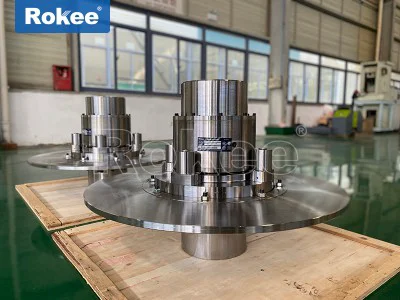
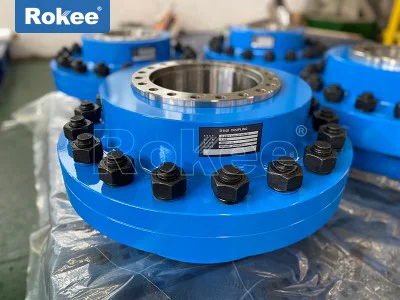
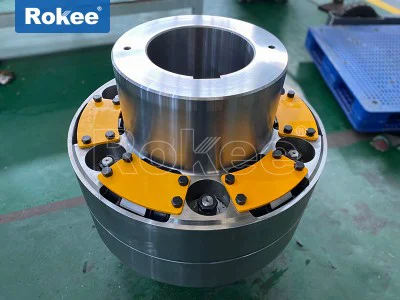
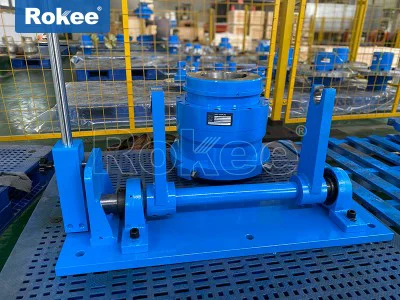
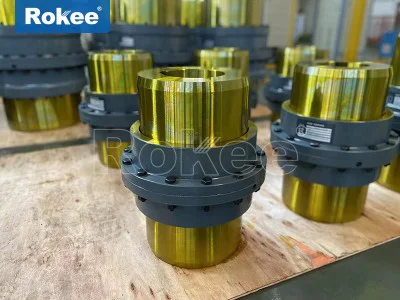
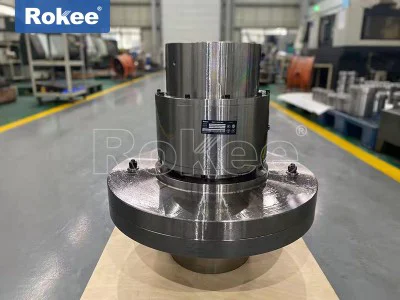
Expansion coupling is a precision transmission component that achieves a keyless connection between the shaft and the wheel hub through the principle of mechanical expansion. Compared with the traditional keyway connection method, it tightly fixes the inner sleeve of the coupling with the shaft through uniform radial pressure, eliminating the stress concentration problem caused by the keyway connection, while providing higher transmission accuracy and convenient installation and disassembly characteristics.
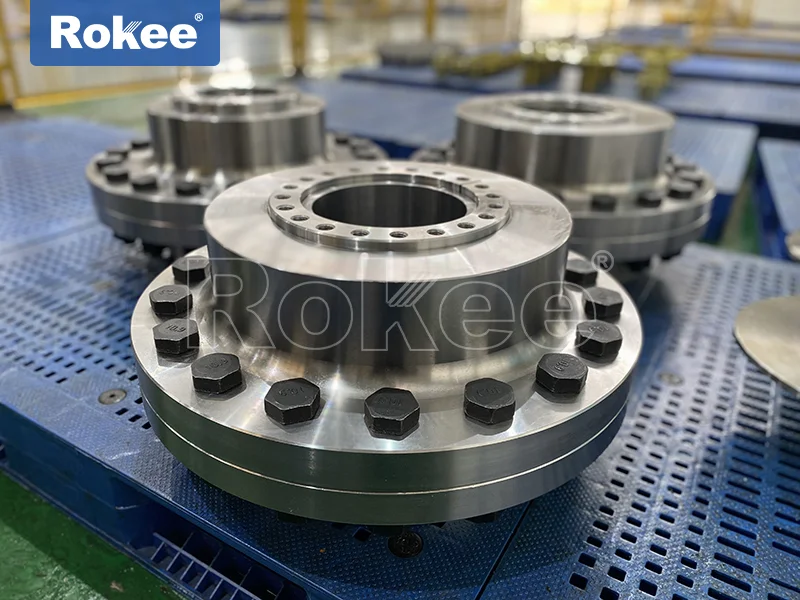
Expansion coupling is a precision transmission device that connects the shaft and hub through mechanical expansion, and belongs to an important branch of keyless connection technology. This type of coupling expands the internal sleeve by applying radial pressure, thereby establishing a strong frictional connection between the shaft and the hub. It has significant characteristics such as precise positioning, high torque transmission, and easy disassembly and assembly.
Compared with traditional keyway connections, the expansion coupling eliminates the stress concentration problem caused by keyway processing and can achieve higher coaxiality (usually within 0.01mm), making it particularly suitable for transmission applications that require frequent disassembly or precise positioning. It has been widely used in high-end equipment such as mechanical manufacturing, automation equipment, wind power, and machine tool spindles.
The core working principle of the expansion coupling is based on two physical principles: "elastic deformation" and "frictional force transmission":
Mechanical expansion mechanism: When the bolts on the coupling are tightened, the conical sleeve inside expands radially under axial force, causing the inner hole of the coupling to form an interference fit with the shaft surface, the outer diameter to form an interference fit with the inner hole of the hub. The contact pressure generated by this double-sided interference fit can reach 200-400MPa.
Torque transmission principle: It relies on the huge frictional force generated between the contact surfaces to transmit torque and axial force. According to the principles of tribology, the transmission capacity is directly proportional to the contact pressure, friction coefficient, and contact area. The contact surface of precision machining can achieve a friction coefficient of 0.12-0.15.
Self centering feature: Due to the uniform radial expansion during the expansion process, it can automatically compensate for small deviations between the shaft and the hub, achieving automatic centering. This characteristic makes it particularly suitable for high-speed rotating situations, with a maximum speed of over 20000rpm.
The main types of expansion couplings
Classified by structural form
Single cone expansion coupling: adopts a single cone sleeve structure, which is simple in structure but difficult to disassemble
Double cone expansion coupling: designed with inner and outer double cone surfaces, reducing disassembly force by more than 30%
Hydraulic expansion coupling: Expansion is achieved through hydraulic oil pressure, which can accurately control the expansion amount
Diaphragm type expansion coupling: adopting an elastic diaphragm structure with vibration absorption functionClassified by application field
Standard type: suitable for general industrial transmission, torque range 50-5000Nm
High torque type: using special alloy materials, the torque can reach 200000 Nm
High speed type: After dynamic balancing treatment, suitable for occasions above 10000rpm
Explosion proof type: used in flammable and explosive environments
Technical advantages of expansion coupling
Gap free transmission: eliminates reverse clearance, improves transmission accuracy by more than 40%
High stiffness connection: axial stiffness can reach the order of 10 ⁷ N/mm
Long life design: The fatigue life usually exceeds 10 cycles
Maintenance free operation: No lubrication required, reducing downtime for maintenance
Environmental adaptability: Operating temperature range -50 ℃ to+300 ℃
Space saving: Axial installation saves 30-50% more space than key connections
Installation and Maintenance Guide
Correct installation steps:
Clean all contact surfaces (roughness Ra ≤ 1.6 μ m)
Apply an appropriate amount of molybdenum disulfide grease
Tighten the bolts in 3-4 steps using a cross symmetrical method
Use a torque wrench to control the preload force (with an error of ± 5%)
Perform final torque check (re tighten after 24 hours)Maintenance precautions:
Regularly check the pre tightening force of bolts (every 2000 hours of operation)
Monitor operating temperature (normal temperature difference ≤ 15 ℃)
Check the vibration value (below 1.5mm/s is normal)
Avoid overload operation (not exceeding 120% of rated torque)
Application Cases
CNC machine spindle: replacing traditional taper connection to improve tool changing accuracy
Wind turbine generator set: used for connecting the gearbox and generator to withstand alternating loads
Steel rolling mill: excellent performance under heavy load impact conditions
Robot joints: meet high-precision and high rigidity requirements
Ship propulsion system: solving the problem of long axis alignment
As one of the core technologies in the field of modern mechanical transmission, the expansion coupling is developing towards higher precision, intelligence, and environmental friendliness. With the transformation and upgrading of China's manufacturing industry, domestically produced expansion couplings have gradually reached the international advanced level in materials, processes, and reliability, providing key basic component support for the localization of high-end equipment.
In the field of mechanical transmission and pipeline systems, expansion couplings serve as essential components designed to address the challenges of thermal expansion, contraction, misalignment, and torque transmission. These versatile devices play a critical role in ensuring the stability, efficiency, and longevity of various industrial systems, ranging from small-scale precision machinery to large-scale industrial pipelines. Unlike traditional coupling mechanisms that often rely on rigid connections, expansion couplings integrate flexible or adjustable elements to accommodate dimensional changes and misalignments, thereby reducing stress concentration and preventing damage to connected components.
The structure of an expansion coupling is meticulously engineered to balance flexibility and stability, allowing it to fulfill dual functions of connecting components and accommodating movements or dimensional variations. While the specific structural details may vary depending on the type and intended application, most expansion couplings share several core components that work in tandem to achieve their intended purpose. At the heart of many expansion couplings is the expansion sleeve or bellows, a flexible element that serves as the primary component responsible for absorbing thermal expansion, contraction, and misalignment. The expansion sleeve is typically constructed from materials with high elasticity, strength, and resistance to wear and corrosion, ensuring it can withstand the mechanical stresses and environmental conditions of its operating environment. In metal-based expansion couplings, the bellows is often made from thin-walled metal sheets that are formed into a corrugated structure, which provides the necessary flexibility while maintaining structural integrity. This corrugated design allows the bellows to expand and contract axially, bend angularly, or move laterally without compromising its ability to transmit torque or maintain a secure connection.
Supporting the expansion sleeve or bellows are the connecting hubs, which serve as the interface between the coupling and the shafts or pipeline ends. The hubs are designed to provide a secure fit, often utilizing interference fits, bolts, or clamping mechanisms to ensure a tight connection that minimizes rotational clearance. In some designs, the hubs may feature tapered surfaces that interact with the expansion sleeve, allowing for easy installation and disassembly while enhancing the coupling’s ability to transmit torque. Additionally, many expansion couplings incorporate sealing elements, such as gaskets or O-rings, to prevent the leakage of fluids or gases in pipeline applications, or to protect the internal components from dust, debris, and other contaminants in mechanical transmission systems. These sealing elements are typically made from flexible materials that can accommodate the movements of the expansion sleeve without losing their sealing capability. In more complex designs, especially those used in high-pressure or high-temperature applications, additional components such as tie rods, guide sleeves, or damping elements may be integrated to enhance stability, control movement ranges, and reduce vibration transmission.
The performance of an expansion coupling is determined by a combination of its structural design, material selection, and manufacturing precision, and these performance characteristics directly influence its suitability for specific applications. One of the most critical performance attributes is the coupling’s ability to accommodate thermal expansion and contraction, which is measured by its expansion capacity—the maximum amount of axial, lateral, or angular movement it can absorb without sustaining damage or losing functionality. This capacity is largely determined by the design of the expansion sleeve or bellows, including its length, corrugation pattern, and material thickness. For example, expansion couplings used in high-temperature pipeline systems, such as those in power plants or chemical facilities, must have a high expansion capacity to accommodate the significant dimensional changes caused by extreme temperature fluctuations. Another key performance characteristic is torque transmission capability, which refers to the maximum amount of torque the coupling can transmit from one shaft to another without slipping or failing. This capability is influenced by the material strength of the hubs and expansion sleeve, as well as the design of the connection mechanism between the coupling and the shafts. Expansion couplings used in heavy-duty industrial applications, such as mining machinery or metallurgical equipment, require high torque transmission capacity to handle the large forces involved in these operations.
Precision and zero rotational clearance are also important performance metrics, particularly for expansion couplings used in precision machinery and automation systems. These couplings must minimize any play or backlash between the connected components to ensure accurate torque transmission and positional control. The tight fit between the expansion sleeve and the shafts, often achieved through interference fits or precision machining, helps to eliminate rotational clearance, thereby improving the accuracy and stability of the transmission system. Additionally, the coaxiality of the coupling—its ability to maintain alignment between the connected shafts or pipelines—is crucial for preventing vibration, noise, and premature wear. High-precision expansion couplings are engineered to maintain tight coaxiality tolerances, even when subjected to movement or external stresses. Durability and resistance to environmental factors are also key performance considerations. Expansion couplings must be able to withstand the operating conditions of their application, including temperature extremes, corrosive environments, high pressure, and vibration. Material selection plays a critical role in this regard; for example, stainless steel is often used in corrosive environments, while high-temperature alloys are used in applications involving extreme heat. The resistance to fatigue is another important durability factor, as expansion couplings are often subjected to repeated cycles of expansion and contraction, which can lead to material fatigue over time. Proper design and material selection help to minimize fatigue and extend the service life of the coupling.
Ease of installation and maintenance is another performance characteristic that contributes to the practical value of expansion couplings. Unlike some traditional coupling mechanisms that require complex alignment procedures or specialized tools, many expansion couplings are designed for simple installation and disassembly. For example, expansion couplings utilizing clamping mechanisms can be easily mounted and removed without disturbing the connected shafts or pipelines, reducing downtime and maintenance costs. Additionally, the modular design of some expansion couplings allows for the replacement of individual components, such as the expansion sleeve or sealing elements, without replacing the entire coupling, further reducing maintenance costs and improving operational efficiency. Vibration damping is another performance feature that may be incorporated into expansion couplings, particularly those used in machinery with high levels of vibration. By absorbing and dissipating vibration energy, these couplings help to reduce noise, prevent damage to connected components, and improve the overall stability of the system.
Expansion couplings are available in a diverse range of types, each designed to meet the specific requirements of different applications. The classification of these couplings is often based on their structural design, material composition, or the type of movement they are intended to accommodate. One common type is the single cone expansion coupling, which features a single conical sleeve that expands radially when tightened, creating a secure interference fit between the coupling and the shafts. This type of coupling is relatively simple in structure, making it cost-effective and easy to install, but it may have limitations in terms of disassembly and the amount of misalignment it can accommodate. Another common type is the double cone expansion coupling, which incorporates two conical sleeves that work in tandem to provide a more secure fit and greater torque transmission capability. The double cone design also allows for easier disassembly compared to the single cone type, making it suitable for applications that require frequent maintenance or component replacement.
Metal bellows expansion couplings are another widely used type, particularly in pipeline systems and high-temperature applications. These couplings feature a metal bellows as the primary flexible element, which is capable of accommodating axial, lateral, and angular movement. The metal bellows is typically made from stainless steel, inconel, or other high-temperature alloys, making it suitable for use in extreme temperature environments. Metal bellows expansion couplings are often used in power generation, chemical processing, and oil and gas applications, where they must withstand high pressure, high temperature, and corrosive fluids. Rubber expansion couplings, on the other hand, utilize a rubber or elastomeric sleeve as the flexible element. These couplings are known for their excellent vibration damping capabilities and ability to accommodate significant misalignments. Rubber expansion couplings are often used in low-pressure pipeline systems, such as water supply and drainage systems, as well as in light-duty mechanical transmission applications, where vibration reduction is a key priority. The rubber sleeve is typically made from materials such as EPDM, neoprene, or nitrile, which offer good resistance to water, oil, and other common fluids.
Diaphragm expansion couplings combine the features of expansion couplings and diaphragm couplings, utilizing a flexible diaphragm to transmit torque and accommodate misalignments, while also incorporating an expansion sleeve to handle thermal expansion and contraction. These couplings are known for their high precision, zero rotational clearance, and ability to transmit high torque, making them suitable for precision machinery, servo systems, and aerospace applications. Another type of expansion coupling is the grid expansion coupling, which features a grid-shaped flexible element made from metal or composite materials. The grid design provides a balance of flexibility and torque transmission capability, and it is often used in heavy-duty industrial applications, such as mining, construction, and agricultural machinery. Additionally, there are specialized expansion couplings designed for specific applications, such as pipeline expansion couplings, which are used to connect sections of pipeline and accommodate thermal expansion and contraction, and shaft expansion couplings, which are used in mechanical transmission systems to connect shafts and transmit torque while accommodating misalignments and dimensional changes.
The selection of the appropriate expansion coupling type depends on a variety of factors, including the application’s temperature range, pressure requirements, torque load, movement type (axial, lateral, angular), misalignment tolerance, and environmental conditions. For example, in high-temperature, high-pressure pipeline systems, metal bellows expansion couplings are often the preferred choice due to their durability and ability to withstand extreme conditions. In precision automation systems, diaphragm expansion couplings are ideal due to their high precision and zero clearance. In low-pressure, vibration-prone applications, rubber expansion couplings offer excellent damping and flexibility.
The applications of expansion couplings are vast and diverse, spanning numerous industries and sectors where mechanical transmission or pipeline systems are used. In the manufacturing industry, expansion couplings play a critical role in a wide range of machinery, including machine tools, conveyor systems, pumps, and compressors. Machine tools, such as lathes, milling machines, and grinders, rely on expansion couplings to transmit torque from the motor to the spindle while accommodating any misalignments or thermal expansion that may occur during operation. This ensures precise machining and reduces wear on the machine components. Conveyor systems, which are used to transport materials in factories, warehouses, and mining operations, use expansion couplings to connect the drive motor to the conveyor rollers, allowing for the absorption of thermal expansion and contraction and reducing vibration, which helps to prevent material jams and improve the efficiency of the system.
In the power generation industry, expansion couplings are essential components in both thermal power plants and renewable energy systems. In thermal power plants, high-temperature and high-pressure steam pipelines use metal bellows expansion couplings to accommodate the significant thermal expansion and contraction that occurs as steam is generated and transported. These couplings help to prevent pipeline damage and leakage, ensuring the safe and efficient operation of the plant. In wind energy systems, expansion couplings are used in the nacelle to connect the turbine rotor to the generator, allowing for the absorption of misalignments and vibration caused by wind loads. This helps to protect the generator and other critical components from damage and extends the service life of the wind turbine. Solar thermal power plants also use expansion couplings in their heat transfer pipelines, where they accommodate the thermal expansion caused by the high temperatures of the heat transfer fluid.
The oil and gas industry is another major user of expansion couplings, where they are used in both upstream and downstream operations. In upstream operations, such as oil drilling and production, expansion couplings are used in pipeline systems that transport crude oil and natural gas from the wellhead to processing facilities. These couplings must withstand high pressure, corrosive fluids, and extreme temperature variations, making metal bellows expansion couplings the preferred choice. In downstream operations, such as refineries and petrochemical plants, expansion couplings are used in processing pipelines, where they accommodate thermal expansion and contraction and reduce vibration, ensuring the safe and efficient processing of petroleum products. Additionally, expansion couplings are used in offshore oil and gas platforms, where they must withstand harsh marine environments, including saltwater corrosion and high winds.
In the construction industry, expansion couplings are used in building services systems, such as heating, ventilation, and air conditioning (HVAC) systems, as well as in plumbing and fire protection systems. HVAC systems rely on expansion couplings to connect ductwork and piping, accommodating thermal expansion and contraction caused by temperature changes in the air or fluid being transported. This helps to prevent damage to the ductwork and piping and ensures efficient heating and cooling. Plumbing systems use expansion couplings to connect pipes in water supply and drainage systems, allowing for the absorption of thermal expansion and contraction and reducing the risk of pipe leaks. Fire protection systems also use expansion couplings to connect sprinkler pipes, ensuring that the system remains intact and functional even when subjected to temperature changes or minor structural movements.
The aerospace and automotive industries also utilize expansion couplings in various applications. In the aerospace industry, precision expansion couplings are used in aircraft engines, landing gear systems, and avionics equipment. These couplings must meet strict performance requirements, including high precision, light weight, and resistance to extreme temperatures and vibration. For example, expansion couplings in aircraft engines are used to connect rotating components, such as the turbine and compressor, while accommodating misalignments and thermal expansion. In the automotive industry, expansion couplings are used in powertrain systems, exhaust systems, and suspension systems. Exhaust systems, in particular, use expansion couplings to connect the exhaust manifold to the catalytic converter and muffler, accommodating the thermal expansion caused by the hot exhaust gases. This helps to reduce stress on the exhaust system components and prevent leaks, improving the efficiency and emissions performance of the vehicle.
In addition to these major industries, expansion couplings are also used in a variety of other applications, including marine systems, where they are used in ship propulsion systems and piping systems to withstand the harsh marine environment; medical equipment, where precision expansion couplings are used in diagnostic and therapeutic devices to ensure accurate operation; and consumer appliances, such as refrigerators, washing machines, and air conditioners, where they are used to reduce vibration and accommodate thermal expansion. The versatility and adaptability of expansion couplings make them indispensable components in modern industrial and commercial systems.
To ensure the optimal performance and longevity of expansion couplings, proper installation, maintenance, and selection are essential. During installation, it is important to ensure that the coupling is correctly aligned with the connected shafts or pipelines, as misalignment can lead to increased stress, vibration, and premature wear. The coupling should also be installed according to the manufacturer’s specifications, including proper tightening of bolts and clamping mechanisms to ensure a secure fit. In pipeline applications, proper sealing is critical to prevent leakage, and the sealing elements should be inspected regularly to ensure they are in good condition. Regular maintenance is also important, including periodic inspections of the coupling components for signs of wear, corrosion, or damage. The expansion sleeve or bellows should be checked for cracks, fatigue, or deformation, and any damaged components should be replaced promptly. Additionally, lubrication may be required for some types of expansion couplings to ensure smooth operation and reduce friction.
In conclusion, expansion couplings are versatile and essential components in mechanical transmission and pipeline systems, designed to accommodate thermal expansion, contraction, misalignment, and transmit torque efficiently. Their structural design, which typically includes an expansion sleeve or bellows, connecting hubs, and sealing elements, balances flexibility and stability to meet the demands of various applications. The key performance characteristics of expansion couplings, such as expansion capacity, torque transmission capability, precision, durability, and ease of maintenance, determine their suitability for specific applications. With a diverse range of types available, including single cone, double cone, metal bellows, rubber, diaphragm, and grid expansion couplings, there is a coupling design to meet the unique requirements of almost any industrial or commercial application. From manufacturing and power generation to oil and gas, construction, aerospace, and automotive industries, expansion couplings play a critical role in ensuring the stability, efficiency, and longevity of systems and equipment. By understanding the structure, performance, types, and applications of expansion couplings, engineers and technicians can select the appropriate coupling for their specific needs, ensuring optimal performance and reducing the risk of system failure.