Universal Joints
Universal joint is a special type of mechanical connector that can achieve power transmission when the two axis lines do not coincide and there is an angle between them. This sophisticated device solves the angle deviation problem that traditional rigid couplings cannot overcome, providing greater flexibility for mechanical design. The basic function of a universal joint is to change the direction of power transmission while allowing the two connected shafts to swing relative to each other within a certain angle range, making it an indispensable component in complex transmission systems.
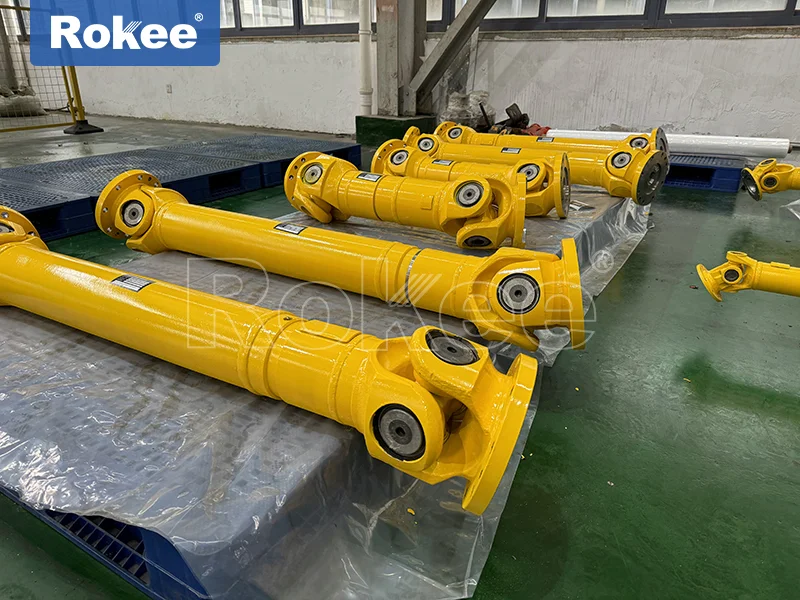
The core functions of universal joints are reflected in three aspects: transmitting torque, adapting to angle changes, and compensating for axial displacement. In the automotive drive system, the universal joint is known as the "joint" component of the universal transmission device, which enables the power generated by the engine to be smoothly transmitted to the wheels, ensuring uninterrupted power regardless of whether the vehicle is driving in a straight line or turning. According to the different structural forms, the universal joint allows the angle between the two axes to vary between 15 ° and 45 °, and some special designs can even achieve larger angles.
The basic working principle of universal joints is based on the mechanical kinematic principles of cross axis or ball cage structures. Taking the most common cross axis universal joint as an example, it combines a cross axis and two universal joint forks to enable the input shaft and output shaft to transmit rotational motion even in the presence of an angle. When the driving shaft rotates, the pivot action of the cross shaft drives the driven shaft to rotate, while allowing the angle between the two shafts to freely change within a certain range. This design, although simple, effectively solves the problem of power transmission when the axes do not coincide.
It is worth noting that traditional cross axis universal joints have an inherent characteristic when transmitting power: when there is an angle between the two shafts, the speed of the output shaft will fluctuate periodically, even if the input shaft rotates at a constant speed. This unequal velocity may cause vibration and noise, so in practical applications, engineers have developed various technologies to solve this problem, including the use of advanced designs such as dual universal joint arrangements and constant velocity universal joints.
A universal joint, commonly referred to as a U-joint or Cardan joint, is a fundamental mechanical coupling that facilitates the transmission of rotational motion and torque between two shafts whose axes are not collinear or experience relative movement during operation. This versatile component acts as a flexible pivot point in mechanical systems, overcoming the limitations of rigid shaft connections and enabling power transfer even when shafts are angled, offset, or subject to dynamic positional shifts. Without universal joints, countless mechanical assemblies would fail to operate efficiently, as misalignment and movement are inevitable in real-world engineering scenarios, ranging from small-scale precision equipment to heavy-duty industrial machinery. The design, construction, and performance of universal joints are tailored to address diverse operational demands, with variations in structure directly impacting their load-bearing capacity, angular flexibility, rotational smoothness, durability, and suitability for specific environments.
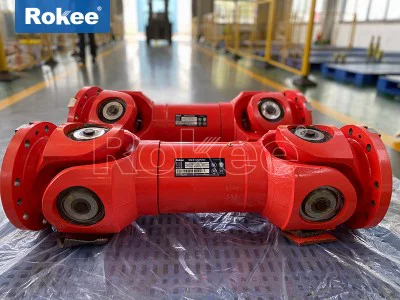
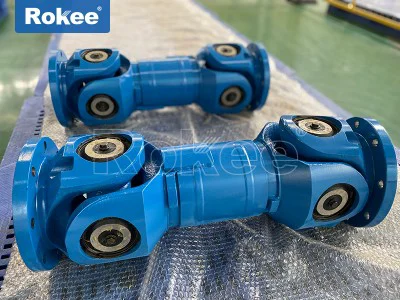
At its core, the structure of a standard universal joint is engineered for simplicity and functional efficiency, relying on a handful of key components to deliver reliable torque transmission. The most prevalent design, the cross-type or Hooke’s joint, consists of two yoke-shaped end fittings, a central cross-shaped spider (also called a cross shaft), and precision bearing assemblies that connect the spider to each yoke. The yokes are securely attached to the driving and driven shafts, respectively, forming the primary connection points for power transfer. The central spider, with its four perpendicular arms, fits into the sockets of the two yokes, creating a pivoting mechanism that allows angular movement between the shafts. Bearing components, typically needle bearings or roller bearings, are integrated between the spider arms and yoke sockets to minimize friction, reduce wear, and enhance rotational efficiency; these bearings are critical for sustaining smooth operation under both light and heavy loads, as well as at varying rotational speeds. Many universal joints also feature sealing elements, such as dust caps, rubber boots, or gaskets, to shield internal bearing surfaces and lubricants from contaminants like dirt, moisture, debris, and corrosive substances, which is vital for prolonging service life and preserving performance in harsh operating conditions. Advanced structural designs may incorporate enhanced lubrication channels, reinforced yoke construction, or precision-machined contact surfaces to boost load capacity and durability, but the foundational cross-and-yoke framework remains consistent across most standard universal joint variants.
The performance of a universal joint is defined by a set of core mechanical attributes that dictate its operational capabilities and limitations, with each characteristic tailored to match the needs of specific applications. One of the most critical performance metrics is angular misalignment tolerance, which refers to the maximum angle between the driving and driven shafts that the joint can accommodate while maintaining efficient power transfer. Standard cross-type universal joints typically handle angular offsets ranging from 15 to 30 degrees, while specialized designs can manage even greater angles, making them suitable for systems with significant shaft movement, such as vehicle steering columns or articulated machinery. Torque capacity is another defining performance feature, representing the maximum rotational force the joint can transmit without suffering deformation, failure, or excessive wear. This attribute is heavily influenced by material strength, component dimensions, bearing type, and structural rigidity; heavy-duty universal joints are built with thickened, high-strength materials and robust bearings to handle extreme torque loads in industrial and heavy machinery settings, while lightweight variants prioritize compactness and low friction for precision, low-load applications. Rotational smoothness and velocity consistency are also key performance factors, especially for high-speed systems. Basic single cross-type universal joints exhibit a natural non-constant velocity characteristic, meaning the driven shaft rotates with slight periodic speed fluctuations when the joint is angled, a trait that becomes more pronounced at larger angles. This fluctuation can cause vibration, noise, and reduced operational stability in high-speed equipment, driving the need for specialized constant-velocity designs that eliminate such inconsistencies. Additional performance considerations include fatigue resistance, which ensures the joint can withstand repeated loading and cyclic stress without cracking or failing over time, and operational efficiency, which measures the amount of power lost to friction during transmission; high-efficiency joints minimize energy waste, reducing heat buildup and improving overall system performance. Environmental resilience, such as resistance to temperature extremes, corrosion, and abrasive conditions, further shapes performance, with specialized materials and coatings enhancing durability in challenging settings like marine, mining, or outdoor agricultural environments.
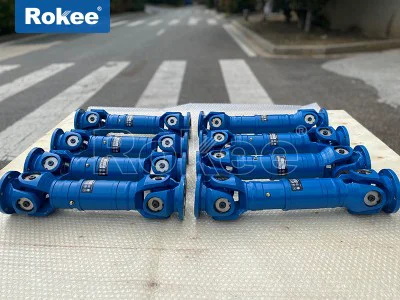
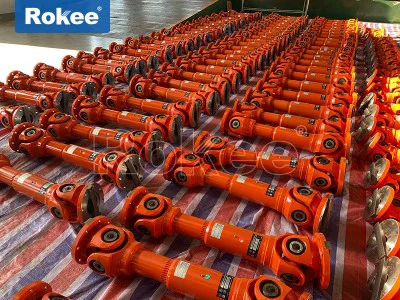
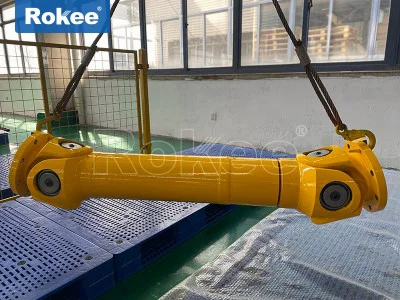
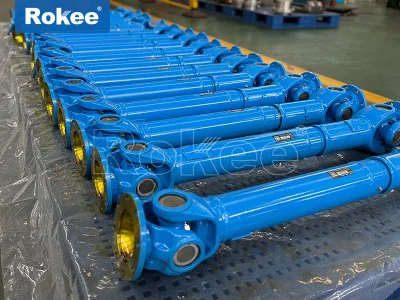
Universal joints are categorized into distinct types based on structural design, operational functionality, and performance capabilities, each engineered to address specific mechanical challenges and application requirements. The most common classification distinguishes between non-constant velocity joints and constant velocity (CV) joints, with further subcategories refining their use cases. The single cross-type universal joint, or Hooke’s joint, is the simplest and most widely used variant, prized for its straightforward design, cost-effectiveness, and high load-bearing capacity. As the foundational universal joint design, it excels in applications where moderate angular misalignment is present and minor speed fluctuations are acceptable, such as heavy machinery drives, agricultural equipment power take-off (PTO) shafts, and vehicle propeller shafts. While its non-constant velocity trait limits use in high-speed precision systems, its durability and ease of maintenance make it a staple in rugged, heavy-duty operations. Double universal joints, constructed by pairing two single cross-type joints with an intermediate shaft, are designed to mitigate the speed fluctuation issue of single joints. When properly phased and aligned, with equal angular offsets at both ends, double joints cancel out velocity variations, delivering smoother rotation and improved stability at higher speeds or larger angles. This design is commonly employed in longer drive shaft assemblies, industrial conveyor systems, and commercial vehicle drivetrains, where enhanced angular flexibility and reduced vibration are priorities.
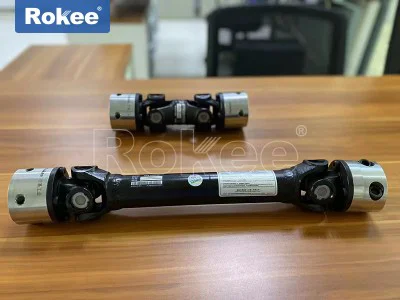
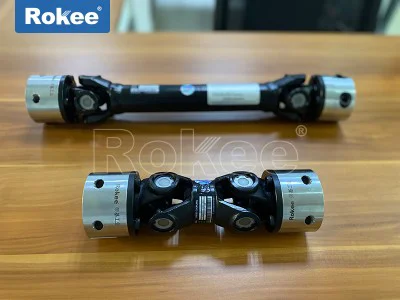
Constant velocity joints represent a more advanced category of universal joints, engineered to eliminate rotational speed fluctuations entirely, ensuring the driven shaft rotates at the exact same speed as the driving shaft regardless of angular misalignment. This makes CV joints indispensable for high-speed, high-precision applications where smooth operation and minimal vibration are critical. There are several subtypes of CV joints, each with unique structural nuances to suit specific operational needs. Ball-type CV joints, including Rzeppa and Weiss designs, use a set of steel balls positioned within precision-machined grooves to maintain constant velocity transmission; these joints offer exceptional angular flexibility and smooth operation, making them ideal for front-wheel drive vehicle axle shafts, high-speed machine tools, and precision robotic assemblies. Tripod CV joints feature a three-armed spider and roller bearings, providing compact size, axial movement capability, and reliable torque transfer, often used in vehicle drivetrains and compact industrial machinery where space is limited. These constant velocity designs are more complex and intricately machined than standard cross-type joints, but their superior rotational smoothness justifies their use in applications where performance and precision take precedence over simplicity. Additional specialized universal joint types include flexible universal joints, which incorporate elastic elements like rubber or polymer components to absorb vibration, shock loads, and minor misalignment, ideal for reducing system wear and noise in equipment prone to dynamic movement; and compact miniature universal joints, scaled down for small-scale precision devices, medical equipment, and delicate instrumentation, where minimal size and precise motion control are essential.
The versatility of universal joints is reflected in their extensive range of applications across nearly every sector of mechanical engineering, from automotive and transportation to industrial manufacturing, aerospace, agriculture, marine, and beyond. In the automotive industry, universal joints are integral components of vehicle drivetrains and steering systems, enabling reliable power delivery and directional control. Cross-type universal joints are widely used in rear-wheel and four-wheel drive vehicles to connect the transmission to the rear differential via the drive shaft, accommodating the vertical movement of the suspension and maintaining torque transfer even as the vehicle navigates uneven terrain. Constant velocity joints are critical for front-wheel drive and all-wheel drive vehicles, connecting the transaxle to the front drive wheels; these joints handle the dual demands of steering-induced angular movement and high-speed rotation, ensuring smooth acceleration and stable handling without vibration or power loss. Steering columns also rely on compact universal joints to transmit driver input from the steering wheel to the steering gear, compensating for slight misalignments and ensuring responsive, consistent steering control.
Industrial manufacturing relies heavily on universal joints for power transmission in a vast array of machinery and production equipment. Conveyor systems use universal joints to connect drive motors to conveyor rollers, accommodating misalignment in long conveyor lines and ensuring consistent material movement across factory floors. Machine tools, including lathes, milling machines, and drilling equipment, utilize precision constant velocity joints to deliver smooth, accurate rotational motion to cutting tools and workpieces, minimizing vibration that could compromise machining precision and surface finish. Packaging machinery, textile equipment, and material handling systems all incorporate universal joints to navigate spatial constraints and shaft misalignment, maintaining uninterrupted production flow. Heavy industrial equipment, such as crushers, mixers, rolling mills, and construction machinery, depends on heavy-duty cross-type universal joints to withstand extreme torque loads, harsh operating conditions, and frequent shock loads, ensuring reliable performance in demanding manufacturing and construction environments.
Agricultural machinery benefits immensely from the durability and flexibility of universal joints, which are essential for powering various farm implements and equipment. Tractors use universal joints in their PTO shafts to transfer engine power to attached tools like plows, mowers, balers, and harvesters; these joints handle the uneven terrain of farm fields, accommodating angular shifts as equipment moves over rough ground and sustaining torque delivery during heavy agricultural operations. Agricultural machinery often operates in dusty, dirty, and moisture-prone conditions, making sealed, rugged universal joints a necessity to prevent contamination and maintain functionality throughout long work cycles. Marine applications also leverage universal joints for propulsion and steering systems, where corrosion resistance and reliable performance in saltwater environments are paramount. Marine-grade universal joints, constructed from corrosion-resistant materials, connect boat engines to propeller shafts and facilitate smooth steering control, compensating for hull flex and shaft movement while resisting rust and degradation from salt spray and moisture.
Aerospace and precision engineering fields utilize specialized high-performance universal joints, engineered to meet strict standards of reliability, lightweight design, and precision. These joints are used in flight control systems, satellite mechanisms, and aerospace instrumentation, transmitting motion and torque in extreme environments characterized by high altitudes, temperature fluctuations, and vacuum conditions; lightweight materials and precision manufacturing ensure these joints meet stringent weight and performance requirements for aerospace applications. Robotics and automation systems integrate compact, precise universal joints to enable articulated movement in robotic arms, manipulators, and automated assembly systems, allowing for flexible, accurate positioning and motion control in industrial automation, medical robotics, and consumer robotics applications. Even in small-scale consumer goods and appliances, miniature universal joints play a vital role, facilitating smooth motion and power transfer in devices ranging from power tools and garden equipment to home appliances and recreational gear.
In summary, universal joints are indispensable mechanical components that bridge the gap between misaligned or moving shafts, enabling efficient torque and rotational motion transfer across an unparalleled range of applications. Their structural design, from the simple cross-type joint to advanced constant velocity variants, is meticulously engineered to balance performance, durability, and functionality, with each type tailored to address specific operational challenges related to angular misalignment, speed, load capacity, and environmental conditions. The performance characteristics of universal joints—including angular tolerance, torque capacity, rotational smoothness, and resilience—directly determine their suitability for diverse sectors, spanning automotive, industrial, agricultural, marine, aerospace, and robotics. As mechanical engineering continues to evolve, with increasing demands for precision, efficiency, and durability, universal joints will remain a cornerstone of mechanical design, adapting through material advancements, structural refinements, and innovative engineering to meet the ever-growing needs of modern machinery and systems. Their enduring relevance stems from their unique ability to solve the universal problem of shaft misalignment, providing a reliable, flexible solution that underpins the operation of countless mechanical assemblies worldwide.