Jaw Type Flexible Couplings
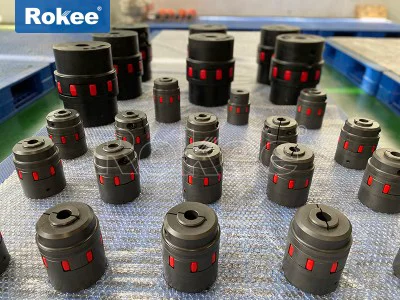
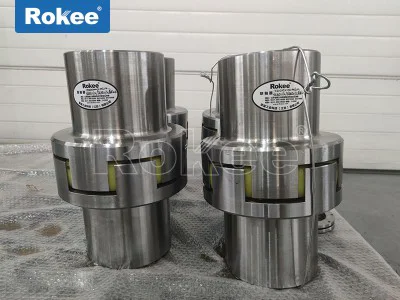
Jaw type flexible coupling (also known as claw shaped elastic coupling or plum blossom coupling) is a widely used flexible connection device in mechanical transmission systems. It connects two shaft systems through elastic elements, which can transmit torque and compensate for radial, axial, and angular deviations between shaft systems, while also having the function of buffering and vibration reduction.
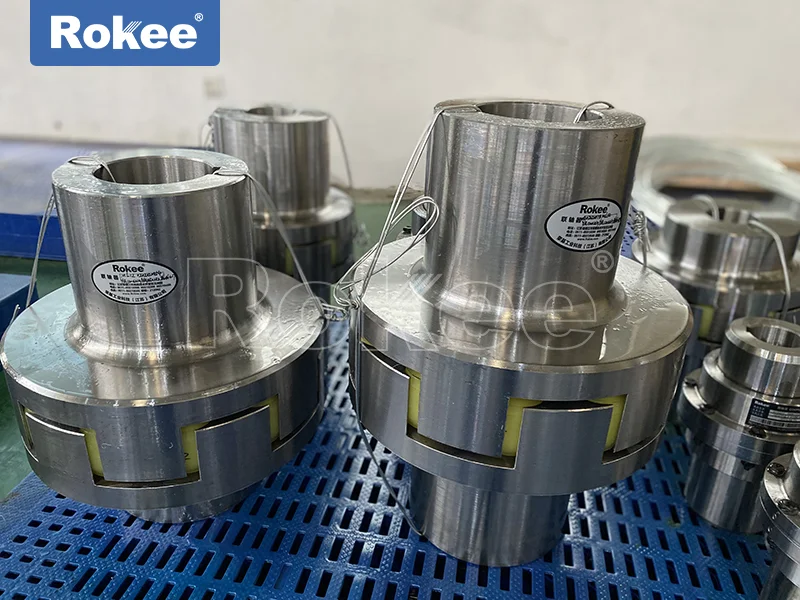
Jaw type flexible couplings play an important role in industrial production due to their simple structure, easy installation, and low maintenance costs. Compared with rigid couplings, flexible jaw couplings can effectively reduce the additional load caused by misalignment of the shaft system and extend the service life of the equipment; Compared with gear couplings, it has the advantages of low noise and no need for lubrication.
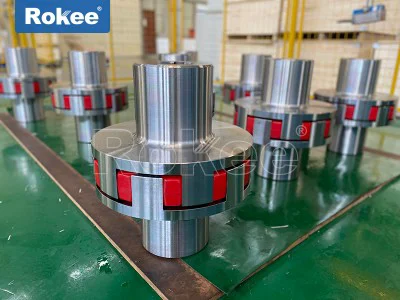
Jaw flexible couplings typically consist of three core components:
Two metal half couplings: usually forged or cast from high-quality alloy steel, with a precision machined surface, and each half coupling end face designed with several protruding "claws"
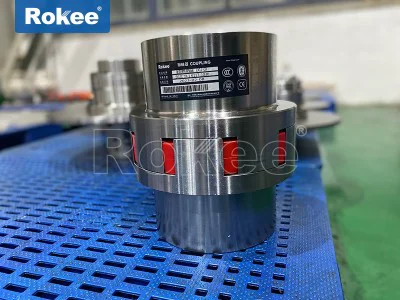
Elastic element (plum blossom pad): located between two half couplings, usually made of polyurethane, rubber or other polymer materials, shaped like a plum blossom petal
Connecting bolt assembly: used to secure two half couplings, some models may include protective covers
The "claws" of claw couplings are usually designed with 3-8 claws (commonly 6 claws), which are evenly distributed on the circumference to form a staggered meshing structure.
The cross-sectional shapes of claws are diverse, including:
Straight claw type: simple structure, easy to manufacture
Curved claw type: large contact area, high load-bearing capacity
Composite surface claw shape: more uniform stress distribution
The different materials of elastomers determine the performance differences of couplings:
Polyurethane elastomer: with a wide range of hardness, good wear resistance, and excellent oil resistance
Rubber elastomer: excellent shock absorption performance, but poor oil and high temperature resistance
Engineering plastic elastomer: such as nylon, suitable for special working conditions
Metal spring plate: used in high torque applications
Jaw couplings transmit torque through elastic bodies in a compressed state. When the driving shaft rotates, the claws of the half coupling push the elastic body, which then transmits the force to the claws of the driven half coupling. This design ensures smooth torque transmission and can absorb impact loads.
Deviation compensation principle
Radial deviation compensation: The deformation ability of the elastic body allows for a certain offset between the two axis centerlines
Angular deviation compensation: The relative tilt between the claw and the elastic body can adapt to the angular deviation of the two axes
Axial deviation compensation: The compression/tension characteristics of elastomers allow for axial displacement
Typical compensation capability range:
Radial deviation: 0.1-0.5mm
Angular deviation: 0.5 ° -1.5 °
Axial deviation: ± 0.5- ± 2mm
Jaw flex couplings have the following dynamic characteristics:
Nonlinear torsional stiffness: low stiffness during small deformations, increased stiffness during large deformations
Damping characteristics: The internal friction of the elastic body provides vibration damping
Critical speed influence: Mass distribution affects the critical speed of the system
Main advantages
Compact structure: Small in size, suitable for situations with limited space
Maintenance free: No lubrication required, reducing maintenance workload
Electrical insulation: Non metallic elastomers can provide insulation performance
Buffer damping: effectively reducing the vibration and noise of the transmission system
Good economy: lower cost than most other types of flexible couplings
Typical application scenarios
General mechanical equipment: pumps, fans, compressors, etc
Material conveying system: conveyors, lifting equipment
Power generation equipment: small generators, water turbines
Automation equipment: robots, CNC machine tools
Shipbuilding Industry: Auxiliary Transmission Systems
Especially suitable for the following working conditions:
Medium torque transmission demand
In situations where certain deviation compensation is required
Clean environment, without a large amount of abrasive particles
In situations where noise control is required
Jaw type flexible couplings play an important role in the field of medium torque transmission due to their excellent cost-effectiveness and reliable performance. When selecting, factors such as torque, speed, deviation compensation requirements, and environmental conditions should be comprehensively considered. For ordinary industrial applications, standard models usually meet the requirements; Under special working conditions, customized solutions may be considered.
In the field of mechanical power transmission, the jaw type flexible coupling is a widely used and versatile component that bridges the gap between two rotating shafts, enabling efficient torque transfer while accommodating various forms of misalignment and reducing operational vibrations. Unlike rigid couplings that require precise alignment and offer no flexibility, jaw type flexible couplings integrate the advantages of rigid torque transmission and moderate compensation capability, making them indispensable in numerous industrial, automotive, and automation applications.
The fundamental structure of a jaw type flexible coupling is relatively simple yet highly functional, typically consisting of three core components: two metallic hubs (often referred to as half-couplings) and an elastomeric insert, commonly known as a "spider" due to its shape. The two metallic hubs are the primary torque-bearing elements, each featuring a series of evenly distributed protruding "jaws" on their mating faces. These jaws are precision-machined to ensure a tight and consistent fit with the elastomeric insert, which is placed between the two hubs to facilitate flexible connection. The metallic hubs are usually manufactured from high-strength materials such as cast iron, alloy steel, or aluminum alloy, selected based on the specific torque requirements and operating conditions of the application. For instance, alloy steel hubs are preferred for high-torque industrial applications due to their superior strength and durability, while aluminum alloy hubs are chosen for lightweight applications such as robotics and automation, where weight reduction is critical. The jaws on the hubs can be designed in various cross-sectional shapes, including straight, curved, and composite surfaces, each offering distinct advantages in terms of load distribution, torque capacity, and misalignment compensation. Straight jaws are the most basic design, easy to manufacture and cost-effective, but they have limited misalignment compensation capability. Curved jaws, on the other hand, feature a rounded profile that increases the contact area with the elastomeric insert, resulting in higher load-bearing capacity and improved ability to accommodate angular and radial misalignment. Composite surface jaws combine the benefits of straight and curved designs, ensuring more uniform stress distribution and enhanced durability during long-term operation.
The elastomeric insert is the heart of the jaw type flexible coupling, responsible for providing flexibility, vibration damping, and misalignment compensation. This component is typically made from polymer materials such as polyurethane, rubber, or nylon, each with unique properties that suit different operating environments. Polyurethane is the most commonly used material for elastomeric inserts due to its excellent wear resistance, wide range of hardness options, and good oil resistance, making it suitable for most industrial applications. Rubber inserts offer superior vibration absorption and shock damping capabilities, making them ideal for applications with high levels of vibration, such as pumps and compressors, but they have lower oil and high-temperature resistance compared to polyurethane. Nylon inserts, meanwhile, are lightweight and cost-effective, suitable for light-duty applications where moderate flexibility and vibration damping are required. The shape of the elastomeric insert is usually plum blossom-shaped, with 4 to 10 petals that fit perfectly into the spaces between the jaws of the two hubs. This design ensures that torque is transmitted through the compression of the elastomeric petals, allowing for smooth power transfer while absorbing shocks and vibrations. Some jaw type flexible couplings may also include optional components such as protective covers, which shield the internal structure from environmental contaminants such as dust, debris, and moisture, extending the service life of the coupling.
The performance of a jaw type flexible coupling is determined by a combination of its structural design, material selection, and operating conditions, with several key characteristics defining its effectiveness in power transmission systems. One of the most important performance attributes is torque transmission capacity, which refers to the maximum torque that the coupling can safely transmit without failure. This capacity is influenced by the size of the hubs, the number and shape of the jaws, the material of the hubs and elastomeric insert, and the hardness of the elastomer. Generally, larger hubs with more jaws and higher-strength materials offer higher torque capacity, making them suitable for heavy-duty applications such as industrial machinery and renewable energy systems. Another critical performance characteristic is misalignment compensation, which allows the coupling to accommodate axial, radial, and angular deviations between the two connected shafts. Axial misalignment occurs when the shafts are displaced along their central axis, radial misalignment is the offset between the central axes of the two shafts, and angular misalignment is the tilt between the shafts. The elastomeric insert’s ability to deform elastically enables the coupling to compensate for these deviations, reducing the additional load on the shafts, bearings, and other components of the transmission system. Typically, jaw type flexible couplings can compensate for radial deviations of up to 5 mm, angular deviations of up to 5 degrees, and axial displacements of ±1.5 mm, depending on the design and material of the elastomeric insert.
Vibration damping and shock absorption are also key performance features of jaw type flexible couplings. In mechanical systems, vibrations are often generated by the operation of motors, pumps, compressors, and other equipment, which can cause noise, reduce component lifespan, and affect operational precision. The elastomeric insert acts as a buffer, absorbing and damping these vibrations through elastic deformation, thereby reducing the vibration amplitude by more than 30% in many cases. This not only protects the transmission system components but also improves the overall stability and efficiency of the equipment. Additionally, jaw type flexible couplings exhibit excellent dynamic balance, allowing them to operate at high speeds without generating excessive vibration. The allowable speed range of these couplings can be as high as 30,000 revolutions per minute (r/min), depending on the size and design, making them suitable for high-speed applications such as precision machinery and aerospace equipment.
Durability and environmental adaptability are also important performance considerations for jaw type flexible couplings. The service life of the coupling is primarily determined by the wear resistance of the elastomeric insert, which is subject to compression and shear forces during operation. Polyurethane inserts typically have a longer service life than rubber inserts, especially in oil-contaminated environments, while rubber inserts are more prone to degradation under high temperatures and chemical exposure. The operating temperature range of jaw type flexible couplings is generally between -35℃ and +80℃, but special materials can extend this range to -50℃ to +120℃, making them suitable for use in extreme environmental conditions such as cold storage facilities and high-temperature industrial processes. Furthermore, these couplings are designed to be maintenance-free, requiring no lubrication, which reduces operational costs and downtime. The elastomeric insert is a wearing component that may need to be inspected and replaced periodically, but this process is simple and does not require specialized tools or extensive disassembly of the equipment.
Jaw type flexible couplings are available in a variety of types, each designed to meet specific application requirements based on factors such as torque capacity, misalignment compensation, installation space, and operational environment. The most common type is the plum blossom jaw coupling, which features a plum-shaped elastomeric insert and is widely used in general industrial applications. This type of coupling is simple in structure, easy to install, and offers good vibration damping and misalignment compensation, making it suitable for use with pumps, compressors, conveyors, and general-purpose motors. Another popular type is the straight jaw coupling, which has a basic design with straight jaws and a simple elastomeric insert. This type is cost-effective and easy to manufacture, but it has limited misalignment compensation capability, making it ideal for light-duty applications with minimal shaft misalignment, such as small motors and household appliances.
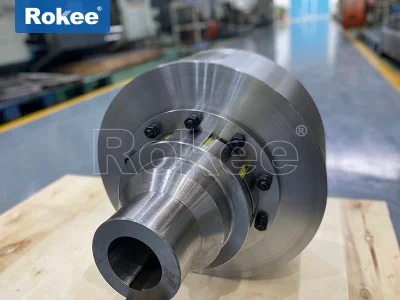
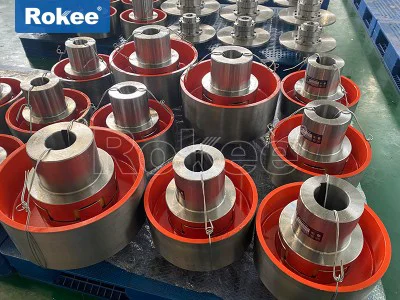
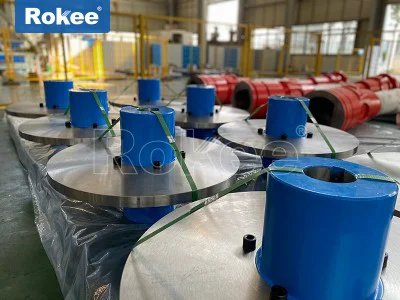
Curved jaw couplings are designed with curved jaws that provide a larger contact area with the elastomeric insert, resulting in higher torque capacity and improved misalignment compensation. This type is suitable for heavy-duty industrial applications where high torque and moderate misalignment are present, such as in mining equipment, steel mills, and large-scale manufacturing machinery. Flanged jaw couplings are another variant, featuring single or double flanges on the hubs to facilitate easy installation and removal. Single flange couplings have a single flange on one hub, while double flange couplings have flanges on both hubs, allowing for quick replacement of the elastomeric insert without axially moving the half-couplings. This feature is particularly useful in applications where downtime must be minimized, such as in continuous production lines.
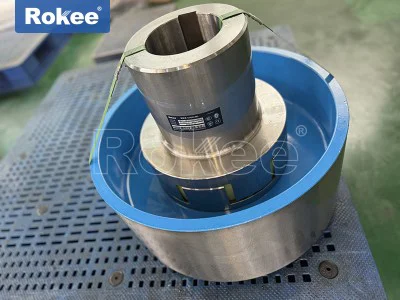
Jaw couplings with brake wheels or brake discs are designed for applications that require braking functionality, such as in conveyor systems, cranes, and other equipment where precise stopping is necessary. These couplings feature an integral or split brake wheel or disc attached to one of the hubs, allowing for seamless integration with braking systems. Split brake wheel couplings are particularly convenient as they can be installed and removed without disassembling the entire coupling, reducing maintenance time and costs. Additionally, there are specialized jaw type flexible couplings designed for precision applications such as robotics and automation, which feature compact and lightweight designs, high torsional stiffness, and zero backlash. These couplings ensure precise torque transmission and accurate positioning, making them suitable for use in robotic arms, CNC machines, and other precision equipment.
The applications of jaw type flexible couplings are extensive and span across numerous industries, thanks to their versatility, reliability, and cost-effectiveness. In the industrial machinery sector, these couplings are widely used in pumps, compressors, fans, conveyors, and mixers, where they transmit torque while absorbing vibrations and compensating for shaft misalignment. For example, in centrifugal pumps, the jaw type flexible coupling connects the motor shaft to the pump shaft, reducing the impact of vibration on the pump bearings and improving the overall efficiency and lifespan of the pump. In conveyor systems, the coupling accommodates the misalignment between the motor and the conveyor drive shaft, ensuring smooth and continuous operation.
The automotive industry also relies heavily on jaw type flexible couplings for various components, including steering columns, drive shafts, and powertrain systems. These couplings provide misalignment compensation and vibration isolation, resulting in smoother and quieter vehicle operation. The backlash-free design of some jaw couplings ensures precise torque transmission, improving the drivability and efficiency of vehicles. Additionally, the ability to withstand high temperatures, vibrations, and dynamic loads makes them suitable for use in harsh automotive environments.
In the robotics and automation sector, jaw type flexible couplings play a critical role in transmitting torque between motor-driven components. The compact and lightweight design of these couplings is ideal for space-constrained applications such as robotic arms and automated guided vehicles (AGVs). They accommodate misalignments caused by assembly errors, thermal expansion, or dynamic movements, while the elastomeric insert absorbs shocks and vibrations, protecting delicate components such as sensors and actuators. High torsional stiffness ensures accurate positioning and synchronization in robotic systems, making them essential for precision tasks such as assembly, pick-and-place, and machining.
The renewable energy industry is another important application area for jaw type flexible couplings, particularly in wind turbines and solar trackers. In wind turbines, the coupling connects the generator shaft to the gearbox shaft, transmitting the torque generated by the turbine blades while compensating for misalignments caused by wind gusts and temperature changes. The ability to withstand harsh environmental conditions, such as extreme temperatures and high winds, makes jaw type flexible couplings ideal for renewable energy installations. In solar trackers, the coupling connects the motor to the tracking mechanism, allowing for precise adjustment of the solar panels to follow the sun, while absorbing vibrations and accommodating minor misalignments.
Other applications of jaw type flexible couplings include aerospace, marine, and medical equipment. In aerospace applications, lightweight and high-performance jaw couplings are used in aircraft engines and auxiliary systems, where they must withstand high speeds and extreme temperatures. In marine applications, corrosion-resistant couplings are used in ship propulsion systems and auxiliary machinery, ensuring reliable performance in saltwater environments. In medical equipment, such as diagnostic machines and surgical tools, precision jaw couplings are used to transmit torque with minimal vibration, ensuring accurate and reliable operation.
In conclusion, the jaw type flexible coupling is a vital component in modern mechanical power transmission systems, offering a unique combination of rigid torque transmission, flexible misalignment compensation, vibration damping, and durability. Its simple yet effective structure, diverse types, and extensive performance characteristics make it suitable for a wide range of applications across various industries. Whether in industrial machinery, automotive systems, robotics, renewable energy, or aerospace, the jaw type flexible coupling plays a crucial role in ensuring efficient, reliable, and smooth operation of mechanical equipment. As technology continues to advance, the design and material of jaw type flexible couplings are constantly evolving, with ongoing improvements in torque capacity, misalignment compensation, and environmental adaptability, further expanding their application scope and enhancing their performance in even the most demanding operating conditions. The versatility and reliability of jaw type flexible couplings make them an indispensable part of modern engineering, contributing to the efficiency and longevity of countless mechanical systems around the world.