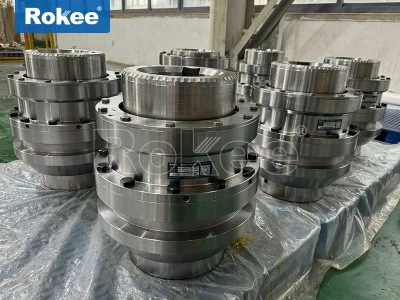
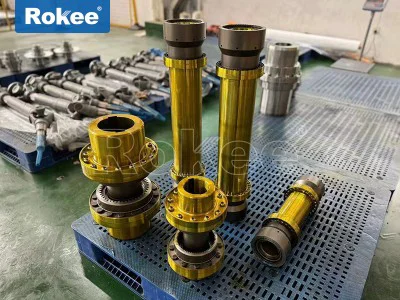
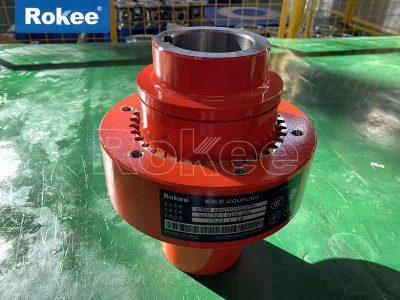
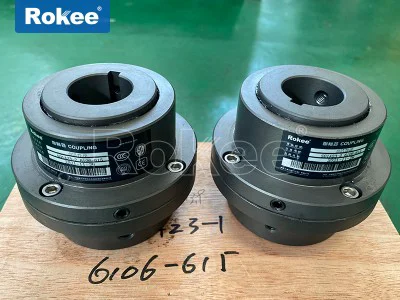
Tooth Gear Couplings
As a key component of mechanical transmission systems, tooth gear couplings play an indispensable role in modern industrial equipment. This device, which achieves power transmission through gear meshing, is widely used in various transmission systems from heavy machinery to precision equipment due to its unique structural design and excellent performance characteristics.
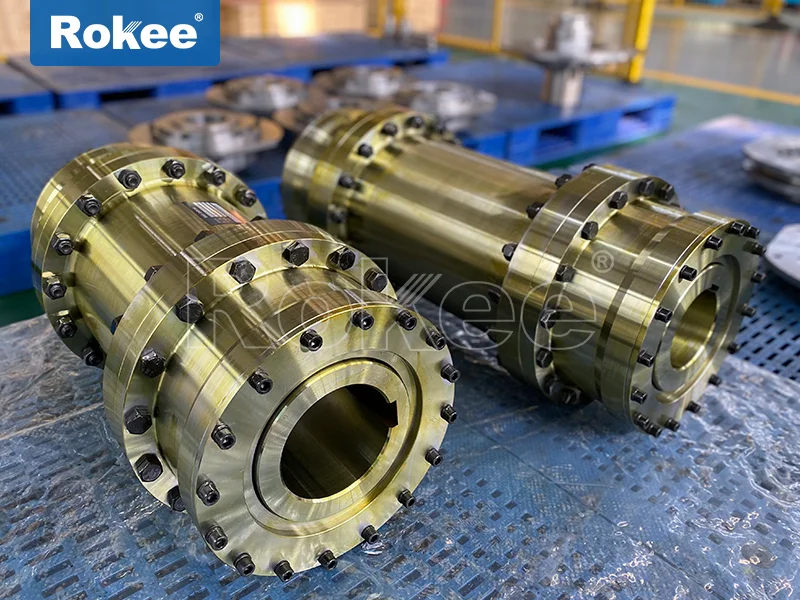
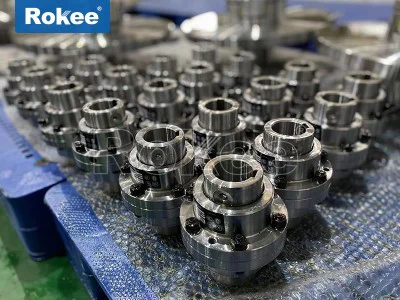
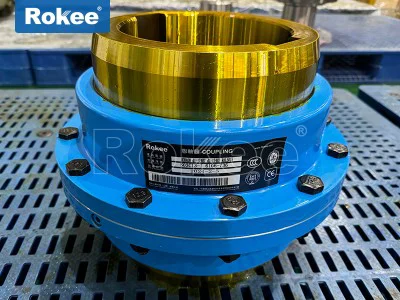
A tooth gear coupling is a mechanical device that achieves two shaft connection and power transmission through internal and external tooth meshing, and belongs to a type of movable rigid coupling. Its core design concept is to efficiently and reliably transmit torque and rotational motion while allowing for a certain degree of axial deviation. This type of coupling mainly consists of several key components: an inner ring gear, a flange half coupling with outer teeth, and connecting fasteners. The inner ring gear is usually a ring gear with precise tooth profiles machined on the inner side; The outer gear sleeve is installed on the transmission shaft, and the outer side is also machined with a matching tooth structure. When these two components mesh with each other, a complete power transmission path is formed.
From the perspective of structural details, the tooth gear coupling can be divided into two parts: external teeth and internal teeth. The external teeth can adopt different tooth shapes according to design requirements, with the most common being straight teeth and drum teeth. The straight tooth design has a simple structure and is easy to process, but its compensation capability is limited; Drum shaped teeth, on the other hand, shape the outer teeth into a spherical shape, with the center of the spherical surface located on the gear axis. This design significantly improves the angular displacement compensation capability of the coupling. The internal gear ring is usually designed with involute straight teeth, but there are differences in the selection of the backlash coefficient of the teeth compared to ordinary gears to meet the special working requirements of the coupling.
In terms of the sealing system of couplings, modern designs typically include a pair of sealing components, whose sealing surfaces are spherical and in close contact with the contact surface of the end cap. In order to improve sealing performance and service life, some high-end products also install spring components on the outer peripheral side of the small gear connection to ensure a tight fit of the sealing surface through constant pressure. This design not only effectively prevents lubricant leakage, but also blocks external pollutants from entering the engagement area, thereby extending the service life of the coupling.
In terms of material selection, the inner and outer teeth of the tooth gear coupling are usually made of high-quality alloy steel, which has undergone quenching and tempering heat treatment and hardening treatment to ensure sufficient strength and wear resistance. Sleeves and connectors may be made of different materials according to application requirements, ranging from metal to non-metallic materials such as nylon.
The working principle of the tooth gear coupling is based on the basic mechanical principles of gear meshing, but it also has its unique features. When the driving shaft starts to rotate, the teeth of the outer gear sleeve and the teeth of the inner gear ring are interlocked, and torque is transmitted through the contact pressure of the tooth surface. This meshing method is different from ordinary gear transmission, as it allows for compensating for a certain degree of shaft deviation, including axial displacement, radial offset, and angular deflection, while transmitting torque. This is the most significant technical feature of tooth gear couplings.
In the ideal alignment state, the contact stress between the inner and outer teeth of the coupling is evenly distributed throughout the entire tooth width direction. However, in practical applications, absolute shaft alignment is almost impossible and unnecessary. The brilliance of the tooth gear coupling lies in its ability to automatically adapt to a certain range of misalignment situations. When there is a parallel misalignment between the two axes, relative radial sliding occurs between the inner and outer teeth; When there is an angle misalignment, axial sliding will occur. Especially with the drum shaped tooth design, the spherical tooth shape allows the contact point of the tooth surface to automatically adjust with the change of deflection angle, avoiding edge contact and stress concentration, significantly improving the adaptability and service life of the coupling.
From a dynamic perspective, the tooth gear coupling exhibits complex mechanical behavior during operation. The periodic relative sliding of the inner and outer tooth surfaces inevitably leads to tooth wear and power loss, which is why such couplings must operate in a well lubricated state. Research has shown that the vibration characteristics of couplings are mainly related to the misalignment of internal and external gears and the friction between tooth surfaces. In high-speed rotation, if lubrication is insufficient, the dry friction force on the tooth surface will cause nonlinear vibration, seriously affecting the smoothness of equipment operation. Therefore, for high-speed applications, in addition to ensuring precise alignment, special attention should be paid to the lubrication condition of the tooth surface.
The torque transmission capability is the core performance indicator of tooth gear couplings. Due to its multi tooth simultaneous meshing design, this type of coupling has a higher torque density than other types of couplings at the same radial size. Taking the drum gear coupling as an example, under the same conditions, its torque transmission capacity can be increased by 15% to 30% compared to the straight gear coupling. This high torque transmission capability makes the tooth gear coupling particularly suitable for low-speed and heavy-duty working conditions, such as large equipment in industries such as metallurgy, mining, and lifting and transportation.
From a thermodynamic perspective, a tooth gear coupling generates heat due to tooth surface friction during operation. Good lubrication not only reduces wear, but also helps with heat dissipation. Infrared photography technology can effectively monitor the working temperature distribution of couplings and detect abnormal hot spots in a timely manner, which are often related to alignment errors or poor lubrication. By combining temperature monitoring with other predictive technologies, the working condition of the coupling can be comprehensively evaluated to prevent potential failures.
It is worth mentioning that the design of modern gear couplings increasingly focuses on dynamic performance optimization. Through finite element analysis and dynamic simulation, engineers can predict the stress distribution, vibration characteristics, and fatigue life of couplings under various working conditions, thereby guiding design improvements. Some high-end applications, such as gas turbine shaft transmission, also perform high-precision dynamic balancing on couplings to ensure stability during high-speed operation. These dynamically balanced couplings can even meet the working requirements of tens of thousands of revolutions per minute.
tooth gear couplings can be classified into various types based on their design characteristics and structural forms, each with its unique performance advantages and applicable scenarios. Understanding the differences between these types is crucial for proper selection and optimization of transmission system design. In practical applications, engineers need to choose the most suitable type of coupling based on factors such as torque requirements, speed range, alignment accuracy, and installation space.
The most common classification method is based on the axial tooth profile of the external gear shaft sleeve, which mainly includes three forms: straight tooth coupling, drum tooth coupling, and special drum tooth coupling. The spur gear coupling is the most basic type, and the axial tooth blank of its outer gear sleeve is processed into a straight shape. The indexing circle and root circle are both straight lines, and the meshing form is exactly the same as that of the inner and outer teeth of ordinary involute cylindrical gears. This type of coupling compensates for the relative displacement between the two shafts by appropriately increasing the backlash between the inner and outer teeth, but the compensation capability is relatively limited. Due to its simple structure and low manufacturing cost, spur gear couplings are still used in some ordinary applications that do not require high compensation. However, in newly designed systems, drum gear couplings have become the more mainstream choice.
The drum gear coupling represents the technological evolution of gear couplings, with the tooth tips of its outer gear sleeve machined into a circular arc shape and the entire gear blank designed as a spherical surface. In the section passing through the tooth center plane and tangent to the cylindrical surface, the tooth profile exhibits a distinct drum shaped characteristic. This design brings multiple performance advantages: firstly, the load-bearing capacity is significantly improved. Calculated based on bending strength, under the same conditions, the drum gear coupling can transmit torque 15% to 30% higher than the straight gear coupling; Secondly, the contact conditions of the tooth surface have been improved. The spherical tooth profile enables the coupling to adaptively adjust the contact area of the tooth surface when there is angular displacement, avoiding the phenomenon of concentrated load at the tooth end of the straight tooth coupling, reducing edge compression, and extending the service life; The most important thing is the significant improvement in compensation performance. The maximum allowable inclination angle of the drum gear coupling can reach 6 degrees (generally recommended for use within the range of 1.5 ° to 2.5 °), far exceeding the compensation capacity of the straight tooth coupling.
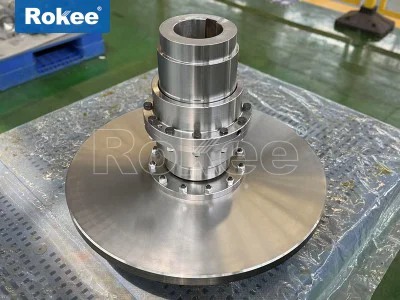
The special drum gear coupling is a specialized model developed for extreme working conditions, which has undergone various enhancements and improvements based on the standard drum shaped gear design. For example, the WGZ type drum toothed coupling with brake wheels not only has the characteristics of conventional drum toothed couplings, but also integrates brake wheel functions, making it particularly suitable for applications that require rapid braking, such as lifting equipment and certain industrial machinery.
From the perspective of application performance, different types of tooth gear couplings have their own emphasis. Although the standard spur gear coupling has a simple structure, its compensation ability is limited and it has gradually been eliminated from the market; drum gear couplings have become the mainstream choice due to their excellent comprehensive performance, especially in situations with heavy loads, impact loads, or significant alignment errors; Special models such as couplings with brake wheels or enclosed designs are developed for specific needs and excel in specialized fields. It is worth noting that with the advancement of manufacturing technology, some new types of couplings have begun to use composite materials or integrated sensors, developing towards lightweight and intelligent direction, which represents the future trend of gear couplings.
A tooth gear coupling is a crucial mechanical component widely used in industrial transmission systems, serving as a key connection between driving and driven shafts to transmit torque and rotational motion efficiently. Unlike other types of couplings, it achieves power transmission through the meshing of internal and external gears, which gives it unique advantages in handling heavy loads, compensating for shaft misalignments, and adapting to harsh working environments.
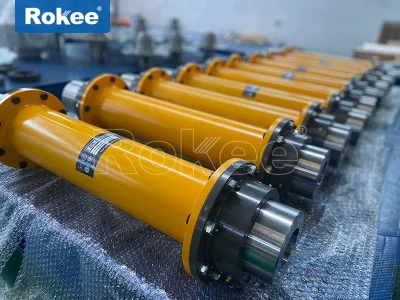
The basic structure of a tooth gear coupling consists of several core components that work together to ensure stable and efficient power transmission. At the heart of the coupling are two main parts: internal gear rings and external gear sleeves (also known as flange half-couplings with external teeth), both of which have the same number of teeth to ensure precise meshing. The external gear sleeves are typically mounted at the ends of the driving and driven shafts, fixed in place through key connections or interference fits to prevent relative rotation between the sleeve and the shaft. The internal gear rings, on the other hand, are designed to mesh perfectly with the external gear sleeves, forming a closed transmission pair. In addition to these core components, most tooth gear couplings also include connecting flanges, sealing devices, and fasteners. The connecting flanges are used to secure and connect the various parts of the coupling, ensuring structural integrity. Sealing devices are essential to prevent lubricant leakage and protect the gear teeth from contamination by dust, moisture, and other harmful substances in the working environment, which could otherwise accelerate wear and reduce the service life of the coupling. Fasteners such as bolts and nuts are used to firmly assemble all components, ensuring that the coupling can withstand the forces generated during operation without loosening. In some cases, especially for applications requiring longer transmission distances, intermediate sleeves or shafts may be added to extend the length of the coupling, while maintaining the same meshing principle and performance characteristics. The precise machining of these components is critical—gear teeth are usually processed with involute profiles, which provide excellent meshing performance, distribute load evenly across the tooth surface, and reduce the risk of tooth wear and damage. The dimensional accuracy of the gear teeth, including tooth pitch, tooth thickness, and tooth profile deviation, directly affects the transmission efficiency and stability of the coupling.
The performance of a tooth gear coupling is determined by its structural design and material selection, making it suitable for a wide range of industrial applications with varying requirements. One of the most prominent performance characteristics of tooth gear couplings is their high torque transmission capacity. Due to the large contact area between the meshing gear teeth, they can withstand heavy loads and impact forces, making them ideal for low-speed, heavy-duty applications. In fact, their torque-bearing capacity is significantly higher than that of many other types of couplings, such as flexible couplings, which makes them indispensable in industries that require the transmission of large amounts of power. Another key performance feature is their ability to compensate for shaft misalignments. In practical industrial operations, it is often difficult to achieve perfect alignment between driving and driven shafts due to installation errors, thermal expansion, foundation settlement, or mechanical vibration. Tooth gear couplings can compensate for three types of misalignments: axial displacement, radial displacement, and angular displacement. The tooth backlash and tooth tip clearance between the internal and external gears allow for a certain degree of relative movement, enabling the coupling to adapt to these misalignments without affecting power transmission or causing excessive vibration. The amount of compensation varies depending on the type of tooth gear coupling—for example, drum-shaped tooth gear couplings have a larger angular displacement compensation capacity compared to straight-tooth ones. Transmission efficiency is another important performance indicator of tooth gear couplings. Thanks to the precise meshing of gear teeth, the energy loss during power transmission is minimal, with transmission efficiency typically reaching 99.7% or higher. This high efficiency helps to reduce energy consumption and improve the overall performance of the transmission system. Additionally, tooth gear couplings exhibit good structural compactness, meaning they occupy less radial space compared to other heavy-duty couplings. This compact design makes them suitable for applications where installation space is limited, such as in small and medium-sized mechanical equipment. However, it is important to note that tooth gear couplings require proper lubrication to ensure smooth operation. The relative sliding between the meshing tooth surfaces during operation inevitably causes wear and power loss, so a suitable lubricant must be used to reduce friction, protect the tooth surfaces, and extend the service life of the coupling. Common lubrication methods include grease lubrication and forced oil lubrication, depending on the operating speed and load of the coupling.
Tooth gear couplings can be classified into various types based on different criteria, such as tooth shape, structural design, and material used, each with unique characteristics and applicable scenarios. The most common classification is based on the shape of the external gear teeth, which divides tooth gear couplings into two main types: straight-tooth gear couplings and drum-shaped (or crowned) tooth gear couplings. Straight-tooth gear couplings have external gear teeth that are cut parallel to the axis of the shaft, with both the pitch circle and root circle being straight lines. They are relatively simple to manufacture and cost-effective, but their misalignment compensation capacity is limited. Due to this limitation, straight-tooth gear couplings are gradually being phased out in new projects and are mainly used in older equipment or applications with minimal shaft misalignments. In contrast, drum-shaped tooth gear couplings have external gear teeth that are processed into a spherical drum shape, with the center of the sphere located on the gear axis. This unique design increases the tooth flank clearance compared to straight-tooth couplings, allowing for a larger angular displacement compensation capacity—typically up to 1°30′ or more, which is 50% higher than that of straight-tooth couplings. The drum-shaped tooth profile also improves the contact conditions between the gear teeth, eliminating edge compression and reducing wear, thereby increasing the torque transmission capacity by 15-30% compared to straight-tooth structures. As a result, drum-shaped tooth gear couplings are widely adopted internationally and have become the preferred choice for most industrial applications. Another type of tooth gear coupling is the nylon internal gear coupling, which features a glass fiber-reinforced nylon internal gear sleeve instead of a metal one. This material innovation gives the coupling excellent wear resistance, with a wear resistance coefficient of 0.12 under dry friction conditions, and a wide operating temperature range of -40℃ to 120℃. Nylon internal gear couplings also have the advantages of being lubrication-free and corrosion-resistant, making them suitable for applications such as water pumps and hydraulic systems where maintenance needs to be minimized. Elastic pin tooth gear couplings are another variant, which use nylon pins as a buffer element. The nylon pins have an elastic modulus of 3.2 GPa, which can absorb up to 15% of the impact load and reduce vibration by 60% compared to rigid couplings. They also provide a small amount of axial compensation (typically ±0.7 mm) and are cost-effective, making them commonly used in conveyor systems, fans, and other general mechanical equipment. In addition to these main types, tooth gear couplings can also be classified based on their structural design, such as basic type (with two pairs of internal and external gear meshing pairs), single flange type, type with brake wheel or brake disc, telescopic type, and type with intermediate sleeve. Each of these structural variants is designed to meet specific application requirements, such as the need for braking, extended transmission distance, or vertical installation.
The wide range of performance characteristics and types of tooth gear couplings makes them applicable to numerous industrial fields, playing a vital role in ensuring the stable operation of various mechanical equipment. One of the most important application areas is the metallurgical industry, where tooth gear couplings are used in rolling mills, continuous casting equipment, and heating furnace conveyor rollers. In rolling mills, they connect the motor to the rolling rolls, transmitting large torques and withstanding the huge rolling forces and impact loads generated during the rolling process. They also compensate for the axial elongation of the rolls caused by high temperatures, ensuring stable and precise operation of the rolling line. The mining and construction machinery industry also relies heavily on tooth gear couplings, which are used in ball mills, crushers, and belt conveyors. These applications require couplings that can withstand harsh working environments, including high dust, high impact, and frequent vibrations, and tooth gear couplings are well-suited for these conditions due to their high load-bearing capacity and strong misalignment compensation ability. In the lifting and transportation industry, tooth gear couplings are used in the hoisting mechanisms of cranes, connecting the reducer output shaft to the drum to transmit torque and bear radial loads. Their compact structure and high reliability ensure the safe and efficient operation of lifting equipment. The petrochemical industry uses tooth gear couplings in compressors, centrifugal pumps, and reaction kettles, where they compensate for the shaft displacement caused by thermal deformation of pipelines and withstand the corrosive environment of chemical media. Nylon internal gear couplings are particularly suitable for these applications due to their corrosion resistance. The marine power system also uses tooth gear couplings to connect diesel engines to propellers, which require high-precision dynamic balancing to adapt to the complex marine environment and ensure smooth power transmission. In addition, tooth gear couplings are used in gas turbines and power generation equipment, where high-precision, dynamically balanced couplings are required to achieve high-speed transmission with low noise and high efficiency. They are also widely used in general mechanical manufacturing, such as fans, water pumps, and other standardized equipment, where they provide reliable power transmission with minimal maintenance requirements. In each of these applications, the selection of the appropriate type of tooth gear coupling depends on factors such as the operating speed, load, shaft misalignment, working environment, and maintenance requirements.
In conclusion, tooth gear couplings are essential components in modern industrial transmission systems, characterized by their robust structure, excellent performance, diverse types, and wide applications. Their core design based on gear meshing enables them to transmit high torques efficiently while compensating for shaft misalignments, making them suitable for a wide range of working conditions from low-speed, heavy-duty to high-speed, precision applications. The various types of tooth gear couplings, including straight-tooth, drum-shaped tooth, nylon internal gear, and elastic pin tooth couplings, each have unique characteristics that make them suitable for specific application scenarios. From the metallurgical and mining industries to the petrochemical and marine sectors, tooth gear couplings play a crucial role in ensuring the stable, efficient, and reliable operation of mechanical equipment. Proper selection, installation, and maintenance of tooth gear couplings—including regular lubrication and inspection of gear teeth for wear and damage—are essential to maximize their service life and performance. As industrial technology continues to develop, tooth gear couplings are likely to undergo further improvements in material selection, structural design, and machining precision, enabling them to meet the increasingly demanding requirements of modern industrial transmission systems. Their versatility and reliability ensure that they will remain a key component in industrial machinery for years to come, supporting the efficient operation of various industries around the world.