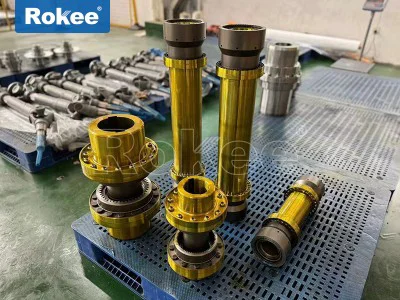
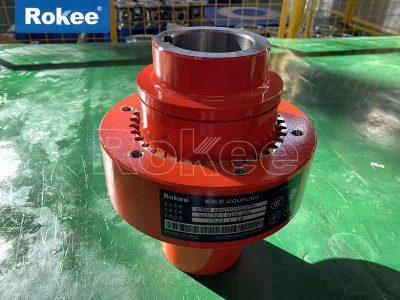
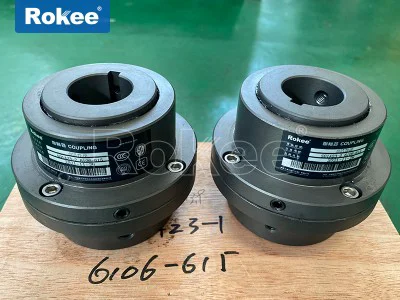
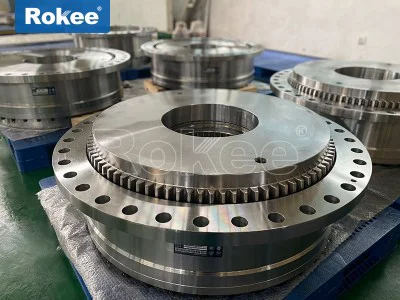
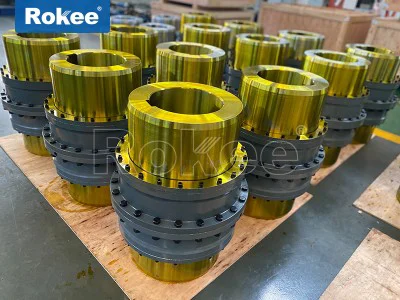
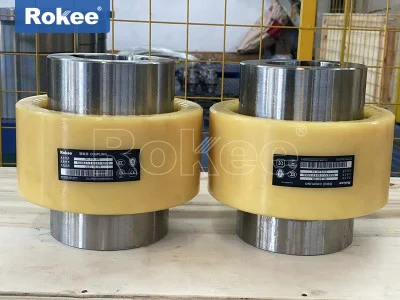
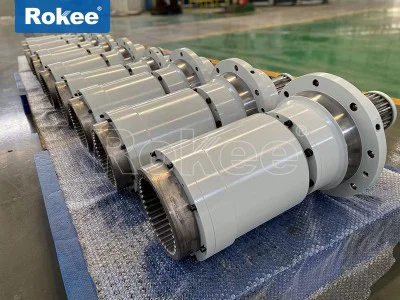
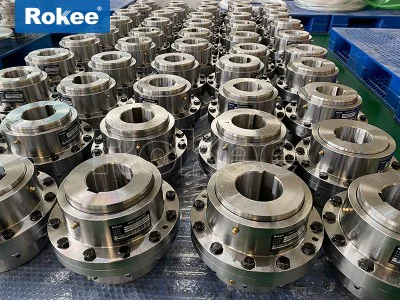
Toothed Couplings
A toothed coupling is a movable rigid coupling, whose core structure consists of internal gear rings with the same number of teeth and flange half couplings with external teeth. According to the different shapes of the external teeth, they are mainly divided into two types: straight teeth and drum teeth. The drum shaped gear coupling makes the outer teeth into spherical surfaces, with the center of the spherical surface located on the gear axis, and has a larger tooth flank clearance than the spur gear coupling. This design brings significant performance advantages.
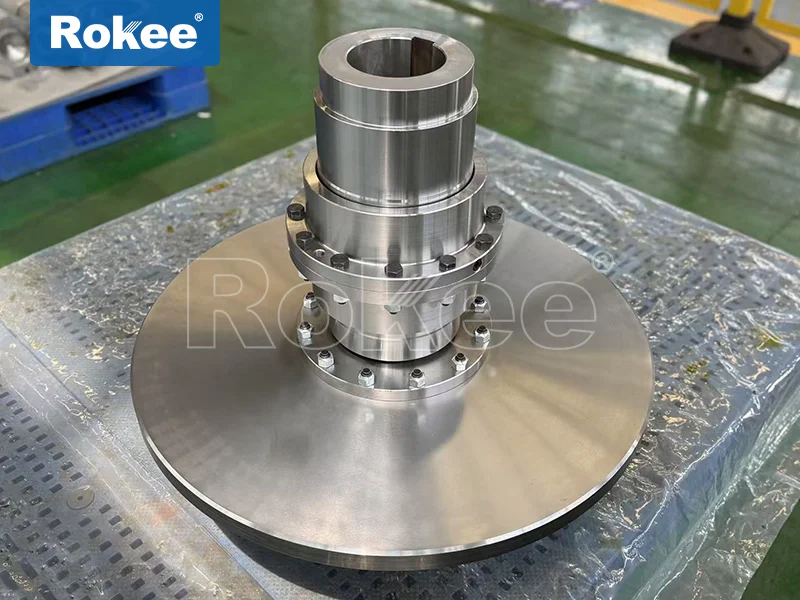
The toothed coupling achieves torque transmission and rotational motion between the two halves of the coupling through the meshing of inner and outer teeth. When there is relative displacement between the two axes, the tooth surfaces of the inner and outer teeth will periodically slide axially relative to each other. This working characteristic enables the toothed coupling to compensate for a certain degree of axial deviation, including radial, axial, and angular displacement, while transmitting power.
Lubrication and sealing are key conditions for the normal operation of gear couplings. Due to the relative sliding between the tooth surfaces, wear and power loss are inevitable, so the toothed coupling must operate under good lubrication and sealing conditions. Modern high-performance gear couplings often use forced thin oil lubrication systems or segmented grease lubrication structures to reduce tooth wear and extend service life.
Gear couplings can be divided into multiple types based on their gear design, each with unique performance characteristics:
Spur gear coupling
Structural features: The axial tooth blank of the external gear shaft sleeve is processed into a straight line, and both the indexing circle and the tooth root circle are straight lines
Compensation capability: Compensate for relative displacement between two axes by increasing the backlash between the inner and outer teeth, but the compensation amount is limited
Current situation: Products that are gradually being phased out should be avoided as much as possible in new projects
Drum gear coupling
Structural innovation: The tooth tips of the external gear shaft sleeve are processed into circular arcs, and the tooth blanks are formed into spherical surfaces with a drum shaped tooth profile
Performance advantages:
The load-bearing capacity is 15-30% higher than that of the straight tooth type
The allowable angular displacement can reach 1 ° 30 ′, which is 50% higher than the straight tooth type
Improved tooth contact conditions and eliminated edge compression phenomenon
Transmission efficiency up to 99.7%
The outer gear sleeve has a trumpet shaped tooth end, which is easy to assemble and disassemble
When the coupling is working, the relative displacement between the two shafts causes periodic axial sliding of the inner and outer tooth surfaces, which presents two major technical challenges due to the dynamic meshing characteristics:
Wear control: Gradual wear caused by sliding friction on the tooth surface, requiring continuous lubrication
Power loss: meshing friction consumes about 0.3-1.2% of transmission efficiency
The crown gear coupling can transmit torque 15-30% higher than the straight tooth type at the same size, and its angular displacement compensation ability can be increased from 1 ° to 1.5 °. Its service life is extended by 3-5 times in heavy-duty scenarios such as metallurgical rolling mills.
A toothed coupling is a type of rigid movable coupling widely used in industrial power transmission systems, designed to connect two rotating shafts and transmit torque while accommodating a certain degree of misalignment between them. Unlike flexible couplings that rely on elastic components to absorb vibration and compensate for displacement, toothed couplings achieve power transmission through the meshing of internal and external gears, combining high torque-bearing capacity with moderate displacement compensation capabilities. This unique design makes them indispensable in a wide range of heavy-duty, high-precision industrial applications, where reliable power transfer and adaptability to dynamic operating conditions are critical. Over the years, with the advancement of machining technology and the development of new materials, toothed couplings have evolved to meet the increasingly stringent requirements of modern industrial machinery, becoming a cornerstone component in sectors such as metallurgy, mining, petrochemicals, and marine engineering.
The core structure of a toothed coupling consists of several key components that work together to ensure efficient and stable power transmission. At its most basic, a typical toothed coupling comprises two external gear sleeves (also known as flange half-couplings) and two internal gear rings, along with sealing devices, connecting flanges, and fasteners. The external gear sleeves are usually mounted on the ends of the driving and driven shafts, featuring external teeth that are precisely machined to mesh with the internal teeth of the gear rings. The internal gear rings are then connected to each other via the connecting flange, creating a rigid connection that transfers torque from one shaft to the other. The sealing devices play a crucial role in preventing lubricant leakage and protecting the gear teeth from contamination by dust, debris, and other external particles, which could otherwise cause premature wear and damage. Fasteners, such as high-strength bolts, ensure that all components are securely assembled, maintaining the integrity of the coupling even under high torque and vibration conditions. In some compact designs, the internal gear ring and connecting flange may be integrated into a single component to reduce size and weight, while still retaining the essential functional characteristics of the coupling.
Toothed couplings can be classified into several types based on the shape of their gear teeth, each with distinct performance characteristics and application suitability. The most common types include straight tooth couplings, drum tooth couplings, and spherical tooth couplings, along with specialized variants such as nylon internal gear couplings and elastic pin toothed couplings. Straight tooth couplings feature external gear sleeves with straight teeth that are parallel to the shaft axis, and their internal gear rings have corresponding straight internal teeth. This simple design makes them easy to manufacture and assemble, but their displacement compensation capability is limited. The tooth clearance in straight tooth couplings is relatively small, allowing only minimal radial, axial, and angular misalignment, which can lead to edge contact and increased wear under conditions of significant shaft misalignment. As a result, straight tooth couplings are gradually being phased out in new industrial projects, replaced by more advanced designs that offer superior performance.
Drum tooth couplings represent a significant improvement over straight tooth designs, featuring external gear sleeves with teeth that are machined into a drum-shaped (crowned) profile, with the center of the spherical surface of the drum located on the gear axis. This unique tooth shape increases the tooth clearance by up to 50% compared to straight tooth couplings, significantly enhancing their displacement compensation capability. The drum-shaped teeth allow for angular displacement of up to 1°30′, which is 50% higher than that of straight tooth couplings, while also improving the contact conditions between the internal and external teeth. This design eliminates edge compression phenomena, distributes the load more evenly across the tooth surface, and increases the torque-bearing capacity by 15-30% compared to straight tooth couplings. Drum tooth couplings also offer higher transmission efficiency, typically reaching 99.7%, and their trumpet-shaped tooth ends facilitate easier assembly and disassembly. These characteristics make drum tooth couplings the most widely used type of toothed coupling in modern industry, suitable for a wide range of heavy-duty applications such as metallurgical rolling mills, mining crushers, and large-scale pumps.
Spherical tooth couplings are an advanced variant of drum tooth couplings, featuring a three-dimensional curved tooth design that further enhances their displacement compensation capabilities. The external gear teeth are machined into a spherical shape, allowing for angular deviation of up to ±1.5°, making them ideal for applications where significant shaft misalignment is unavoidable. This design provides superior radial and angular centering capacity, ensuring smooth power transmission even under extreme conditions of misalignment. Spherical tooth couplings are particularly suitable for high-speed, high-torque applications such as gas turbines and wind power generators, where precision and reliability are paramount. Specialized toothed coupling variants are designed to meet specific application requirements: nylon internal gear couplings use glass fiber-reinforced nylon composite materials for the internal gear sleeve, offering lubrication-free operation, corrosion resistance, and effective vibration and noise reduction. These couplings are suitable for use in temperature ranges from -40℃ to 120℃, with a nominal torque coverage of 40N·m to 3150N·m, making them ideal for water pumps and hydraulic systems. Elastic pin toothed couplings incorporate nylon pins with an elastic modulus of 3.2GPa, which can absorb 15% of the impact load and reduce vibration by 60% compared to rigid couplings, making them economical and suitable for conveyor and fan equipment.
The working principle of a toothed coupling is based on the meshing of internal and external gears to transmit torque and rotational motion between two shafts. When the driving shaft rotates, it drives the external gear sleeve mounted on its end to rotate. The external teeth of this sleeve mesh with the internal teeth of the adjacent internal gear ring, transferring the rotational force and torque to the gear ring. The internal gear ring is connected to the other internal gear ring via the connecting flange, which in turn meshes with the external gear sleeve on the driven shaft, causing the driven shaft to rotate synchronously. This meshing process ensures efficient power transmission, with minimal power loss even under high torque conditions. A key feature of toothed couplings is their ability to compensate for relative displacement between the two shafts, which can occur due to installation errors, thermal expansion during operation, load fluctuations, or structural deformation. When such displacement occurs, the gear teeth slide axially relative to each other periodically, allowing the coupling to adapt to radial, axial, and angular misalignments without disrupting power transmission. The extent of this compensation depends on the tooth design, with drum and spherical tooth couplings offering far greater adaptability than straight tooth designs.
Lubrication and sealing are critical factors in ensuring the long-term performance and service life of toothed couplings. Due to the relative sliding between the meshing gear teeth during operation, wear and power loss are inevitable if proper lubrication is not maintained. Lubricants reduce friction between the tooth surfaces, minimize wear, dissipate heat generated by meshing, and prevent corrosion. The choice of lubricant depends on the operating conditions of the coupling, including temperature, speed, torque, and the presence of contaminants. For most industrial applications, lithium soap-based grease with extreme pressure (EP) additives is recommended, as it provides excellent lubrication and wear resistance under heavy loads. In high-speed or high-temperature applications, forced thin oil lubrication systems or specialized high-temperature greases may be required to ensure optimal performance. Some specialized toothed couplings, such as nylon internal gear couplings, are designed to operate without lubrication, reducing maintenance requirements and costs.
Sealing devices are equally important, as they prevent lubricant leakage and protect the gear teeth from external contaminants such as dust, dirt, water, and chemical fluids. Common sealing methods include rubber lip seals, labyrinth seals, and mechanical seals, each suitable for different operating environments. Rubber lip seals are simple and cost-effective, providing effective sealing for general industrial applications. Labyrinth seals consist of a series of concentric grooves that form a tortuous path, preventing contaminants from entering while allowing for slight shaft movement. Mechanical seals offer the highest level of sealing performance, suitable for harsh environments such as those found in the petrochemical industry, where exposure to corrosive fluids is common. Proper installation of seals is essential, as any damage or misalignment during assembly can lead to seal failure, lubricant loss, and premature coupling damage.
The installation and maintenance of toothed couplings are crucial to ensuring their optimal performance and extending their service life. Proper alignment of the driving and driven shafts is the most important installation requirement, as excessive misalignment can lead to increased wear, vibration, and premature failure. Even though toothed couplings can compensate for a certain degree of misalignment, it is recommended to minimize alignment errors during installation using laser alignment tools or dial indicators. The alignment should be checked both radially and angularly, with the goal of achieving the smallest possible misalignment within the coupling’s rated capacity. During installation, the external gear sleeves should be mounted on the shafts with the correct interference fit, which may require heating the sleeves in hot oil or an oven to expand them, allowing for easy installation before they cool and contract onto the shaft. The hub faces should be flush with the shaft ends to ensure proper meshing of the gear teeth.
After installation, the coupling cavity should be filled with the appropriate lubricant, ensuring that all meshing tooth surfaces are fully coated. A thin film of lubricant should also be applied to the mating flange faces and fasteners to prevent corrosion and ensure proper tightening. The fasteners should be tightened to the recommended torque to ensure a secure connection, avoiding over-tightening or under-tightening, which can lead to flange distortion or loosening during operation. After the first three months of operation, the coupling should be re-lubricated, and subsequent lubrication intervals should be extended to six months, but not exceed one year. The lubrication interval should be adjusted based on the severity of the operating conditions, with more frequent lubrication required for high-speed, high-torque, or harsh environments. When re-lubricating, the old lubricant should be completely replaced by removing a grease fitting 180° from the filling point and pumping in fresh lubricant until it purges from the opening, ensuring that all contaminants are flushed out.
Regular inspection and maintenance are essential to identifying potential issues before they lead to coupling failure. Inspections should be performed periodically, with the frequency depending on the operating conditions. Key inspection points include the condition of the gear teeth, seals, fasteners, and lubricant. The gear teeth should be checked for signs of wear, pitting, cracking, or corrosion, as these can significantly reduce the coupling’s torque-bearing capacity and service life. The contact area between the meshing teeth should be at least 50% along the tooth height and 70% along the tooth width to ensure proper load distribution. The seals should be inspected for signs of leakage, damage, or wear, and replaced if necessary to prevent lubricant loss and contamination. Fasteners should be checked for tightness, and any loose bolts should be tightened to the recommended torque. The lubricant should be inspected for color, consistency, and the presence of contaminants, with replacement required if it becomes discolored, contaminated, or degraded.
Toothed couplings find extensive applications across a wide range of industrial sectors, due to their high torque-bearing capacity, reliable performance, and adaptability to various operating conditions. In the metallurgical industry, they are used in rolling mills, extruders, and continuous casting machines, where they transmit high torque under conditions of moderate misalignment and high temperature. In the mining industry, toothed couplings are employed in crushers, conveyors, and hoists, providing reliable power transmission in harsh, dusty environments with significant vibration and shock loads. The petrochemical industry uses toothed couplings in pumps, compressors, and mixers, where they must withstand corrosive fluids, high pressures, and wide temperature variations. Marine engineering applications include ship propulsion systems and auxiliary machinery, where toothed couplings provide efficient power transmission in wet, corrosive environments. Other applications include power generation (gas turbines, wind turbines), cement production (rotary kilns, material handling systems), automotive manufacturing (drivetrains), and construction machinery, where their versatility and durability make them an ideal choice for heavy-duty power transmission.
The performance characteristics of toothed couplings make them particularly suitable for applications requiring high torque density, which is the ability to transmit large amounts of torque per unit volume. This compact design allows them to be used in machinery where space is limited, without compromising on torque-bearing capacity. Toothed couplings also offer high transmission efficiency, typically above 99%, which reduces energy loss and improves the overall efficiency of the power transmission system. Their rigid construction ensures precise torque transmission, making them suitable for high-precision applications such as machine tools and robotics, where accurate motion control is essential. Additionally, toothed couplings are highly durable, with a long service life when properly installed and maintained, reducing downtime and maintenance costs for industrial operations.
In recent years, advancements in materials science and machining technology have led to significant improvements in the performance and versatility of toothed couplings. The use of high-strength alloy steels, such as 42CrMo, combined with heat treatment processes such as carburizing and quenching, has increased the hardness and wear resistance of the gear teeth, extending the coupling’s service life under heavy loads. Precision machining techniques, such as CNC gear hobbing and grinding, have improved the accuracy of the gear teeth, reducing friction and wear and enhancing transmission efficiency. The development of composite materials, such as glass fiber-reinforced nylon and polyurethane, has led to the creation of specialized toothed couplings that offer weight reduction, corrosion resistance, and vibration damping, expanding their application range to include more demanding environments.
Another notable trend in the development of toothed couplings is the integration of smart monitoring technologies, which allow for real-time monitoring of the coupling’s operating conditions. Sensors embedded in the coupling can detect parameters such as temperature, vibration, and torque, providing valuable data that can be used to predict potential failures and schedule maintenance proactively. This predictive maintenance approach reduces unplanned downtime, improves operational efficiency, and extends the service life of the coupling and the connected machinery. Additionally, the use of computer-aided design (CAD) and finite element analysis (FEA) has enabled engineers to optimize the design of toothed couplings, tailoring them to specific application requirements and improving their performance while reducing material usage and cost.
Despite their many advantages, toothed couplings do have some limitations that must be considered when selecting a coupling for a specific application. One of the main limitations is their relatively high cost compared to some other types of couplings, such as flexible couplings with elastic components. This cost is justified by their superior torque-bearing capacity and durability, but may be a consideration for low-torque, non-critical applications. Toothed couplings also require regular lubrication and maintenance, which adds to the operational cost, although specialized lubrication-free variants are available to address this issue. Additionally, while they can compensate for a certain degree of misalignment, excessive misalignment can still lead to premature wear and failure, requiring careful installation and alignment.
In conclusion, toothed couplings are essential components in modern industrial power transmission systems, offering a unique combination of high torque-bearing capacity, reliable performance, and displacement compensation capabilities. Their diverse range of types and designs makes them suitable for a wide variety of applications across multiple industrial sectors, from heavy-duty mining and metallurgy to high-precision power generation and marine engineering. Proper selection, installation, lubrication, and maintenance are critical to ensuring the optimal performance and long service life of toothed couplings, reducing downtime and operational costs. With ongoing advancements in materials, machining technology, and smart monitoring, toothed couplings are expected to continue evolving, meeting the increasingly stringent requirements of modern industrial machinery and remaining a vital part of industrial power transmission for years to come. Their ability to transmit high torque efficiently and reliably, even under challenging operating conditions, makes them irreplaceable in many critical applications, solidifying their position as a cornerstone of industrial engineering.