Flexible Claw Couplings
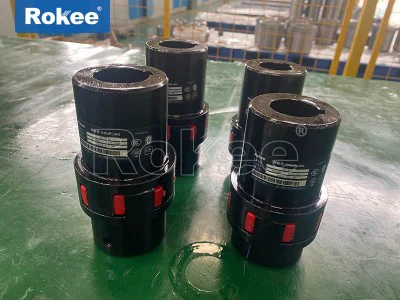
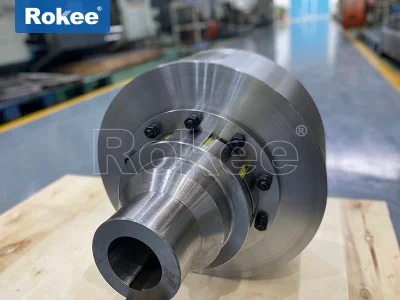
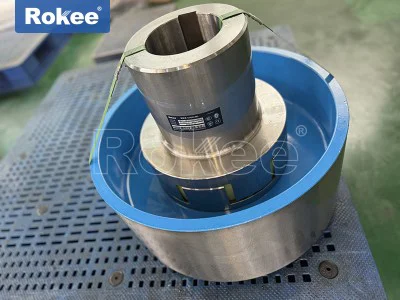
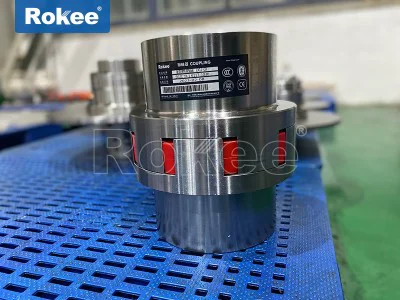
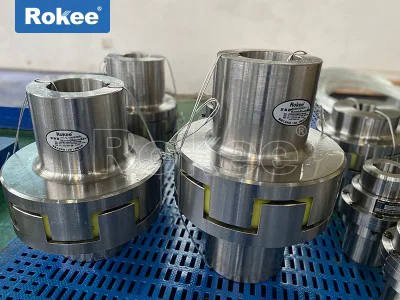
Flexible claw coupling is a key connecting component widely used in mechanical transmission systems. It achieves power transmission between two shafts through a special "claw" structure design, and has the ability to compensate for axial, radial, and angular deviations. This type of coupling consists of two clawed wheel hubs and an intermediate elastic element (usually a star or claw shaped elastic body), which absorbs and buffers vibrations and impacts during the transmission process through the deformation of the elastic element.
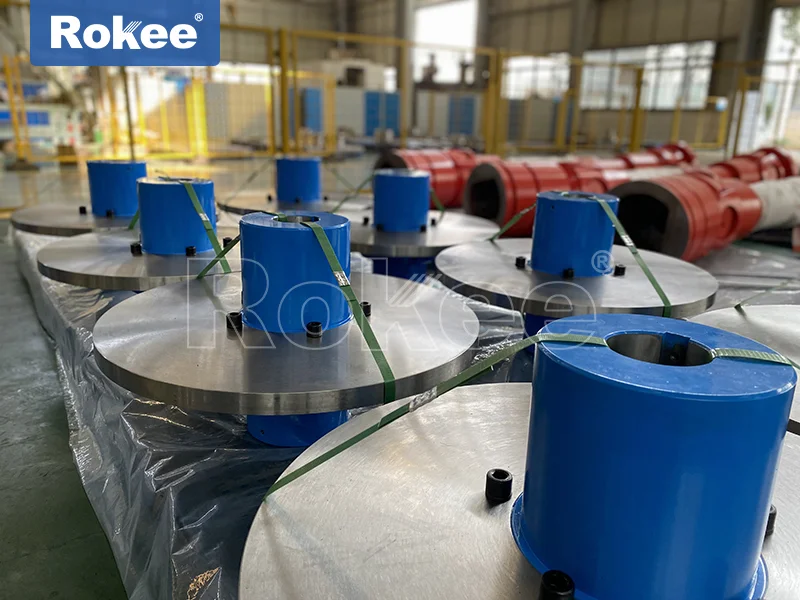
When the driving shaft rotates, it drives one claw shaped wheel hub to rotate, and transmits torque to another claw shaped wheel hub through elastic elements, thereby driving the driven shaft. Elastic components can compensate for various deviations between the two shafts through their flexible deformation while transmitting torque, ensuring smooth operation of the transmission system.
Core characteristics of flexible claw coupling
Excellent deviation compensation capability:
Axial deviation compensation: ± 0.5-3mm
Radial deviation compensation: 0.2-1.5mm
Angular deviation compensation: 1 ° -3 °Vibration damping characteristics: Elastic components can effectively absorb and attenuate vibrations in transmission systems, reduce noise levels (usually 5-15dB), and extend equipment service life.
Maintenance free design: Most flexible claw couplings adopt an integrated sealing structure, which does not require lubrication and significantly reduces maintenance costs.
High torque transmission efficiency: The transmission efficiency can reach 98-99.5%, with minimal energy loss.
Electrical insulation performance: Elastic components are usually made of non-conductive materials, which can provide good electrical insulation properties.
Typical structural types of flexible claw couplings
Standard Claw Coupling:
Symmetric Claw Design
Medium torque capacity
Suitable for general industrial applicationsHigh torque claw coupling:
Enhanced Claw Structure
Using high hardness alloy materials
Suitable for heavy machineryMicro claw coupling:
compact design
Small size (minimum up to Φ 10mm)
Used for precision instruments and small equipmentHigh temperature resistant special type:
Using special heat-resistant elastomers
The working temperature can reach over 150 ° C
Suitable for high temperature environments
Installation and maintenance of flexible claw coupling
Installation points:
The deviation of the two axis alignment should be controlled within the allowable range of the coupling
Avoid forced installation that may cause pre compression of the elastomer
Use specialized installation tools (such as hydraulic tensioners)Maintenance inspection items:
Regularly check the wear of elastic components
Monitor the operating temperature of the coupling (abnormal temperature rise may indicate a problem)
Check if the fasteners are looseCommon fault diagnosis:
Abnormal vibration: may be caused by poor alignment or damage to elastic components
Increased noise: usually indicates that the coupling has worn out
Decreased transmission efficiency: a sign of aging or wear of elastic components
Typical application areas of flexible claw couplings
Industrial automation:
Robot Joint Transmission
CNC machine feed systemEnergy equipment:
Wind turbine
Pumps and compressorsTransportation:
Ship propulsion system
Rail transit auxiliary equipmentSpecial Machinery:
Military equipment
Aerospace Ground Equipment
Flexible claw couplings are evolving towards higher performance and intelligence, becoming an indispensable key component in modern mechanical transmission systems. Choosing and using flexible claw couplings correctly can not only improve transmission efficiency, but also significantly extend the overall service life of equipment, creating greater value for enterprises.
In the realm of mechanical power transmission, flexible claw couplings stand as indispensable components that bridge the gap between driving and driven shafts, offering a unique blend of rigidity for torque transmission and flexibility for misalignment accommodation. Unlike rigid couplings that demand perfect shaft alignment and offer no tolerance for positional errors, flexible claw couplings are engineered to address the inherent imperfections of real-world mechanical systems, where shaft misalignment, vibration, and thermal expansion are common challenges. These couplings have earned widespread adoption across diverse industrial sectors due to their robust design, reliable performance, and versatile functionality, serving as a critical link in ensuring the smooth, efficient, and durable operation of rotating machinery.
At its core, the flexible claw coupling features a streamlined yet highly functional structural design, consisting of three primary fundamental components: two metallic claw hubs and an intermediate elastic spider insert. The claw hubs, typically forged or machined from high-strength materials such as carbon steel, alloy steel, cast iron, or lightweight aluminum alloy, are the load-bearing elements of the coupling. Each hub is precision-engineered with evenly spaced, interlocking claw-shaped protrusions around its inner circumference, designed to mesh seamlessly with the elastic insert without direct metal-to-metal contact between the two hubs. The geometric profile of these claws is carefully calibrated to optimize torque transmission efficiency, distribute stress uniformly across the contact surface, and maximize the engagement with the elastic element, preventing localized wear or fatigue failure under cyclic loading conditions. The surface of the claws is often finished to a smooth tolerance to minimize friction and ensure consistent interaction with the elastic insert over prolonged operation.
The intermediate elastic spider, the heart of the flexible claw coupling’s adaptive performance, is crafted from high-performance elastomeric materials such as polyurethane, natural rubber, synthetic rubber, or reinforced nylon, each selected for specific mechanical properties tailored to operational demands. This spider features a star-shaped or lobed structure that fits precisely between the interlocking claws of the two metal hubs, creating a cushioned interface that separates the metallic components entirely. The elastic nature of this insert is what defines the coupling’s flexibility, allowing it to deform elastically under load to compensate for shaft misalignment while simultaneously transmitting torque from the driving hub to the driven hub. The thickness, hardness, and material composition of the elastic spider are pivotal variables; softer elastomers offer greater flexibility and vibration damping but lower torque capacity, while harder variants deliver enhanced torque transmission and wear resistance with slightly reduced misalignment tolerance. This modular structure not only simplifies manufacturing and assembly but also facilitates straightforward maintenance, as the elastic spider can be replaced independently without removing the entire coupling from the shafts, minimizing downtime and operational costs.
The operating principle of the flexible claw coupling is rooted in the synergy between mechanical interlocking and elastic deformation. When the driving shaft rotates, it transfers rotational motion to the attached claw hub, which in turn exerts compressive force on the lobes of the elastic spider. This compressive force is transmitted through the elastic insert to the claws of the driven hub, propelling the driven shaft into rotation. Throughout this process, the elastic spider undergoes controlled elastic deformation, absorbing minor shocks, dampening vibrational energy, and accommodating three primary types of shaft misalignment: axial, radial, and angular. Axial misalignment, caused by thermal expansion or shaft endplay, is compensated by the longitudinal flexibility of the elastomer; radial misalignment, the lateral offset between the two shaft centers, is addressed by the lateral deformation of the spider lobes; and angular misalignment, the slight tilt of the shafts relative to one another, is mitigated by the uneven compression of the elastic insert across its circumference. Crucially, this deformation remains within the elastic limit of the material, ensuring the coupling can revert to its original shape once the load is removed, preserving its functional integrity and avoiding permanent damage. Unlike gear couplings or chain couplings that require lubrication and suffer from metal fatigue, the flexible claw coupling operates without lubrication, eliminating the risk of oil leaks, contamination, and ongoing maintenance related to lubricant replenishment.
The performance characteristics of flexible claw couplings are tailored to meet the diverse demands of industrial transmission systems, combining key advantages that set them apart from other coupling types. Foremost among these is exceptional misalignment compensation capacity, enabling the coupling to handle moderate levels of axial, radial, and angular misalignment without compromising torque transmission or inducing excessive stress on the shafts and bearings. This capability reduces the precision required for shaft alignment during installation, lowering assembly complexity and ensuring reliable operation even as machinery undergoes thermal cycling or minor structural shifts over time. Second, superior vibration and shock damping performance distinguishes these couplings; the elastic insert acts as a natural shock absorber, attenuating torsional vibrations generated by uneven load distribution, motor startup surges, or sudden load changes, and reducing noise levels during operation. This damping effect not only improves the smoothness of power transmission but also protects connected equipment such as motors, gearboxes, pumps, and compressors from premature wear and fatigue damage, extending the service life of the entire drive system.
Additional performance merits include high torque transmission efficiency, typically ranging from 98% to 99.5% under optimal operating conditions, minimizing energy loss and enhancing overall system energy efficiency. The coupling also exhibits robust torsional rigidity, ensuring accurate rotational positioning and minimal backlash, making it suitable for applications requiring precise motion control. Electrical insulation is another valuable trait, as the non-conductive elastic spider prevents the transfer of electrical currents between shafts, safeguarding sensitive electronic components and motors from electrical damage or stray current corrosion. Furthermore, flexible claw couplings boast a wide operating temperature range, with specialized elastomer formulations enabling functionality in extreme environments, from sub-zero cold conditions to high-temperature industrial settings. Durability and wear resistance are also hallmarks of these couplings; the metal hubs resist deformation and corrosion under harsh operating conditions, while high-quality elastic inserts withstand repeated cyclic loading, oil exposure, and minor abrasive contaminants, ensuring long service life with minimal maintenance requirements.
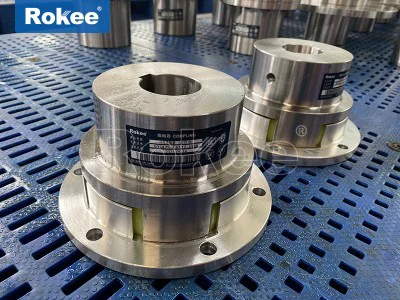
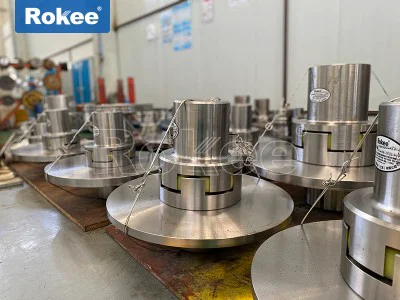
Flexible claw couplings are categorized into distinct types based on structural design, material composition, performance specifications, and application-specific features, each engineered to address unique operational requirements. The most common classification is based on hub design, encompassing standard integral hubs, split hubs, and flange-mounted hubs. Standard integral hubs feature a one-piece construction with a central bore for shaft mounting, offering high rigidity and torque capacity ideal for general-purpose applications; split hubs are designed with a longitudinal cut, allowing for easy installation and removal without disassembling adjacent equipment, making them perfect for confined spaces or retrofitting projects; flange-mounted hubs incorporate a flanged outer diameter, enabling direct connection to flanged shafts or equipment housings for enhanced stability in heavy-duty operations.
Classification by elastic insert material is equally critical, as it directly dictates the coupling’s performance parameters. Polyurethane spider inserts are the most widely utilized, offering an optimal balance of wear resistance, oil resistance, temperature tolerance, and load-bearing capacity, suitable for the majority of industrial environments. Rubber inserts, including natural and synthetic variants, provide superior vibration damping and flexibility, ideal for applications with high vibrational loads or delicate equipment that requires enhanced shock protection. Nylon or reinforced plastic inserts offer lightweight construction, high chemical resistance, and low friction, well-suited for light-duty, high-speed applications or corrosive environments where metal components may degrade. Specialized high-temperature elastomers are engineered for extreme heat applications, retaining their elastic properties and structural integrity at elevated temperatures that would compromise standard inserts.
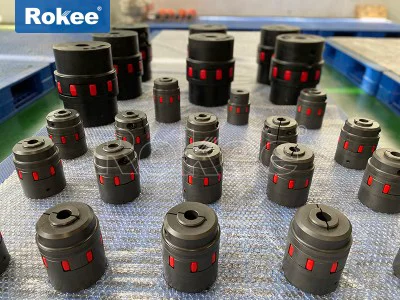
Additional classifications include torque capacity variants, ranging from miniature lightweight couplings for low-power precision equipment to heavy-duty, high-torque couplings for large-scale industrial machinery. Miniature flexible claw couplings feature compact dimensions and lightweight hubs, designed for small motors, instrumentation equipment, and precision transmission systems with minimal torque requirements. Standard medium-torque couplings are the workhorse of the product line, catering to general industrial machinery with balanced flexibility and load capacity. Heavy-duty high-torque couplings feature reinforced claw structures, thicker hubs, and high-density elastic inserts, engineered to withstand extreme torsional loads in heavy machinery. Other specialized types include corrosion-resistant couplings with coated or stainless steel hubs for harsh, corrosive environments such as chemical processing or marine applications, and low-backlash couplings with precision-machined claws and tailored elastomers for high-precision motion control systems where positional accuracy is paramount.
The versatility of flexible claw couplings is reflected in their extensive cross-industry applications, where they fulfill critical transmission roles across countless types of rotating machinery. In the general machinery sector, they are extensively employed in water pumps, centrifugal pumps, vacuum pumps, air compressors, fans, and blowers, ensuring reliable power transmission while dampening the vibrations inherent to fluid handling and air movement equipment. In machine tool and industrial automation systems, these couplings connect servo motors, stepping motors, and drive shafts in CNC machine tools, robotic arms, assembly lines, and conveyor systems, providing the precise torque transmission and minimal backlash required for accurate positioning and automated operation. The automotive and transportation industries utilize flexible claw couplings in vehicle auxiliary systems, agricultural machinery, construction equipment, and marine propulsion auxiliary drives, where they endure variable loads, shock impacts, and harsh operating conditions while maintaining consistent performance.
In the energy and power generation sector, flexible claw couplings play a vital role in wind turbine auxiliary drives, generator sets, hydraulic systems, and thermal power plant auxiliary equipment, accommodating thermal expansion-induced shaft misalignment and damping torsional vibrations in power transmission trains. The chemical, food, and pharmaceutical industries rely on corrosion-resistant and hygienic variants of these couplings for mixers, agitators, conveyors, and processing equipment, where they resist chemical exposure and meet strict operational cleanliness standards. Heavy manufacturing sectors, including steel production, mining, and material handling, deploy heavy-duty flexible claw couplings in crushers, mills, hoists, and large conveyor systems, leveraging their high torque capacity and shock resistance to withstand the rigorous demands of heavy industrial operations. They are also widely used in packaging machinery, printing equipment, textile machinery, and other light industrial equipment, offering reliable performance, low maintenance, and cost-effective operation for high-volume production environments.
Beyond these core sectors, flexible claw couplings find utility in specialized applications such as aerospace ground support equipment, medical devices, and laboratory instrumentation, where compact size, precise transmission, and vibration damping are critical. Their adaptability to diverse operational conditions—from low-speed, high-torque heavy machinery to high-speed, precision-driven automation systems—underscores their status as a universal transmission component. The ongoing evolution of material science and engineering design continues to enhance the performance of flexible claw couplings, with advancements in elastomer technology improving heat resistance, wear life, and load capacity, while precision manufacturing techniques refine claw geometry for optimized torque transmission and misalignment tolerance. As industrial machinery becomes increasingly efficient, compact, and reliable, the demand for high-performance flexible claw couplings is poised to grow, solidifying their position as an essential element in modern mechanical power transmission systems.
In summary, flexible claw couplings represent a masterclass in mechanical design, merging simple structural elegance with exceptional functional versatility. Their well-engineered composition of metal claw hubs and elastic spider inserts delivers a unique combination of torque transmission, misalignment compensation, vibration damping, and maintenance-free operation, addressing key challenges in mechanical power transmission. The diverse range of types, tailored to varying torque requirements, environmental conditions, and application needs, ensures there is a flexible claw coupling suitable for nearly every industrial scenario. From small-scale precision automation to heavy-duty industrial manufacturing, these couplings provide reliable, efficient, and durable connectivity, safeguarding equipment performance and reducing operational costs. As a cornerstone of mechanical transmission technology, flexible claw couplings continue to evolve alongside industrial innovation, remaining an indispensable component that enables the seamless operation of the machinery that drives modern industry forward.