Jaw Flexible Couplings
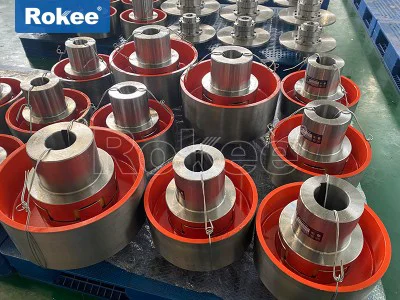
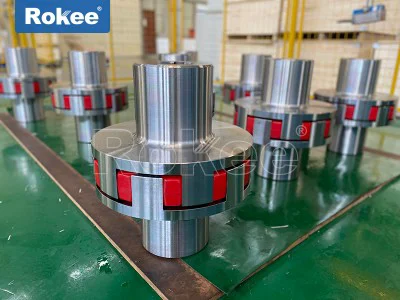
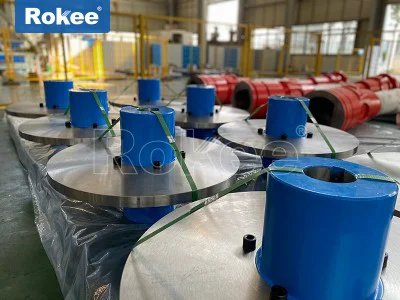
Jaw flexible coupling is a mechanical connection device that combines rigid transmission performance and moderate compensation capability, named after its unique "claw shaped" structure. This type of coupling plays a crucial role in industrial transmission systems by transmitting torque through interlocking claws and absorbing and buffering vibration impacts using elastic elements.
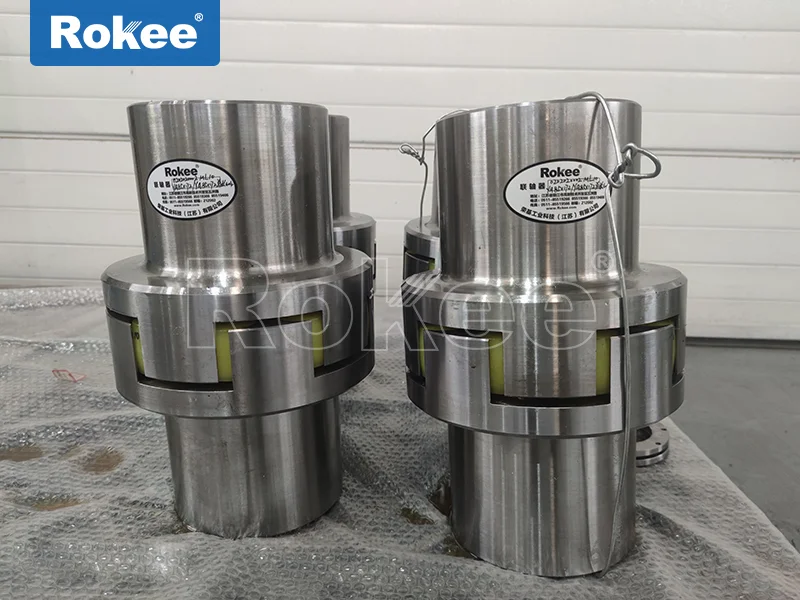
Compared with traditional rigid couplings, jaw flexible couplings have superior vibration reduction performance; Compared with pure elastic couplings, it can provide higher torque transmission capacity. This balancing characteristic makes it an ideal choice for many industrial applications, especially in situations where both transmission accuracy and system flexibility need to be considered simultaneously.
Jaw flexible couplings typically consist of the following core components:
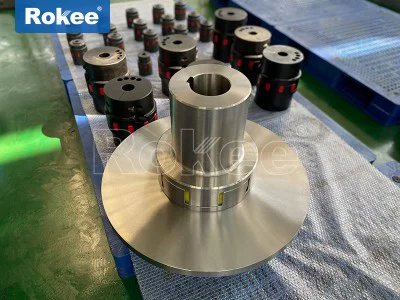
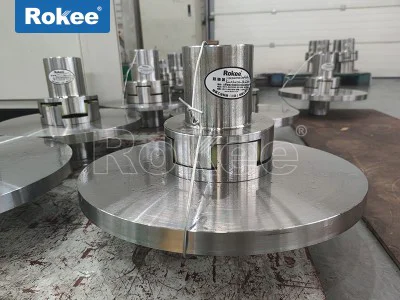
Metal flange: usually made of high-strength cast iron, steel or aluminum alloy material, with precision machined claws on both sides
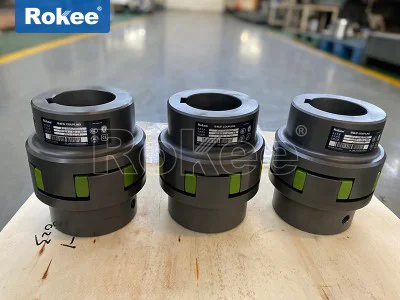
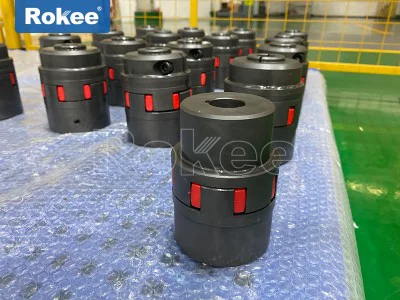
Elastic element: a rubber, polyurethane, or nylon material cushioning component placed between the claws
Connecting bolt: used to fix the two halves of the coupling and apply pre tension force
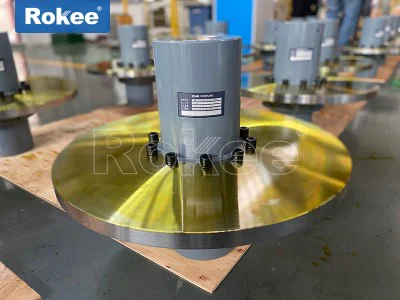
Protective cover (optional): protects the internal structure from environmental influences
The working principle of claw coupling is based on the principle of elastic deformation:
Torque transmission: The rotation of the active end pushes the elastic body through the convex claw, and the elastic body then transmits the force to the convex claw of the passive end
Vibration absorption: Elastic bodies deform when subjected to force, absorbing and damping system vibrations
Deviation compensation: The deformable characteristics of elastomers allow for a certain degree of axial, radial, and angular deviation
There are various variants of the convex claw design for modern claw couplings:
Straight claw type: basic form, easy to manufacture but limited compensation capability
Curve claw type: progressive contact, smoother transmission
Multi claw design: increase the number of contact points to improve torque capacity
Asymmetric Claw Type: Optimizing Load Distribution for Specific Operating Conditions
Jaw flexible couplings have the following significant advantages:
Excellent vibration reduction performance: can reduce system vibration by 40-60%
Good deviation compensation capability:
Axial deviation: ± 0.5-3mm
Radial deviation: 0.2-1.5mm
Angular deviation: 1 ° -3 °No backlash transmission: maintaining high transmission accuracy
Overload protection: The elastic body will be damaged first when overloaded, protecting valuable equipment
Maintenance free design: Most models do not require lubrication
Jaw flexible couplings are widely used in:
Pump equipment: centrifugal pump, plunger pump, vacuum pump
Compressor system: screw and reciprocating compressors
Power generation equipment: diesel generator sets, small steam turbines
Material conveying: conveyor belt, elevator, mixing equipment
Machine tool industry: CNC machine tool feed system
The basic maintenance content includes:
Visual inspection: Elastic cracking and wear condition
Vibration monitoring: Regularly measure changes in vibration values
Temperature check: Abnormal temperature rise may indicate a problem
Bolt inspection: Ensure proper pre tightening force
As a key component in industrial transmission systems, the correct selection and use of jaw flexible couplings directly affect the operational efficiency and reliability of the entire equipment. With the advancement of materials science and manufacturing technology, modern claw couplings have developed into high-performance and long-life transmission solutions. Through scientific selection and reasonable maintenance, jaw flexible couplings can provide reliable and efficient power transmission solutions for various industrial transmission systems.
In the vast landscape of mechanical power transmission systems, the jaw flexible coupling stands as one of the most widely utilized and versatile connecting components, bridging driving and driven shafts to transfer torque efficiently while accommodating operational imperfections that are inevitable in real-world industrial machinery. Unlike rigid couplings that demand perfect shaft alignment and offer no tolerance for movement or vibration, jaw flexible couplings strike a balanced blend of torsional rigidity, elastic flexibility, and mechanical durability, making them indispensable across countless manufacturing, processing, and power generation applications.
At its core, the jaw flexible coupling features a straightforward yet highly engineered structural design, composed of three primary fundamental components that work in seamless coordination: two rigid metal hubs and a central elastic spider element, with no complex auxiliary parts required for standard operation, which contributes to its widespread adoption and ease of maintenance. The metal hubs are precision-machined from high-strength metallic materials, typically including carbon steel, alloy steel, cast iron, or lightweight aluminum alloy, selected based on the intended load capacity, operating speed, and environmental conditions of the application. Each hub is equipped with a set of evenly spaced, protruding jaws around its inner face, arranged in a radial pattern that aligns with the jaws of the opposing hub when assembled. These jaws are not sharp or interlocking in a rigid gear-like fashion; instead, they are contoured to create uniform gaps between adjacent jaws on each hub, forming recessed spaces that perfectly cradle the lobes of the central elastic spider. The hubs are designed with a central bore to fit securely onto the shaft ends of the driving and driven equipment, secured via standard mechanical fastening methods such as keyways, set screws, or clamping collars, ensuring a tight, slip-free connection that prevents relative movement between the hub and shaft during torque transmission. The central elastic spider, often referred to simply as the spider, is the heart of the coupling’s flexibility, molded from a resilient elastomeric or polymer material into a multi-lobed, star-like shape that fits precisely into the gaps between the jaws of both hubs. This three-part assembly is compact, with no overlapping components or excessive bulk, allowing it to be installed in confined spaces where larger, more complex coupling designs cannot fit, and it operates without the need for lubrication, a key advantage that reduces ongoing maintenance requirements and eliminates the risk of lubricant leakage contaminating surrounding equipment or work environments.
The operating principle of the jaw flexible coupling is rooted in the compression and elastic deformation of the central spider element, distinguishing it from shear-type flexible couplings that rely on stretching or twisting of elastic components for flexibility. When torque is applied to the driving shaft, the jaws of the driving hub push against the lobes of the elastic spider, compressing the elastomer material and transferring the rotational force through the spider to the jaws of the driven hub, which then rotates the driven shaft. This direct compression-based torque transmission ensures high efficiency, with minimal power loss during operation, while the elastic nature of the spider allows for controlled deformation that absorbs mechanical shocks, dampens torsional vibration, and compensates for minor shaft misalignments that occur naturally due to manufacturing tolerances, thermal expansion, mechanical wear, or foundation settling. Unlike rigid couplings, which transfer shocks and misalignment stresses directly to the shafts, bearings, and gearboxes of connected equipment, leading to premature wear, noise, and catastrophic failure, the jaw flexible coupling acts as a mechanical buffer, shielding critical components from excessive stress and extending the overall service life of the entire power transmission system. The failsafe design of the jaw coupling is another critical structural benefit: in the event that the elastic spider becomes worn, damaged, or breaks completely due to prolonged use or overload, the metal jaws of the two hubs will come into direct contact with one another, allowing the coupling to continue transmitting torque temporarily, albeit with increased vibration and noise. This failsafe feature prevents sudden, unplanned downtime in critical operations, giving maintenance teams time to replace the spider at a convenient scheduled interval without halting production or endangering equipment, a feature that sets jaw flexible couplings apart from many other non-failsafe elastic coupling designs.
The performance characteristics of jaw flexible couplings are defined by a unique combination of mechanical strength, flexibility, damping capacity, and environmental resistance, making them suitable for a broad spectrum of operating conditions. One of the most prominent performance traits is their ability to compensate for three primary types of shaft misalignment: angular misalignment, parallel misalignment, and axial misalignment, also known as end float. Angular misalignment occurs when the two shafts are not perfectly collinear and form a small angle between their centerlines, while parallel misalignment refers to a lateral offset between the shaft centerlines without an angular gap, and axial misalignment involves slight forward or backward movement of the shafts along their centerlines during operation. Standard jaw flexible couplings can reliably accommodate moderate levels of all three misalignment types, with specific tolerance ranges varying based on the size of the coupling and the hardness of the spider material, but generally providing sufficient flexibility for most general industrial applications where perfect shaft alignment is impractical to achieve or maintain. Torsional stiffness is another key performance metric, balancing the need for precise torque transmission and vibration damping; the coupling offers enough rigidity to maintain consistent rotational timing for most machinery, avoiding excessive wind-up or backlash that could disrupt operational accuracy, while still being flexible enough to absorb sudden torque spikes and cyclic vibrations generated by equipment such as pumps, compressors, and motors. Vibration damping capacity is heavily influenced by the material of the elastic spider, with softer elastomers providing superior damping for high-vibration applications, and stiffer polymers offering higher torque transmission capacity for heavy-load scenarios. Additionally, jaw flexible couplings exhibit excellent load-bearing capabilities, with torque ratings scaling effectively with the physical size of the coupling and the number of jaws on the hubs; larger couplings with more jaws can handle significantly higher torque loads, making them suitable for both small, lightweight machinery and heavy-duty industrial equipment. The operating temperature range of these couplings is also noteworthy, as the spider materials are formulated to withstand extreme cold and heat without losing their elastic properties, resisting degradation from exposure to oils, hydraulic fluids, chemicals, and atmospheric elements such as ozone and moisture in harsh industrial settings, ensuring consistent performance over long service lives even in challenging environments.
Jaw flexible couplings are categorized into distinct classifications based on multiple criteria, including jaw profile design, spider material composition, structural configuration, and intended operational purpose, each tailored to meet specific application requirements and performance needs. The most common classification is based on the shape and profile of the metal hub jaws, which directly impacts the coupling’s flexibility, torque capacity, and misalignment tolerance. Standard straight jaw couplings feature flat, linear jaw surfaces, representing the most basic and widely produced design, ideal for general-purpose applications with moderate loads and standard misalignment conditions; these are cost-effective to manufacture and easy to install, making them the default choice for many routine power transmission tasks. Curved jaw or crowned jaw couplings, by contrast, have rounded, contoured jaw surfaces that create a gradual, uniform contact with the spider lobes, reducing stress concentrations on the elastomer and improving the coupling’s ability to handle higher angular misalignment and smoother torque transmission. This curved design minimizes wear on the spider, extends its service life, and reduces operational noise, making it preferred for applications with higher speed or more significant misalignment challenges. Another classification is based on the structure of the elastic spider, with solid-center spiders being the standard design for most applications, providing maximum structural integrity and load distribution, and open-center spiders designed for installations where shaft ends must be positioned very close together, reducing the overall length of the coupling assembly for space-constrained setups. There are also snap-wrap spider designs, which feature a flexible, open-end structure that allows for quick spider replacement without removing the hubs from the shafts, streamlining maintenance procedures in hard-to-reach equipment installations.
Classifications by spider material are equally important, as the elastomer or polymer composition dictates the coupling’s temperature resistance, chemical resistance, torque capacity, and damping properties, with each material engineered for specific environmental and operational conditions. Nitrile butadiene rubber (NBR) is the most commonly used spider material, a versatile elastomer with excellent oil resistance, moderate temperature tolerance, and superior vibration damping capabilities, ideal for general industrial applications with standard operating conditions and exposure to common industrial fluids. Polyurethane spiders offer higher torque capacity and greater resistance to abrasion, ozone, and weathering compared to NBR, with a stiffer composition that makes them suitable for heavy-load applications where minimal deflection is required, though they have slightly lower damping performance. High-performance thermoplastic elastomers, such as Hytrel, provide exceptional high-temperature resistance, capable of withstanding extreme heat far beyond the range of standard rubber or polyurethane, along with excellent chemical resistance and high torque load capacity, making them ideal for harsh industrial environments with elevated temperatures or exposure to aggressive chemicals. For extremely low-speed, high-torque applications, metal-impregnated or rigid polymer spider materials are available, offering maximum durability and load-bearing strength with minimal elastic deformation, suitable for heavy machinery that operates at very low rotational speeds and requires no vibration damping. Additionally, jaw flexible couplings can be classified by hub design, including standard split hubs for easy installation on pre-assembled shafts, solid hubs for maximum rigidity and torque transmission, and lightweight aluminum hubs for high-speed, low-load applications where reduced rotational mass is critical to minimize inertia and energy consumption.
The versatility of jaw flexible couplings, combined with their robust performance and simple design, has led to their extensive use across nearly every sector of industrial and commercial machinery, covering a vast array of applications where reliable torque transmission and shaft misalignment compensation are essential. In the fluid handling industry, jaw flexible couplings are universally employed in centrifugal pumps, positive displacement pumps, vacuum pumps, and compressors, connecting electric motors to pump and compressor shafts to ensure smooth power transfer while absorbing the vibration and pulsation generated by fluid flow. These couplings protect the pump bearings and motor components from damage caused by hydraulic shocks and minor shaft misalignment, reducing maintenance frequency and extending the operational life of pumping systems used in water treatment, chemical processing, oil and gas production, and HVAC systems. In the manufacturing and material handling sector, they are a staple in conveyor systems, elevators, mixers, agitators, and packaging machinery, linking drive motors to gearboxes and conveyor rollers, accommodating the slight misalignments that occur in long conveyor lines and absorbing the cyclic loads from continuous material movement. The failsafe design is particularly valuable in conveyor systems, where unexpected downtime can disrupt entire production lines, making jaw couplings a reliable choice for uninterrupted material processing.
In the machine tool and precision manufacturing industry, jaw flexible couplings are used in CNC machine tools, lathes, milling machines, and robotic automation systems, where they provide the perfect balance of torsional rigidity for precise positioning and elastic flexibility to absorb minor vibrations that could compromise machining accuracy. Unlike more complex precision couplings, they offer cost-effective performance for general machining applications, maintaining consistent torque transmission without introducing excessive backlash that would affect part quality. In the power generation and energy sector, these couplings are utilized in small-scale generators, turbine auxiliary systems, wind turbine pitch mechanisms, and water power equipment, connecting drive shafts to power generation components and withstanding the variable loads and environmental conditions found in power production facilities. They are also widely used in the automotive and heavy machinery industries, in construction equipment, agricultural machinery, and material processing machinery, where durability and resistance to shock loads are paramount, operating reliably in dusty, outdoor, and high-vibration environments that would quickly damage less robust coupling designs.
Beyond these core industries, jaw flexible couplings find application in marine auxiliary equipment, food and beverage processing machinery, pharmaceutical production equipment, and textile manufacturing machinery, adapting to the unique requirements of each sector through careful selection of spider materials and hub designs to meet hygiene standards, chemical resistance, and operational speed requirements. Their low maintenance requirements, simple installation process, and cost-effective performance make them a preferred choice for both original equipment manufacturing and aftermarket replacement parts, as they can be easily integrated into new machinery designs or retrofitted into existing systems to replace worn or outdated rigid couplings. When selecting a jaw flexible coupling for a specific application, engineers consider key factors such as required torque capacity, operating speed, shaft diameter, type and degree of misalignment, operating temperature range, environmental exposure to chemicals or moisture, and maintenance accessibility, ensuring that the chosen coupling matches the exact operational demands to optimize performance and longevity.
Proper installation and routine inspection are critical to maximizing the service life of jaw flexible couplings, even though they require minimal active maintenance. During installation, ensuring proper shaft alignment within the coupling’s specified tolerance range is essential to prevent premature wear on the spider and reduce unnecessary stress on connected equipment; over-tightening fasteners or forcing the coupling onto misaligned shafts can lead to uneven load distribution and rapid degradation of the elastic element. Regular visual inspections to check for signs of spider wear, cracking, compression set, or damage are recommended, as a worn spider will reduce the coupling’s flexibility and damping capacity, leading to increased vibration and potential equipment damage. As the spider is the only wearable component, replacement is a simple and low-cost procedure, with no need to replace the entire coupling assembly, further enhancing the economic and practical value of jaw flexible couplings. In summary, the jaw flexible coupling’s combination of simple, robust structure, reliable performance, versatile classifications, and broad industrial applicability cements its status as a foundational component in modern mechanical power transmission. Its ability to balance rigidity and flexibility, absorb vibration, compensate for misalignment, and operate reliably in diverse conditions makes it an irreplaceable solution for countless machinery applications, continuing to evolve with advancements in material science and manufacturing technology to meet the ever-changing demands of industrial innovation.