Flexible Jaw Shaft Couplings
Flexible jaw shaft coupling is a key connection device widely used in industrial machinery transmission systems. It achieves flexible connection between two shafts through a special "claw shaped" structure design, which can compensate for a certain degree of axial, radial, and angular deviation. This type of coupling is widely used in various mechanical equipment due to its compact structure, high torque transmission, and easy installation and maintenance.
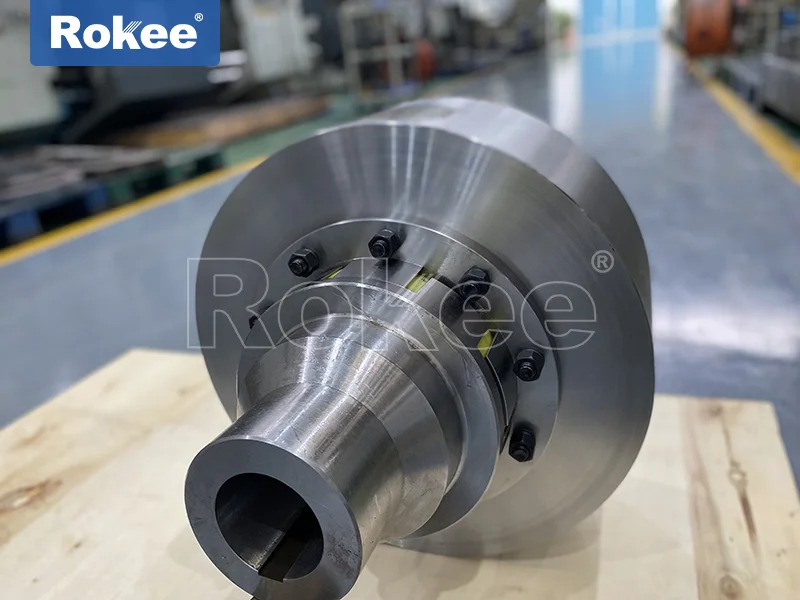
Compared with traditional rigid couplings, flexible jaw shaft couplings have significant advantages. When there is misalignment in the transmission system, it can effectively absorb vibration and impact, protect the transmission shaft and bearings from damage, reduce energy loss, and improve transmission efficiency. Its unique flexibility characteristics make it play an irreplaceable role in modern high-precision, high-speed transmission systems.
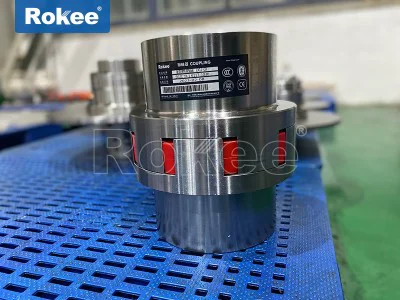
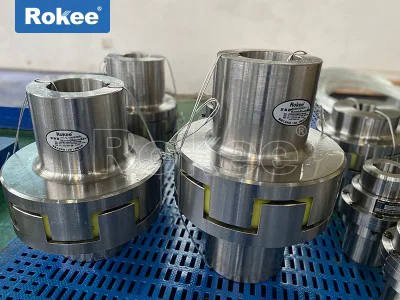
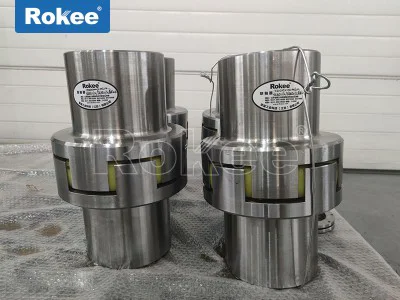
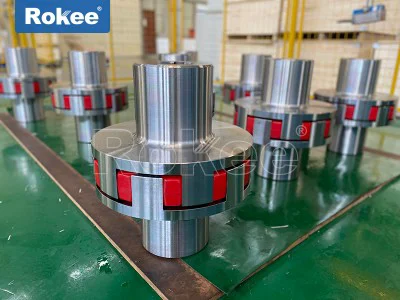
A typical flexible jaw shaft coupling is mainly composed of the following parts:
Metal or nylon claw discs: used in pairs, usually made of high-strength alloy steel or engineering plastics
Elastic element: located between two claw disks, commonly made of materials including polyurethane, rubber, or special composite materials
Shaft sleeve or flange: used to connect with the drive shaft and the driven shaft
Fasteners: bolts, nuts, etc. used to fix various components
Flexible jaw shaft couplings transmit torque through interlocking claw structures and intermediate elastic elements. When the driving shaft rotates, it drives one side of the claw plate to rotate, and the power is transmitted to the other side of the claw plate through the elastic element, thereby driving the driven shaft to rotate. Elastic components can absorb and buffer additional loads caused by misalignment of the shaft system while transmitting torque, achieving flexible transmission.
Main features and advantages
Compensation capability
The flexible jaw shaft coupling has excellent deviation compensation capability:
Axial deviation: usually compensated for 0.5-3mm
Radial deviation: The compensation range is generally between 0.2-1.5mm
Angular deviation: Generally, a deviation of 0.5 ° -3 ° is allowed
This multi-directional compensation capability makes it particularly suitable for situations where installation accuracy is not high, greatly reducing the difficulty of mechanical assembly.Vibration reduction and noise reduction
The elastic element in the middle can effectively absorb and dampen vibrations, reducing the noise level of the transmission system, which is particularly important for high-precision equipment and environments with strict requirements.Maintenance free design
Most flexible jaw shaft couplings adopt a lubrication free design, reducing maintenance workload and costs, making them particularly suitable for equipment that is difficult to access or requires continuous operation.overload protection
When the system is overloaded, the elastic components may deform or break, thereby protecting more expensive transmission components from damage.
When choosing a flexible jaw shaft coupling, comprehensive consideration should be given to:
Transmission power and torque requirements
Shaft diameter size and connection method
Types and degrees of deviations present
Environmental conditions (temperature, humidity, corrosiveness, etc.)
Do you need electrical insulation characteristics
Correct installation steps
Check the size matching of the shaft and coupling
Clean the contact surface between the shaft and coupling
Install the half coupling onto the shaft using appropriate methods (hot or press fit)
Align the two axes and control the misalignment within the allowable range
Install elastic components and the other half of the coupling
Uniformly tighten all bolts to the specified torque
Common installation errors
Excessive deviation exceeds the coupling compensation capability
Using incorrect installation tools resulted in component damage
Uneven tightening torque of bolts
Ignore the requirement for axial clearance
Although flexible jaw shaft couplings are generally maintenance free, regular inspections are still necessary
Check if there are cracks, deformations, or wear on the elastic components
Confirm that all fasteners are not loose
Observe whether there are any abnormal vibrations or noise during operation
More frequent inspections are required in harsh environments
flexible jaw shaft couplings are widely used in:
Pump equipment: centrifugal pumps, vacuum pumps, etc
Fan system: industrial fan, cooling tower fan
Compression machinery: air compressor, refrigeration compressor
Conveyor equipment: conveyor belt, elevator
Processing machinery: machine tools, injection molding machines
In the field of mechanical power transmission, flexible jaw shaft couplings play an indispensable role as a key connecting component, bridging the gap between rotating shafts in various industrial systems to ensure efficient, stable and reliable power transfer. Unlike rigid couplings that require precise alignment and offer no flexibility, flexible jaw shaft couplings integrate the advantages of rigid transmission and elastic compensation, making them widely adopted in numerous industries where shaft misalignment, vibration and shock loads are common challenges.
The structure of a flexible jaw shaft coupling is relatively simple yet scientifically designed, consisting of three core components that work in harmony to achieve power transmission and flexibility: two metal jaw hubs (also known as semi-couplings) and an intermediate elastomeric insert, commonly referred to as a "spider" or plum blossom pad. Each metal hub is typically a cylindrical or flange-shaped component with a series of evenly spaced, radially extending convex jaws on one end, which are precision-machined to ensure smooth engagement with the elastomeric insert. The hubs are usually manufactured from high-strength materials to withstand the torque and loads encountered in operation; common materials include carbon steel, alloy steel, aluminum alloy and stainless steel, with the selection depending on the specific application requirements such as torque capacity, environmental conditions and weight constraints. Carbon steel and alloy steel hubs are preferred for heavy-duty applications due to their high strength and durability, while aluminum alloy hubs are chosen for lightweight and high-speed scenarios where reduced inertia is critical. Stainless steel hubs are utilized in corrosive environments, such as food processing, pharmaceutical or marine applications, to prevent rust and degradation over time.
The elastomeric insert is the heart of the flexible jaw shaft coupling, responsible for providing flexibility, vibration damping and misalignment compensation. This insert is typically made from resilient materials such as polyurethane, rubber, engineering plastics or, in some high-torque applications, metal spring plates. The shape of the insert is designed to match the jaw profile of the hubs, usually featuring lobes or petals that fit snugly between the jaws of the two hubs, creating a secure interlocking connection. Polyurethane is one of the most commonly used materials for the elastomeric insert due to its excellent wear resistance, wide range of hardness options, good oil resistance and balanced flexibility and rigidity. Rubber inserts, on the other hand, offer superior shock absorption and vibration damping capabilities but are less resistant to oil and high temperatures, making them suitable for general-purpose applications with moderate operating conditions. Engineering plastics such as nylon are used in special scenarios where chemical resistance or electrical insulation is required, while metal spring plates are employed in high-torque, high-temperature applications where elastomeric materials may fail to withstand the harsh conditions. The insert is often designed with a plum blossom shape (hence the alternative name "plum blossom coupling") or a star shape, with the number of lobes ranging from 4 to 10, depending on the torque capacity and misalignment requirements of the application.
In addition to the three core components, some flexible jaw shaft couplings may include optional accessories such as protective covers, which shield the internal structure from dust, debris, moisture and other environmental contaminants, thereby extending the service life of the coupling. The hubs are fixed to the shafts using various methods, including keyway connections, set screws, clamping sleeves or expansion sleeves, ensuring a secure, slip-free fit that prevents relative movement between the hub and the shaft during operation. Keyway connections are the most common method, providing a reliable torque transfer mechanism by means of a key that fits into grooves machined in both the hub and the shaft. Set screws are used for light-duty applications, where the screw is tightened against the shaft to create friction that holds the hub in place. Clamping sleeves and expansion sleeves offer a more uniform clamping force, making them suitable for high-speed or high-torque applications where precise positioning and stability are critical.
The performance of flexible jaw shaft couplings is defined by a set of key characteristics that determine their suitability for different applications, including torque transmission capacity, misalignment compensation capability, vibration damping and shock absorption, torsional stiffness, operating speed range, temperature resistance and durability. Torque transmission capacity is one of the most important performance indicators, referring to the maximum torque that the coupling can transmit without failure. This capacity varies significantly depending on the size of the coupling, the material of the hubs and the elastomeric insert, and the number of jaws. Smaller couplings designed for light-duty applications may have a torque capacity as low as 0.5 N·m, while large, heavy-duty couplings can handle torques exceeding 14,000 N·m, making them suitable for industrial machinery such as large pumps, compressors and turbines.
Misalignment compensation is another defining performance feature of flexible jaw shaft couplings, allowing them to accommodate three types of misalignment between the connected shafts: radial, axial and angular misalignment. Radial misalignment occurs when the axes of the two shafts are parallel but offset from each other, while axial misalignment refers to the linear displacement of one shaft relative to the other along the axis. Angular misalignment happens when the axes of the two shafts are not parallel but intersect at a certain angle. The elastomeric insert’s ability to deform elastically enables the coupling to compensate for these misalignments, reducing the additional loads and stresses on the shafts, bearings and other components of the transmission system. Typically, flexible jaw shaft couplings can compensate for radial misalignment up to 5 mm, axial misalignment between ±0.5 mm and ±3 mm, and angular misalignment between 1° and 5°, depending on the design and material of the insert. This compensation capability is crucial in applications where precise shaft alignment is difficult to achieve or maintain, such as in large industrial systems with multiple components or in equipment subject to thermal expansion and contraction.
Vibration damping and shock absorption are essential performance characteristics that protect the transmission system from damage caused by vibrations and sudden shock loads. The elastomeric insert acts as a buffer, absorbing and dissipating vibrational energy generated by the rotating shafts, motors or other equipment. This not only reduces noise levels in the workplace but also minimizes wear and tear on bearings, gears, motors and other sensitive components, extending their service life. The damping effect is influenced by the material and hardness of the elastomeric insert; softer inserts offer better vibration damping but lower torque capacity, while harder inserts provide higher torque capacity but reduced damping. In applications with high levels of vibration, such as pumps, compressors and reciprocating machinery, flexible jaw shaft couplings with softer, more resilient inserts are preferred to ensure smooth operation.
Torsional stiffness refers to the coupling’s resistance to torsional deformation under torque, which affects the precision of power transmission. High torsional stiffness is essential in applications requiring precise positioning and synchronization, such as robotics, automation systems and servo drives, where even small torsional deformations can lead to inaccuracies. Flexible jaw shaft couplings with rigid elastomeric inserts or metal spring plates offer higher torsional stiffness, while those with softer rubber inserts have lower stiffness but better flexibility. The operating speed range of a flexible jaw shaft coupling is determined by its balance, material strength and design, with typical maximum speeds ranging from a few thousand revolutions per minute (rpm) for heavy-duty couplings to over 40,000 rpm for small, high-speed couplings. Proper balancing is crucial to prevent vibration at high speeds, which can damage the coupling and other components.
Temperature resistance is another important performance factor, as the operating temperature of the coupling can significantly affect the performance and lifespan of the elastomeric insert. Different materials have different temperature ranges: rubber inserts typically operate between -30°C and +90°C, polyurethane inserts between -20°C and +80°C, and special materials such as EPDM or Hytrel® TPE can extend the range to -50°C to +130°C or higher. In high-temperature applications, such as those involving engines, furnaces or industrial ovens, couplings with high-temperature-resistant inserts are necessary to prevent premature failure. Durability and maintenance requirements are also key performance considerations; flexible jaw shaft couplings are generally low-maintenance, as they do not require lubrication (unlike gear couplings) and the elastomeric insert can be easily replaced when worn. The lifespan of the coupling depends on the operating conditions, with typical service lives ranging from several thousand to tens of thousands of operating hours.
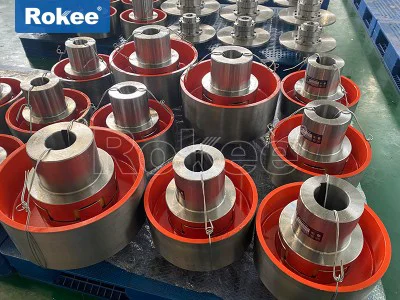
Flexible jaw shaft couplings are available in a variety of types, each designed to meet specific application requirements based on factors such as torque capacity, misalignment needs, installation space, maintenance accessibility and environmental conditions. The most common types include standard jaw couplings, split jaw couplings, spacer jaw couplings, brake wheel jaw couplings and stainless steel jaw couplings. Standard jaw couplings are the basic type, featuring a simple three-piece design (two hubs and one elastomeric insert) and are suitable for general-purpose applications such as pumps, fans, conveyors and small motors. They are compact, cost-effective and easy to install, making them the most widely used type of flexible jaw shaft coupling.
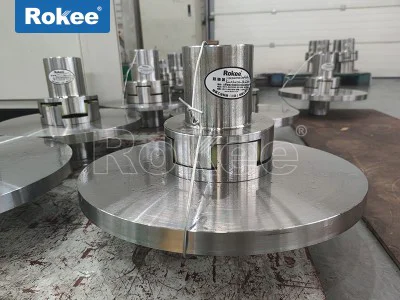
Split jaw couplings are designed with split hubs, allowing them to be installed and removed without moving the connected shafts or equipment. This feature is particularly useful for retrofit installations, emergency repairs or applications where access to the coupling is limited. The split hubs are held together by bolts, ensuring a secure connection while providing the convenience of easy maintenance. Spacer jaw couplings feature an extended spacer between the two hubs, which increases the distance between the connected shafts. This design is ideal for applications where the shafts are separated by a large distance or where maintenance access to the equipment (such as pumps or gearboxes) is required without disassembling the coupling. The spacer can be removed to allow access to the equipment, reducing downtime and maintenance costs.
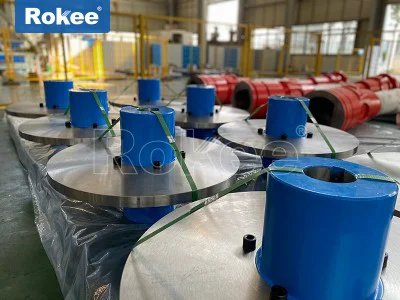
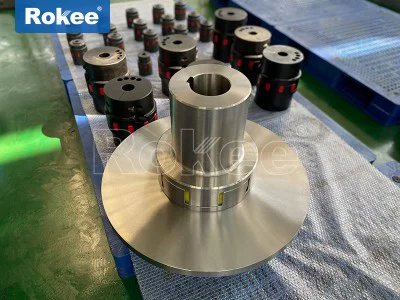
Brake wheel jaw couplings integrate a brake wheel into one of the hubs, allowing for braking functionality in addition to power transmission. This type of coupling is commonly used in applications where the connected equipment needs to be stopped quickly, such as cranes, hoists, conveyors and other lifting equipment. The brake wheel can be paired with a brake caliper or shoe to provide reliable braking force, ensuring safety and control. Brake disc jaw couplings are a variation of this type, featuring a split brake disc instead of a brake wheel, which offers better heat dissipation and is suitable for high-speed applications.
Stainless steel jaw couplings are constructed with stainless steel hubs and, in some cases, stainless steel or corrosion-resistant elastomeric inserts, making them suitable for corrosive environments such as food processing, pharmaceutical, marine and chemical industries. These couplings are resistant to rust, moisture and chemical exposure, ensuring reliable performance in harsh conditions. Another variation is the curved jaw coupling, which features curved jaws instead of straight jaws, providing a larger contact area with the elastomeric insert. This design offers smoother torque transmission, higher load-bearing capacity and better misalignment compensation compared to straight jaw couplings, making them suitable for high-torque and high-speed applications.
The versatility of flexible jaw shaft couplings makes them applicable in a wide range of industries and applications, spanning from light-duty household machinery to heavy-duty industrial equipment. One of the most common applications is in industrial machinery, where they are used to connect motors to pumps, compressors, conveyors, mixers, fans and other rotating equipment. In pump systems, for example, flexible jaw shaft couplings compensate for misalignment between the motor and the pump shaft, reducing vibration and extending the life of the pump and motor bearings. Compressors benefit from the coupling’s shock absorption capabilities, which reduce the impact of pulsating loads and improve overall system stability.
The automotive industry also utilizes flexible jaw shaft couplings in various components, including steering columns, drive shafts and powertrain systems. In steering columns, the coupling accommodates misalignment between the steering wheel and the steering gear, ensuring smooth and responsive steering. In powertrain systems, it transmits torque from the engine to the transmission while absorbing vibrations and compensating for misalignment caused by thermal expansion and dynamic loads. The backlash-free design of some flexible jaw shaft couplings ensures precise torque transmission, improving the drivability and efficiency of vehicles.
Robotics and automation systems rely heavily on flexible jaw shaft couplings for precise power transmission and positioning. In robotic arms and automated machinery, the coupling connects motors to actuators, ensuring accurate torque transfer and synchronization. The compact and lightweight design of these couplings makes them suitable for space-constrained applications, while their high torsional stiffness ensures precise positioning. The vibration damping capabilities also protect delicate electronic and mechanical components in robotic systems, reducing maintenance requirements and improving reliability.
Renewable energy applications, such as wind turbines and solar trackers, also benefit from the use of flexible jaw shaft couplings. In wind turbines, the coupling connects the generator to the gearbox or directly to the rotor, compensating for misalignment caused by wind gusts, thermal expansion and structural movement. The coupling’s ability to withstand harsh environmental conditions, such as extreme temperatures and moisture, makes it ideal for outdoor renewable energy installations. In solar trackers, the coupling transmits torque to the tracking mechanism, allowing the solar panels to follow the sun’s movement while accommodating misalignment caused by wind and thermal changes.
Other applications include marine equipment, where stainless steel jaw couplings are used to connect motors to propellers and other marine components, resisting corrosion from saltwater. In the food and beverage industry, stainless steel couplings with food-grade elastomeric inserts are used to ensure compliance with hygiene standards, connecting mixers, conveyors and other processing equipment. The pharmaceutical industry also uses corrosion-resistant and easy-to-clean couplings to maintain sterile conditions in production processes.
In addition to these industrial applications, flexible jaw shaft couplings are used in household appliances such as washing machines, dryers and refrigerators, where they connect the motor to the drum or compressor, reducing vibration and noise. They are also used in medical equipment, such as centrifuges and diagnostic machines, where precise torque transmission and low vibration are critical for accurate results.
The selection of the appropriate flexible jaw shaft coupling for a specific application requires careful consideration of several factors, including torque capacity, misalignment requirements, operating speed, temperature range, environmental conditions, installation space and maintenance needs. It is essential to choose a coupling that can handle the maximum torque and misalignment expected in the application, while also being compatible with the operating temperature and environmental conditions. The material of the hubs and elastomeric insert should be selected based on the application’s requirements for strength, corrosion resistance and flexibility. For example, heavy-duty applications require high-strength steel hubs and durable polyurethane or metal inserts, while corrosive environments require stainless steel hubs and corrosion-resistant inserts.
In conclusion, flexible jaw shaft couplings are essential components in modern mechanical power transmission systems, offering a unique combination of rigid torque transmission, flexible misalignment compensation, vibration damping and shock absorption. Their simple yet robust structure, diverse types and extensive applications make them a versatile solution for a wide range of industries, from industrial manufacturing and automotive to robotics and renewable energy. By understanding the structure, performance characteristics and types of flexible jaw shaft couplings, engineers and designers can select the most appropriate coupling for their specific application, ensuring efficient, reliable and long-lasting operation of the transmission system. As technology advances, the design and materials of flexible jaw shaft couplings continue to evolve, further expanding their capabilities and applications in an increasingly complex and demanding industrial landscape.