Multi Jaw Couplings
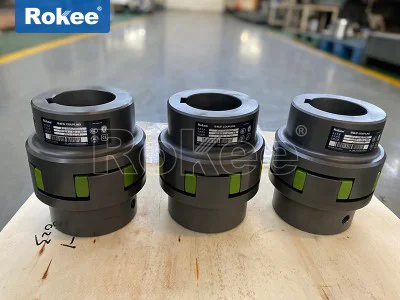
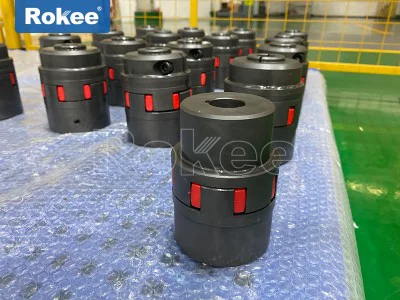
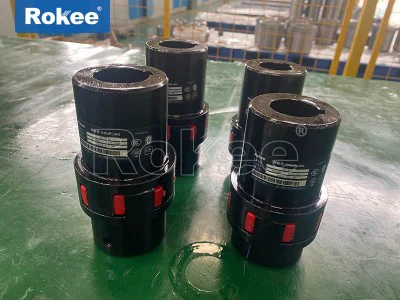
Multi jaw coupling is a flexible coupling widely used in mechanical transmission systems, occupying an important position in the industrial field with its unique structural design and excellent transmission performance. This type of coupling usually consists of two half couplings with multi claw structures and an elastic element, which achieves power transmission through the meshing of claw teeth and elastic body.
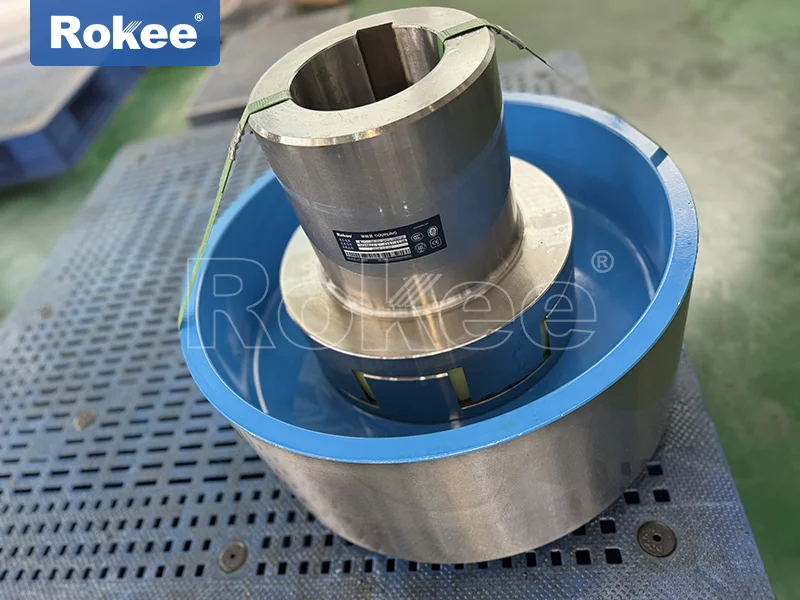
The typical structure of a multi jaw coupling includes:
Two metal half couplings: usually made of high-strength alloy steel, each half coupling end face is machined with multiple claws (usually 6-12)
Elastic element: located between two half couplings, mostly made of elastic materials such as polyurethane, rubber, or nylon
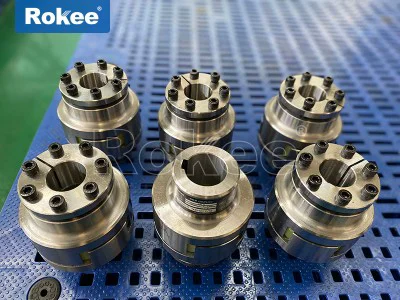
Tightening components: including bolts, nuts, etc., used to fix the coupling on the shaft
Multi jaw couplings achieve power transmission through the mutual meshing of claw teeth and elastic bodies. When the driving shaft rotates, it drives one half of the coupling to rotate, and its claws transmit torque to the other half of the coupling by squeezing the elastic body, thereby driving the driven shaft to rotate. Elastic bodies not only transmit torque during this process, but also play a role in buffering, damping, and compensating for deviations.
The torque transmission process can be divided into three stages:
Initial stage: The claw teeth begin to contact the elastic body, resulting in initial deformation
Load transmission stage: The elastic body deforms under the pressure of the claw teeth, effectively transmitting torque
Extreme stage: When the maximum design torque is reached, the deformation of the elastic body reaches its limit
Multi jaw couplings have multiple unique advantages compared to other types of couplings:
Excellent shock absorption performance: The elastic material effectively absorbs and dampens vibrations, reducing transmission system noise
Good deviation compensation capability: can simultaneously compensate for radial, angular, and axial deviations
Maintenance free design: No lubrication required, reducing maintenance costs
Overload protection function: When the torque exceeds the limit, the elastic body can slip, protecting the safety of the equipment
Easy installation: usually does not require special tools, reducing installation difficulty
Classified by type of elastomer
Polyurethane type: with high elasticity, wear resistance, and oil resistance, suitable for most industrial applications
Rubber type: Excellent shock absorption performance, suitable for high vibration environments
Nylon type: high mechanical strength, suitable for heavy-duty applications
Composite material type: combining the advantages of multiple materials to meet the needs of special working conditions
Classified by structural form
Standard type: Universal design, balancing various performance aspects
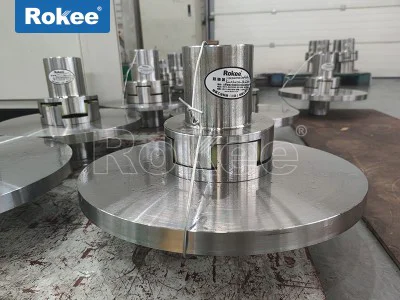
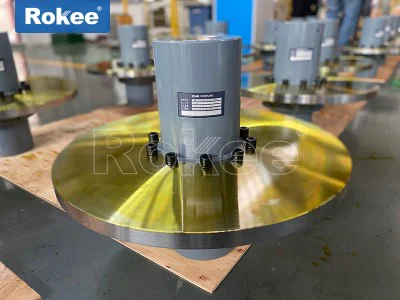
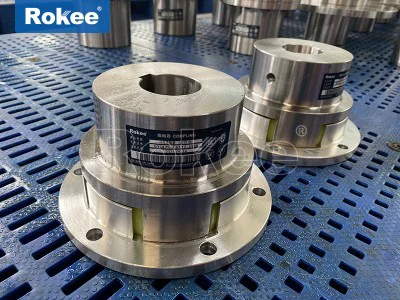
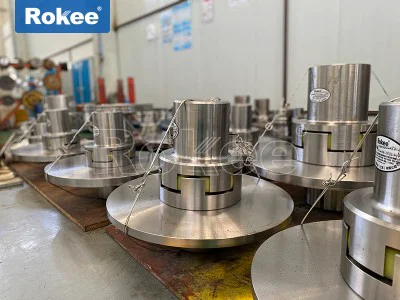
Flange type: with flange connection, easy to install and disassemble
Shaft sleeve type: directly sleeved on the shaft, compact structure
Quick disassembly type: designed with a quick disassembly mechanism for easy maintenance
Special purpose design
Explosion proof type: used in flammable and explosive environments
Corrosion resistant type: suitable for corrosive environments such as chemical engineering
Food grade: Compliant with food safety standards, used for food processing machinery
High precision type: used for precision transmission systems, such as machine tool spindles
The wide application scenarios of multi jaw couplings include:
Industrial machinery
Pump equipment: centrifugal pump, plunger pump, etc
Fan system: industrial fans, ventilation equipment
Compressors: air compressors, refrigeration compressors
Conveyor machinery: belt conveyor, chain conveyorMachine Tool and Automation
CNC machine feed system
Robot Joint Transmission
Automated production line transmission deviceSpecial Equipment
Ship propulsion system
generator set
Engineering machinery transmissionEmerging field
New energy equipment (wind power, solar tracking system)
Electric vehicle transmission system
Precision instruments and meters
Multi jaw couplings will continue to play an important role in the field of mechanical transmission, and their performance and application scope will continue to expand, providing more reliable and efficient transmission solutions for various mechanical systems.
Multi jaw coupling is a kind of flexible coupling widely used in mechanical transmission systems, which plays an irreplaceable role in various industrial fields due to its unique structural design, excellent transmission performance and wide adaptability. Unlike rigid couplings that require absolute alignment of the two connected shafts, multi jaw coupling achieves flexible power transmission through the combination of metal hubs and elastic elements, which not only ensures the stability of torque transmission, but also has the functions of buffering, damping and compensating shaft misalignment, thus effectively protecting the connected equipment and extending the service life of the entire transmission system.
The basic structure of multi jaw coupling is relatively simple but scientifically designed, which is mainly composed of three core parts: two metal half couplings (also known as hubs), an elastic element (commonly referred to as a spider), and necessary tightening components. The two metal half couplings are the main load-bearing parts of the coupling, which are usually processed by high-strength metal materials to ensure that they can bear the required torque and working load. The common materials used for the half couplings include high-strength alloy steel, carbon steel, and aluminum alloy. Among them, alloy steel and carbon steel are widely used in heavy-duty transmission scenarios because of their high strength, good toughness and wear resistance, while aluminum alloy is more suitable for light-duty, high-speed transmission occasions due to its light weight and good balance performance. Each end face of the half coupling is processed with a number of evenly distributed claw-shaped structures, and the number of claws is usually 6 to 12, which can be adjusted according to the torque requirements and structural size of the application scenario. The shape of the claws is usually divided into straight teeth and curved teeth, and different claw shapes will have an important impact on the transmission performance and misalignment compensation ability of the coupling.
The elastic element is the key component that distinguishes multi jaw coupling from rigid coupling and determines its flexible transmission performance. It is installed between the two half couplings, and its claws are alternately meshed with the claws of the two half couplings to realize power transmission. The elastic element is usually made of elastic materials with good toughness and wear resistance, such as polyurethane, rubber, nylon, and some special engineering plastics. Different elastic materials have different performance characteristics, which can be selected according to the specific working environment and performance requirements. For example, polyurethane has the advantages of high wear resistance, good elasticity, and strong torque transmission capacity, and is suitable for most general industrial occasions; rubber has excellent damping and buffering performance, which is suitable for occasions with large vibration and impact; nylon has good corrosion resistance and low cost, which is suitable for light-duty and corrosive environments. The elastic element not only undertakes the task of transmitting torque, but also absorbs the vibration generated during the operation of the equipment, buffers the impact load, and compensates for the relative displacement between the two shafts, thus reducing the stress on the bearing, motor and other components and avoiding damage to the equipment.
The tightening components mainly include bolts, nuts, washers and other parts, which are used to fix the half coupling on the driving shaft and driven shaft to ensure that there is no relative slip between the coupling and the shaft during operation, so as to realize efficient torque transmission. The selection of tightening components needs to match the size of the coupling and the working load. Generally, high-strength bolts are used to ensure sufficient tightening force, prevent the coupling from loosening due to vibration during operation, and ensure the safety and stability of the transmission system. In addition, some multi jaw couplings will also be equipped with positioning pins or keyways to further improve the positioning accuracy between the half coupling and the shaft, ensuring that the two shafts are coaxial as much as possible and reducing the impact of misalignment on the transmission performance.
The working principle of multi jaw coupling is based on the mutual cooperation between the metal half coupling and the elastic element. When the driving shaft rotates, it drives the connected half coupling to rotate, and the claws of the half coupling squeeze the elastic element, so that the elastic element generates a certain amount of deformation. Through the elastic force generated by the deformation of the elastic element, the torque is transmitted to the other half coupling, and then the other half coupling drives the driven shaft to rotate, thus completing the power transmission process. The torque transmission process of multi jaw coupling can be roughly divided into three stages: in the initial stage, the claws of the driving half coupling start to contact the elastic element, and the elastic element generates initial deformation, which is the preparation stage of torque transmission; in the load transmission stage, with the increase of the rotation speed of the driving shaft, the torque transmitted increases, the deformation of the elastic element also increases accordingly, and the elastic element stably transmits the torque to the driven half coupling, which is the main stage of torque transmission; in the extreme stage, when the transmitted torque reaches the maximum design torque of the coupling, the deformation of the elastic element reaches the limit, and if the torque continues to increase, the elastic element will be damaged, so as to play a role of overload protection for the connected equipment. This working principle not only ensures the efficient transmission of torque, but also realizes the functions of buffering, damping and overload protection, making the multi jaw coupling have obvious advantages in practical applications.
The performance characteristics of multi jaw coupling are closely related to its structural design and material selection, and its comprehensive performance is outstanding, which is mainly reflected in the aspects of torque transmission capacity, misalignment compensation capacity, damping and buffering performance, wear resistance, and ease of installation and maintenance. In terms of torque transmission capacity, multi jaw coupling has a wide range of torque adaptation, which can transmit small torque of several N·m to large torque of tens of thousands of N·m, and can be customized according to the specific needs of different application scenarios. The torque transmission capacity of the coupling is mainly determined by the material and size of the half coupling, the material and hardness of the elastic element, and the number of claws. Generally speaking, the higher the strength of the half coupling material, the harder the elastic element, and the more the number of claws, the stronger the torque transmission capacity of the coupling.
Misalignment compensation is one of the important performance advantages of multi jaw coupling. In the actual operation process of mechanical equipment, due to the installation error, the deformation of the equipment during operation, the wear of the bearing and other reasons, the two connected shafts will inevitably have relative misalignment, which mainly includes angular misalignment, parallel misalignment and axial misalignment. If the misalignment is not compensated, it will generate additional stress on the shaft, bearing and other components, leading to premature wear and damage of the equipment. The elastic element of multi jaw coupling has good flexibility, which can effectively compensate for the above three types of misalignment. The angular misalignment compensation range is usually 0.5° to 2°, the parallel misalignment compensation range is 0.1mm to 0.5mm, and the axial misalignment compensation range is a few millimeters. The specific compensation range is related to the structure of the coupling, the material of the elastic element and the size of the coupling. This misalignment compensation capacity makes the multi jaw coupling have strong adaptability, and can be used in various occasions where the shaft alignment is difficult to ensure.
Damping and buffering performance is another important performance characteristic of multi jaw coupling. In the operation process of mechanical equipment, especially in the start-up, shutdown and load change stages, it will generate large vibration and impact load, which will not only affect the stability of the equipment operation, but also reduce the service life of the equipment. The elastic element of multi jaw coupling can absorb the vibration energy generated by the equipment operation through its own deformation, and buffer the impact load, so as to reduce the vibration amplitude of the transmission system and the noise generated by the operation. This not only improves the stability and comfort of the equipment operation, but also reduces the impact on the connected components such as motors, bearings and gearboxes, effectively protecting the equipment and extending its service life. In addition, the elastic element can also reduce the torsional vibration of the transmission system, avoid resonance, and ensure the smooth operation of the equipment.
Wear resistance and service life are important indicators to measure the performance of multi jaw coupling. The half coupling made of high-strength metal materials has good wear resistance and can resist the wear caused by long-term operation. The elastic element is made of wear-resistant materials, and its service life is related to the working environment, load size and operating speed. Under normal working conditions, the service life of the elastic element can reach several thousand to tens of thousands of working hours, and it is easy to replace, which can reduce the maintenance cost and downtime of the equipment. In addition, multi jaw coupling adopts a dry running design, which does not need lubrication during operation, avoiding the trouble of lubricating oil replacement and leakage, and reducing the maintenance workload and environmental pollution.
Ease of installation and maintenance is also a prominent advantage of multi jaw coupling. Its structure is simple, the number of parts is small, and the installation process is relatively simple, which does not require complex tools and professional skills. During installation, only need to fix the two half couplings on the driving shaft and driven shaft respectively, then install the elastic element between the two half couplings, and finally tighten the bolts to complete the installation. In the maintenance process, if the elastic element is worn or damaged, it can be replaced quickly without disassembling the entire transmission system, which greatly reduces the maintenance time and labor intensity. This characteristics makes the multi jaw coupling widely used in occasions where the maintenance conditions are limited or the downtime needs to be minimized.
According to the structural design, material selection and application scenarios, multi jaw coupling can be divided into several different types, each type has its own unique characteristics and applicable occasions. According to the shape of the claws, it can be divided into straight jaw coupling and curved jaw coupling. Straight jaw coupling has simple structure, easy processing and low cost, and its claws are straight, which can realize radial installation and disassembly of the elastic element, making the replacement of the elastic element more convenient. Straight jaw coupling is suitable for general industrial occasions with small vibration, small misalignment and medium and light load, such as fans, pumps, conveyors and other equipment. Curved jaw coupling has curved claws, which can make the contact between the claw and the elastic element more uniform, reduce the stress concentration, and improve the torque transmission capacity and misalignment compensation capacity. In addition, curved jaw coupling can achieve zero backlash transmission when matched with a rigid elastic element, which is suitable for precision transmission occasions with high requirements for positioning accuracy, such as servo systems, machine tools, automation equipment and other fields.
According to the material of the half coupling, multi jaw coupling can be divided into steel jaw coupling, aluminum alloy jaw coupling and stainless steel jaw coupling. Steel jaw coupling is made of alloy steel or carbon steel, which has high strength, good toughness and strong torque transmission capacity, and is suitable for heavy-duty transmission occasions, such as metallurgical equipment, mining machinery, heavy machinery and other fields. Aluminum alloy jaw coupling is made of high-quality aluminum alloy, which has light weight, good balance performance and low inertia, and is suitable for high-speed transmission occasions, such as precision machine tools, aerospace equipment, electrical equipment and other fields. Stainless steel jaw coupling is made of stainless steel, which has excellent corrosion resistance, high temperature resistance and wear resistance, and is suitable for harsh working environments, such as food processing, pharmaceutical, marine, chemical and other fields where corrosion resistance is required.
According to the installation method, multi jaw coupling can be divided into set screw type jaw coupling, clamping type jaw coupling and split hub type jaw coupling. Set screw type jaw coupling fixes the half coupling on the shaft through set screws, which has simple structure, low cost and easy installation, but the positioning accuracy is relatively low, and it is suitable for light-duty and low-speed transmission occasions. Clamping type jaw coupling fixes the half coupling on the shaft through clamping force, which has high positioning accuracy, good centering performance and strong anti-loosening ability, and is suitable for high-speed, high-precision transmission occasions, such as servo motors, precision machine tools and other equipment. Split hub type jaw coupling is composed of two split hubs, which can be installed and disassembled without removing the shaft and connected equipment, which is very convenient for maintenance and replacement, and is suitable for occasions where the shaft is difficult to disassemble, such as retrofit installations, emergency repairs and other scenarios.
In addition, according to the presence or absence of a spacer, multi jaw coupling can be divided into ordinary jaw coupling and spacer type jaw coupling. Ordinary jaw coupling has a compact structure, small volume and light weight, and is suitable for occasions where the distance between the two shafts is small. Spacer type jaw coupling is equipped with a spacer between the two half couplings, which can adjust the distance between the two shafts, and is suitable for occasions where the distance between the two shafts is large or maintenance space is required, such as pump drives, gearboxes and other equipment that need regular maintenance.
Due to its excellent comprehensive performance and various types, multi jaw coupling is widely used in various industrial fields, covering machinery, electronics, metallurgy, mining, chemical industry, food, pharmaceutical, aerospace and other fields. In the field of general machinery, multi jaw coupling is the most commonly used coupling type, which is widely used in fans, pumps, compressors, conveyors, mixers and other equipment. For example, in the water supply and drainage system, multi jaw coupling connects the motor and the water pump, which not only ensures the efficient transmission of torque, but also compensates for the misalignment between the motor shaft and the water pump shaft, absorbs the vibration generated by the operation of the water pump, and protects the motor and the water pump from damage. In the field of precision machinery, curved jaw coupling with zero backlash is widely used in servo systems, precision machine tools, automation equipment and other fields. For example, in the CNC machine tool, multi jaw coupling connects the servo motor and the lead screw, which can realize high-precision torque transmission, ensure the positioning accuracy of the machine tool, and improve the processing quality of the workpiece.
In the field of heavy industry, such as metallurgy, mining and heavy machinery, steel jaw coupling with strong torque transmission capacity is widely used. For example, in the metallurgical equipment, multi jaw coupling connects the motor and the rolling mill, which can transmit large torque, bear the impact load generated during the rolling process, and compensate for the misalignment caused by the deformation of the equipment, ensuring the stable operation of the rolling mill. In the field of chemical industry, stainless steel jaw coupling with corrosion resistance is used to connect various chemical pumps, reactors and other equipment, which can adapt to the corrosive environment in the chemical production process, avoid the coupling from being corroded and damaged, and ensure the safety and stability of the production process. In the field of food and pharmaceutical industry, stainless steel jaw coupling with FDA-compliant elastic elements is used to connect mixing equipment, conveying equipment and other equipment, which can ensure the hygiene and safety of the production process, avoid pollution of food and drugs, and meet the relevant industry standards.
In the field of aerospace and aviation, aluminum alloy jaw coupling with light weight and high balance performance is used in various aircraft components and aerospace equipment, which can reduce the weight of the equipment, improve the balance performance and reliability of the equipment, and adapt to the harsh working environment in the air. In the field of electrical equipment, multi jaw coupling is used to connect motors and generators, which can ensure the stable transmission of torque, absorb the vibration generated by the operation of the equipment, and improve the efficiency and service life of the electrical equipment. In addition, multi jaw coupling is also used in household appliances, such as air conditioners, washing machines and other equipment, which can reduce the vibration and noise of the equipment, improve the user experience.
When selecting multi jaw coupling in practical applications, it is necessary to comprehensively consider various factors to ensure that the selected coupling can meet the actual working requirements. First of all, it is necessary to determine the torque transmission requirements, including the rated torque, maximum torque and working speed, so as to select the coupling with appropriate size and material. Secondly, it is necessary to consider the misalignment between the two shafts, including the type and range of misalignment, so as to select the coupling with appropriate misalignment compensation capacity. In addition, it is also necessary to consider the working environment, such as temperature, humidity, corrosion, vibration and other factors, so as to select the coupling with appropriate material and structure. For example, in high temperature environment, it is necessary to select elastic elements with high temperature resistance; in corrosive environment, it is necessary to select stainless steel half couplings and corrosion-resistant elastic elements. Finally, it is also necessary to consider the installation space, maintenance conditions and other factors, so as to select the coupling with appropriate structure and installation method.
In the process of using multi jaw coupling, it is also necessary to pay attention to daily inspection and maintenance to ensure the normal operation of the coupling. Regularly check the wear of the elastic element, if the elastic element is found to be cracked, worn or deformed, it should be replaced in time to avoid affecting the transmission performance and causing damage to the equipment. Check the tightening condition of the bolts regularly, and re-tighten them if they are loose to prevent the coupling from loosening during operation. In addition, it is also necessary to check the alignment of the two shafts regularly, and adjust them in time if there is excessive misalignment to reduce the stress on the coupling and the connected equipment. For the coupling used in harsh environments, it is necessary to strengthen the inspection frequency and take corresponding protective measures to extend the service life of the coupling.
In conclusion, multi jaw coupling is a kind of flexible coupling with simple structure, excellent performance, various types and wide applications. Its unique structural design enables it to have the functions of torque transmission, misalignment compensation, damping and buffering, overload protection, etc., which can effectively protect the connected equipment and improve the stability and reliability of the transmission system. With the continuous development of industrial technology, the performance requirements of mechanical transmission systems are getting higher and higher, and multi jaw coupling is also constantly improving and innovating. In the future, with the development of new materials, new processes and new technologies, multi jaw coupling will have better performance, more types and wider applications, and will play a more important role in the development of the industrial field. Whether in general industrial occasions or high-precision, heavy-duty, harsh environment occasions, multi jaw coupling can provide reliable and efficient power transmission solutions, becoming an indispensable part of mechanical transmission systems.