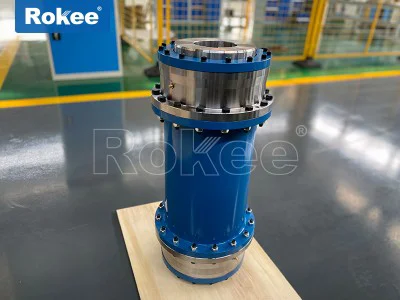
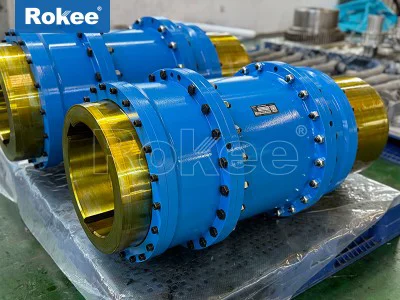
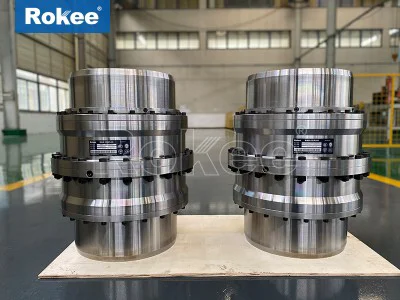
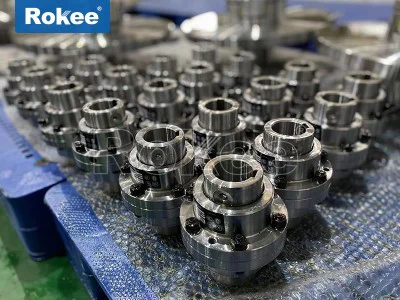
NL Nylon Sleeve Gear Couplings
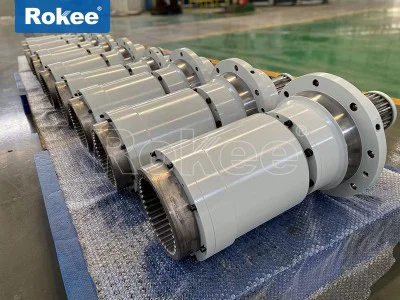
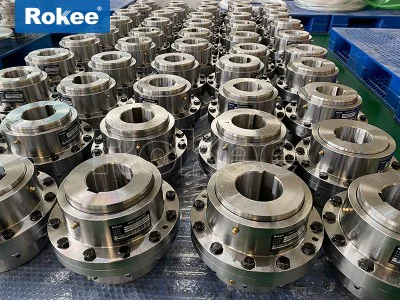
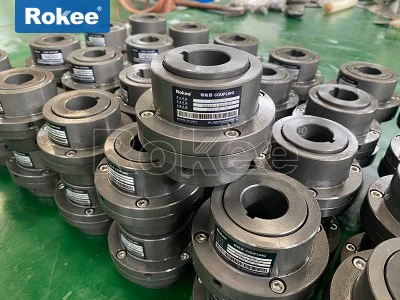
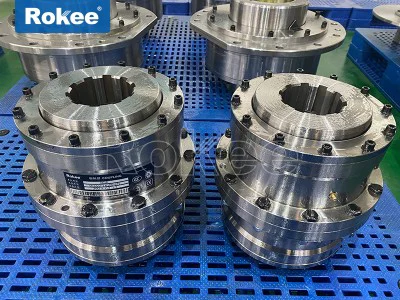
NL nylon sleeve gear coupling is a special mechanical transmission component, belonging to a type of elastic coupling. It is made of nylon material to transmit torque through tooth meshing, and has the ability to buffer and absorb vibration, as well as compensate for axial, radial, and angular deviations. This type of coupling combines the high load-bearing capacity of metal gear couplings with the vibration reduction characteristics of elastic couplings, playing an important role in modern mechanical transmission systems.
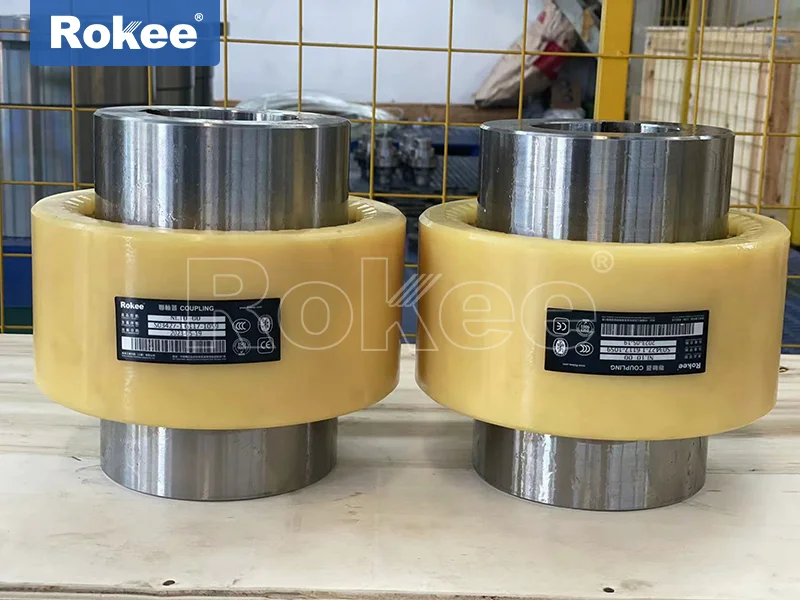
Structural characteristics of NL nylon sleeve gear coupling
Core components:
Metal toothed shaft sleeve (usually made of high-quality alloy steel)
Nylon toothed elastic sleeve
Connecting bolts and fasteners
Protective cover (equipped on some models)Tooth shaped design features:
Adopting involute tooth profile or special curve tooth profile design
The number of teeth is generally between 30-60 teeth
The tooth surface is precision machined to ensure meshing accuracyMaterial characteristics:
The nylon sleeve is made of high wear-resistant nylon 6 or nylon 66 material
The metal components are made of high-quality steel such as 45 # steel and 40Cr
Some high-end models use MC nylon or reinforced nylon materials
Working principle and performance advantages of NL nylon sleeve tooth coupling
Torque transmission mechanism:
Transmitting torque through the meshing of nylon teeth and metal teeth
The elastic deformation of nylon material absorbs impact and vibration
The tooth flank clearance allows for a certain degree of deviation compensationMain performance advantages:
Vibration and noise reduction: The damping characteristics of nylon material effectively reduce the vibration and noise of the transmission system
Deviation compensation: can compensate for axial deviation of ± 1-5mm, radial deviation of 0.2-1.5mm, and angular deviation of 1 ° -3 °
Lubrication free maintenance: Nylon's self-lubricating properties reduce maintenance requirements
Electrical insulation: Nylon material provides excellent electrical insulation performance
Overload protection: In the event of overload, the nylon sleeve can be damaged before other components, protecting critical equipment
Selection considerations for NL nylon sleeve toothed coupling:
The required torque to be transmitted
Deviation of alignment between two axes
Working environment temperature and medium
Speed range and vibration requirements
Installation space restrictions
Key points for installation and maintenance
Installation steps:
Check the compatibility between the coupling model and the equipment
Clean the shaft end and coupling inner hole
Use hot fitting method (heat the nylon sleeve to 80-100 ℃) or special tools for press fitting
Gradually and evenly tighten the connecting bolts
Check the alignment status (laser alignment is recommended)Daily maintenance:
Regularly check the wear of nylon sleeves
Observe for any abnormal vibrations or noise
Check the tightening status of bolts
Avoid contact with corrosive media such as strong acids and alkalisCommon troubleshooting:
Nylon sleeve wear: replace with a new nylon sleeve
Abnormal vibration: Re center or inspect the equipment foundation
Decreased transmission torque: Check if the nylon sleeve is aging or damaged
NL nylon sleeve gear couplings are widely used in various industrial fields:
General machinery: pumps, fans, compressors, etc
Construction machinery: cranes, excavators, concrete machinery, etc
Metallurgical equipment: rolling mill, continuous casting machine, straightening machine, etc
Mining machinery: crushers, ball mills, conveying equipment, etc
Power generation equipment: steam turbine, generator, water turbine, etc
Shipbuilding industry: propulsion systems, deck machinery, etc
NL gear couplings occupy an important position in the field of mechanical transmission due to their excellent comprehensive performance. With the advancement of materials science and manufacturing technology, its performance will be further improved and its application scope will continue to expand.
In the intricate landscape of mechanical power transmission, the NL nylon sleeve gear coupling stands out as a versatile, reliable, and cost-effective component that bridges the gap between rigid gear couplings and purely elastic flexible couplings. Designed to connect two rotating shafts while facilitating seamless torque transfer, this type of coupling integrates the robust load-bearing capabilities of metallic gear structures with the shock-absorbing, vibration-dampening properties of high-performance engineering nylon, making it a staple in countless industrial drive systems across diverse sectors. Unlike rigid couplings that demand perfect shaft alignment and offer no tolerance for misalignment or mechanical stress, the NL nylon sleeve gear coupling is engineered to accommodate operational imperfections, reduce wear on connected machinery, and extend the service life of entire transmission assemblies, all while maintaining efficient power delivery under varying working conditions. Its widespread adoption stems from a unique blend of structural simplicity, material innovation, and functional adaptability, addressing key pain points in mechanical transmission such as shaft misalignment, vibration transmission, frequent maintenance needs, and premature component failure.
At its core, the NL nylon sleeve gear coupling features a streamlined, symmetrical structure composed of two precision-machined metallic hubs and a central nylon sleeve, complemented by standard fasteners that secure the assembly without compromising flexibility. The metallic hubs, typically forged from high-grade carbon steel or alloy steel, are fitted with external gear teeth that undergo precision machining and heat treatment to enhance hardness, wear resistance, and load-bearing capacity; these teeth are crafted with a refined profile, often a crowned or involute design, to ensure smooth meshing with the internal gear teeth of the nylon sleeve and optimize contact distribution during rotation. The central nylon sleeve, the heart of the coupling’s flexible performance, is injection-molded from premium engineering nylon—such as reinforced nylon 6, nylon 66, or modified MC nylon—selected for its exceptional tensile strength, elasticity, self-lubricating nature, and resistance to abrasion, mild chemicals, and thermal fluctuations. This nylon sleeve is precision engineered with internal gear teeth that match the profile and pitch of the hub’s external teeth, creating a tight yet flexible meshing interface that enables torque transmission while allowing controlled relative movement between the two hubs. Unlike complex coupling designs with multiple moving parts or hydraulic components, the NL nylon sleeve gear coupling has a minimal number of components, eliminating points of failure and simplifying both manufacturing and on-site assembly, a trait that enhances its practicality for both original equipment manufacturing and aftermarket replacement.
The operating principle of the NL nylon sleeve gear coupling is rooted in the harmonious interaction between its metallic and polymeric components, balancing rigidity for torque transfer and flexibility for misalignment compensation. During operation, the driving hub, attached to the prime mover shaft, rotates and transfers torque through its external gear teeth to the internal gear teeth of the nylon sleeve. The nylon sleeve, in turn, transmits this rotational force to the driven hub connected to the load shaft, maintaining continuous power flow even when the two shafts are not perfectly aligned. The inherent elasticity of the nylon material allows the sleeve to deform slightly under load, absorbing sudden shocks, dampening high-frequency vibrations generated by rotating machinery, and mitigating the transfer of mechanical stress between the driving and driven components. Crucially, this elastic deformation enables the coupling to compensate for three primary types of shaft misalignment: axial displacement, radial displacement, and angular misalignment—common issues in real-world industrial settings caused by thermal expansion, foundation settling, manufacturing tolerances, or operational wear. Unlike rigid gear couplings that require precise alignment and can fail abruptly under even minor misalignment, the NL nylon sleeve gear coupling accommodates these deviations without sacrificing transmission efficiency, reducing the risk of catastrophic failure and minimizing the strain on bearings, shafts, and other critical drive components.
One of the most compelling advantages of the NL nylon sleeve gear coupling is its maintenance-free, lubrication-free operation, a feature that sets it apart from traditional metallic gear couplings and many other flexible coupling variants. Conventional gear couplings rely on regular lubrication with grease or oil to reduce friction between meshing teeth, prevent wear, and maintain performance; this not only adds ongoing maintenance costs and labor but also creates the risk of lubricant leakage, contamination of surrounding equipment, and environmental hazards. In contrast, the engineering nylon used in the NL sleeve possesses inherent self-lubricating properties, with a low coefficient of friction that eliminates the need for external lubrication throughout the coupling’s service life. This self-lubrication ensures smooth meshing of gear teeth, reduces frictional heat buildup, and slows the rate of wear on both the nylon sleeve and metallic hubs, even in continuous operation. Additionally, the nylon material resists the accumulation of dust, debris, and mild contaminants, further reducing the need for cleaning or upkeep. For industrial facilities operating around the clock, such as manufacturing plants, power generation stations, and mining operations, this maintenance-free design translates to significant cost savings, reduced downtime, and improved overall operational efficiency, as personnel can focus on core production tasks rather than routine coupling maintenance.
Beyond low-maintenance operation, the NL nylon sleeve gear coupling delivers exceptional vibration and noise reduction capabilities, addressing a critical concern in heavy industrial environments where excessive vibration and noise can compromise worker safety, reduce equipment precision, and accelerate mechanical fatigue. Rotating machinery such as motors, pumps, fans, and compressors naturally generates vibration during operation, which, if unmitigated, can propagate through the transmission system, leading to loosened fasteners, damaged bearings, and premature shaft failure. The viscoelastic nature of the nylon sleeve acts as a natural damping medium, absorbing vibrational energy and dissipating it as low-level heat rather than transferring it to connected components. This damping effect not only stabilizes the entire drive system but also significantly reduces operational noise, creating a quieter, safer working environment for personnel. In precision-driven applications such as textile machinery, food processing equipment, and automated assembly lines, where consistent performance and minimal vibration are paramount, the NL nylon sleeve gear coupling’s ability to smooth out rotational irregularities and reduce noise makes it an indispensable component, ensuring product quality and operational stability.
The material resilience and structural design of the NL nylon sleeve gear coupling also contribute to its impressive durability and adaptability to diverse operating environments, further solidifying its position as a top choice for engineers and maintenance professionals. The metallic hubs, engineered for high strength and toughness, withstand heavy torque loads and resist bending or deformation under dynamic operating conditions, while the reinforced nylon sleeve offers excellent resistance to thermal cycling, operating reliably across a broad temperature range typical of industrial settings. It performs consistently in both cool, dry environments and moderately humid, dusty spaces, maintaining its elastic properties and load-bearing capacity without rapid degradation. Unlike some elastomeric couplings that deteriorate when exposed to oils, greases, or mild industrial chemicals, the high-grade nylon used in these couplings exhibits good chemical resistance, preserving its structural integrity in environments with incidental contact with common industrial fluids. Furthermore, the coupling’s compact, lightweight design reduces rotational inertia compared to heavier, bulkier coupling types, minimizing energy loss during acceleration and deceleration and improving the overall energy efficiency of the transmission system. This combination of durability, environmental adaptability, and energy efficiency ensures that the NL nylon sleeve gear coupling delivers long-term value, with a service life that far exceeds many lower-quality flexible coupling alternatives.
Another notable benefit of the NL nylon sleeve gear coupling is its ease of installation, removal, and replacement, which streamlines both initial equipment setup and emergency maintenance procedures. The two-piece hub design and simple nylon sleeve interface allow for quick mounting onto shaft ends using standard keyways and fasteners, without the need for specialized tools or highly skilled technicians. Unlike complex couplings that require precise alignment jigs or complex assembly sequences, the NL coupling’s flexible nature forgives minor installation errors, reducing the time and effort required for setup. In the event of wear or damage—typically isolated to the nylon sleeve, the sacrificial component of the assembly—replacement is straightforward and cost-effective: only the nylon sleeve needs to be swapped out, while the metallic hubs can often be reused if they remain in good condition. This modularity not only reduces replacement costs but also minimizes downtime, a critical factor in industries where even short interruptions to production can result in significant financial losses. Additionally, the coupling’s standardized design ensures compatibility with a wide range of shaft sizes and drive configurations, making it suitable for retrofitting existing machinery as well as integrating into new equipment designs, offering unparalleled flexibility for engineers seeking reliable transmission solutions.
The versatility of the NL nylon sleeve gear coupling is reflected in its extensive application across nearly every major industrial sector, where it serves as a critical link in power transmission systems for a vast array of machinery. In general industrial manufacturing, it is commonly used to connect electric motors to pumps, fans, blowers, and compressors, providing reliable power transfer while protecting these vital pieces of equipment from misalignment and vibration damage. In the mining and quarrying industry, where machinery operates under heavy loads, harsh conditions, and constant vibration, the coupling’s robust construction and shock-absorbing properties ensure uninterrupted operation of crushers, conveyors, and grinding mills. In the metallurgical and steelmaking sectors, it withstands high temperatures, heavy torque demands, and the rigors of continuous production, supporting rolling mills, casting machines, and material handling equipment. It also plays a key role in construction machinery, power generation equipment, textile manufacturing lines, food and beverage processing machinery, and marine auxiliary systems, adapting seamlessly to the unique demands of each application. Whether used in low-speed, high-torque heavy machinery or high-speed, precision-driven equipment, the NL nylon sleeve gear coupling consistently delivers stable, efficient performance, proving its versatility across a spectrum of operational requirements.
When selecting the appropriate NL nylon sleeve gear coupling for a specific application, several key factors must be carefully evaluated to ensure optimal performance and longevity, avoiding mismatches that could lead to premature failure or reduced efficiency. First and foremost is the torque requirement of the transmission system: the coupling must be rated to handle both the continuous operating torque and any peak or transient torque loads generated during startup, shutdown, or sudden load changes, ensuring it can withstand stress without deformation or breakage. Shaft speed is another critical consideration, as the coupling’s design must accommodate the rotational speed of the connected machinery to prevent imbalance, excessive heat buildup, or mechanical failure. The magnitude and type of shaft misalignment expected in the application—axial, radial, or angular—must also align with the coupling’s compensation capabilities, as exceeding these limits will negate its flexible benefits and accelerate wear. Additionally, environmental factors such as ambient temperature, humidity, dust levels, and exposure to chemicals should be taken into account to select a coupling with the right material specifications for long-term durability. Installation space constraints are also important, as the compact dimensions of the NL coupling make it ideal for applications with limited clearance, a common challenge in densely packed industrial machinery setups.
Proper installation and routine inspection practices further enhance the performance and service life of the NL nylon sleeve gear coupling, even with its maintenance-free design. During installation, ensuring a secure, tight fit between the hubs and shaft ends, with correct keyway engagement, is essential to prevent slippage and ensure efficient torque transfer; over-tightening fasteners should be avoided to prevent damage to the nylon sleeve or distortion of the metallic hubs. While regular lubrication is unnecessary, periodic visual inspections are recommended to check for signs of wear, such as cracking, deformation, or excessive tooth wear on the nylon sleeve, as well as loosening of fasteners or signs of abnormal stress on the metallic hubs. Monitoring for unusual vibration, noise, or heat during operation can also help identify potential issues early, before they escalate into costly failures. In applications with heavy or cyclic loads, more frequent inspections may be warranted to catch wear early, while in standard, light-to-medium duty applications, occasional checks are sufficient. By following these simple practices, users can maximize the operational life of the coupling, ensuring it continues to deliver reliable performance and protect connected machinery for years to come.
In the evolving landscape of mechanical engineering, the NL nylon sleeve gear coupling remains a timeless, high-value solution, balancing performance, affordability, and practicality in a way that few other transmission components can match. As industries continue to prioritize efficiency, reliability, and reduced operational costs, the demand for this versatile coupling remains strong, driven by its unique ability to solve common transmission challenges without compromising on performance. Its integration of metallic strength and polymeric flexibility, combined with maintenance-free operation and broad environmental adaptability, positions it as a cornerstone component in modern power transmission systems. Unlike specialized couplings that cater to niche applications or high-cost premium couplings that offer marginal performance gains for exorbitant prices, the NL nylon sleeve gear coupling delivers exceptional value across the board, making it accessible to small-scale operations and large industrial enterprises alike. As material science advances and manufacturing techniques improve, the performance of these couplings continues to be refined, with enhanced nylon formulations and precision machining further boosting their load capacity, durability, and misalignment compensation, ensuring they remain relevant and effective in meeting the evolving needs of global industry.
In summary, the NL nylon sleeve gear coupling is far more than a simple shaft connection component; it is a critical engineering solution that optimizes mechanical transmission performance, protects valuable machinery, and reduces long-term operational costs. Its robust structural design, innovative material selection, and multifunctional capabilities address the core challenges of industrial power transmission, from misalignment and vibration to maintenance burdens and equipment wear. Across every industry where reliable, efficient shaft coupling is required, the NL nylon sleeve gear coupling proves its worth, delivering consistent performance, exceptional durability, and unparalleled practicality. As a testament to thoughtful engineering and material innovation, it continues to be a preferred choice for engineers, designers, and maintenance teams worldwide, embodying the perfect balance of strength, flexibility, and affordability in mechanical power transmission.