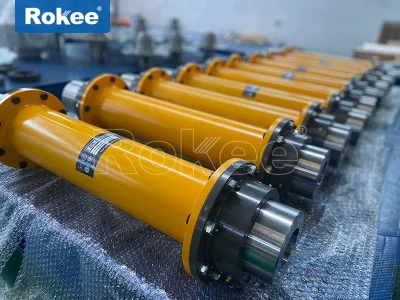
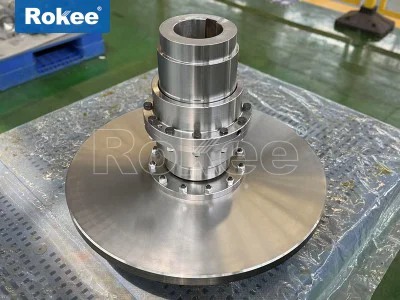
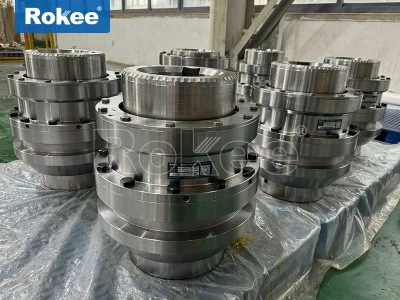
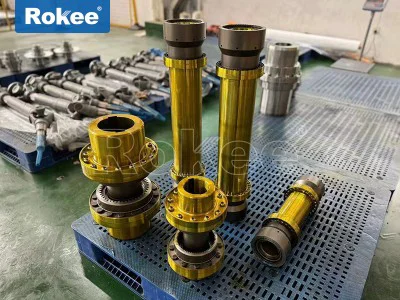
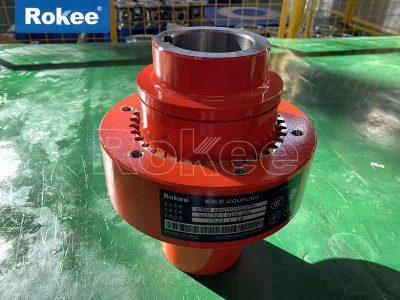
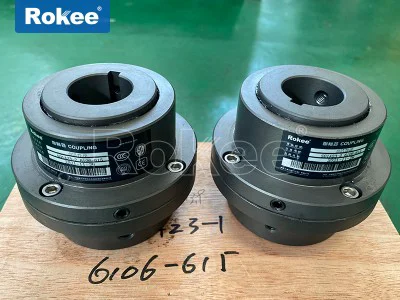
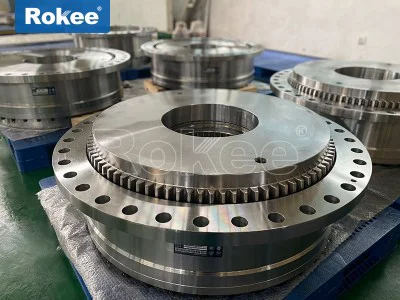
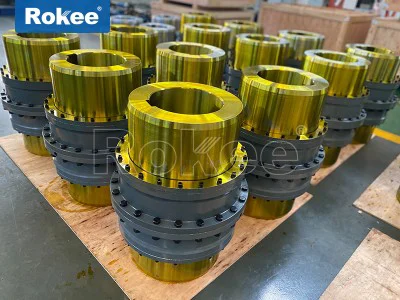
Flexible Drive Gear Couplings
In the context of rapid development of intelligent manufacturing today, flexible drive gear coupling as key components of mechanical transmission systems, are playing an increasingly important role. This type of coupling achieves flexible connection during the transmission process through its unique design and material application, effectively solving the limitations of traditional rigid couplings in vibration absorption, deviation compensation, and noise control.
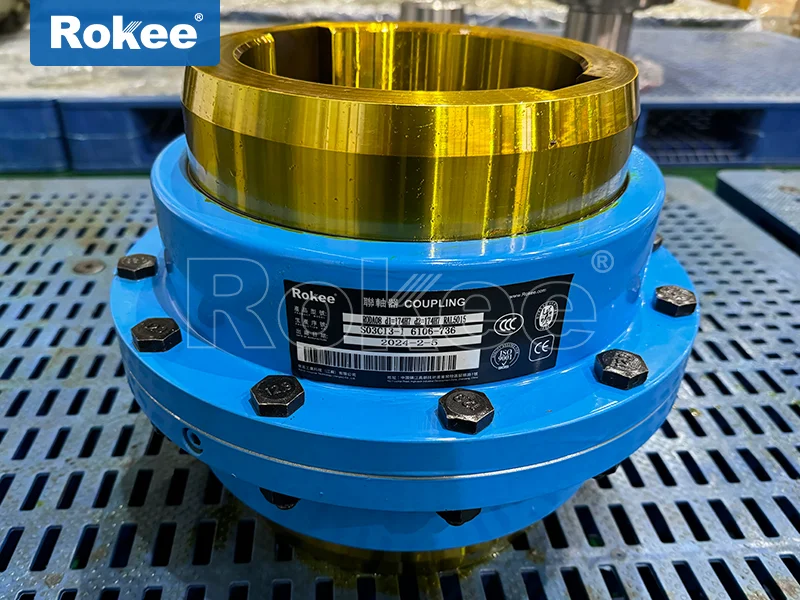
Flexible drive gear couplings represent an important development direction of modern transmission technology, cleverly integrating the precision of gear transmission with the adaptability of flexible connections. In the intricate symphony of automated production lines, the power transmission system is like a key melody in a symphony, and the coupling is the core element that ensures the accuracy of each note. Once the coupling performance is poor, problems such as increased system vibration, decreased positioning accuracy, and shortened equipment service life will arise one after another, seriously affecting production efficiency and product quality.
Compared with traditional couplings, the biggest advantage of flexible gear couplings is their excellent deviation compensation capability. It can effectively absorb and compensate for installation deviations in axial, radial, and angular directions, protecting the transmission system from additional stress caused by misalignment. For example, in high-speed servo systems, the small backlash of the coupling can lead to accumulated position errors, while high-quality flexible gear couplings adopt a pre tensioned design. By optimizing the contact stress distribution, true zero backlash transmission can be achieved, and the angular compensation accuracy can reach ± 0.05 °, ensuring synchronization accuracy during multi axis linkage.
Flexible drive gear couplings also have vibration damping characteristics, which can absorb and reduce vibrations and impacts transmitted from the motor or load end, protecting precision transmission components. In the intelligent manufacturing environment, with the development trend of high-speed and precision equipment, this damping function has become increasingly important and has become one of the key factors in ensuring product quality consistency.
Flexible drive gear couplings can be divided into multiple types based on their structural design and material applications, each with its unique performance characteristics and applicable scenarios. Understanding these types and their differences is crucial for proper selection and optimization of transmission system performance.
Elastic gear coupling is one of the most common types in industrial applications, which adopts a design combining metal gears and elastic components. The typical representative of this type of coupling is the drum shaped gear coupling, which is characterized by the spherical shape of the tooth top of the outer gear shaft sleeve, and can achieve significant angular and radial deviation compensation when meshing with the inner gear ring. For example, the GIICL drum gear coupling has a torque range of 20-40000 Nm, allowing for angular deviation of 1.5 ° and radial deviation of 0.2-6.3mm, making it particularly suitable for heavy machinery and mining equipment. Elastic components are usually made of polyurethane or rubber materials, which not only ensure the accuracy of transmission, but also absorb impact and vibration.
Choosing a suitable Flexible drive gear coupling is an engineering and technical decision that requires comprehensive consideration of multiple factors. The correct selection not only ensures the efficient and stable operation of the transmission system, but also extends the service life of the equipment and reduces maintenance costs. In the field of intelligent manufacturing, with the development of precision and high-speed equipment, the selection of couplings has become more critical.
Torque characteristics are the primary consideration factor in selection. Engineers need to accurately calculate the rated torque, peak torque, and possible impact torque of the system, and select couplings with sufficient safety margins.
The deviation compensation capability is directly related to the adaptability of the coupling to system installation errors. Including axial deviation, radial deviation, and angular deviation. In complex transmission systems with long axis systems or multiple support points, cumulative errors may be significant, and it is necessary to choose drum tooth or double diaphragm couplings with strong compensation capabilities. It is particularly noteworthy that certain high-precision applications, such as semiconductor equipment, have extremely strict control over axial movement and require the use of special couplings with limit structures.
Dynamic performance parameters are particularly important in high-speed precision transmissions. This includes critical speed (to avoid resonance), torsional stiffness (affecting positioning accuracy), and moment of inertia (affecting acceleration performance).
Flexible drive gear couplings stand as one of the most widely utilized power transmission components in mechanical engineering, serving as a critical bridge between driving and driven shafts in rotating machinery systems. Unlike rigid couplings that demand perfect shaft alignment and offer no tolerance for positional deviations, these flexible variants are engineered to balance robust torque transmission capabilities with adaptive misalignment compensation, making them indispensable across heavy-duty industrial, manufacturing, and mechanical drive scenarios. At their core, flexible drive gear couplings are designed to transfer rotational power efficiently while mitigating the adverse effects of shaft misalignment, thermal expansion, vibration, and mechanical shock, all of which are common in real-world operating environments where precise shaft alignment is difficult to maintain consistently over long operational periods. Their unique structural design combines the high load-bearing strength of traditional gear mechanisms with controlled flexibility, creating a versatile component that outperforms many other coupling types in demanding applications that require both strength and adaptability.
The fundamental structural composition of a standard flexible drive gear coupling revolves around a few key integrated components, each engineered to fulfill a specific functional role without compromising overall durability. The primary elements include two hub assemblies with external crowned gear teeth, one or two inner sleeve components with matching internal gear teeth, and sealing components to retain lubrication and prevent contamination from external debris. The external gear teeth on the hubs are precision machined with a crowned profile, a defining feature that sets flexible gear couplings apart from rigid gear couplings; this curved tooth design allows for angular, radial, and axial movement between the meshing internal and external gear teeth, enabling the coupling to accommodate shaft misalignment without creating excessive contact stress or binding. The hubs are securely mounted to the driving and driven shafts via locking mechanisms, typically keyways and set screws or interference fits, ensuring a stable connection that prevents slippage even under high torque loads. The inner sleeve(s) encase the meshing gear teeth, forming a closed gear pair that maintains continuous contact during rotation, while the sealing elements, usually made of wear-resistant elastomeric materials or metal gaskets, seal the gear meshing area to retain lubricating grease or oil, reduce friction between tooth surfaces, and block dust, moisture, and abrasive particles that could accelerate wear and tear. In double-engagement flexible gear couplings, two sets of gear meshes are used, connected by a central sleeve or spacer, which enhances misalignment compensation range and load distribution compared to single-engagement designs that feature only one gear mesh point. This modular structural layout not only ensures reliable power transmission but also simplifies assembly, disassembly, and routine maintenance, allowing for quick replacement of worn components without full disassembly of the connected machinery.
The performance characteristics of flexible drive gear couplings are tailored to address the core challenges of industrial power transmission, with a focus on high torque capacity, misalignment tolerance, durability, and operational stability. One of the most prominent performance advantages is their exceptional torque transmission capability, as the gear-to-gear meshing design distributes load evenly across multiple tooth surfaces, enabling the coupling to handle heavy continuous torque and intermittent shock loads far more effectively than elastomeric or grid-style couplings. This high load capacity makes them suitable for heavy machinery that operates under constant high-stress conditions. In terms of misalignment compensation, these couplings can reliably accommodate three primary types of shaft deviations: angular misalignment, parallel radial offset, and axial end float. The crowned gear teeth allow for smooth articulation at the gear mesh interface, minimizing contact pressure and wear even when shafts are not perfectly aligned, a common issue caused by manufacturing tolerances, installation errors, thermal expansion during operation, or mechanical settling over time. Unlike flexible couplings that rely on elastic material deformation, which can degrade under high temperatures or heavy loads, flexible gear couplings use mechanical gear meshing for flexibility, resulting in higher torsional stiffness and minimal backlash, ensuring consistent rotational speed transmission and precise power delivery without lost motion. Additionally, these couplings exhibit strong resistance to harsh operating conditions, including extreme temperatures, high humidity, and exposure to industrial contaminants, as their metal construction (typically high-strength alloy steel or hardened carbon steel) withstands mechanical wear, fatigue, and environmental degradation better than non-metallic flexible components. Properly lubricated and sealed flexible gear couplings also boast a long service life, with minimal maintenance requirements beyond periodic lubricant replenishment and seal inspections, reducing downtime and long-term operational costs for industrial systems.
Flexible drive gear couplings are classified into distinct categories based on structural design, application-specific configurations, and functional capabilities, each optimized to meet unique operational requirements across different industries. The most fundamental classification is based on the number of gear engagement points, dividing them into single-engagement and double-engagement types. Single-engagement flexible gear couplings feature one external gear hub and one internal gear sleeve, designed primarily to accommodate moderate angular misalignment and small axial movements, making them ideal for compact machinery layouts with limited installation space and relatively minor shaft deviations. Double-engagement couplings, by contrast, incorporate two external gear hubs and two internal gear sleeves (often connected by a central spacer), offering enhanced compensation for combined angular, radial, and axial misalignment, and are preferred for heavy-duty applications where shaft misalignment is more pronounced or variable. Another key classification is based on configuration and auxiliary functions, including standard close-coupled couplings, spacer-type couplings, brake wheel-integrated couplings, and vertical shaft couplings. Close-coupled flexible gear couplings are the most common type, featuring a compact overall length for direct shaft-to-shaft connection in standard horizontal drive systems, widely used in general industrial machinery. Spacer-type couplings include an extended central spacer between the two gear assemblies, designed to maintain a fixed distance between driving and driven shafts, suitable for applications where equipment separation is required for maintenance, such as pumps, compressors, and large fans. Brake wheel-integrated couplings feature a built-in brake wheel on one of the hubs, eliminating the need for a separate brake mounting component and streamlining the drive system for machinery that requires frequent braking, such as cranes, hoists, and conveyor systems. Vertical shaft flexible gear couplings are engineered with reinforced structural support to handle the axial thrust loads generated by vertical rotating equipment, preventing sagging and ensuring stable gear meshing in vertical drive configurations like mixers, agitators, and vertical pumps. Additionally, some specialized variants are designed with non-standard tooth profiles or modified hub designs to meet specific operational needs, such as reduced backlash for precision drive systems or enhanced corrosion resistance for marine and chemical processing environments.
The versatility of flexible drive gear couplings, rooted in their balanced structural performance and diverse classifications, makes them applicable across an extensive range of industrial sectors and mechanical drive systems, wherever reliable high-torque transmission and misalignment compensation are essential. In heavy manufacturing and metallurgical industries, these couplings are extensively used in rolling mills, metal forming machinery, extruders, and forge equipment, where they handle extreme torque loads and absorb the heavy shock loads generated during metal processing, while compensating for shaft misalignment caused by the massive size and weight of the machinery. In the energy and power generation sector, flexible gear couplings connect motors, turbines, and generators, as well as auxiliary equipment such as feed pumps, fans, and compressors, ensuring stable power transmission in both thermal power plants and renewable energy facilities, where thermal expansion of shafts and foundation settling can cause significant misalignment. The mining and quarrying industry relies heavily on these couplings for heavy-duty equipment like crushers, conveyors, bucket elevators, and drilling machinery, as their rugged metal construction withstands the abrasive dust, heavy loads, and harsh outdoor operating conditions typical of mining operations. In marine and offshore engineering, flexible drive gear couplings are used in shipboard propulsion systems, deck machinery, and offshore pumping equipment, where they resist saltwater corrosion and compensate for shaft movement caused by vessel motion and hull flexing. The petrochemical and chemical processing industries utilize these couplings in pumps, compressors, mixers, and agitators, as their sealed design prevents lubricant leakage and contamination from corrosive chemicals, while maintaining reliable operation in continuous production environments. They are also widely applied in material handling equipment, including overhead cranes, gantry cranes, conveyor belts, and packaging machinery, providing smooth power transmission and misalignment tolerance in high-cycle operational settings. Additionally, flexible gear couplings find use in construction machinery, agricultural equipment, and industrial ventilation systems, covering nearly every sector that relies on heavy rotating machinery. Their ability to combine high torque capacity, misalignment compensation, and long-term durability makes them a preferred choice over other coupling types in applications where failure would result in significant production downtime and costly repairs.
Despite their robust design, the performance and service life of flexible drive gear couplings are heavily influenced by proper selection, installation, and routine maintenance practices, which are critical to maximizing their operational efficiency. Selecting the appropriate type and size of coupling requires careful evaluation of key operational parameters, including torque load magnitude, rotational speed, shaft diameter, expected misalignment range, and operating environment conditions; choosing an undersized coupling can lead to premature failure, while an oversized model may increase unnecessary weight and installation complexity. During installation, achieving reasonable initial shaft alignment is still important, even though the coupling compensates for misalignment, as excessive misalignment beyond the design tolerance will accelerate tooth wear and increase vibration. Proper lubrication is equally vital: the gear meshing surfaces must be filled with the correct type of high-performance lubricant to reduce friction, prevent metal-to-metal contact, and dissipate heat generated during operation, with lubricant replenishment scheduled at regular intervals based on operating hours and environmental conditions. Routine maintenance should include visual inspections of sealing components for wear or damage, checks for abnormal vibration or noise during operation, and monitoring of gear tooth condition for signs of excessive wear, pitting, or fatigue. By adhering to proper selection, installation, and maintenance protocols, flexible drive gear couplings can deliver consistent, reliable performance over many years of operation, solidifying their role as a cornerstone component in modern mechanical power transmission systems. As industrial machinery continues to evolve toward higher load capacities, greater operational efficiency, and more demanding operating environments, the design of flexible drive gear couplings will continue to advance, with improvements in material science, tooth profile engineering, and sealing technology further enhancing their performance, durability, and adaptability to meet the evolving needs of global industrial applications.