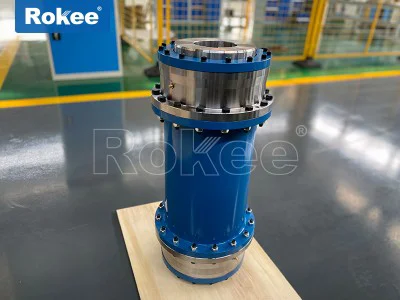
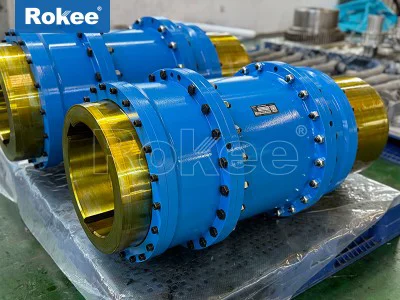
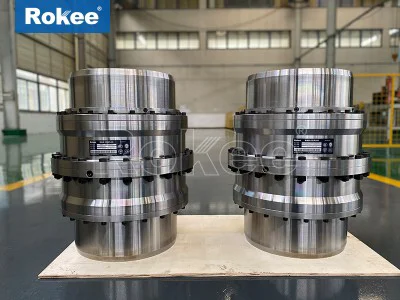
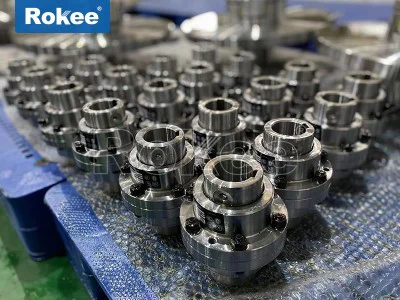
Brake Drum Geared Couplings
The brake drum geared coupling as a special mechanical transmission component, plays a crucial role in modern industrial equipment. It perfectly combines the efficient transmission characteristics of gear couplings with the safety control function of braking devices, and is widely used in heavy-duty mechanical systems that require precise control. This type of coupling can not only transmit huge torque, but also effectively compensate for shaft deviation, while achieving rapid stop or position maintenance of the equipment through an integrated braking mechanism. From metallurgical rolling mills to mining lifting equipment, from port cranes to heavy engineering machinery, brake drum geared couplings have won the favor of engineers for their excellent performance and reliability.
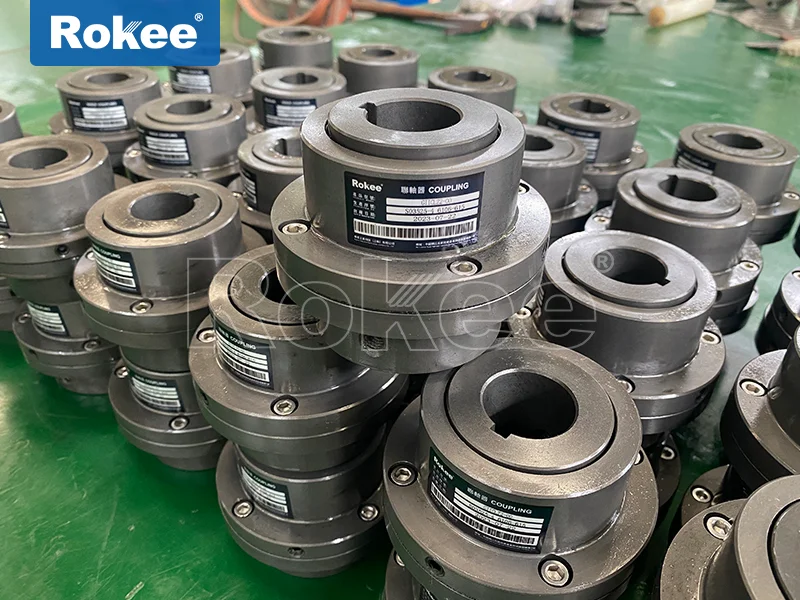
The structural design of the brake drum geared coupling cleverly integrates gear transmission and braking functions, and its core components can be divided into three main parts: the gear coupling body, the brake drum component, and the connecting support structure. This carefully designed combination not only meets the basic needs of power transmission, but also integrates brake control functions, greatly simplifying the overall layout of the mechanical system.
The main body of the gear coupling adopts a drum shaped tooth design, which is the key difference from ordinary straight tooth couplings. The main body is composed of an inner gear ring and an outer gear shaft sleeve, where the outer teeth are not simply straight teeth, but are processed into a drum shape - that is, the tooth surface is raised in a circular arc shape, similar to a barrel or spherical shape. The design of this drum shaped gear allows the coupling to obtain greater angular compensation capability. Theoretically, the allowable angular displacement of the drum shaped gear coupling can reach 1 ° 30 ′, which is about 50% higher than that of the traditional spur gear coupling. The internal gear ring is usually integrated with the half coupling and connected to the equipment shaft flange through high-strength bolts. The special contour of the drum shaped teeth enables the contact point of the gear to automatically adjust with the axis deviation during meshing, avoiding the edge contact problem that occurs in straight tooth couplings during angular deviation, significantly improving the contact area of the tooth surface and the uniformity of load distribution.
The brake drum component is another core part of this type of coupling, usually located on the outer periphery of the coupling. The brake drum is generally made of high-strength cast iron or alloy steel, and its inner circular surface is precisely matched with the outer circle of the gear coupling body. The outer circular surface is processed as a very smooth and flat brake friction surface to ensure that the friction material can uniformly contact during braking. The diameter and width of the brake drum are designed according to the required braking torque, and the diameter of the brake drum for large equipment can reach more than 1 meter. One side of the brake drum is usually designed with heat dissipation ribs or ventilation slots to accelerate the dissipation of heat generated during braking. Brake calipers or brake bands are installed around the periphery of the brake drum, which are driven by hydraulic, pneumatic, or electromagnetic means to press the friction plate against the surface of the brake drum, thereby generating braking torque to slow down or stop the system.
The connecting support structure includes auxiliary components such as bearing seats, sealing systems, lubrication pipelines, and protective covers. The bearing seat is used to support the rotating parts of the coupling and withstand radial loads; The sealing system adopts a labyrinth seal or rubber oil seal to prevent lubricant leakage and external pollutants from entering; The lubrication pipeline is responsible for guiding the lubricating oil to the gear meshing area, and some high-end models are also equipped with automatic lubrication systems; The protective cover plays a role in safety protection and preventing foreign objects from getting involved. Although these auxiliary structures do not play a major role in transmission or braking, they are crucial for the long-term reliable operation of the coupling.
The structural design of the brake drum geared coupling fully considers the convenience of installation and maintenance. Most products adopt a split design, which means that the brake drum and gear coupling can be installed separately for easy on-site assembly and later maintenance. At the same time, considering the installation space limitations of different devices, manufacturers usually offer various structural variants, such as brake drum built-in, external, flange connection, or shaft sleeve connection, to meet various mechanical layout requirements. This modular design concept enables the brake drum geared coupling to flexibly adapt to a wide range of application scenarios, from compact machine tools to large industrial equipment.
The working principle of the brake drum geared coupling is based on the integration of precision mechanical transmission and control technology, achieving dual functions of power transmission and motion braking. The operating mechanism of this coupling can be deeply understood from two dimensions: power transmission and braking control, and its outstanding performance characteristics stem from carefully designed structural features and the selection of high-quality materials.
The core of the power transmission mechanism lies in the unique meshing principle of the drum gear. When the driving shaft rotates, the drum shaped teeth on the outer gear sleeve drive the inner gear ring to rotate, thereby driving the driven shaft to rotate. The special shape of the drum teeth enables the gear pair to adapt to a certain degree of axis deviation during transmission. Compared with ordinary straight tooth couplings, the contact point of the drum shaped teeth will automatically adjust its position with the misalignment of the shaft system, always maintaining a larger contact area. In actual operation, even if there is axial displacement, radial offset, or angular deviation, the drum shaped tooth surface can automatically adjust the contact position through small relative sliding to avoid stress concentration. This adaptive feature enables the coupling to effectively compensate for shaft misalignment caused by manufacturing errors, installation deviations, or structural deformations during operation while transmitting high torque, protecting bearings and other transmission components from the effects of additional loads.
The implementation of brake control function relies on the brake drum mechanism integrated on the coupling. When the braking system is activated, the brake calipers or brake bands tightly clamp the rotating brake drum, converting kinetic energy into thermal energy through friction, thereby achieving deceleration or stopping of the equipment. The design of the brake drum takes into account thermal capacity and heat dissipation performance, ensuring that it will not fail due to overheating under frequent braking conditions. It is worth noting that the braking system of the brake drum geared coupling is usually used as a safety brake or holding brake, rather than the main working brake. This means that it is more used for anti slip braking after equipment stops or for safe braking in emergency situations, rather than speed regulation during daily operation. This division of labor enables the coupling braking system to focus on reliability and safety, without frequent actions, thereby extending its service life.
The core performance characteristics of the brake drum geared coupling are manifested in multiple aspects:
Excellent deviation compensation capability: The three-dimensional compensation capability of the drum gear coupling far exceeds that of ordinary couplings. Typical parameters show that this type of coupling can allow radial displacement of 0.4-6.3mm (depending on specifications), axial displacement of 2-10mm, and angular displacement of 1 ° -1.5 °. This compensation capability is not simply about "tolerating" deviations, but truly adapting to deviations through the optimization of gear meshing characteristics, ensuring that transmission efficiency is not significantly reduced due to misalignment of the shaft system. In practical industrial applications, this characteristic greatly reduces the requirements for installation accuracy and reduces the risk of failure caused by foundation settlement or thermal deformation.
Extremely high torque density: Thanks to the optimized design of drum shaped teeth, this type of coupling can transmit greater torque than straight tooth couplings at the same size, with an average increase in load-bearing capacity of 15% -20%. The torque transmission capacity of the large brake drum geared coupling can reach millions of Newton meters, which is sufficient to meet the most demanding heavy-duty requirements. High torque density means that in space constrained applications, engineers can choose more compact couplings without sacrificing transmission performance.
Dual function integration: Integrating transmission and braking functions into one not only saves installation space but also optimizes system dynamics performance. In traditional design, couplings and brakes need to be installed separately, occupying a large axial space, and the increase in inertia of the intermediate shaft section will affect the braking response. The integrated design shortens the transmission chain, reduces unnecessary rotational inertia, and makes braking more rapid and effective. Meanwhile, integrated design also simplifies the lubrication system, allowing gears and bearings to share the same lubrication scheme, reducing maintenance complexity.
Long service life: The drum shaped tooth design avoids the common edge wear problem of straight tooth couplings, and with a forced lubrication system, the tooth surface wear rate is only about 10% of that of grease lubrication. Practical applications have shown that the service life of high-quality brake drum geared couplings can reach more than 10 years under harsh working conditions such as metallurgical rolling mills. Long lifespan not only reduces spare parts costs, but also reduces downtime for maintenance and improves overall equipment utilization.
Efficient heat dissipation performance: The brake drum geared coupling has been designed with special consideration for thermal management issues. Circulating lubricating oil can not only lubricate gears, but also take away the heat generated by meshing friction and braking processes. Some high-end models also adopt hollow shaft structures or add heat dissipation fins to further enhance heat dissipation capabilities. Effective temperature control ensures the performance stability of the coupling under heavy load and frequent braking conditions, preventing material performance degradation or lubrication failure caused by overheating.
These excellent performances make the brake drum geared coupling an indispensable key component in the heavy industry field, demonstrating reliability and durability that ordinary couplings cannot match under extreme working conditions. By intelligently integrating transmission and braking functions, it not only simplifies mechanical system design, but also improves overall performance and safety, reflecting the highly integrated and functionally composite trend of modern mechanical design.
In the field of mechanical power transmission, the brake drum geared coupling stands out as a highly versatile and functional component that seamlessly integrates torque transmission, misalignment compensation and braking functions into one compact unit. Unlike standard gear couplings that only focus on power transfer between rotating shafts, this specialized coupling incorporates a robust brake drum structure, making it indispensable for machinery systems that require reliable stopping, speed regulation or emergency halting during operation. Designed to withstand heavy loads, harsh working conditions and frequent dynamic changes, it has become a core transmission part in numerous industrial sectors, addressing the dual demands of efficient power delivery and safe braking control that ordinary couplings cannot meet.
At its core, the brake drum geared coupling features a sophisticated yet rational structural design that balances transmission efficiency and braking stability, with every component tailored to fulfill specific functional roles while ensuring overall durability. The primary structure consists of two key half-coupling assemblies, a precision-machined gear meshing unit, an integrated brake drum component and reliable sealing and fastening parts. Each half-coupling is equipped with either internal or external gear teeth, with the external gear teeth crafted into a unique drum-shaped profile, a critical design that sets it apart from straight-tooth couplings. The drum-shaped external teeth have a spherical contour with the center of the sphere positioned precisely on the gear axis, creating a larger tooth side clearance compared to straight teeth, which enables the coupling to accommodate greater angular, radial and axial misalignments between connected shafts without compromising torque transmission efficiency. The brake drum is rigidly integrated with one of the half-couplings, either through integral forging or high-strength connection, forming a unified rotating body that rotates synchronously with the transmission shaft; this integration eliminates the need for separate braking components, simplifying the overall shaft system layout and enhancing braking responsiveness.
The gear meshing mechanism is the heart of torque transmission, with the internal gear sleeve and external drum gear engaging closely to transfer rotational force from the driving shaft to the driven shaft. The tooth surfaces are precision ground to ensure smooth meshing, uniform stress distribution and minimal friction during operation, which reduces energy loss and wear. To maintain long-term stable performance, the coupling is fitted with tight sealing structures at both ends, typically consisting of wear-resistant gaskets and dust-proof end covers, which prevent lubricant leakage and block the ingress of dust, moisture and abrasive particles from the external environment. This sealing design is crucial for preserving the lubrication state of the gear meshing pair, extending the service life of the tooth surfaces and reducing maintenance frequency. Fastening components such as high-strength bolts and lock washers are used to secure the various parts of the coupling, ensuring that the assembly remains rigid and stable even under extreme vibration, shock loads or high-speed rotation, preventing loosening or structural failure that could disrupt equipment operation.
The performance of brake drum geared couplings is defined by a set of exceptional mechanical and operational characteristics that make them suitable for heavy-duty and high-demand industrial scenarios, with each performance index optimized to meet the rigorous requirements of modern machinery. One of the most prominent performance advantages is its high load-bearing capacity, thanks to the drum-shaped gear design that enlarges the contact area between meshing teeth and distributes stress more evenly across the tooth surface. This structural optimization allows the coupling to transmit significantly higher torque than standard straight-tooth couplings of the same external dimensions, making it ideal for heavy machinery that operates under sustained heavy loads. Additionally, the enhanced misalignment compensation capability is a key performance highlight; the drum-shaped teeth can tolerate larger angular deviations, radial offsets and axial displacements caused by manufacturing errors, installation inaccuracies, thermal expansion or operational wear, effectively reducing additional bending stress and vibration on the shafts and bearings. This not only protects the connected equipment from premature damage but also ensures smooth and stable power transmission even in less-than-perfect shaft alignment conditions.
In terms of braking performance, the integrated brake drum design delivers exceptional stopping power and control precision. The brake drum, made of high-strength, wear-resistant alloy material, provides a large and stable friction surface for external brake shoes or brake calipers, enabling rapid and reliable deceleration or stopping of the entire transmission system when braking force is applied. The synchronous rotation of the brake drum with the shaft eliminates lag in braking response, which is critical for equipment that requires emergency stopping to avoid accidents or product damage. The coupling also exhibits high transmission efficiency, with minimal power loss during gear meshing due to the precision-engineered tooth profiles and adequate lubrication, ensuring that most of the input power is transferred to the driven equipment, which boosts overall energy efficiency of the machinery system. Furthermore, it boasts strong environmental adaptability, capable of operating reliably in extreme temperatures, high humidity, dusty environments and other harsh working conditions, as long as proper lubrication and sealing are maintained. Its robust construction also offers excellent resistance to shock and vibration, absorbing sudden load fluctuations and impact forces to protect the driving motor, gearbox and other core components from damage.
Durability and low maintenance requirements further elevate the performance value of brake drum geared couplings. The wear-resistant tooth surfaces and sturdy brake drum material resist abrasion and fatigue even under long-term continuous operation, reducing the frequency of component replacement. The sealed internal structure keeps the gear meshing pair lubricated effectively, minimizing friction and wear, and extending the overall service life of the coupling. Unlike complex transmission components that demand frequent disassembly and maintenance, this coupling features a user-friendly design that allows for easy installation, inspection and routine upkeep, reducing downtime and operational costs for industrial enterprises. Whether operating at low speeds with heavy torque or moderate speeds with continuous load, the coupling maintains consistent performance stability, ensuring uninterrupted production and operation in various industrial settings.
Brake drum geared couplings are classified into distinct types based on multiple practical criteria, including structural configuration, braking mode, installation method and application-specific design, each tailored to suit different operational needs and machinery layouts. The most common classification is based on the integrated braking component, dividing the couplings into brake wheel type and brake disc type variants, which differ in braking mechanism and application scenarios. The brake wheel type brake drum geared coupling features a solid, cylindrical brake wheel integrated with the half-coupling, designed to work with external brake shoes that press against the outer surface of the brake wheel to generate friction and achieve braking. This type offers a large friction area and strong braking torque, making it suitable for heavy-duty equipment that requires high braking force, such as large lifting machinery and mining equipment. In contrast, the brake disc type variant incorporates a flat, circular brake disc into the coupling structure, paired with caliper-style brakes that clamp onto both sides of the disc to stop rotation. This design provides more precise braking control and faster heat dissipation, making it ideal for equipment that demands accurate speed regulation and frequent braking, such as conveyor systems and processing machinery.
Another classification approach is based on the structural layout of the gear assembly, distinguishing between single engagement and double engagement brake drum geared couplings. Single engagement types feature a simplified gear meshing structure with fewer components, offering a more compact profile and lighter weight, suitable for applications with limited installation space and moderate torque requirements. They provide basic misalignment compensation and braking functions, making them a cost-effective choice for light to medium-duty machinery. Double engagement types, on the other hand, have a dual gear meshing setup that enhances torque transmission capacity and misalignment tolerance, with higher rigidity and stability. This structure is engineered for heavy-duty, high-load applications where maximum reliability and load-bearing performance are essential, such as metallurgical rolling equipment and large-scale material handling machines. Additionally, couplings can be categorized by installation orientation, including horizontal and vertical types, to match the shaft layout of different equipment; horizontal types are designed for standard horizontal shaft systems, while vertical types are optimized for vertical shaft transmission setups, ensuring stable performance and proper braking function regardless of installation angle.
Specialized variants also exist for specific operational conditions, such as extended shaft type brake drum geared couplings for applications requiring longer distance between driving and driven shafts, and sealed reinforced types for highly corrosive or dusty environments. These specialized designs retain the core advantages of torque transmission and braking while adapting to unique working conditions, further expanding the applicability of the coupling across diverse industrial sectors. Regardless of the classification, all types adhere to the fundamental design principles of combining efficient gear transmission with reliable braking, ensuring that each variant can meet the targeted operational demands while maintaining the core performance benefits of the brake drum geared coupling.
The unique combination of high-performance torque transmission and reliable braking functionality makes brake drum geared couplings widely applied across numerous key industrial fields, serving as a critical component in machinery that requires both power transfer and safety braking. In the metallurgical industry, these couplings are extensively used in rolling mills, continuous casting machines, crushers and other heavy equipment, where they handle extremely high torque loads, absorb shock forces generated during metal processing and provide emergency braking to prevent production accidents. The heavy-duty design and high load-bearing capacity enable them to withstand the harsh operating conditions of metallurgical production, including high temperatures, heavy dust and continuous heavy loads, ensuring stable operation of the production line and reducing downtime caused by component failure.
In the mining and quarrying sector, brake drum geared couplings play a vital role in mining conveyors, ball mills, crushers and hoisting equipment, where reliable braking is essential for operational safety. Mining machinery often operates in rugged, remote environments with heavy loads and uneven terrain, and the coupling’s ability to compensate for shaft misalignment and deliver strong braking torque ensures that equipment can stop safely in emergency situations, such as conveyor belt slippage or hoisting overload. The durable, sealed construction also resists the ingress of dust, gravel and moisture, maintaining performance in the abrasive mining environment and extending the service life of the transmission system.
The lifting and transportation industry relies heavily on brake drum geared couplings for cranes, gantry cranes, winches and elevators, where precise and reliable braking is critical to ensuring the safety of personnel and cargo. The integrated brake drum provides instant braking response, preventing load slippage or equipment runaway during lifting, lowering or transportation operations. The high misalignment compensation capability also accommodates the dynamic shifts and vibrations that occur during crane movement, protecting the transmission shaft and bearings from damage and ensuring smooth, stable operation of lifting equipment. Whether in port terminals, construction sites or warehouse logistics centers, these couplings deliver consistent performance to support safe and efficient material handling.
In the petrochemical and chemical processing industries, brake drum geared couplings are used in large pumps, compressors, agitators and other processing equipment, where stable transmission and safe shutdown are paramount. The chemical production environment often involves flammable, corrosive or high-temperature media, and the coupling’s robust, sealed design prevents lubricant contamination and ensures reliable operation under demanding conditions. Emergency braking functionality allows equipment to shut down quickly in case of process anomalies, preventing equipment damage, material leakage or safety hazards, making it an essential component for maintaining operational safety in chemical processing plants.
Beyond these core industries, brake drum geared couplings find applications in general machinery, power generation, construction machinery and other fields, including fans, centrifuges, mixers and various transmission systems that require both power transmission and braking control. Their adaptability to different load conditions, installation spaces and operational environments makes them a universal solution for addressing the dual needs of efficient transmission and safety braking. As industrial machinery continues to evolve towards higher loads, higher precision and greater safety, the demand for brake drum geared couplings is expected to grow, driven by their unmatched combination of functional integration, performance reliability and operational durability.
In summary, the brake drum geared coupling represents a pinnacle of mechanical transmission component design, merging the torque transmission efficiency of drum gear couplings with the safety and control of integrated braking systems. Its well-engineered structure delivers exceptional load-bearing capacity, misalignment compensation, braking responsiveness and durability, while its diverse classifications cater to a wide spectrum of industrial applications and operational scenarios. From heavy metallurgical equipment to precision lifting machinery, this coupling plays an irreplaceable role in ensuring efficient, safe and stable operation of rotating shaft systems. As industrial technology advances, ongoing optimizations in material science, structural design and manufacturing processes will further enhance the performance and versatility of brake drum geared couplings, solidifying their position as a critical and indispensable component in the global mechanical engineering and power transmission landscape.