Serpentine Spring Couplings
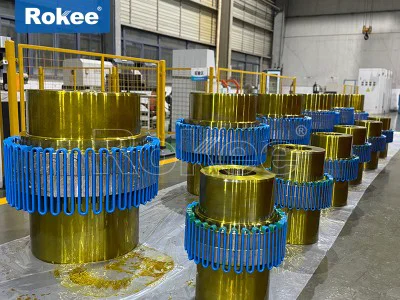
The serpentine spring coupling is a high-performance flexible coupling that achieves power transmission between two shafts through specially designed snake shaped spring elements, while also having good shock absorption, buffering, and compensation for deviations. This type of coupling was developed by German engineers in the mid-20th century and has now become an indispensable key component in industrial transmission systems.

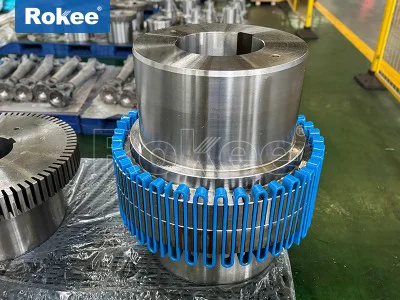
Compared with traditional couplings, the unique feature of serpentine spring couplings is that their spring elements are bent in a serpentine shape and installed in the tooth slots of two half couplings. This design enables it to absorb more vibrations and impacts, and compensate for larger shaft deviations without reducing its ability to transmit torque.
The serpentine spring coupling is mainly composed of the following components:
Two half couplings: usually made of high-strength cast iron or steel, with inner holes machined into special tooth shapes
Serpentine spring set: made of multiple special alloy spring steels, curved in a serpentine shape
Shell (available on some models): protects the spring and prevents grease leakage
Sealing element: maintain internal lubrication state
When the driving shaft rotates, the serpentine spring is driven by the toothed groove of the half coupling, and the spring then transmits the power to the half coupling of the driven shaft. The snake shaped spring undergoes elastic deformation when transmitting torque, which enables it to:
Absorbing and buffering impact loads
Compensate for axial, radial, and angular deviations
Reduce system vibration transmission
Technical features and advantages
Excellent shock absorption performance
The high damping characteristics of the serpentine spring coupling can reduce vibration transmission by up to 80%, making it particularly suitable for situations with impact loads or torsional vibrations. The multi piece design of the spring achieves graded elasticity and provides progressive buffering effect under different loads.Powerful deviation compensation capability
Axial deviation compensation: ± 1.5-6mm
Radial deviation compensation: 0.5-3mm
Angular deviation compensation: 1 ° -1.5 °
This multi-directional compensation capability greatly reduces the strict requirements for axis alignment, reduces installation time and maintenance costs.Efficient torque transmission
Adopting a multi spring parallel design to achieve high torque transmission capability in a compact size. The torque range typically ranges from a few Newton meters to hundreds of thousands of Newton meters, meeting different power requirements. The surface contact between the spring and the tooth groove is more uniform than traditional key connections, reducing stress concentration.
Common Categories of serpentine spring coupling
Standard type (JS type): Basic type, suitable for general industrial applications
Enhanced Type (JSB Type): Thickened springs increase load-bearing capacity by 30-50%
Flange type (JFF type): with flange connection, easy to install and disassemble
High temperature type: using special materials and lubrication, the working temperature can reach 300 ℃
Corrosion resistant type: made of stainless steel material, suitable for chemical and marine environments
When choosing a serpentine spring coupling, the following factors should be considered:
Torque demand: including rated torque and peak torque
Speed range: The maximum working speed should be lower than the allowable speed of the coupling
Shaft diameter size: Ensure matching with equipment shaft
Environmental conditions: temperature, humidity, corrosiveness, etc
Deviation situation: Estimated type and magnitude of axis deviation
Application of serpentine spring couplings
Heavy Industry Applications
Steel metallurgy: rolling mill, straightening machine, crusher
Mining machinery: ball mills, crushers, conveying equipment
Power industry: Steam turbines, generators, large pump setsGeneral Industry
Petrochemical industry: compressors, pumps, mixing equipment
Shipbuilding industry: propulsion systems, deck machinery
Paper industry: paper machines, calendersspecial application
Wind power generation: adaptable to variable load conditions
Rail Transit: Traction System Transmission
Military equipment: transmission systems with high reliability requirements
Installation and Maintenance Guide
Installation key points
Cleaning inspection: Ensure that the contact surface between the journal and coupling is clean and undamaged
Alignment adjustment: Although the compensation ability is strong, good alignment should be ensured as far as possible
Tighten bolts evenly in diagonal order, using the specified torque
Lubrication treatment: An appropriate amount of lubricating grease should be added for the first installation (if required)Maintenance Recommendations
Regular inspection: Check the condition and lubrication of the spring every 3-6 months
Lubrication management: Supplement or replace lubricating grease according to working conditions (shorten the cycle in high temperature environments)
Abnormal monitoring: Pay attention to abnormal vibrations or noise, and promptly investigate the cause
Life assessment: Springs usually need to be considered for replacement after working for 20000-50000 hours
The serpentine spring coupling occupies an important position in the industrial transmission field due to its excellent performance and reliability. With the advancement of technology, its application scope will continue to expand, providing efficient solutions for more complex working conditions. Proper selection and use of serpentine spring couplings can significantly improve equipment operating efficiency, extend service life, and reduce maintenance costs.
In the realm of industrial power transmission systems, the serpentine spring coupling stands as a pivotal and widely adopted flexible coupling, renowned for its exceptional mechanical properties and versatile adaptability to diverse operating conditions. Unlike rigid couplings that demand precise shaft alignment and offer no tolerance for misalignment or vibration, this type of coupling integrates elastic serpentine spring elements into its core design, striking a delicate balance between efficient torque transmission and reliable mechanical protection. Developed to address the limitations of conventional transmission connectors, it has evolved into a cornerstone component across heavy industry, manufacturing, and various mechanical engineering sectors, catering to the growing demand for durable, high-performance shaft connection solutions that can withstand harsh operational stresses and dynamic load fluctuations.
At its core, the serpentine spring coupling features a streamlined yet robust structural composition, consisting of several key components that work in tandem to deliver optimal performance. The primary elements include two precision-machined half couplings, a set of curved serpentine spring blades, a protective outer shell (included in most standard configurations), and sealing components to preserve internal lubrication. The half couplings, typically forged from high-strength cast iron or alloy steel, are engineered with specialized tooth grooves along their outer peripheries, designed to securely house and engage with the serpentine springs. These half couplings are mounted separately onto the driving and driven shafts, forming the primary connection points for power transfer. The serpentine springs, the heart of the coupling, are crafted from premium alloy spring steel subjected to rigorous heat treatment processes, endowing them with superior elasticity, fatigue resistance, and load-bearing capacity. Their distinctive serpentine, wave-like curvature allows for controlled elastic deformation under load, enabling the coupling to absorb shocks and compensate for shaft misalignments without compromising torque delivery. The protective shell encloses the spring assembly, shielding it from external contaminants such as dust, moisture, and debris, while also preventing lubricant leakage and reducing operational noise. Sealing rings are fitted at the junction of the shell and half couplings to maintain a sealed internal environment, ensuring consistent lubrication and prolonging the service life of the spring and tooth groove surfaces.
The operating principle of the serpentine spring coupling is rooted in the elastic deformation and mechanical engagement of its spring elements. During operation, rotational torque from the driving shaft is transferred to the corresponding half coupling, which then transmits force to the serpentine springs via the precision-machined tooth grooves. As the springs absorb the torque, they undergo moderate elastic deformation, distributing the load evenly across their curved surfaces and transferring the rotational motion to the driven half coupling and subsequently the driven shaft. This unique power transmission mechanism eliminates direct rigid contact between the two half couplings, introducing a layer of elasticity that mitigates the negative impacts of dynamic loads, shaft misalignment, and mechanical vibration. Unlike gear couplings that rely on rigid tooth meshing or rubber elastic couplings that suffer from limited durability, the serpentine spring coupling leverages metallic elasticity to deliver consistent performance, combining the high torque-carrying capacity of rigid couplings with the flexibility and shock absorption of flexible models.
The performance characteristics of serpentine spring couplings are what set them apart from other transmission couplings, making them suitable for a broad spectrum of industrial applications. One of the most prominent advantages is their exceptional shock absorption and vibration damping capability. The elastic deformation of the serpentine springs effectively absorbs instantaneous impact loads and attenuates torsional vibrations generated during equipment operation, reducing stress on connected shafts, bearings, and gearboxes. This damping effect minimizes wear and tear on critical components, lowers the risk of mechanical failure, and enhances the overall stability and smoothness of the transmission system. Additionally, these couplings boast strong misalignment compensation capacity, accommodating axial, radial, and angular deviations between connected shafts. This flexibility reduces the stringent requirements for initial shaft alignment during installation, simplifying setup procedures, cutting installation time, and lowering maintenance costs associated with realignment. Even with moderate shaft misalignment, the coupling maintains efficient torque transmission without experiencing performance degradation or premature failure.
Serpentine spring couplings also exhibit outstanding torque transmission efficiency and overload resistance. With a transmission efficiency rating of up to 99.5%, they minimize energy loss during power transfer, making them highly energy-efficient for continuous industrial operation. Their robust metallic construction enables them to withstand short-term overloads of up to two to three times the rated torque, a critical feature for equipment subjected to sudden load spikes or variable operating conditions. This overload resilience prevents sudden breakdowns and ensures uninterrupted operation in demanding industrial environments. Furthermore, the couplings offer excellent durability and longevity, thanks to the high-strength alloy steel springs and rugged half coupling materials. Resistant to fatigue, wear, and deformation under prolonged cyclic loading, they require minimal routine maintenance, reducing downtime and operational expenses for industrial facilities. The sealed design and effective lubrication further protect internal components from corrosion and abrasion, extending the functional lifespan of the entire coupling assembly.
Another notable performance trait is the variable stiffness feature inherent in many serpentine spring coupling designs, which adapts to changing load conditions. Under low-load operation, the springs maintain a relatively low stiffness, providing enhanced flexibility and vibration damping; as torque loads increase, the spring deformation increases, and the contact area between the springs and tooth grooves expands, resulting in a gradual increase in stiffness. This progressive stiffness characteristic optimizes performance across varying load ranges, delivering superior buffering for light loads and stable torque transmission for heavy loads, making the couplings highly versatile for equipment with fluctuating operational demands. Additionally, the modular and compact structural design facilitates easy installation, disassembly, and replacement of worn components, such as the serpentine springs, without requiring the removal of connected equipment, further streamlining maintenance workflows and reducing operational disruptions.
Serpentine spring couplings are manufactured in a diverse range of types, each tailored to specific operational requirements, installation scenarios, and industrial applications, ensuring compatibility with a wide array of mechanical systems. The most common classification is based on structural configuration and installation method, with each variant offering unique functional benefits to suit distinct working conditions. The standard shell radial installation type represents the basic and most widely used model, featuring a horizontally split protective shell that allows for radial installation and removal of the coupling without displacing the connected shafts or equipment. This design is ideal for general industrial applications with standard shaft layouts and moderate operational demands, offering a cost-effective and reliable solution for routine power transmission tasks.
The shell axial installation type is engineered for scenarios where radial access is limited, featuring an axially assembled shell that simplifies installation in confined spaces. This variant maintains the same core performance as the standard model but is optimized for compact equipment layouts, making it suitable for machinery with restricted peripheral clearance. Double flange and single flange connection types are designed for enhanced installation flexibility, equipped with flange structures that enable direct connection to flanged shafts or equipment components. The double flange variant offers superior stability and alignment support, while the single flange variant streamlines installation for lightweight to medium-duty systems, both proving invaluable for pump units, fan systems, and other rotary equipment where flange mounting is preferred.
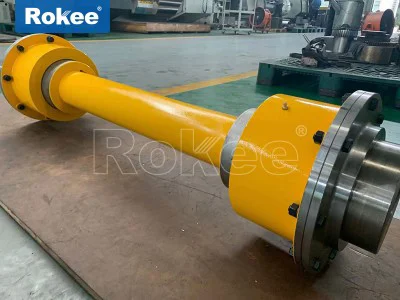
Intermediate shaft type serpentine spring couplings are engineered to bridge longer distances between driving and driven shafts, incorporating an intermediate shaft segment to extend the transmission range. This type is essential for industrial systems where shafts are separated by a significant gap, eliminating the need for additional transmission components and maintaining efficient power transfer over extended distances. High-speed variants are specially designed for high-rotational-speed applications, featuring balanced components, refined tooth profiles, and reinforced shells to minimize centrifugal force effects and ensure stable operation at elevated speeds, commonly used in turbo machinery, high-speed pumps, and other high-RPM equipment.
Specialized variants include those integrated with brake wheels or brake discs, designed for equipment requiring reliable braking functionality alongside power transmission, such as cranes, hoists, and conveying machinery. These couplings combine the elastic performance of standard serpentine spring models with dedicated braking components, delivering a dual-function solution for material handling and lifting equipment. Safety-focused variants are engineered with built-in overload protection mechanisms, designed to disengage or absorb extreme overloads to protect downstream equipment from catastrophic damage, ideal for heavy machinery with high risk of sudden load surges. Additionally, customized models are available for extreme environmental conditions, including corrosion-resistant variants for marine, chemical, and coastal applications, and high-temperature variants for industrial furnaces, metallurgical equipment, and other high-heat operating environments, ensuring stable performance in harsh settings where standard couplings would degrade rapidly.
The exceptional structural design and versatile performance of serpentine spring couplings have led to their widespread adoption across nearly every major industrial sector, serving as a critical link in power transmission systems for countless types of machinery and equipment. In the heavy industry sector, they are extensively used in mining and metallurgical equipment, including crushers, ball mills, rolling mills, and continuous casting machines. These applications involve high torque loads, frequent impact stresses, and harsh operating conditions, where the coupling’s shock absorption, overload resistance, and durability are indispensable for maintaining reliable operation and reducing equipment downtime. In the mining industry, for example, serpentine spring couplings withstand the abrasive dust and heavy loads of ore processing machinery, while in metallurgy, they endure the high temperatures and continuous operational demands of steel production lines.
In the power generation industry, serpentine spring couplings play a vital role in connecting turbines, generators, large water pumps, and auxiliary equipment, ensuring efficient and stable power transmission. Their ability to dampen torsional vibrations and compensate for minor shaft misalignments is crucial for maintaining the precision and reliability of power generation systems, preventing costly breakdowns that could disrupt energy supply. The petrochemical industry also relies heavily on these couplings for compressors, pumps, mixers, and other rotary equipment, where leak-proof operation, corrosion resistance, and long-term durability are essential for handling volatile and abrasive fluids safely and efficiently.
In the manufacturing and general machinery sector, serpentine spring couplings are integrated into a wide range of equipment, including fans, blowers, conveyor systems, paper-making machinery, and machine tools. Their flexibility and low maintenance requirements make them ideal for automated production lines and continuous manufacturing processes, where operational uptime is critical. In the shipbuilding and marine industry, these couplings are used in propulsion systems, deck machinery, and onboard auxiliary equipment, with corrosion-resistant variants ensuring reliable performance in saltwater environments. The construction machinery sector utilizes them in excavators, cranes, concrete mixers, and other heavy equipment, where they absorb the heavy shocks and vibrations associated with construction operations, enhancing equipment longevity and operator safety.
Beyond these core sectors, serpentine spring couplings find application in specialized fields such as wind power generation, rail transit, and military engineering. In wind turbines, they accommodate the variable loads and shaft misalignments inherent in renewable energy systems, ensuring consistent power transfer from rotor blades to generators. In rail transit, they support the transmission systems of locomotives and railcars, delivering reliable performance under dynamic operating conditions. For military and high-reliability applications, their rugged construction and consistent performance make them suitable for critical equipment that demands uncompromising durability and functionality. Regardless of the industry or application, serpentine spring couplings deliver consistent value by enhancing equipment performance, reducing maintenance burdens, and extending the service life of connected mechanical components.
In summary, the serpentine spring coupling represents a pinnacle of flexible transmission coupling design, merging robust structural engineering, superior elastic performance, and versatile adaptability to meet the evolving needs of modern industrial machinery. Its well-crafted component design enables efficient torque transmission, exceptional shock absorption, and reliable misalignment compensation, while its diverse range of types caters to every conceivable operational scenario, from standard industrial settings to extreme environmental conditions. As industrial technology continues to advance and mechanical systems demand higher performance, greater durability, and enhanced flexibility, the serpentine spring coupling will remain an indispensable component in power transmission systems worldwide. Its ability to balance strength and flexibility, efficiency and resilience, cements its status as a preferred choice for engineers and operators seeking reliable, long-lasting shaft connection solutions across all branches of industrial and mechanical engineering.