Drive Shafts
As the core component of mechanical power transmission systems, drive shafts play an indispensable role in various fields such as automobiles, agricultural machinery, and industrial equipment.
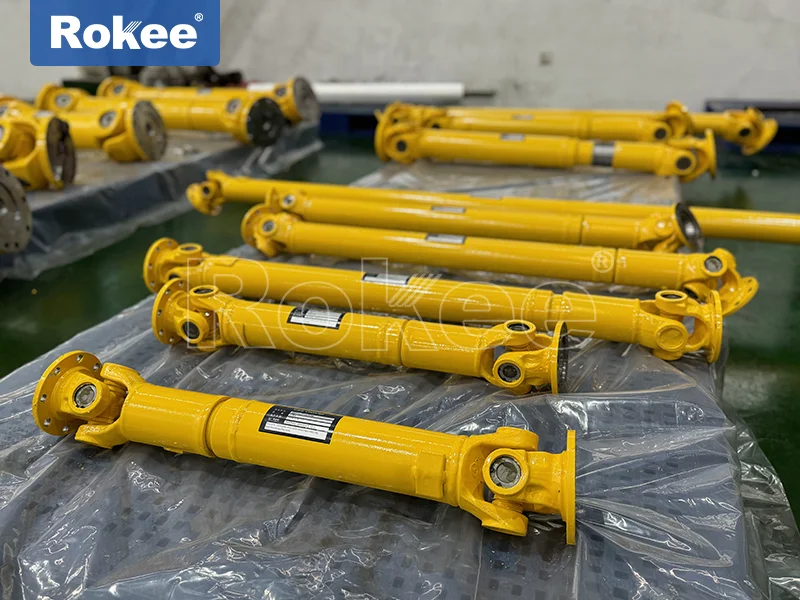
As a key component in the mechanical power transmission system, the drive shaft plays an important role in efficiently transmitting the rotational power generated by the prime mover (such as the engine and electric motor) to the actuator. This seemingly simple mechanical component is essentially a precise power transmission medium, and its design and performance directly affect the efficiency, reliability, and service life of the entire mechanical system. The basic structure of a drive shaft usually includes a shaft tube, connecting components, and support structure. Depending on the application scenario, there are significant differences in its specific form and material selection.
In the power transmission system, the core function of the drive shaft is to achieve the transmission of torque and rotational motion. When the engine or electric motor starts running, the generated power is first transmitted to the drive shaft through the clutch or coupling, and then transmitted to the gearbox, drive axle, or directly to the wheels by the drive shaft. During this process, the drive shaft must maintain sufficient structural strength and torsional stiffness to ensure the efficiency and accuracy of power transmission. At the same time, the drive shaft also needs to adapt to changes in installation position and relative motion, which requires it to have a certain degree of flexibility and adjustment ability. It is precisely this seemingly contradictory requirement - to be both strong and flexible - that makes the design of drive shafts a challenge in mechanical engineering.
From a physical perspective, the drive shaft is a high-speed, low support rotating body, which makes its dynamic balance performance particularly critical. In actual operation, even small imbalances can generate significant centrifugal forces during high-speed rotation, leading to increased vibration, noise, and even premature failure of components. Therefore, high-quality drive shafts must undergo strict dynamic balance testing and adjustment before leaving the factory, usually requiring the unbalance to be controlled within 100g · cm. This precise balance ensures the smoothness of the drive shaft during high-speed operation, extending the service life of bearings and related connectors.
The application range of drive shafts is extremely wide, covering almost all mechanical fields that require power transmission. In the automotive industry, the drive shaft is the "power bridge" that connects the gearbox and the drive axle; In agricultural machinery, the drive shaft transmits the power output of the tractor to various agricultural tools; In industrial equipment, the drive shaft realizes the power connection between the motor and the working mechanism. Different application scenarios have put forward different technical requirements for drive shafts - automotive drive shafts emphasize lightweight and comfort, agricultural machinery drive shafts focus on durability and protective performance, while industrial equipment drive shafts pursue high precision and long life. This diverse demand has given rise to various types of drive shaft designs, each showcasing unique engineering wisdom in material selection, structural optimization, and performance balance.
With the advancement of materials science and manufacturing technology, modern drive shafts have developed into precision components that integrate multiple advanced technologies. From traditional steel solid shafts to modern composite hollow shafts, from single torque transmission to integrated intelligent monitoring functions, drive shaft technology continues to evolve, constantly meeting higher requirements for power transmission in various industrial fields. Understanding the basic concepts and core functions of drive shafts is the foundation for a deep understanding of their technical details and application characteristics.
The structural design of the drive shaft embodies the delicate balance in mechanical engineering, ensuring strong torque transmission capability while adapting to various changes during installation and use. A typical drive shaft consists of three core components: shaft tube, expansion sleeve, and universal joint, each of which plays an irreplaceable role. As the main part of the drive shaft, the shaft tube is responsible for transmitting torque and is usually made of high-quality alloy steel with extremely high torsional strength. Modern drive shaft tubes often adopt hollow designs, which achieve lightweight while ensuring strength. The wall thickness and diameter are accurately calculated and determined based on the transmitted torque. The telescopic sleeve is an adjustable part of the drive shaft that allows for length changes. It consists of a spline shaft and a spline sleeve, and can compensate for small changes in the distance between the transmission and the drive axle during vehicle operation, preventing stress concentration caused by rigid connections.
The universal joint is the most technologically advanced component in the drive shaft, which solves the problem of axis deflection during power transmission. The most common cross axis universal joint consists of a cross axis, four needle roller bearings, and two universal joint forks, allowing the two connected shafts to transmit power within a maximum angle range of 15-20 degrees. This design enables the drive shaft to adapt to angle changes caused by vehicle suspension motion, ensuring uninterrupted power transmission. It is worth noting that a single cross axis universal joint has unequal speed when transmitting power, that is, when the input shaft rotates at a constant speed, there will be slight fluctuations in the output shaft speed. To solve this problem, the automotive transmission system usually adopts a dual universal joint arrangement, and by accurately arranging the relative positions of the universal joint forks, the non-uniform velocity effects of the two universal joints cancel each other out, thereby achieving almost constant velocity power transmission.
The working principle of the drive shaft is based on the torsional characteristics of the material. When one end is subjected to torque, the drive shaft transmits rotational motion to the other end almost without delay due to its structural rigidity. In an ideal situation, the drive shaft itself does not consume energy and only serves as a medium for power transmission. However, in practical applications, the drive shaft needs to overcome various resistances: intermolecular friction within the material, air resistance during high-speed rotation, and friction losses at the supporting bearings. These factors result in a certain degree of energy loss for all drive shafts in practical use, and efficient drive shaft design aims to minimize these losses.
In the automotive transmission system, the working environment of the drive shaft is particularly complex. Taking traditional rear wheel drive vehicles as an example, the drive shaft is connected to a gearbox fixed to the body and a drive axle elastically connected to the body through suspension. During the driving process of the vehicle, the position of the drive axle will constantly change with the undulations of the road surface, resulting in continuous changes in the angle and effective length of the drive shaft. The collaborative work of the universal joint and the telescopic sleeve enables the drive shaft to adapt to these changes: the universal joint compensates for changes in angle, and the telescopic sleeve adjusts length changes, both of which together ensure the continuity and smoothness of power transmission. This dynamic adaptability is the essence of drive shaft design and a key indicator for evaluating its performance.
Modern drive shafts also integrate various auxiliary structures and protective devices. The protective cover prevents dust and moisture from entering the universal joint and spline parts; The oil nozzle design facilitates regular lubrication and maintenance; Balance weights ensure stability during high-speed rotation; Some heavy-duty vehicles and construction machinery are equipped with overload protection devices on their drive shafts, which automatically disconnect power transmission when torque exceeds a safe threshold to prevent damage to important components. These additional features transform the drive shaft from a simple power transmission component to a precision system that integrates multiple protection mechanisms, greatly improving the reliability and service life of the transmission system.
The structure and working principle of the drive shaft demonstrate the clever balance in mechanical design - finding the best combination point between strength and weight, stiffness and flexibility, precision and durability. Understanding these core contents helps us further understand the various types of drive shafts and their application characteristics.
drive shafts have developed various structural forms based on different application requirements and design concepts, each with its unique advantages and applicable scenarios. According to the characteristics and transmission methods of universal joints, drive shafts can be divided into several categories, which reflect the solutions to different technical problems in engineering design. Understanding these types of drive shafts and their characteristics is crucial for selecting and using drive shafts correctly.
The rigid universal joint drive shaft and the flexible universal joint drive shaft constitute the most basic classification method. The rigid universal joint drive shaft adopts a mechanical hinge connection, relying on precise fitting of parts to transmit power. It has the characteristics of simple structure and large torque capacity, and is widely used in heavy-duty applications. The most common cross axis universal joint drive shaft is composed of a cross axis and bearings, allowing for significant angular deflection between the two connected shafts, but with non-uniform transmission characteristics. The flexible universal joint drive shaft uses elastic components such as rubber and polyurethane to transmit torque, with buffering and vibration reduction functions, which can absorb impact and compensate for small deviations. However, the torque transmission ability is relatively low, and it is mostly used in situations with strict vibration requirements, such as high-end passenger cars and precision machinery.
From the perspective of angular velocity characteristics, drive shafts can be divided into three types: non-uniform velocity, quasi constant velocity, and constant velocity. When the input shaft rotates at a constant speed, there will be slight fluctuations in the output shaft speed of the non-uniform universal joint drive shaft (such as the cross shaft type), which is particularly evident in single universal joint transmission. To overcome this problem, double universal joint arrangements are commonly used in engineering practice, where the speed fluctuations of the two universal joints cancel each other out through specific geometric arrangements, forming a quasi constant velocity transmission. The true constant velocity universal joint drive shaft adopts more complex structural designs, such as cage type (Rzeppa type) and fork type (Weiss type) universal joints, which use precise ball track mechanisms to ensure that the instantaneous angular velocity of the input and output shafts is always consistent at any working angle. The constant velocity universal joint drive shaft is widely used in the drive half shaft of front wheel drive vehicles, which not only transmits power but also adapts to the steering requirements of the wheels.
According to the ability to transmit torque, drive shafts can be classified into micro, light, medium, heavy, and engineering specific categories. Micro drive shafts are used for small equipment and instruments, transmitting torque typically below 10 Nm, emphasizing precision and lightweight; Lightweight drive shafts are suitable for passenger cars and small commercial vehicles, with a torque range of approximately 10-500Nm; medium drive shafts are used for large SUVs and light trucks, capable of handling 500-2000Nm of torque; Heavy duty drive shafts are used for heavy-duty trucks and large buses, with a torque capacity of 2000-10000 Nm. Engineering specific drive shafts are used for extreme working conditions such as mining machinery and construction vehicles, with a torque of tens of thousands of Newton meters and special reinforcement design and protection mechanisms.
The shaft transmission system represents a special form of drive shaft application, commonly found in motorcycles and some high-end bicycles. This system uses a closed gear transmission instead of traditional chain transmission, changing the direction of power through a pair of bevel gears, and then transmitting power to the rear wheels through a longitudinal drive shaft. The efficiency of shaft transmission can reach over 90%, comparable to high-quality chain transmission, but it has outstanding advantages such as maintenance free, clean, and reliable. Modern axle driven bicycles combined with internal variable speed flower drums can achieve 7-8 speed shifting without the need for external shifting mechanisms, greatly simplifying the structure and improving protection. The core advantage of shaft transmission lies in its enclosed design, where the transmission components are not affected by the external environment, have a long service life, and require almost no daily maintenance, making it particularly suitable for transportation vehicles in harsh environments.
A drive shaft, also referred to as a propeller shaft or Cardan shaft in various engineering contexts, is a fundamental mechanical component designed to transmit torque and rotational power between disconnected parts of a drivetrain, overcoming spatial gaps and accommodating relative movement between driving and driven assemblies. Unlike fixed shafts that only support static loads or linear motion, drive shafts operate under dynamic torsional and shear stresses, making their structural design, material selection, and performance tuning critical to the efficiency, durability, and safety of the entire mechanical system. At its core, the primary function of a drive shaft is to transfer mechanical energy seamlessly from a power source—such as an engine, motor, or transmission—to a load-bearing component, whether that be wheels, axles, propellers, or industrial machinery. This transmission must occur with minimal power loss, even as the shaft endures constant changes in alignment, length, and load during operation, which demands a delicate balance between structural rigidity, flexibility, and weight optimization.
The fundamental structure of a standard drive shaft is engineered to withstand extreme operational stresses while maintaining functional flexibility, consisting of several key integrated parts that work in tandem to ensure reliable power delivery. The main shaft body, typically a hollow cylindrical tube, forms the backbone of the assembly; hollow designs are preferred over solid shafts in most applications due to their superior strength-to-weight ratio, reduced rotational inertia, and ability to resist bending and torsional deformation without adding unnecessary mass. Solid shafts are only utilized in heavy-duty, high-torque scenarios where compactness and maximum rigidity are non-negotiable, as their higher weight increases inertial loads and can hinder overall system efficiency. At each end of the shaft body, coupling mechanisms are installed to connect the drive shaft to adjacent drivetrain components, with universal joints (U-joints) being the most common choice for standard applications. These joints enable the shaft to transmit torque at varying angles, compensating for misalignment caused by suspension travel, chassis flex, or mechanical movement during operation. For systems requiring smoother power delivery at steeper angles, constant velocity (CV) joints are integrated, eliminating the speed fluctuations and vibration that can occur with traditional U-joints. Many drive shafts also feature a splined slip joint, a telescopic component that allows the shaft to adjust its length dynamically, accommodating changes in distance between the power source and driven assembly as the vehicle or machinery moves. Additional structural elements include center support bearings, used in longer shaft assemblies to reduce bending stress and resonant vibration, and protective casings or boots that shield internal joints from contaminants like dust, moisture, and debris, preserving lubrication and extending component lifespan.
Performance is the defining characteristic of any drive shaft, dictated by a set of core metrics that determine its suitability for specific operating conditions, with no single design capable of excelling across all performance parameters. Torsional strength stands as the most critical performance attribute, referring to the shaft’s ability to resist twisting under applied torque without permanent deformation or failure; insufficient torsional strength leads to shaft breakage, power loss, and catastrophic system failure, particularly under heavy loads or sudden acceleration. Bending stiffness is equally vital, as excessive flexing in the shaft body generates harmful vibration, increases wear on joints and bearings, and disrupts power transmission efficiency, especially in longer shaft configurations. Rotational inertia is a key performance consideration for dynamic systems, as lower inertia reduces the energy required to accelerate or decelerate the shaft, improving throttle response, fuel efficiency in automotive applications, and overall mechanical responsiveness. This is why lightweight materials and hollow shaft designs are prioritized in modern engineering, as they cut down rotational mass without compromising structural integrity. Vibration damping and noise reduction are also paramount performance features, as unbalanced or poorly designed drive shafts create excessive noise, vibration, and harshness (NVH) that degrade operator comfort and accelerate wear on surrounding components. Critical speed, the rotational velocity at which the shaft enters resonant vibration, is another non-negotiable performance metric; operating above this speed causes violent shaking, structural damage, and immediate failure, so drive shafts are engineered to have a critical speed well above the maximum operating speed of the system they serve. Durability and fatigue resistance round out core performance traits, as drive shafts endure repeated cycles of stress, temperature fluctuations, and environmental exposure; a high-quality drive shaft must resist fatigue cracking, corrosion, and wear over extended operational lifespans, even in harsh working conditions.
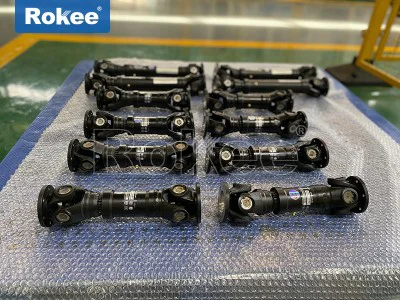
Drive shafts are classified into distinct types based on structural configuration, operational design, and intended application, each tailored to address specific mechanical requirements, space constraints, and performance demands. The most prevalent categorization is based on structural assembly, dividing drive shafts into one-piece, two-piece, multi-piece, telescopic slip-in-tube, and collapsible designs. One-piece drive shafts are the simplest and most widely used variant, consisting of a single rigid shaft body with end joints; they offer high torsional rigidity, minimal power loss, and straightforward installation, making them ideal for compact vehicles, light-duty machinery, and applications with short drivetrain distances. However, their length is limited by bending stress and critical speed constraints, rendering them unsuitable for long-wheelbase platforms. Two-piece drive shafts address this limitation by splitting the shaft into two shorter segments connected by a center support bearing, reducing individual shaft length to minimize bending and resonance issues. This design is commonly employed in full-size vehicles, heavy-duty trucks, and long-wheelbase equipment, offering improved stability, reduced vibration, and enhanced durability over extended drivetrain spans. Multi-piece drive shafts feature three or more segmented shafts with multiple support bearings, engineered for extremely long-wheelbase heavy machinery, commercial vehicles, and industrial equipment where even two-piece designs cannot mitigate stress and vibration effectively. Telescopic slip-in-tube drive shafts integrate a fully adjustable splined section that allows for significant length variation, paired with flexible joints to handle extreme angular misalignment; these are ideal for vehicles with independent suspension systems, off-road equipment, and machinery with substantial suspension travel. Collapsible drive shafts, a specialized safety-focused variant, are designed to compress and absorb impact energy in the event of a collision or sudden mechanical failure, preventing catastrophic shaft penetration and reducing damage to surrounding components and operators.
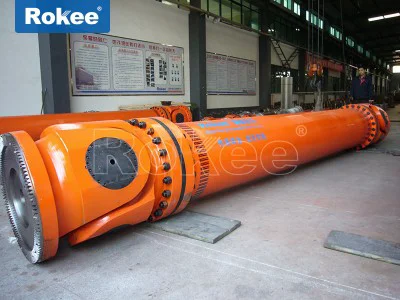
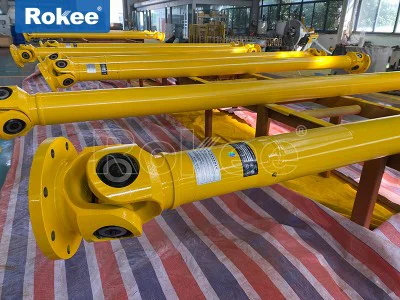
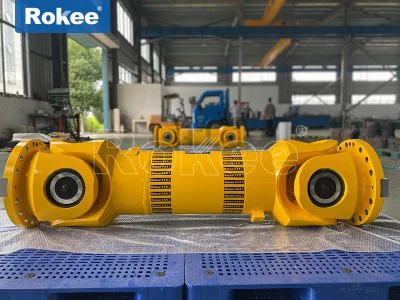
Drive shafts are also categorized by joint type and operational functionality, separating them into universal joint (U-joint) drive shafts, constant velocity (CV) drive shafts, and specialized industrial drive shafts. U-joint drive shafts are the traditional workhorse of mechanical power transmission, utilizing cross-shaped universal joints to accommodate moderate angular misalignment; they are robust, cost-effective, and easy to maintain, making them suitable for rear-wheel-drive vehicles, light trucks, agricultural machinery, and basic industrial equipment. While reliable, U-joints produce slight speed fluctuations at steep angles, leading to minor vibration and reduced efficiency in high-angle applications. CV drive shafts, by contrast, feature precision-engineered constant velocity joints that maintain consistent rotational speed regardless of operating angle, eliminating vibration and ensuring smooth power delivery even at extreme misalignments. These shafts are predominantly used in front-wheel-drive vehicles, all-wheel-drive systems, performance cars, and heavy-duty off-road equipment, where seamless power transfer and steering compatibility are essential. Industrial-grade drive shafts represent a specialized category, built to withstand extreme torque loads, harsh environmental conditions, and continuous heavy-duty operation; they often feature reinforced shaft bodies, heavy-duty bearings, and sealed joints, tailored for construction machinery, manufacturing equipment, marine propulsion systems, agricultural implements, and power take-off (PTO) applications. Material-based classification further differentiates drive shafts, with steel drive shafts offering exceptional strength and affordability for standard applications, aluminum drive shafts providing lightweight performance for improved efficiency and dynamic response, and carbon fiber composite drive shafts delivering unmatched strength-to-weight ratio, reduced inertia, and superior vibration damping for high-performance vehicles, racing applications, and premium industrial machinery.
The versatility of drive shaft designs and performance profiles enables their deployment across an extensive range of industries and applications, each leveraging specific shaft characteristics to meet unique operational needs. In the automotive industry, drive shafts are integral to nearly every vehicle platform, with one-piece U-joint shafts serving compact rear-wheel-drive cars, two-piece shafts supporting full-size sedans, trucks, and SUVs, and CV shafts powering front-wheel-drive and all-wheel-drive passenger vehicles. Performance and racing vehicles rely on lightweight aluminum or carbon fiber drive shafts to minimize rotational inertia, boost acceleration, and enhance handling, while heavy-duty commercial trucks, buses, and off-road vehicles utilize multi-piece, reinforced drive shafts to handle extreme torque loads and rugged terrain. Beyond automotive use, drive shafts are indispensable in agricultural machinery, powering tractors, harvesters, plows, and other farm equipment through PTO systems; these shafts are built to endure dusty, wet, and high-load farming conditions, with durable joints and sealed components to resist contamination and wear. Marine engineering relies heavily on specialized drive shafts, known as propeller shafts, to transmit power from boat engines to underwater propellers; these shafts are constructed from corrosion-resistant materials to withstand saltwater exposure and feature waterproof seals to prevent water intrusion into the vessel’s drivetrain. In the industrial sector, drive shafts are used in manufacturing machinery, conveyor systems, pumps, compressors, and heavy construction equipment, including excavators, loaders, and cranes, where they transfer power between motors, gearboxes, and working components reliably under continuous heavy use. Rail transportation employs robust drive shafts to link locomotive engines to wheel assemblies, ensuring consistent power delivery and durability under the extreme stresses of rail travel. Even in aerospace and small-scale mechanical systems, specialized compact drive shafts are utilized for auxiliary power transmission, demonstrating the component’s universal relevance across mechanical engineering disciplines.
As mechanical engineering continues to advance, drive shaft technology evolves in tandem, with ongoing innovations focused on enhancing performance, reducing weight, improving efficiency, and extending service life. Modern design practices leverage advanced computer modeling and simulation to optimize shaft geometry, balance stress distribution, and fine-tune critical speed and vibration characteristics, eliminating design flaws before production. Material science advancements have led to the development of high-strength alloys, composite materials, and hybrid shaft designs that push the boundaries of strength-to-weight performance, reducing inertial loads and boosting overall system efficiency. Manufacturing improvements, such as precision machining, seamless tube forming, and automated assembly, have enhanced shaft balance, structural integrity, and consistency, reducing NVH and increasing operational reliability. Additionally, integrated lubrication systems, wear-resistant coatings, and advanced sealing technologies have minimized maintenance requirements and extended the lifespan of drive shafts in harsh operating environments. Despite their simple outward appearance, drive shafts remain a cornerstone of mechanical power transmission, with their structural design, performance capabilities, and diverse types directly shaping the functionality, efficiency, and reliability of countless mechanical systems worldwide. Every application, from passenger vehicles to industrial heavy machinery, depends on a carefully selected drive shaft design that aligns with its unique torque, speed, alignment, and environmental demands, highlighting the critical role of this unassuming yet indispensable component in modern engineering and machinery operation.
Coupling Categories

Links:
Related Articles
- Aug 19, 2026Universal Joint Coupling Drive Shaft
- Aug 14, 2026SWP Cardan Drive Shaft
- Aug 14, 2026Universal Joint Cardan Drive Shaft
- Aug 14, 2026Cardan Drive Shaft For Sale
- Aug 14, 2026Flange Cardan Drive Shaft
- Aug 10, 2026Non Telescopic Cardan Drive Shaft
- Aug 4, 2026Pump Drive Cardan Drive Shaft
- Aug 4, 2026Short Cardan Drive Shaft
- Aug 4, 2026Ball Cage Cardan Drive Shaft
- Aug 4, 2026Cardan Drive Shaft For Steel Mill