Curved Tooth Gear Couplings
As a key component in modern industrial transmission systems, curved tooth gear couplings have become the preferred solution for heavy-duty and high-precision transmission fields due to their unique structural design and excellent performance. This type of coupling effectively solves the limitations of traditional spur gear couplings in terms of compensation capacity, load-bearing performance, and service life through innovative drum tooth design, and is widely used in multiple industrial fields such as metallurgy, mining, energy, and heavy engineering.
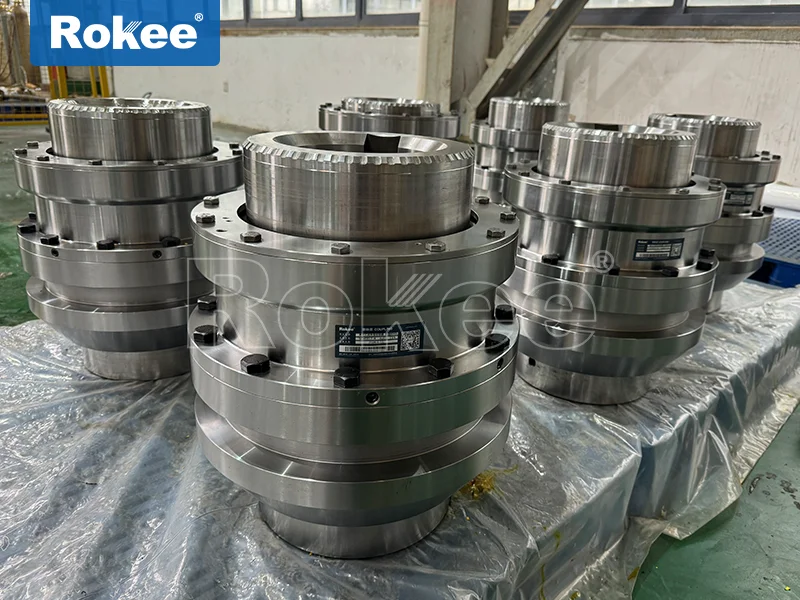
Curved tooth gear coupling belongs to rigid flexible coupling, and its core technology lies in the unique gear design. Compared with ordinary spur gear couplings, drum gear couplings achieve better deviation compensation capability and higher torque transmission efficiency through the special combination of drum shaped outer teeth and straight tooth inner teeth.
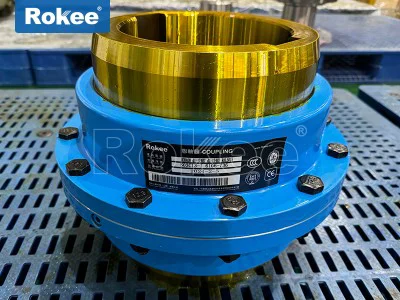
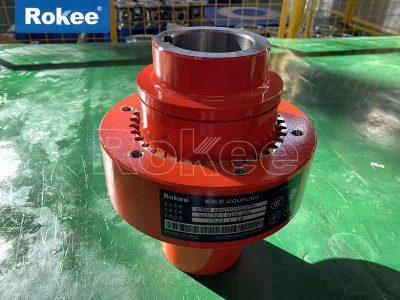
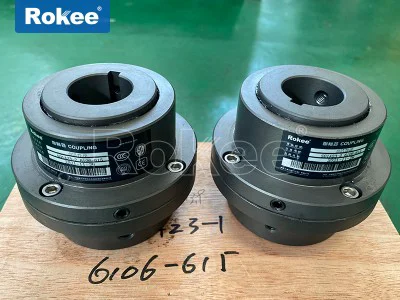
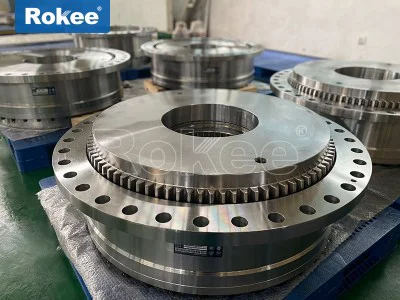
In terms of structural composition, the curved tooth gear coupling consists of internal gear rings with the same number of teeth and flange half couplings with external teeth. The outer teeth are not simply straight teeth, but are made into spherical surfaces, with the center of the spherical surface located on the gear axis. This design results in a larger backlash between the teeth compared to regular gears. The internal teeth usually maintain a straight tooth form, and the combination of the two forms a unique transmission system. In practical applications, there are various structural variants of drum gear couplings according to different standard systems, including GICL, GIICL, WG and other series, to meet the needs of different industrial scenarios.
The motion compensation capability is the core advantage of drum gear couplings. This type of coupling can simultaneously compensate for radial, axial, and angular axis deviations, with an angular compensation capability of ± 1.5 °, which is 50% higher than traditional spur gear couplings. When the radial displacement is zero, the allowable angular displacement of the drum toothed coupling is 1 ° 30 ', while the straight toothed coupling is only 1 °. This enhanced compensation capability allows for relatively relaxed alignment requirements during installation, reducing installation difficulty and accuracy requirements, while also reducing additional loads and vibrations caused by poor alignment.
From the perspective of mechanical performance analysis, the drum shaped tooth design significantly improves the tooth surface contact conditions. When there is angular displacement, the contact state of the drum shaped teeth along the tooth width is more reasonable, avoiding the stress concentration problem caused by the edge compression of the tooth end under angular displacement conditions in straight tooth couplings. This optimized contact state not only improves torque transmission capacity (15-20% higher than spur gear couplings of the same size), but also reduces tooth wear and extends service life.
In terms of transmission efficiency, the curved tooth gear coupling also performs well, with a transmission efficiency of up to 99.7%. High efficiency means less energy loss and lower operating temperature, which is particularly important for high-power transmission systems.
The sealing and lubrication system of the curved tooth gear coupling has also been specially designed. Good lubrication is the key to ensuring the long-term reliable operation of the coupling. Most high-quality drum tooth couplings use NLGI 2 # extreme pressure lithium based grease or forced thin oil lubrication systems. Thin oil lubrication can reduce tooth wear to about 10% of grease lubrication, while circulating oil can also take away the heat generated by meshing, preventing material performance degradation. The advanced sealing structure can achieve 10000 hours of maintenance free operation, significantly reducing maintenance costs.
The improvement of load-bearing capacity and durability is one of the most prominent advantages of drum toothed couplings. Using high-quality alloy steel materials (such as 42CrMo, 20CrMnTi) and undergoing precision carburizing and quenching processes, the tooth surface hardness can reach HRC58-62, with excellent wear resistance. The special heat treatment process results in a depth of 1.2-1.8mm for the wear-resistant layer on the tooth surface, far exceeding the industry average of 0.8mm. In a certain heavy-duty gearbox application, the curved tooth gear coupling has accumulated a peak torque transmission of 290 kN · m, demonstrating excellent load capacity. The combination of materials and processes increases the service life of high-quality drum gear couplings by more than three times compared to ordinary products, significantly reducing replacement frequency and total cost of ownership.
The convenience of installation and maintenance is another important advantage. The outer tooth sleeve of the curved tooth gear coupling has a trumpet shaped tooth end, making it very convenient to install and remove the inner and outer teeth. This design greatly simplifies on-site installation and post maintenance work, especially in industrial sites with limited space. Meanwhile, due to the enhanced compensation capability, its requirements for installation alignment are relatively relaxed, allowing for a certain axial deviation (<0.3mm) and angular deviation (<0.5 °), reducing installation difficulty and labor costs. In terms of maintenance, modern drum gear couplings adopt advanced sealing technology, with some models achieving maintenance free operation for 10000 hours, while conventional models only require lubrication every 2000 hours or 6 months, with significantly lower maintenance intensity than other types of couplings.
Excellent performance in vibration and noise control. The drum shaped tooth surface optimizes the meshing contact conditions, avoiding the impact and vibration of traditional spur gear couplings under angular displacement conditions. Actual test data shows that under the same operating conditions, the curved tooth gear coupling can reduce equipment vibration values by 60-70% and significantly reduce noise levels. This characteristic makes it particularly suitable for high-precision equipment that is sensitive to vibration, such as semiconductor manufacturing equipment.
In terms of application fields, curved tooth gear couplings have been widely used in multiple heavy industry sectors due to their excellent performance:
The metallurgical industry is one of the most important application areas for drum gear couplings, including rolling mills, heavy-duty reducers, continuous casting equipment, etc. In these situations, the coupling not only needs to transmit huge torque, but also withstand shaft displacement caused by thermal deformation.
In the field of mining machinery, such as mine hoists, crushers, conveying equipment, etc., the working environment is harsh and the load changes greatly. The high compensation capability and impact resistance of the curved tooth gear coupling make it an ideal choice.
In energy equipment such as hydroelectric generators and wind turbine yaw/pitch systems, long-life and maintenance free transmission solutions are often required. curved tooth gear couplings in wind power applications usually adopt special anti-corrosion design and sealing technology to adapt to harsh outdoor environments.
Heavy engineering machinery, including port cranes, shield tunneling machines, large test benches, etc., rely on drum gear couplings to transmit large torque while compensating for deviations caused by structural deformation.
In addition, the drum gear coupling is also widely used in shafting transmission in petrochemical industry, marine propulsion, paper machinery and other fields. With the advancement of technology, its application scenarios are constantly expanding, and relatively lightweight industrial fields such as food and beverage production lines and logistics conveying systems are also adopting miniaturized and high-precision curved tooth gear coupling solutions.
The excellence of curved tooth gear couplings comes from precise design and strict manufacturing processes. Excellent curved tooth gear coupling manufacturers not only strive for excellence in material selection, but also implement strict quality control throughout the entire production process to ensure the reliability of products under various harsh working conditions.
Materials science is the foundation of the manufacturing of drum gear couplings. High end curved tooth gear couplings commonly use 42CrMo alloy steel, and after quenching and tempering treatment, the tooth surface hardness reaches the optimal range of HRC58-62. Compared with ordinary 45 # steel, this material combination increases the product's lifespan by more than three times. A well-known manufacturer conducts spectral analysis on materials to ensure that their chemical composition accurately meets standards. The C content is controlled at 0.38% -0.45%, the Cr content is 1.80% -2.10%, and the Mo content is 0.15% -0.25%, ensuring product performance from the source. In addition, for special application environments such as corrosive media or high temperature situations, special stainless steel or surface treatments such as nickel plating, nitriding, etc. will be selected to further enhance corrosion resistance and heat resistance.
Tooth design is the core technology of curved tooth gear couplings. The design of the drum curve is particularly crucial, as it determines the compensation capability and load distribution of the coupling. Modern curved tooth gear couplings often use circular arc drum curvature curves, and some complex applications adopt a three-stage circular arc combination design. The optimization of the radius of the bulge circle is crucial: a radius that is too small can lead to edge contact, while a radius that is too large can weaken tooth strength. Research has shown that the optimal radius of the bulge circle should be such that there is no edge contact at the maximum axial inclination angle, while minimizing the concentrated load on the gear teeth.
In terms of processing technology, there are two main methods for manufacturing drum shaped teeth: displacement machining and enveloping machining. In the displacement machining method, in addition to rotational motion, the gear blank also moves forward and backward relative to the tool; The enveloping processing method maintains that the tooth blank only undergoes rotational motion, while the center of the rolling cutter undergoes circular motion. At present, the envelope processing method has become mainstream due to its higher efficiency and accuracy. Advanced CNC gear hobbing machines combined with high-precision rolling cutters can achieve cumulative tooth pitch error control within 0.025mm, which is twice as accurate as the 0.05mm required by the national standard GB/T 3852.
Heat treatment technology has a significant impact on product performance. High quality curved tooth gear couplings use carburizing and quenching technology to form a hardened layer 1.2-1.8mm deep on the tooth surface, while maintaining good toughness at the core, achieving an ideal performance combination of "external hardness and internal toughness".
The design of lubrication system has a critical impact on product lifespan. curved tooth gear couplings mainly have two types of lubrication: grease lubrication and thin oil lubrication. Lubricating grease is simple and easy to implement, using NLGI 2 # extreme pressure lithium based grease, suitable for medium and low-speed applications; Thin oil lubrication is more suitable for high-speed and heavy-duty working conditions, and the lubricating oil needs to be filtered through a high-precision oil filter with a filtration degree of less than 10 microns. Innovative lubrication design, such as oil collection groove structure, utilizes centrifugal force to spray oil into the meshing area, ensuring sufficient lubrication.
Proper selection and scientific maintenance are key factors in fully utilizing the performance of curved tooth gear couplings. Many on-site failures are not caused by product quality issues, but rather due to improper selection or poor maintenance. Mastering professional selection methods and maintenance skills can significantly improve the reliability of equipment operation and the service life of couplings.
In the vast landscape of mechanical power transmission systems, shaft couplings serve as indispensable connecting components that bridge driving and driven shafts, enabling efficient torque transfer while accommodating inevitable shaft misalignments that arise from manufacturing tolerances, installation errors, thermal expansion, mechanical vibration, and operational load fluctuations. Among the diverse range of coupling types available, the curved tooth gear coupling stands out as a robust, high-performance solution that blends rigid torque transmission with flexible misalignment compensation, making it a staple in heavy-duty and precision-driven industrial machinery across the globe. Unlike flexible elastomer couplings or rigid flange couplings, this specialized gear coupling leverages the unique geometry of curved, drum-shaped external teeth to deliver a balanced combination of strength, flexibility, and durability, addressing critical operational challenges that many standard coupling designs cannot overcome. To fully grasp its value and widespread adoption, it is essential to dissect its fundamental structural composition, inherent performance attributes, distinct classification criteria, and versatile real-world applications, all of which contribute to its status as a cornerstone component in modern mechanical engineering.
At its core, the curved tooth gear coupling features a streamlined, modular structural design that prioritizes functional efficiency and mechanical reliability, with no overly complex components that could compromise long-term performance. The assembly typically consists of two primary half-coupling hubs, each equipped with precision-machined curved external gear teeth, and a central inner gear sleeve that houses matching internal straight teeth to engage with the external curved teeth on both hubs. Each half-coupling hub is securely mounted to the corresponding driving and driven shafts via a tight interference fit, keyway connection, or clamping mechanism, ensuring zero slippage during torque transmission and maintaining consistent rotational synchrony between the two shafts. The defining structural feature that sets this coupling apart from conventional straight-tooth gear couplings is the spherical, curved profile of the external teeth; the center of this spherical curvature aligns precisely with the axis of the gear hub, creating a uniform contact surface between the external curved teeth and the internal straight teeth of the sleeve. This intentional design eliminates the edge contact and concentrated stress points that plague straight-tooth couplings, distributing contact pressure evenly across the entire tooth surface during operation. Additional structural elements include sealing components integrated at the junction between the hubs and the central sleeve, which prevent the ingress of contaminants such as dust, moisture, and abrasive particles while retaining lubrication within the gear mesh, and high-strength fasteners that secure the assembly without compromising rotational balance. The overall structure is compact, with a low moment of inertia relative to its torque-carrying capacity, minimizing energy loss from rotational inertia and allowing for smooth operation even at varying rotational speeds.
The performance characteristics of the curved tooth gear coupling are directly derived from its specialized structural design, making it uniquely suited for demanding operational environments where both high torque transmission and misalignment compensation are non-negotiable. One of its most prominent performance advantages is its exceptional torque transmission capacity, which far exceeds that of many flexible non-metallic couplings; the curved tooth design optimizes tooth engagement, allowing the coupling to handle heavy, shock, and impact loads without deformation or failure, even under continuous heavy-duty operation. Unlike rigid couplings, which offer no misalignment tolerance and can transmit damaging stress to shafts and bearings when misalignment occurs, this coupling provides reliable compensation for three primary types of shaft misalignment: angular misalignment, radial misalignment, and axial misalignment. The curved tooth profile permits a moderate degree of angular deflection between the two shafts, typically far greater than what straight-tooth gear couplings can accommodate, reducing bending stress on shaft ends and extending the service life of connected bearings and gearboxes. Radial misalignment, caused by lateral offset between shaft centers, is effectively absorbed through the smooth meshing of curved teeth, while axial misalignment, stemming from thermal expansion or axial movement of shafts during operation, is compensated without disrupting torque flow or causing excessive wear. Beyond misalignment compensation, the coupling exhibits exceptional wear resistance and operational longevity, thanks to the even stress distribution across tooth surfaces; this reduces localized wear and fatigue, minimizing the need for frequent maintenance and replacement compared to couplings with poor load distribution. It also delivers stable rotational performance with minimal backlash, ensuring precise power transmission for applications requiring consistent speed and positional accuracy, and operates quietly even under high loads, as the curved tooth mesh reduces friction-induced noise and vibration. Additionally, the coupling maintains consistent performance across a wide range of operating temperatures, adapting to thermal changes in industrial settings without compromising structural integrity or functional efficiency, and its sealed design protects internal components from harsh external conditions, further enhancing its durability in challenging work environments.
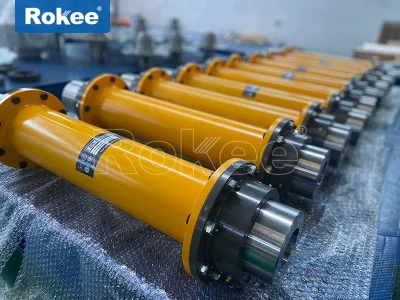
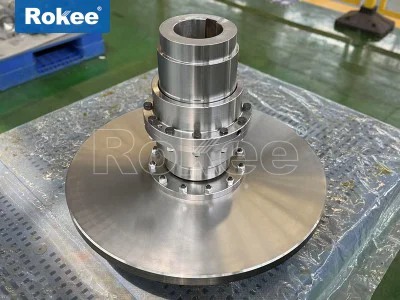
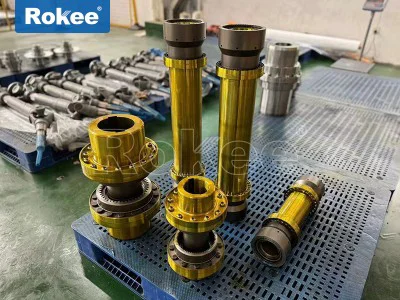
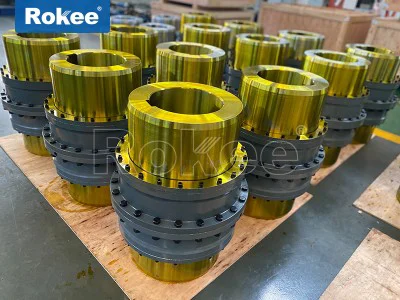
Curved tooth gear couplings are categorized into several distinct types based on structural variations, functional adaptations, and installation requirements, each tailored to address specific operational needs and spatial constraints in different mechanical systems. The most fundamental classification distinguishes between single-stage curved tooth gear couplings and double-stage curved tooth gear couplings, differentiated by the number of gear mesh interfaces and misalignment compensation capabilities. Single-stage models feature a single set of curved external teeth and a corresponding inner sleeve, offering compact dimensions and sufficient misalignment compensation for standard industrial applications with moderate load and misalignment requirements; they are ideal for systems with limited installation space and relatively stable shaft alignment. Double-stage models, by contrast, incorporate two sets of curved tooth meshes, often with an extended intermediate sleeve or spacer between the two hub assemblies, providing significantly enhanced misalignment compensation, especially for larger angular and radial offsets, and are designed for heavy-duty systems where shaft movement is more pronounced. Another key classification is based on structural modifications for specialized operational needs, including standard curved tooth gear couplings for general-purpose use, models with integrated brake discs or brake wheels for systems requiring combined power transmission and braking functions, and vertically oriented models designed exclusively for vertical shaft installations, such as pumps, mixers, and vertical conveyor systems. There are also narrow-width and wide-width variants, with narrow models optimized for high-speed operation and compact layouts, and wide models engineered for maximum torque capacity and heavy-load applications. Additionally, some variants feature modified tooth profiles and clearance settings to suit specific speed and load ranges, while others are designed with detachable components for easier installation and maintenance in hard-to-reach equipment spaces. Each type retains the core curved tooth design and performance benefits but is fine-tuned to meet the unique demands of different mechanical setups, ensuring versatility across various industrial scenarios.
The combination of robust structural design, exceptional performance, and diverse classification makes curved tooth gear couplings highly versatile, with widespread applications across nearly every heavy industry and precision manufacturing sector that relies on mechanical power transmission. One of the primary application areas is heavy machinery and metal processing equipment, including rolling mills, forging machines, and metal extrusion presses, where the couplings handle extremely high torque loads, continuous heavy operation, and significant shaft misalignment caused by thermal expansion and mechanical stress. In these settings, their ability to withstand shock loads and maintain reliable torque transmission ensures uninterrupted production, a critical factor in metal manufacturing where downtime results in substantial productivity losses. They are also extensively used in mining and quarrying equipment, such as crushers, conveyors, and mining hoists, which operate in harsh, dusty environments with heavy vibration and extreme loads; the sealed, durable design of the couplings resists contamination and wear, ensuring consistent performance in rugged conditions that would quickly damage less robust coupling types. In the marine and shipbuilding industry, curved tooth gear couplings are employed in propulsion systems, deck machinery, and auxiliary equipment, where they accommodate shaft movement caused by vessel motion and wave impact, while delivering reliable torque transfer for marine propulsion and operational machinery. The energy sector, including power generation plants, wind turbine drive systems, and hydraulic power units, relies heavily on these couplings for their high efficiency, misalignment tolerance, and long service life; they connect turbines, generators, and drive motors, ensuring stable power output even under variable load conditions. Additionally, they are widely integrated into heavy transportation equipment, such as large-scale construction machinery, agricultural machinery, and material handling systems, including cranes, excavators, and conveyor belts, where durability and load-bearing capacity are paramount. In precision manufacturing and industrial automation, curved tooth gear couplings are used in machine tools, gearboxes, and automated production lines, providing precise torque transmission with minimal backlash to maintain machining accuracy and operational precision. They also find application in pump and compressor systems across various industries, including water treatment, chemical processing, and oil and gas production, where they ensure smooth power transfer between motors and pump shafts while compensating for thermal expansion and minor installation misalignments. Beyond these core sectors, they are utilized in a wide range of other mechanical systems, from textile machinery and printing equipment to marine propulsion and aerospace ground support equipment, wherever a balance of high torque capacity, misalignment compensation, and long-term durability is required.
In summary, the curved tooth gear coupling represents a masterful fusion of mechanical design and functional performance, addressing the dual challenges of reliable torque transmission and effective misalignment compensation that define modern power transmission systems. Its thoughtfully engineered structural composition, centered on the unique curved tooth profile, delivers unparalleled load-bearing capacity, wear resistance, and operational stability, while its diverse classifications ensure adaptability to a vast array of industrial applications and operational conditions. Unlike rigid couplings that lack flexibility or soft flexible couplings that lack heavy-load capacity, this gear coupling strikes a perfect balance between rigidity and flexibility, making it an irreplaceable component in critical industrial machinery. As industrial technology continues to advance and operational demands become more stringent, the curved tooth gear coupling remains a preferred choice for engineers and designers worldwide, thanks to its proven reliability, low maintenance requirements, and ability to perform consistently in the most demanding environments. Its enduring relevance in mechanical engineering underscores the importance of specialized, performance-driven component design, proving that even seemingly small components can have a profound impact on the efficiency, durability, and overall functionality of entire mechanical systems.