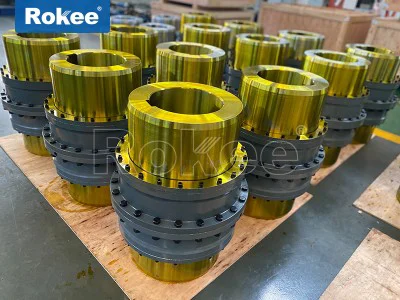
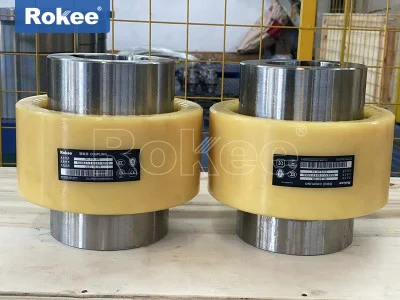
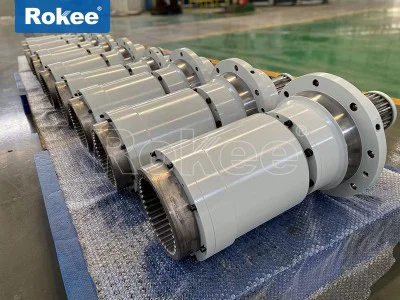
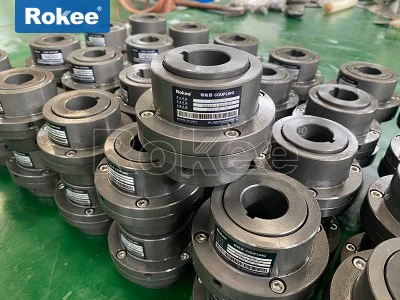
Geared Couplings
Geared couplings as key components in the field of mechanical transmission, play a crucial role in modern industrial equipment. This precision device that achieves power transmission through gear meshing can not only efficiently transmit torque, but also effectively compensate for various deviations between shaft systems, ensuring the smooth operation of the transmission system. From heavy metallurgical equipment to high-speed trains, from mining machinery to precision machine tools, gear couplings are ubiquitous.
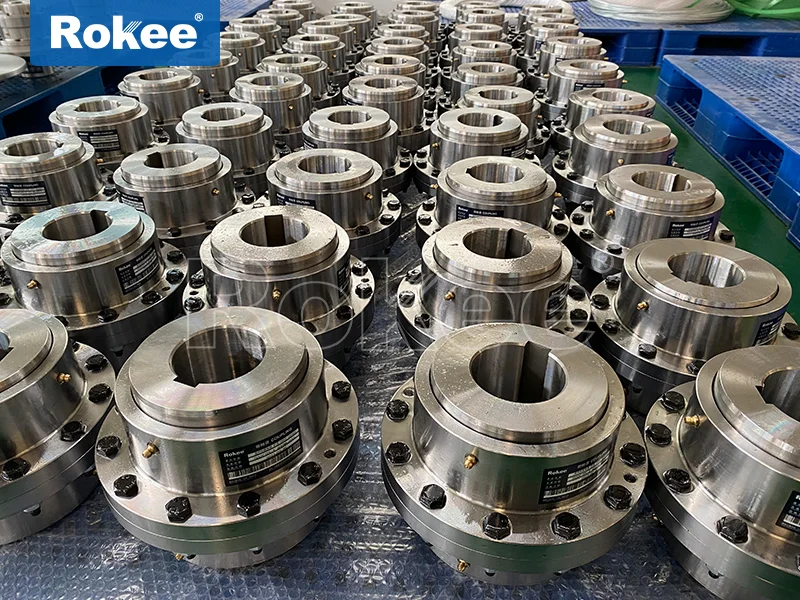
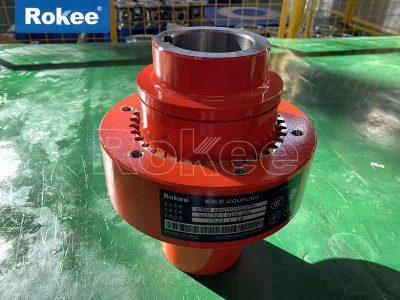
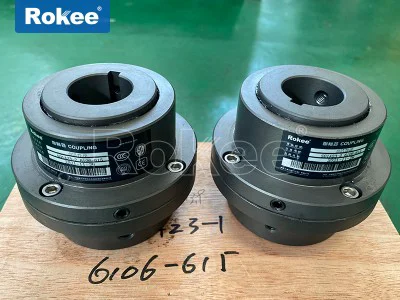
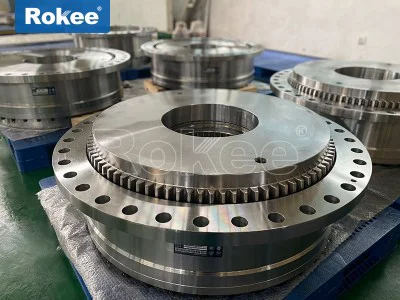
Geared coupling is a mechanical transmission device that achieves power transmission through gear meshing, belonging to the category of rigid movable couplings. The core design concept is to use meshing gear pairs to connect two shafts, while allowing for a certain degree of axial, radial, and angular deviation. This type of coupling mainly consists of four basic components: outer gear shaft sleeve, inner gear ring, sleeve assembly, and sealing and lubrication system. The outer gear shaft sleeve is usually installed at the end of the drive shaft, and its outer teeth mesh with the inner teeth of the inner gear ring to form a power transmission path. The sleeve serves as a connection and protection, enclosing the entire meshing system to prevent external contaminants from entering and maintain lubrication.
The working principle of geared couplings is based on the mechanical principle of precision gear meshing. When the driving shaft rotates, the internal gear ring that meshes with it is driven to rotate by the external gear shaft sleeve, thereby transmitting power to the driven shaft. During this process, the special design of the gears allows for a certain relative displacement between the two shafts. Specifically, geared couplings can compensate for parallel offsets of 0.01-0.02 inches (approximately 0.25-0.5 millimeters) and misalignment angles of up to 2 degrees, with some drum tooth designs even allowing for up to 6 degrees of deviation angle. This compensation capability eliminates the need for absolute perfect alignment during installation of geared couplings, greatly reducing installation difficulty and maintenance costs.
From the perspective of power transmission efficiency, geared couplings perform extremely well. Due to its direct meshing with metal gears, the energy loss during transmission is minimal, and the transmission efficiency can reach 99.7%, far higher than many other types of couplings. At the same time, the torque transmission capability of geared couplings is impressive, and the torque bearing range of standard products can reach the 4500kN · m level, which can meet the needs of the vast majority of heavy-duty industrial applications. The high efficiency and high torque characteristics make geared couplings the preferred choice for high-power transmission systems.
The material selection of geared couplings has a direct impact on their performance. The teeth of most geared couplings are made of high-quality alloy steel and undergo heat treatment processes such as quenching and carburizing to improve surface hardness and wear resistance. The sleeve part may be made of metal or high-strength engineering plastics (such as nylon) depending on the application scenario. Metal sleeves provide higher strength and durability, while nylon sleeves can reduce weight, lower noise, and have certain self-lubricating properties. The application of these material sciences ensures the reliable operation of geared couplings under various harsh working conditions.
Geared couplings can be classified into various types based on their tooth profile design and structural configuration, each with its unique performance characteristics and applicable scenarios. Understanding these classifications and their differences is crucial for selecting and using geared couplings correctly. In practical applications, engineers need to choose the most suitable type of geared coupling based on factors such as load characteristics, speed requirements, alignment accuracy, and installation space.
The spur geared coupling is the most basic form, with a straight tooth profile on its outer gear sleeve, simple structure, and low manufacturing cost. This type of coupling compensates for the relative displacement between the two shafts by increasing the backlash between the inner and outer teeth, but the compensation capability is limited and can generally only adapt to very small axis deviations. Straight tooth couplings are prone to edge contact during meshing, leading to stress concentration and potential uneven wear during long-term use. With the development of technology, spur geared couplings have gradually been replaced by drum geared couplings with better performance. Currently, they are mainly used in general transmission applications with low compensation requirements and low speeds.
Drum shaped geared coupling is currently the most widely used type of geared coupling in industry, representing the advanced level of modern geared coupling technology. Unlike the straight tooth design, the outer gear shaft sleeve of the drum shaped geared coupling is machined into a circular arc shape, and the entire tooth surface has a drum shaped structure. This innovative design brings multiple advantages: firstly, the drum shaped teeth significantly improve the tooth surface contact conditions, even when there is axis deviation, it can maintain surface contact instead of line contact, making the contact stress distribution more uniform; Secondly, the drum shaped teeth allow for a larger angle misalignment, with a compensation capability of up to 6 degrees, far exceeding the 2-degree limit of straight tooth couplings; Furthermore, this design eliminates the common edge compression phenomenon of spur geared couplings and reduces local stress concentration. Research has shown that under the same conditions, the torque transmission capacity of drum geared couplings is 15-30% higher than that of straight geared couplings, and their service life is significantly extended. Therefore, in heavy load fields such as metallurgy, mining, and lifting, drum geared couplings have become a standard configuration.
From the perspective of structural configuration, geared couplings can be divided into two standardized forms: CL type short couplings and CLZ type long couplings. The CL type is directly connected to two shafts by a pair of inner and outer gear sleeves, with a compact structure and suitable for situations with limited axial space; The CLZ type connects two half couplings through an intermediate shaft to form a longer transmission chain, which can adapt to the transmission needs of larger wheelbases. When the central axis is not long, the CLZ type can adopt a hollow design to reduce weight. Both types have achieved standardized production, with torque transmission capabilities covering various application scenarios below 100 tons per meter.
Geared couplings occupy an important position in the field of industrial transmission due to their excellent mechanical performance. The advantages of this type of coupling are reflected in multiple aspects, making it the preferred transmission solution for many harsh working conditions. Understanding these performance advantages can help engineers make more rational choices in equipment design and maintenance, fully leveraging the technical characteristics of geared couplings.
High torque density is one of the most significant advantages of geared couplings. Compared to other types of couplings, geared couplings can transmit greater torque at the same size, making them particularly valuable in space limited heavy-duty applications. The torque transmission capacity of modern geared couplings can reach 4500 kN · m, which is sufficient to meet the power requirements of the vast majority of industrial equipment. This powerful torque transmission capability stems from the high efficiency of gear meshing principle and the application of high-quality alloy steel materials. By accurately calculating the contact stress and bending stress of the tooth surface, engineers can optimize gear parameters to achieve maximum torque capacity of the coupling at the smallest size.
The precision transmission characteristics of geared couplings are also commendable. Due to the use of gear meshing principle, this coupling can ensure precise synchronization between the input shaft and the output shaft, with a constant transmission ratio and no slip phenomenon. Under high-speed operating conditions, geared couplings can still maintain excellent dynamic balance performance, with vibration and noise control at a low level. Some high-precision geared couplings that have undergone special dynamic balancing treatment can even be used in extreme high-speed situations such as gas turbines, with speeds reaching tens of thousands of revolutions per minute. This precise transmission characteristic makes geared couplings an ideal choice for transmission systems that require strict synchronization.
The ability to compensate for deviations constitutes another major technical advantage of geared couplings. Unlike rigid couplings that require strict alignment of shaft systems, geared couplings can effectively compensate for installation deviations in axial, radial, and angular directions. Especially in the design of drum shaped teeth, by making the outer teeth into spherical surfaces (with the center of the spherical surface on the gear axis) and increasing the tooth flank clearance, extraordinary deviation adaptability is achieved. In practical applications, geared couplings can compensate for parallel offsets of 0.01-0.02 inches and up to 6 degrees of misalignment (depending on the specific type), greatly reducing installation difficulty and minimizing vibration and wear issues caused by poor alignment. This compensation capability is particularly important for large equipment such as rolling mills and ship propulsion systems, as their shaft systems often experience dynamic displacement due to thermal deformation, foundation settlement, and other reasons.
The reliability and durability of geared couplings are renowned in the industry. The high-quality geared coupling is made of high-strength alloy steel, and the tooth surface has undergone hardening treatment such as carburizing and quenching. The surface hardness can reach HRC58-62, while the core maintains sufficient toughness to withstand impact loads. A reasonable lubrication system design further extends the service life, and under normal maintenance conditions, the geared coupling can operate stably for tens of thousands of hours. It is worth mentioning that the failure of geared couplings is usually gradual. By regularly checking the condition of the tooth surface and lubrication status, potential problems can be detected in advance and planned maintenance can be arranged to avoid production interruptions caused by sudden failures.
Based on these performance advantages, geared couplings have been widely used in many industrial fields. In the metallurgical industry, geared couplings are the core transmission components of key equipment such as hot strip mills and cold rolling mills, responsible for transmitting the power of electric motors to the rolling mills. The harsh conditions such as high temperature, heavy load, and impact load in the steel production process precisely highlight the high torque and durability advantages of geared couplings. Mining and lifting equipment are another major application area of geared couplings. Equipment such as ball mills, crushers, and bridge cranes rely on geared couplings to transmit huge torque and compensate for installation deviations. In these situations, couplings often need to withstand frequent starting, braking, and even reverse operations, and the sturdy characteristics of geared couplings ensure the reliable operation of the equipment.
In the field of energy, geared couplings are widely used in wind turbines, hydro turbines, and gas turbines. Especially in modern wind power applications, geared couplings connect the generator and gearbox, not only transmitting torque, but also absorbing vibration and compensating for shaft displacement caused by tower shaking. The field of rail transit also relies on geared couplings. In the gear transmission system of high-speed trains, precision geared couplings ensure efficient transmission of power from the traction motor to the wheelset, with a running speed of up to 160 to 350 kilometers per hour. In addition, geared couplings play an irreplaceable role in industries such as ship propulsion, petrochemicals, and heavy machinery,
In the realm of mechanical power transmission, geared couplings stand as indispensable components that bridge the gap between driving and driven shafts, facilitating efficient torque transfer while accommodating operational misalignments that are inevitable in real-world industrial setups. Unlike rigid couplings that demand perfect shaft alignment and offer no flexibility, geared couplings blend robust mechanical strength with controlled flexibility, making them a staple in heavy-duty and precision-driven machinery across countless industries. A deep dive into their structural design, inherent performance traits, diverse classifications, and practical applications reveals why these components remain a preferred choice for engineers tasked with building reliable, long-lasting power transmission systems.
At its core, the fundamental structure of a standard geared coupling is engineered around precision-machined gear meshing, with a modular design that prioritizes durability and functional versatility. The primary components typically include two external toothed hubs, one or two internal toothed sleeves, and sealing elements to retain lubrication and prevent contamination. The external hubs are securely mounted onto the ends of the two shafts being connected, usually via keyways, interference fits, or clamping mechanisms, ensuring a tight, backlash-free connection that eliminates slippage during torque transmission. The internal sleeves, which feature precision-cut internal gear teeth, encase the external hubs and create a meshing interface between the two sets of teeth. This gear meshing is the heart of the coupling’s functionality, as it allows for controlled relative movement between the hubs while maintaining a continuous power transfer path. A critical structural variation that elevates performance is the drum-shaped tooth profile, which replaces the traditional straight spur gear teeth on external hubs. This curved tooth design distributes contact stress evenly across the gear surfaces, reducing edge wear, minimizing friction, and expanding the coupling’s ability to compensate for angular, parallel, and axial misalignments simultaneously. The materials used in constructing geared couplings are carefully selected to withstand extreme operational stresses; high-strength alloy steels are the most common choice, undergoing heat treatment processes such as quenching and carburizing to enhance hardness, wear resistance, and fatigue strength. Sealing components, typically made from durable elastomers, are integrated into the sleeve design to seal the internal gear cavity, locking in lubricating grease or oil and blocking out dust, moisture, debris, and other corrosive contaminants that could accelerate gear degradation. This sealed structure not only prolongs the coupling’s service life but also reduces the frequency of maintenance interventions in harsh working environments.
The performance characteristics of geared couplings are directly shaped by their structural design, resulting in a unique set of advantages that set them apart from other flexible coupling types. Foremost among these is exceptional torque transmission capacity; geared couplings can handle extremely high torque loads relative to their compact physical size, making them ideal for heavy machinery where space is limited but power demands are substantial. The multiple gear teeth that engage simultaneously during operation distribute the torque load evenly, preventing localized stress concentrations and enabling the coupling to handle peak loads and transient torque spikes without failure. Another key performance trait is misalignment compensation, a vital feature in industrial systems where perfect shaft alignment is difficult to achieve and maintain. Shaft misalignment can stem from installation errors, thermal expansion during operation, mechanical vibration, or structural settling over time, and geared couplings excel at mitigating these issues. The drum-shaped tooth design, in particular, allows for moderate angular misalignment, limited parallel eccentricity, and small axial displacements, absorbing these shifts without compromising power transmission or causing excessive wear on adjacent components like bearings and shafts. Geared couplings also exhibit high mechanical efficiency, with minimal energy loss during operation due to the precise gear meshing and low-friction tooth surfaces; this efficiency translates to reduced energy consumption and lower operational heat generation, supporting consistent performance even under continuous heavy-duty use. Additionally, these couplings offer reliable high-speed operation capability when properly balanced, suiting applications that demand both high torque and rapid rotational speeds. Despite these strengths, geared couplings do have performance considerations that must be accounted for: they require regular lubrication to maintain smooth gear meshing and prevent wear, and they may generate moderate noise at very high speeds if not properly aligned or balanced. However, these minor drawbacks are easily managed with routine maintenance, making the overall performance profile of geared couplings highly favorable for demanding industrial applications.
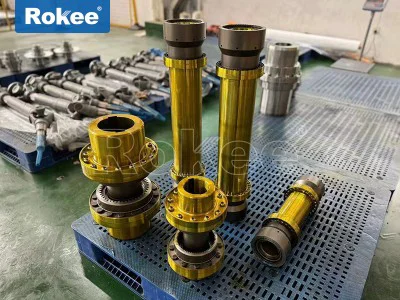
Geared couplings are categorized into distinct types based on structural design, functional capabilities, and application-specific requirements, each tailored to address unique operational challenges and shaft configuration needs. The most prevalent classification is based on flexibility and component layout, starting with full geared couplings, the most widely used variant in general industrial settings. A full geared coupling features two external toothed hubs and two internal toothed sleeves, or a single continuous internal sleeve, providing dual-sided flexibility that compensates for combined angular, parallel, and axial misalignments. This design is versatile and robust, suitable for applications where both shafts exhibit some degree of movement or misalignment, and it is the go-to choice for standard heavy-duty power transmission setups. In contrast, half geared (or semi-rigid) couplings feature one external toothed hub paired with a rigid, non-toothed hub, offering flexibility on only one side of the coupling. This design is ideal for scenarios where one shaft is fixed or requires minimal misalignment compensation, while the other shaft needs flexibility to accommodate movement; common use cases include connecting motors to fixed gearboxes or pumps where one component is securely anchored. Another specialized type is the floating shaft geared coupling, engineered to bridge large distances between two shafts that cannot be positioned close together. This design incorporates an intermediate floating shaft between two sets of geared coupling assemblies, extending the power transfer span while retaining the core misalignment compensation and high-torque capabilities of standard geared couplings. Floating shaft variants are essential in applications where spatial constraints separate the driving and driven units by a significant gap, such as long conveyor systems or large-scale industrial machinery. Continuous sleeve geared couplings feature a single, uninterrupted internal sleeve that encases both external hubs, offering enhanced protection against contamination and improved structural rigidity compared to split-sleeve designs. This type is well-suited for harsh, dirty environments where debris ingress is a major concern, as the seamless sleeve design reinforces sealing and shields the internal gear components more effectively. Additionally, geared couplings can be classified by tooth profile—spur gear and helical gear designs—with helical geared couplings offering smoother meshing, reduced noise, and better load distribution at high speeds, making them preferable for precision and high-RPM applications. Each type retains the core high-torque performance of geared couplings but is optimized to meet specific operational, spatial, and environmental demands, ensuring engineers can select a variant that aligns perfectly with their system requirements.
The versatility, strength, and reliability of geared couplings make them a cornerstone component across a vast array of industrial sectors, where consistent power transmission and misalignment tolerance are non-negotiable. In heavy industry, including steel manufacturing, mining, and metallurgy, geared couplings are ubiquitous in high-torque machinery such as rolling mills, crushers, conveyors, hoists, and extruders. These machines operate under extreme loads, constant vibration, and harsh physical conditions, and the robust design of geared couplings ensures uninterrupted power transfer, even as shafts shift due to heavy material processing and mechanical stress. In the energy production sector, encompassing thermal power plants, hydropower facilities, and wind energy systems, geared couplings connect turbines, generators, motors, and gearboxes, facilitating efficient power generation and distribution. Their ability to handle high rotational speeds and substantial torque loads, coupled with misalignment compensation, makes them critical for maintaining the stability and efficiency of energy generation equipment, where downtime can result in significant operational losses. The oil and gas industry also relies heavily on geared couplings for upstream and downstream operations, including pumps, compressors, mixers, and drilling machinery. These applications often involve corrosive environments, variable loads, and remote operating conditions, and the sealed, durable structure of geared couplings ensures reliable performance with minimal maintenance. In marine and shipbuilding applications, geared couplings are integrated into propulsion systems, deck machinery, and auxiliary equipment, where they withstand saltwater exposure, mechanical vibration, and shaft misalignment caused by hull movement and wave impact. Manufacturing and processing industries, including automotive production, paper mills, food processing, and textile manufacturing, utilize geared couplings in assembly lines, mixers, presses, and rotary equipment, where they balance precision power transmission with the flexibility needed to sustain continuous production flows. Even in transportation and heavy machinery sectors, such as locomotives, construction equipment, and material handling systems, geared couplings play a vital role in connecting engine and transmission components, ensuring smooth power delivery and durability under rugged operating conditions. Beyond these core sectors, geared couplings find use in any industrial system where two shafts must be connected, high torque is required, and perfect shaft alignment cannot be guaranteed; their adaptability to diverse operational conditions cements their status as a versatile and irreplaceable component in modern mechanical engineering.
Selecting the appropriate geared coupling for a specific application requires careful evaluation of several key factors to optimize performance and longevity. Engineers must assess the required torque capacity, ensuring the coupling can handle both continuous operating torque and peak transient loads without failure. Operational speed is another critical consideration, as the coupling must be rated for the maximum rotational speed of the system to avoid imbalance, noise, or premature wear. The type and magnitude of expected shaft misalignment—angular, parallel, axial, or a combination—dictate whether a full geared, half geared, or specialized variant is needed, as each type has distinct misalignment limits. Environmental conditions, including temperature extremes, moisture, dust, and chemical exposure, influence the choice of sealing materials, surface coatings, and structural design, such as opting for a continuous sleeve coupling in harsh environments. Installation space constraints also play a role, as compact machinery may require a low-profile geared coupling design, while long shaft spans demand floating shaft variants. Proper installation and routine maintenance further enhance the performance and service life of geared couplings; ensuring correct shaft alignment during setup, using high-quality lubricants at recommended intervals, inspecting gear teeth for wear or damage periodically, and replacing worn seals promptly all contribute to sustained functionality. When selected and maintained correctly, geared couplings deliver years of reliable service, minimizing downtime, reducing wear on connected machinery, and optimizing the overall efficiency of power transmission systems.
In summary, geared couplings represent a masterclass in mechanical engineering design, merging robust structural integrity, exceptional torque transmission, and controlled flexibility to solve the universal challenge of shaft connection in industrial machinery. Their well-engineered component layout, high-performance material selection, and specialized tooth profiles enable them to withstand extreme loads, compensate for unavoidable shaft misalignments, and operate efficiently across diverse environmental conditions. The wide range of geared coupling types—from standard full geared designs to specialized floating shaft and semi-rigid variants—ensures there is a tailored solution for nearly every power transmission application, spanning heavy industry, energy production, oil and gas, marine, manufacturing, and beyond. As industrial machinery continues to evolve toward higher power densities, more demanding operational conditions, and greater efficiency requirements, geared couplings will remain a vital component, adapting to new challenges while retaining their core strengths of reliability, durability, and performance. Their enduring prevalence across global industries is a testament to their unmatched ability to balance power, flexibility, and resilience, making them an essential element in the design of efficient, long-lasting mechanical systems.