Motor Couplings
Motor coupling is a key component in mechanical transmission systems, used to connect the motor shaft with the driven equipment shaft and achieve power transmission. This mechanical device can not only transmit rotational motion and torque, but also compensate for misalignment between the two axes to varying degrees, protecting the equipment from the effects of vibration and impact.
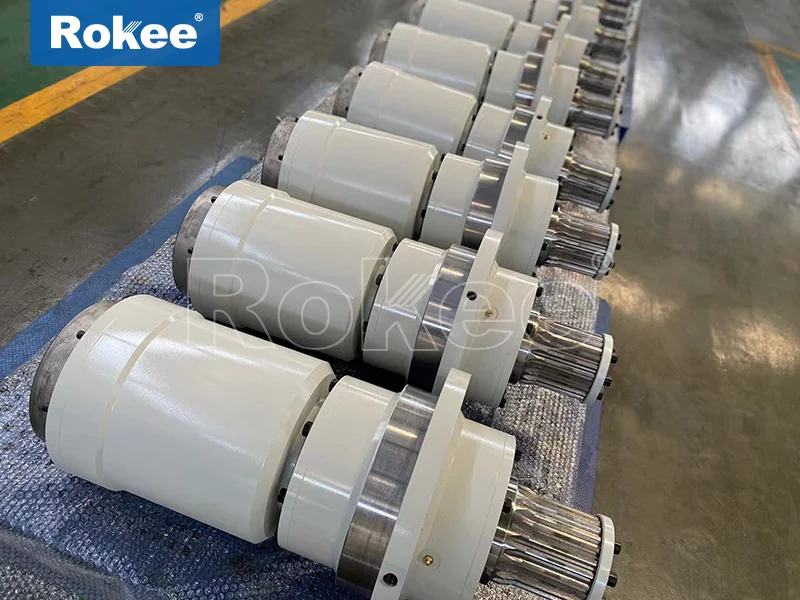
Motor couplings play multiple important roles in mechanical systems:
Power transmission: Efficiently transmitting the rotational power generated by the motor to the driven equipment is the most basic function of the coupling.
Inter axis compensation:
Radial misalignment compensation: allows for a certain offset between the two axis centerlines
Angle misalignment compensation: Tolerant for angle deviation between two axes
Axial displacement compensation: adapted to the relative movement of the shaft in the length directionVibration damping: Absorbs and reduces vibrations and impacts generated by motors or loads, protecting the transmission system.
Overload protection: Some couplings are designed to disconnect in case of overload, preventing equipment damage.
The working principle of a coupling is based on mechanical connection and elastic deformation. When the motor rotates, torque is transmitted from the active part of the coupling to the driven part, and power transmission may be achieved through gear meshing, deformation of elastic elements, or friction. High performance couplings can effectively compensate for various misalignment situations without affecting transmission efficiency.
Main types and characteristics of motor couplings
Rigid coupling
Sleeve coupling: The simplest form of coupling, consisting of an integrated sleeve and fasteners. The installation accuracy requirement is extremely high, with no compensation capability, suitable for high-precision positioning systems.
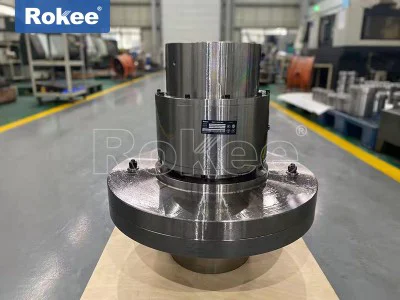
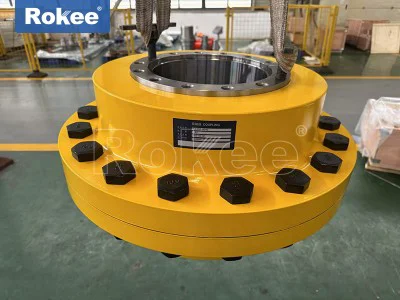
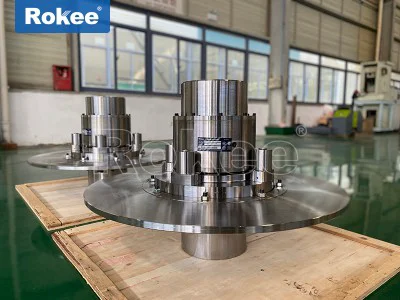
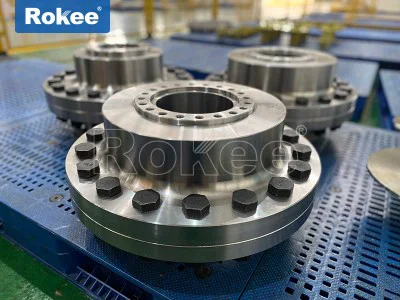
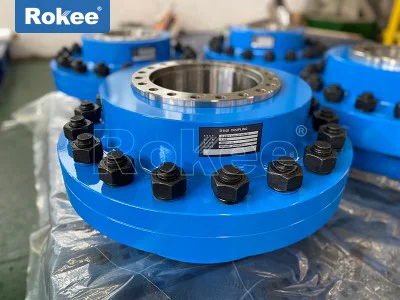
Flange coupling: rigidly connected by flanges and bolts, capable of transmitting high torque, mainly used for large heavy-duty equipment such as ship propulsion systems.
Clamp shell coupling: The shaft end is clamped by two half shells, which is easy to disassemble and assemble but has poor balance. It is commonly used for vertical shaft connections.Elastic coupling:
Rubber component type: using the elastic deformation of rubber to compensate for deviations, with excellent vibration reduction performance, suitable for occasions with vibration isolation requirements
Metal spring type: using coil spring or spiral spring, with long service life and high temperature resistance, used for high-precision servo systems
Polyurethane type: with good comprehensive performance, wear-resistant and oil resistant, widely used in packaging machinery
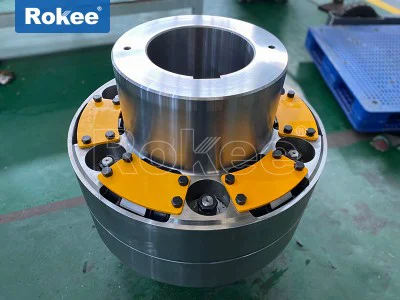
Gear coupling: transmits torque through the meshing of internal and external gears, allowing for large radial and angular deviations, with high lubrication requirements, commonly found in metallurgical equipment.
Diaphragm coupling: Flexible connection achieved by metal diaphragm group, zero backlash, maintenance free, especially suitable for high-speed turbine machinery.
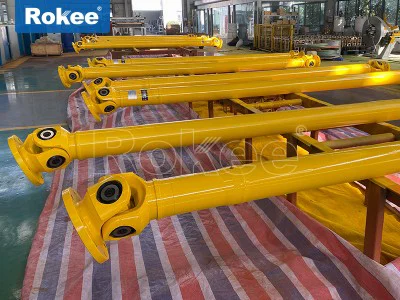
Universal joint: Adopting a cross axis or ball cage structure, it can achieve large angle transmission and is widely used in vehicle transmission systems.
Chain coupling: With a simple structure and low cost, but high noise and low precision, it is commonly used in non precision applications such as agricultural machinery.Special function coupling
Safety coupling: It automatically disengages when the torque exceeds the set value, protecting valuable equipment from damage. There are various types such as friction type and steel ball type.
Magnetic coupling: It achieves non-contact transmission through permanent magnets, completely sealed without leakage, and is an ideal choice for chemical pumps.
Hydraulic coupling: Utilizing liquid viscosity to transmit torque, it can achieve stepless speed regulation and is used for large construction machinery.
Key performance parameters of motor couplings
Torque capacity: including rated torque, peak torque, and alternating torque bearing capacity, is the primary basis for selection.
Speed range: Couplings have a maximum allowable speed limit, and special attention should be paid to the dynamic balance level for high-speed applications.
Compensation ability for misalignment:
Radial deviation: usually 0.1-5mm
Angle deviation: generally 0.5 ° -3 °
Axial displacement: mostly between ± 1- ± 10mmStiffness characteristics: torsional stiffness affects the response speed of the system, and radial stiffness does not compensate for the misalignment of the relationship.
Inertia moment: For high dynamic response systems, low inertia couplings can significantly improve positioning accuracy.
Environmental adaptability: including special requirements such as temperature range, corrosion resistance, and explosion-proof rating.
Selection considerations
Power parameters: motor power, speed, starting characteristics
Shaft conditions: shaft diameter, shaft spacing, alignment accuracy
Load characteristics: constant load, impact load, periodically changing load
Environmental factors: temperature, humidity, corrosiveness, explosion-proof requirements
Space limitations: installation space size, ease of disassembly and maintenance
Cost factor: Balance between initial purchase cost and long-term maintenance expenses
Recommended Common Application Scenarios
Servo system: Priority should be given to zero backlash diaphragm couplings or bellows couplings
Pump equipment: Elastic couplings or toothed couplings can effectively absorb vibrations
Compressor: High speed applications should use diaphragm couplings that have undergone precision dynamic balancing
Lifting machinery: gear couplings or safety couplings that require high torque capacity
Food and medicine: hygienic couplings or non lubricated magnetic couplings to avoid contamination
Selection steps
Determine the shaft diameter and installation space
Calculate the required transmission torque (considering starting torque and load factor)
Assess the misalignment of the shaft system
Choose the appropriate type of coupling
Check the limiting conditions such as speed and temperature
Consider special environmental requirements
Verify the convenience of installation and disassembly
With the advancement of industry and intelligent manufacturing, couplings are transforming from simple mechanical components to intelligent system components, and their reliability and functionality will continue to improve, providing more comprehensive transmission solutions for modern industrial equipment.
In the realm of mechanical power transmission, motor couplings stand as indispensable components that bridge the gap between motor shafts and driven equipment shafts, serving as the critical link for efficient torque transfer, motion synchronization, and operational stability across countless industrial and mechanical systems. These components are far more than simple connecting pieces; their structural designs, material compositions, and performance attributes are meticulously engineered to address the unique challenges of diverse operating conditions, ranging from high-precision motion control to heavy-duty industrial production, from low-speed steady operation to high-speed dynamic running.
At its core, the primary function of a motor coupling is to transmit rotational torque and motion from the driving motor shaft to the driven shaft of connected machinery, while also mitigating the adverse effects of shaft misalignment, vibration, shock loads, and thermal expansion that inevitably occur in real-world operating scenarios. Even minor deviations in shaft alignment, caused by manufacturing tolerances, installation errors, structural deformation under load, or thermal cycling, can impose excessive stress on motor bearings, shaft seals, and driven components, leading to accelerated wear, increased energy consumption, noise generation, and even catastrophic system failures. Motor couplings are engineered to counteract these issues, with their structural designs tailored to balance torque transmission efficiency, misalignment compensation capacity, vibration damping, and operational durability. The fundamental structure of most motor couplings consists of two hub components that attach to the motor and driven shafts respectively, and a middle connecting element that links the hubs together; the variation in this middle element, along with hub design and material selection, gives rise to the wide array of coupling types available today, each with distinct performance profiles suited for specific applications.
Structural performance is the cornerstone of motor coupling functionality, encompassing key metrics such as torque capacity, torsional stiffness, misalignment tolerance, backlash, vibration damping, rotational speed limit, and wear resistance. Torque capacity refers to the maximum torque a coupling can transmit continuously without deformation or failure, a parameter directly influenced by material strength, cross-sectional area, and structural integrity. Torsional stiffness defines the coupling’s resistance to torsional deformation under load; high torsional stiffness ensures precise motion transfer, making it ideal for precision applications, while moderate stiffness allows for slight flexibility to absorb shocks. Misalignment tolerance is divided into three core categories: angular misalignment (the angle between the central axes of the two shafts), radial misalignment (parallel offset between shafts), and axial misalignment (endplay movement of shafts along the axis). Different coupling structures offer varying levels of tolerance for these misalignment types, with some optimized for angular compensation, others for radial offset, and a select few capable of handling combined misalignment. Backlash, the gap between mating components during rotational reversal, is a critical factor in precision systems; low or zero-backlash designs are mandatory for applications requiring accurate positioning, such as robotics and CNC machinery. Vibration damping capacity relates to the coupling’s ability to absorb and dissipate vibrational energy generated by motor operation or load fluctuations, reducing noise and protecting sensitive components. Rotational speed limit is determined by the coupling’s balance, weight, and structural stability, with high-speed applications demanding lightweight, dynamically balanced designs to prevent centrifugal force-induced damage. Wear resistance, meanwhile, hinges on material hardness, friction characteristics, and resistance to environmental factors like temperature, moisture, and chemical exposure, directly impacting the coupling’s service life and maintenance requirements.
Motor couplings are broadly categorized based on their structural flexibility and functional design, primarily into rigid couplings, flexible couplings, and special-purpose couplings, each with distinct structural features, performance traits, and application scenarios. Rigid couplings represent the simplest and most robust category, characterized by a solid, inflexible structure that creates a fixed, rigid connection between two shafts. Structurally, rigid couplings typically consist of a one-piece or two-piece sleeve, flange, or clamp design that tightly clamps both shafts together, eliminating any relative movement between them. This rigid construction delivers exceptional torque transmission efficiency, zero backlash, and high torsional stiffness, with no energy loss during power transfer. However, the defining limitation of rigid couplings is their complete lack of misalignment tolerance; they require perfect shaft alignment during installation and consistent alignment during operation, as even minor misalignment will transfer excessive stress to shafts and bearings. Additionally, rigid couplings do not dampen vibration or absorb shock loads, transmitting all motor vibrations and impact forces directly to the driven equipment. Due to these traits, rigid couplings are exclusively used in applications where shaft alignment is inherently precise and stable, such as low-speed, fixed mechanical assemblies, precision gearboxes, and specialized industrial machinery where vibration damping and misalignment compensation are unnecessary, and maximum torque transfer efficiency is the top priority.
Flexible couplings are the most widely utilized category in motor-driven systems, engineered with inherent flexibility to accommodate shaft misalignment while reliably transmitting torque, making them suitable for the vast majority of real-world applications where perfect shaft alignment is unachievable. This category is further divided into elastomeric flexible couplings, metallic flexible couplings, and mechanical flexible couplings, each differentiated by their flexible elements and performance characteristics. Elastomeric flexible couplings feature a resilient non-metallic element, such as rubber, polyurethane, or nylon, positioned between the two metal hubs. The elastomeric insert acts as the flexible medium, compressing and deforming slightly to compensate for moderate misalignment, absorb shock loads, and dampen vibrations. Structurally, these couplings often adopt a jaw-and-spider design, with interlocking jaws on the hubs gripping a central elastomeric spider; other variants include tire-shaped couplings and sleeve couplings with elastomeric layers. The soft, resilient nature of the elastomer delivers excellent vibration and noise reduction, electrical isolation between shafts, and low maintenance requirements, as no lubrication is needed. Performance-wise, these couplings offer moderate torque capacity and misalignment tolerance, with limitations in high-temperature environments, as excessive heat can degrade the elastomeric material, causing hardening, cracking, or loss of flexibility. They are also unsuitable for extremely high-torque applications due to the lower strength of non-metallic components.
Metallic flexible couplings, by contrast, utilize thin metallic discs, bellows, or grid structures as the flexible medium, combining the durability of metal with the flexibility needed for misalignment compensation. Disc couplings, a prominent subtype, feature sets of thin, high-strength steel discs stacked between the hubs, with torque transmitted through the flexing of these discs rather than material deformation. This design delivers high torsional stiffness, zero backlash, excellent high-speed performance, and resistance to high temperatures and harsh environments, with no elastomeric components to degrade over time. Metallic bellows couplings, formed from a seamless metal bellows, offer exceptional precision and flexibility, accommodating angular, radial, and axial misalignment while maintaining zero backlash, making them ideal for high-precision, low-inertia applications. Grid couplings incorporate a curved metal grid inserted into longitudinal slots on the hubs, providing high torque capacity, shock absorption, and moderate misalignment tolerance, with the grid flexing to distribute load evenly and dampen impacts. While metallic flexible couplings offer superior durability, temperature resistance, and torque capacity compared to elastomeric variants, some types require periodic lubrication, and their vibration damping capabilities are generally lower than elastomeric designs, as metal does not absorb vibrational energy as effectively as resilient polymers.
Mechanical flexible couplings rely on mechanical clearance and relative movement between components to achieve flexibility, rather than material deformation. Common subtypes include gear couplings, Oldham couplings, and universal joint couplings. Gear couplings feature external teeth on the hubs and internal teeth on a sleeve, with meshing teeth allowing for angular and radial misalignment; they boast extremely high torque capacity, making them suitable for heavy-duty, high-load applications, though they require regular lubrication to reduce friction between teeth and prevent wear. Oldham couplings consist of two hubs with perpendicular slots and a central sliding disc, designed specifically to compensate for large radial misalignment while maintaining zero backlash and smooth torque transmission, with minimal bearing load. Universal joint couplings, or U-joints, excel at accommodating large angular misalignment between shafts, even at significant angles, making them ideal for systems where shafts are not collinear, such as mobile machinery and multi-axis mechanical assemblies. These mechanical flexible couplings offer robust performance for extreme misalignment scenarios but may introduce slight backlash or require more frequent maintenance compared to other flexible designs.
Special-purpose motor couplings are engineered to address unique operational requirements that standard rigid or flexible couplings cannot meet, featuring specialized structures and performance attributes tailored to niche applications. Magnetic couplings, for example, transmit torque through magnetic fields rather than physical contact, eliminating mechanical wear, backlash, and vibration transfer entirely. This non-contact design creates a hermetic seal between the motor and driven equipment, making them perfect for applications involving sealed fluid systems, vacuum environments, or corrosive media, where leakage prevention and contamination control are critical. While magnetic couplings offer exceptional durability and contamination resistance, their torque capacity is generally lower than mechanical couplings, limiting their use to light-to-medium duty applications. Fluid couplings, another special-purpose variant, use hydraulic fluid to transmit torque, providing smooth, shock-free startup, overload protection, and variable speed control. The fluid medium cushions torque transmission, preventing sudden load spikes from damaging the motor or driven machinery, making them suitable for high-inertia systems that require gradual acceleration. Other special-purpose couplings include those designed for extreme temperature conditions, high-corrosion environments, or ultra-high-speed operation, featuring specialized materials like stainless steel, titanium, or high-performance alloys, and customized structural modifications to withstand harsh operating conditions without compromising performance.
The selection of a motor coupling is a nuanced process that hinges on aligning structural performance with specific application requirements, with no universal “best” coupling—only the most suitable option for a given set of operating conditions. In general industrial settings, such as conveyor systems, centrifugal pumps, fans, and blowers, elastomeric flexible couplings are the preferred choice, as they balance misalignment tolerance, vibration damping, low maintenance, and cost-effectiveness, addressing the moderate torque and misalignment needs of these applications while reducing noise and extending equipment life. For high-precision motion control systems, including CNC machine tools, robotic arms, servo motor drives, and linear actuators, zero-backlash metallic flexible couplings (such as disc couplings or bellows couplings) are essential, as their high torsional stiffness and precise motion transfer ensure accurate positioning, repeatability, and responsiveness, critical for maintaining production quality and operational precision.
Heavy-duty industrial applications, including mining machinery, crushers, rolling mills, and large compressors, demand couplings with exceptional torque capacity and shock resistance, making gear couplings or grid couplings the optimal selection. These couplings can withstand extreme loads, absorb heavy shock impacts, and tolerate the significant misalignment common in large-scale industrial equipment, ensuring reliable operation under harsh, high-stress conditions. In applications where shafts exhibit large angular offsets or non-collinear alignment, such as automotive drivetrains, agricultural machinery, and multi-axis industrial systems, universal joint couplings are the go-to solution, as they efficiently transmit torque even at substantial shaft angles without binding or performance loss. For environments with strict hygiene or corrosion requirements, such as food and beverage processing, pharmaceutical manufacturing, or marine applications, stainless steel metallic couplings or non-metallic elastomeric couplings with corrosion-resistant materials are preferred, as they resist rust, chemical degradation, and contamination, complying with strict operational standards.
High-speed motor applications, including turbo machinery, centrifuges, and high-speed spindles, require lightweight, dynamically balanced couplings with minimal inertia, such as precision disc couplings or bellows couplings. These designs reduce centrifugal force, minimize vibration at high rotational speeds, and prevent energy loss, ensuring stable and efficient operation even at elevated RPMs. In scenarios where overload protection and smooth startup are paramount, such as crushers, mixers, and high-inertia conveyor systems, fluid couplings provide reliable performance, cushioning the startup process and slipping automatically under excessive load to protect the motor and driven equipment from damage. For sealed or vacuum systems, such as chemical pumps, medical equipment, and vacuum processing machinery, magnetic couplings offer unparalleled benefits, eliminating mechanical wear and preventing fluid or gas leakage, maintaining the integrity of the operating environment while ensuring consistent torque transmission.
Beyond selection, proper installation and regular maintenance are vital to maximizing the performance and service life of motor couplings. During installation, ensuring accurate shaft alignment (within the coupling’s specified tolerance) is critical, even for flexible couplings, as excessive misalignment will accelerate wear and reduce performance. For rigid couplings, precision alignment is non-negotiable, while flexible couplings require alignment within their rated misalignment limits to avoid overstressing flexible elements. Maintenance practices vary by coupling type: elastomeric couplings require periodic inspection of the resilient insert for signs of wear, cracking, or degradation, with timely replacement to maintain performance; metallic gear and grid couplings need regular lubrication to reduce friction and prevent tooth wear; magnetic and disc couplings are largely maintenance-free, only requiring occasional inspection for debris accumulation or structural damage. Adhering to proper installation protocols and maintenance schedules not only extends the coupling’s lifespan but also enhances overall system efficiency, reduces downtime, and minimizes the risk of unexpected failures that can disrupt operations and incur costly repairs.
In summary, motor couplings are foundational components of mechanical power transmission systems, with their diverse structures, performance characteristics, and types enabling them to adapt to an unparalleled range of industrial, commercial, and specialized applications. From rigid couplings that prioritize maximum torque transfer in precision assemblies to flexible couplings that balance misalignment compensation and reliability in general-purpose systems, and special-purpose couplings that address unique environmental and operational challenges, each category serves a distinct purpose in optimizing drive system performance. The key to harnessing the full potential of motor couplings lies in understanding the interplay between structural design, performance metrics, and application requirements, enabling informed selection, proper installation, and effective maintenance. As mechanical systems continue to evolve toward higher precision, greater efficiency, and more extreme operating conditions, motor coupling technology will advance in tandem, with innovative materials, refined structural designs, and enhanced performance attributes further solidifying their role as critical components in the seamless, reliable operation of motor-driven machinery across all sectors of industry and technology.