Flexible Gear Couplings
As a key component of modern mechanical transmission systems, flexible gear couplings are demonstrating unprecedented technological value in the field of intelligent manufacturing. The flexible gear coupling achieves flexible connection during the transmission process through a unique structural design, effectively solving the limitations of traditional rigid couplings in vibration absorption, deviation compensation, and noise control.
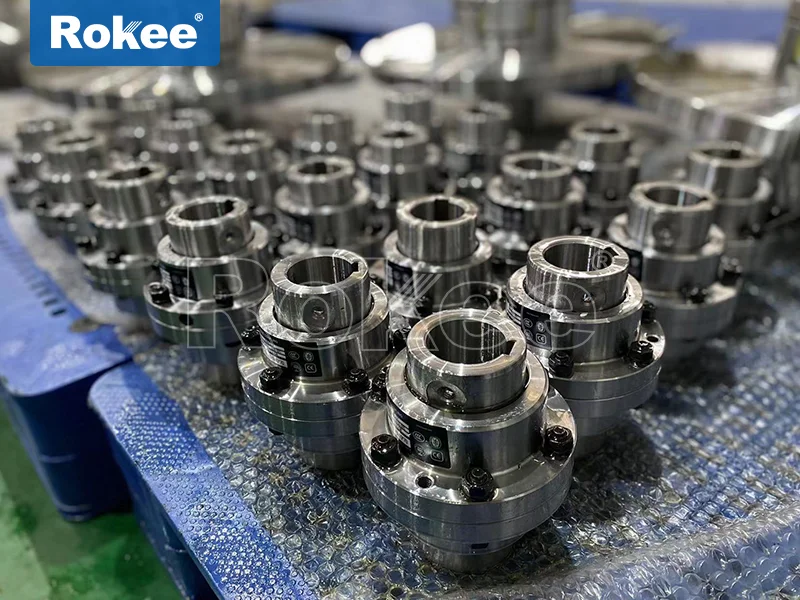
Flexible gear couplings are essential components in modern mechanical transmission systems, cleverly integrating the precision of gear transmission with the adaptability of flexible connections. Compared with traditional rigid couplings, flexible gear couplings can effectively compensate for various deviations between shaft systems while transmitting torque through specially designed meshing structures and elastic elements, providing a more reliable and efficient transmission solution for modern industrial equipment.
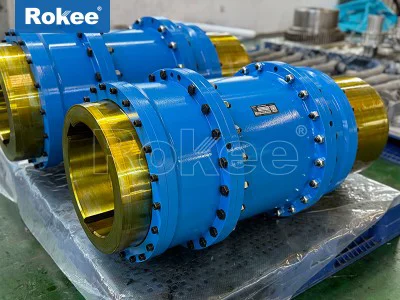
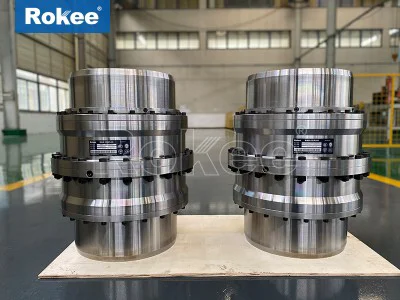
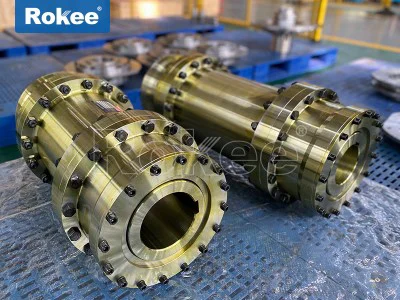
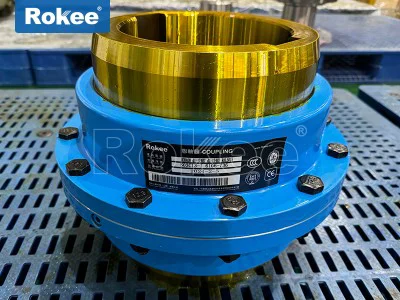
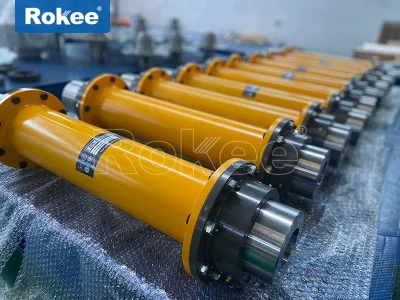
In terms of basic structure, flexible gear couplings typically consist of three main parts: an outer gear sleeve, an inner gear ring, and a sleeve component. External gear shaft sleeves are usually installed on the drive shaft, and their tooth tips are often designed in a spherical shape; The inner gear ring is installed on the driven shaft and forms a meshing relationship with the outer gear sleeve; The sleeve component can be designed in two types: flange sleeve and continuous sleeve, depending on the type. This structure enables the coupling to compensate for shaft system deviations through relative motion between gears while transmitting torque. In terms of material selection, modern flexible gear couplings often use high-strength alloy steel, stainless steel, or special nylon materials to meet the requirements of strength, wear resistance, and corrosion resistance under different working conditions.
The core advantages of flexible gear couplings are mainly reflected in three aspects: deviation compensation capability, vibration damping characteristics, and high transmission efficiency. In terms of deviation compensation, high-quality flexible gear couplings can simultaneously compensate for three types of deviations: axial, radial, and angular. Among them, the angular compensation ability can reach up to ± 3 °, the radial compensation amount can reach 0.2-6.3mm, and the axial compensation amount can reach ± 0.1mm. This multi-directional compensation ability greatly reduces the requirements for equipment installation accuracy and reduces additional loads caused by poor alignment. In terms of vibration control, the elastic elements in the coupling, such as polyurethane, rubber, or metal diaphragms, can effectively absorb and attenuate vibrations and impacts transmitted from the motor or load end, protecting the precision components in the transmission system. In terms of transmission efficiency, the optimized gear coupling can achieve a transmission efficiency of 99.7%, with almost no additional energy loss.
From the perspective of performance parameters, the torque bearing range of modern flexible gear couplings is extremely wide, from small encoder couplings of 0.05Nm to heavy-duty industrial couplings of 4500kN · m, which can meet the needs of the vast majority of industrial applications. In terms of rotational speed, ordinary rubber elastic couplings are suitable for medium and low-speed applications (usually below 5000rpm), while metal diaphragm couplings can be applied to ultra high speed conditions of 40000rpm. Temperature adaptability is also an important indicator. High quality couplings can work stably in the ambient temperature range of -50 ° C to 120 ° C, and specially designed couplings can even adapt to more extreme temperature environments.
In principle, flexible gear couplings transmit torque through gear meshing, while utilizing the deformation of elastic elements or the relative displacement of gear pairs to absorb vibration and compensate for deviations. Taking the drum shaped gear coupling as an example, when the spherical teeth of the outer gear sleeve mesh with the straight teeth of the inner gear ring, it allows for a certain angular and radial displacement between the two shafts without generating excessive additional stress. When the shaft system is misaligned, the gear pair automatically adjusts its position through relative sliding to maintain smooth power transmission. Elastic components (such as diaphragms, rubber blocks, etc.) absorb impact and vibration energy through their own elastic deformation while transmitting torque, protecting the transmission system from damage.
Flexible gear couplings can be classified into various types based on their structural design and material applications, each with its unique performance characteristics and applicable scenarios. Understanding these types and their differences is crucial for proper selection and optimization of transmission system performance.
The drum gear coupling represents a high-performance solution for traditional flexible gear couplings and is widely used in the field of heavy industry. The typical representative of this type of coupling is the GIICL type product, whose core feature is that the tooth tip of the outer gear shaft sleeve is spherical, which can achieve significant angular and radial deviation compensation when meshing with the inner gear ring. In terms of torque carrying capacity, the drum shaped gear coupling performs well, with a torque range of 20-40000 Nm, making it particularly suitable for heavy-duty applications such as steel mills, mining equipment, and large pump sets. In terms of deviation compensation capability, the allowable angular deviation is 1.5 °, and the radial deviation is 0.2-6.3mm, which can effectively absorb the foundation settlement and thermal deformation during equipment operation. In terms of material selection, the teeth are usually made of 20CrMnTi alloy steel that has undergone carburizing and quenching treatment, with a hardness of HRC58-62 and extremely high wear resistance and fatigue strength. The lubrication method is mostly grease lubrication, and lithium based grease needs to be added regularly to extend its service life. The GIICL drum gear coupling produced by Shanghai Dasheng Machinery Co., Ltd. adopts a special heat treatment process, which increases the product life by 30% compared to conventional products and has been widely used in the metallurgical industry.
Diaphragm couplings are outstanding in the field of precision transmission, particularly suitable for high-precision servo systems and robot applications. This type of coupling is composed of multiple layers of metal diaphragms (usually stainless steel) connected to the two end shaft sleeves through bolts, and its completely backless design makes it an ideal choice for position control systems.
Elastic element gear couplings use elastic materials such as rubber or polyurethane as buffering media, which have the advantages of simple structure and low cost. This type of coupling commonly has designs such as plum blossom, claw, and 8-shaped, which have excellent vibration reduction performance and electrical insulation characteristics, and are suitable for servo systems that are susceptible to electrical interference. The torque range is usually between 0.05-800Nm, suitable for small and medium power transmission. The choice of elastomer material directly affects the performance of the coupling. ordinary nitrile rubber is suitable for general working conditions, while polyurethane material has higher strength and wear resistance. EPDM rubber is particularly suitable for high temperatures and outdoor environments. The disadvantage of this type of coupling is that the elastic components will age and require regular inspection and replacement. The general service life is 3-5 years.
Choosing a suitable flexible gear coupling is an engineering and technical decision that requires comprehensive consideration of multiple factors. The correct selection not only ensures the efficient and stable operation of the transmission system, but also extends the service life of the equipment and reduces maintenance costs. In the field of intelligent manufacturing, with the development of precision and high-speed equipment, the selection of couplings has become more critical, requiring comprehensive evaluation from multiple dimensions such as mechanical characteristics, dynamic performance, environmental adaptability, and economy.
In the field of mechanical power transmission, flexible gear couplings stand as one of the most widely used and reliable connecting components, bridging driving and driven shafts in countless industrial systems while addressing core challenges of misalignment, torque transmission, and operational stability. Unlike rigid couplings that demand perfect shaft alignment and offer no tolerance for positional deviations, flexible gear couplings are engineered to balance robust power delivery and adaptive flexibility, making them indispensable for heavy-duty, high-speed, and dynamically demanding operating environments.
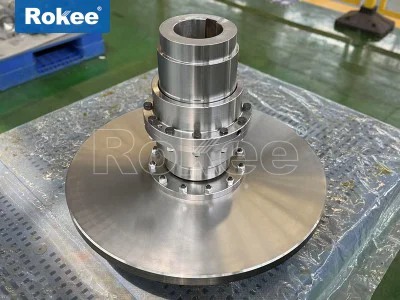
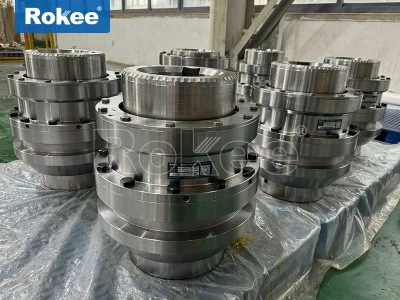
At its core, the structural composition of a flexible gear coupling is built around a set of precision-machined gear meshing components and auxiliary connecting parts, optimized for both strength and flexibility. The fundamental structure typically consists of two hub units with external crowned gear teeth, two inner gear sleeves with matching internal teeth, and a set of fastening hardware that secures the assembly to the respective driving and driven shafts. The external teeth on the hubs are specially crowned, meaning their profiles are curved rather than straight, a critical design feature that enables the coupling to accommodate various forms of shaft misalignment without creating excessive contact stress or binding during rotation. The inner gear sleeves, which encase the external gear hubs, feature precision-cut internal teeth that form a tight yet movable meshing pair with the crowned external teeth; this meshing interface is the heart of the coupling’s flexibility, allowing for controlled angular, parallel, and axial movement between the two connected shafts. Additional structural elements include sealing components integrated into the gear sleeve assembly to retain lubrication and prevent contamination from dust, moisture, or debris in industrial settings, as well as flange sections on the gear sleeves that facilitate secure bolted connection between the two halves of the coupling. Some designs also incorporate spacer components between the two gear sleeves to adjust the overall length of the coupling, catering to applications where a greater distance between shaft ends is required. The entire structure is engineered with compactness in mind, minimizing radial and axial footprint while maximizing torque-carrying capacity, ensuring compatibility with limited installation spaces in diverse machinery setups.
The performance attributes of flexible gear couplings are directly derived from their specialized structural design, making them superior to many other flexible coupling types in heavy-load and high-speed scenarios. First and foremost, these couplings excel in high torque transmission capability, with the gear meshing interface distributing load evenly across multiple tooth contacts, enabling efficient transfer of substantial rotational force without slippage or component failure. This load distribution mechanism also enhances the coupling’s fatigue resistance, allowing it to withstand repeated cyclic loads, sudden torque spikes, and reverse rotation common in industrial machinery without premature wear or structural damage. A defining performance feature is their exceptional misalignment compensation capacity: they can effectively accommodate angular misalignment, where the two shafts intersect at a small angle, parallel misalignment, where the shafts are parallel but offset from a common centerline, and axial misalignment, which involves slight back-and-forth movement of the shafts along their longitudinal axis. This flexibility eliminates the need for ultra-precise shaft alignment during installation, reduces stress on connected bearings and gearboxes, and extends the service life of the entire drive system. Flexible gear couplings also maintain consistent rotational transmission efficiency, with minimal power loss during operation due to the precision gear meshing and low-friction contact surfaces; this efficiency remains stable across a wide range of rotational speeds, from low-speed, high-torque operation to high-speed rotational applications. Additionally, they exhibit strong adaptability to varying environmental conditions, with robust metallic construction that can withstand moderate temperature fluctuations, mechanical vibration, and exposure to common industrial contaminants, provided proper lubrication and sealing are maintained. Unlike some flexible couplings that rely on elastomeric components prone to degradation, the all-metal gear construction of standard flexible gear couplings offers long-term durability and resistance to wear, though regular lubrication is essential to preserve tooth surfaces and reduce friction-induced heat buildup.
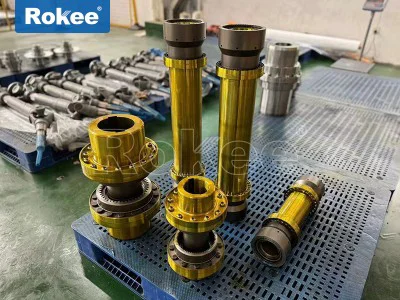
Flexible gear couplings are categorized into distinct varieties based on structural modifications, functional adaptations, and application-specific design tweaks, each tailored to address unique operational requirements in different industrial scenarios. The most primary classification is based on the number of gear engagement sets and overall configuration, distinguishing between single engagement and double engagement types. Single engagement flexible gear couplings feature a simplified structure with one set of gear meshing components, offering compact dimensions and suitability for applications with moderate misalignment requirements and limited installation space; they are often used in smaller-scale machinery where shaft movement is minimal and torque loads are relatively consistent. Double engagement flexible gear couplings, by contrast, incorporate two sets of gear meshing interfaces, significantly enhancing their misalignment compensation range and load-carrying capacity, making them the preferred choice for heavy-duty industrial equipment with substantial shaft deviations and high torque demands. Another key classification is based on the presence of spacer elements, separating standard close-coupled designs from spacer-type designs. Close-coupled flexible gear couplings have a short overall length, ideal for machinery where the driving and driven shafts are positioned in close proximity, while spacer-type designs feature a central spacer section between the two gear sleeves, allowing for a longer distance between shaft ends and facilitating maintenance access to adjacent components such as pumps, motors, or gearboxes. Varieties are also differentiated by auxiliary functional integrations, including designs adapted for braking systems, where the coupling hub or sleeve is modified to accommodate brake discs or brake wheels without compromising core torque transmission and flexibility functions. There are also specialized designs optimized for vertical shaft installations, differing from horizontal shaft models in weight distribution and lubrication retention features to ensure reliable performance when mounted in a vertical orientation. Additionally, some variants are engineered with modified tooth profiles or material compositions to handle specific operational stresses, such as higher rotational speeds, extreme temperature environments, or mild corrosive conditions, further expanding the range of available configurations to match diverse industrial needs.
The combination of robust structural design, exceptional performance, and diverse varieties makes flexible gear couplings applicable across nearly every heavy industrial sector where reliable power transmission and misalignment tolerance are non-negotiable. One of the most prominent application areas is heavy machinery and manufacturing equipment, including metalworking machinery, rolling mills, forging presses, and extrusion lines. In these settings, the couplings handle extremely high torque loads and frequent load fluctuations, compensating for shaft misalignment caused by heavy structural vibration, thermal expansion of machine components, and gradual wear of bearing systems, ensuring uninterrupted operation of critical production lines. They are also widely used in pumping and compression systems, such as centrifugal pumps, reciprocating pumps, industrial compressors, and blower units; these systems often experience shaft misalignment due to pipeline pressure, thermal expansion of fluid-carrying components, and foundation settling, and flexible gear couplings maintain consistent power transfer while protecting pump and compressor internals from excessive stress. In the mining and quarrying industry, the couplings are integrated into conveyor systems, crushing equipment, and material handling machinery, where they endure harsh operating conditions including heavy dust, continuous operation, and sudden load changes, delivering reliable performance in rugged outdoor and underground mining environments. The energy and power generation sector relies heavily on flexible gear couplings as well, connecting turbines, generators, electric motors, and drive systems in thermal power plants, hydroelectric facilities, and industrial power stations. Here, their high-speed operational stability and misalignment compensation are critical for maintaining the efficiency of power generation equipment, as even minor shaft deviations can lead to reduced efficiency and accelerated component wear. Marine and offshore engineering is another key application area, where the couplings are used in shipboard propulsion systems, auxiliary machinery, and deck equipment, adapting to the dynamic movement of vessel hulls and the resulting shaft misalignment, while withstanding the challenging marine environment with proper sealing and lubrication. They also find extensive use in transportation equipment manufacturing, including large-scale automotive production machinery, railway maintenance equipment, and aerospace manufacturing tools, where precision power transmission and operational reliability are paramount for high-precision production processes. Furthermore, flexible gear couplings are utilized in paper and pulp processing machinery, textile manufacturing equipment, and chemical processing equipment, adapting to the specific operational demands of each industry, from continuous low-speed high-torque operation to intermittent high-speed cycling with frequent start-stop cycles.
Beyond these core industrial sectors, flexible gear couplings are also employed in specialized engineering applications that demand a unique balance of flexibility and strength, such as material handling elevators, crane drive systems, and heavy-duty conveyor belts in logistics and warehousing facilities. Their ability to absorb minor shock loads and compensate for installation-related misalignment makes them a cost-effective and reliable choice for both new machinery design and equipment retrofitting projects, as they reduce the need for complex alignment procedures and minimize maintenance requirements over the long term. It is important to note that proper selection of the specific variety of flexible gear coupling is essential for optimal performance, with factors such as torque rating, rotational speed range, allowable misalignment limits, shaft diameter compatibility, and installation space constraints all playing a vital role in matching the coupling to the intended application. While regular maintenance, including periodic lubrication and inspection for tooth wear or seal damage, is necessary to maximize service life, the inherent durability of the gear-based design ensures that these couplings offer a long operational lifespan with minimal downtime when used correctly.
In summary, flexible gear couplings represent a pinnacle of mechanical power transmission design, merging the strength and reliability of gear-based torque transfer with the adaptive flexibility needed to address real-world industrial challenges of shaft misalignment and dynamic loading. Their carefully engineered structural components, from crowned external gear teeth to precision inner sleeves, deliver a unique set of performance advantages including high torque capacity, broad misalignment tolerance, excellent fatigue resistance, and stable operational efficiency. The wide range of design varieties ensures that there is a suitable flexible gear coupling configuration for nearly every industrial application, from heavy manufacturing and power generation to mining, marine, and specialized processing equipment. As industrial machinery continues to evolve toward higher load capacities, faster operational speeds, and more compact designs, flexible gear couplings will remain a foundational component in power transmission systems, providing the essential link between driving and driven components while enhancing the overall reliability, efficiency, and service life of industrial equipment. Their enduring relevance stems from their ability to adapt to diverse operational conditions, simplify installation and maintenance, and deliver consistent performance in even the most demanding industrial environments, solidifying their status as a versatile and irreplaceable element in modern mechanical engineering.