Short Telescopic Universal Joint Coupling
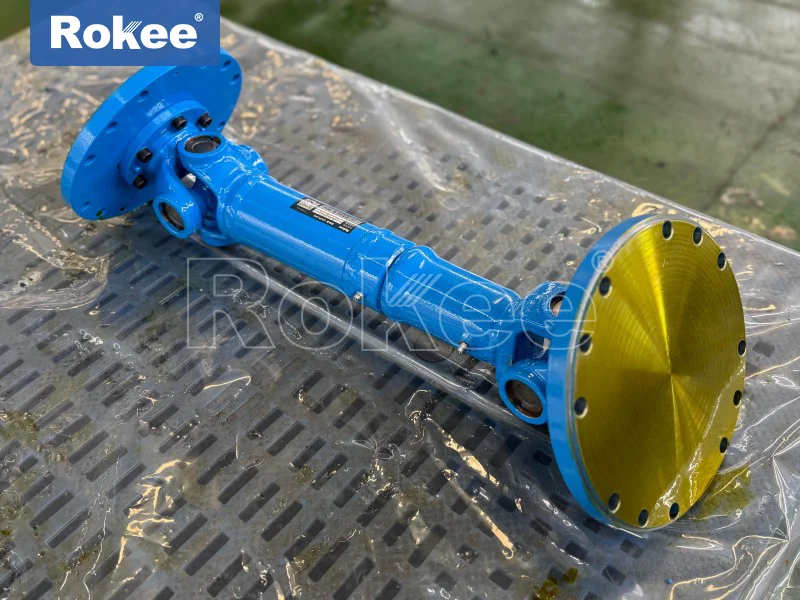
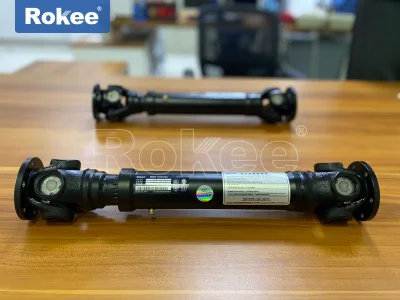
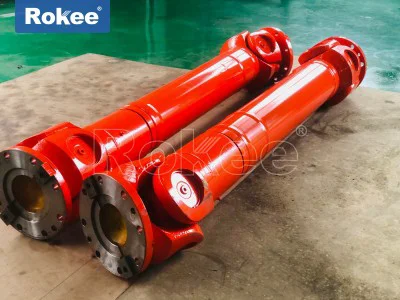
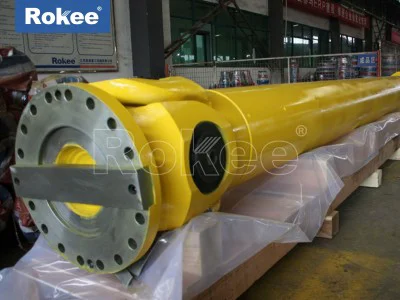
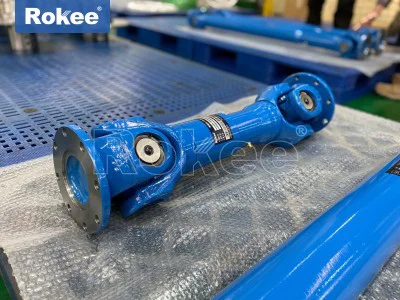
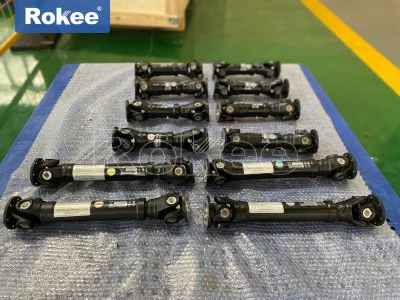
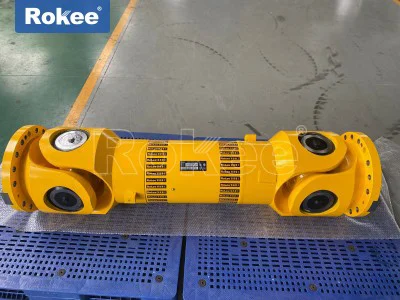
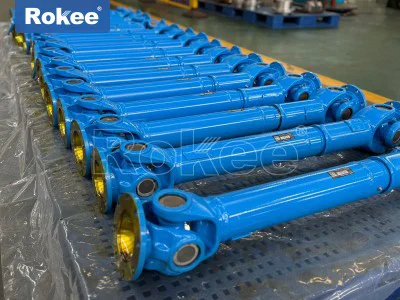
The short telescopic universal joint coupling is a specially designed mechanical transmission device that combines the angular compensation capability and axial telescopic function of the universal joint, while also having a compact structural feature. This type of coupling plays a crucial role in transmission systems that require simultaneous compensation for angular deviation and axial displacement.
Short telescopic universal joint couplings typically consist of the following core components:
Cross shaft assembly: As the core component of the universal joint, it consists of a cross shaft and four needle roller bearings, allowing for angular deflection between the two shafts.
Expansion spline sleeve: adopts an internal and external spline matching structure to achieve axial expansion displacement compensation, while reliably transmitting torque.
Compact shell: A specially designed short shell structure that protects internal components while ensuring a smaller overall length.
Sealing system: including dust cover and sealing ring to prevent grease leakage and contamination from entering.
When the driving shaft rotates, power is transmitted to the driven shaft through the cross shaft. The cross shaft structure allows for a certain degree of angular deviation between the two shafts, while the telescopic spline structure can compensate for axial displacement. This dual compensation capability makes it particularly suitable for situations where installation positions are limited and there are alignment errors.
Short telescopic universal joint couplings are widely used in the following scenarios:
Construction machinery: excavators, loaders, and other equipment are connected to the engine and gearbox to compensate for displacement caused by frame deformation.
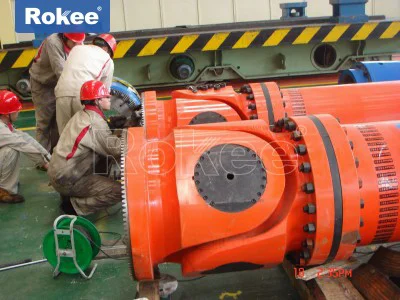
Steel metallurgy: In heavy equipment such as rolling mills and straightening machines, it is suitable for shaft deformation in high-temperature environments.
Ship power: Connect the main engine and propeller to compensate for ship deformation and installation errors.
Special vehicles: Transmission systems for military vehicles, mining vehicles, and other harsh working conditions.
Industrial robots: power transmission at the joints of the robotic arm, adapted to multi degree of freedom motion.
Short telescopic universal joint couplings play an important role in modern mechanical transmission systems due to their compact structure and dual compensation capability. Correctly selecting and using such couplings can effectively solve transmission problems under complex working conditions, improve system reliability and service life.