Purpose Of Universal Joint Coupling

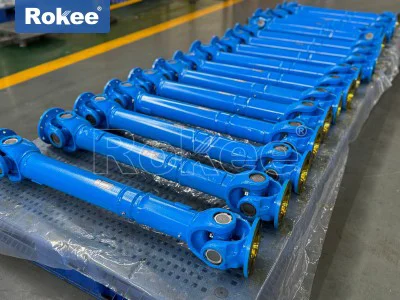
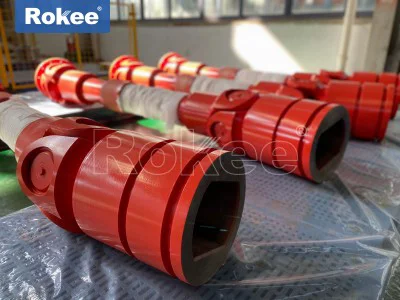
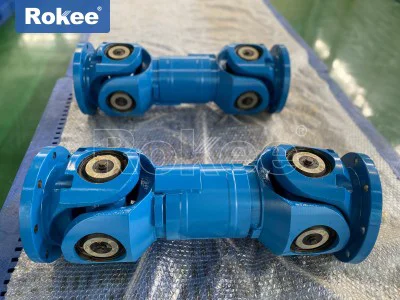
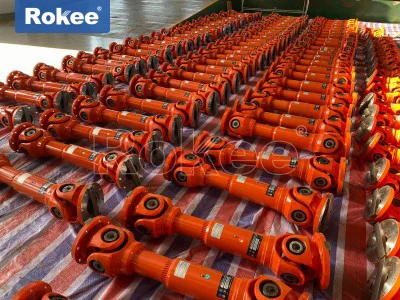
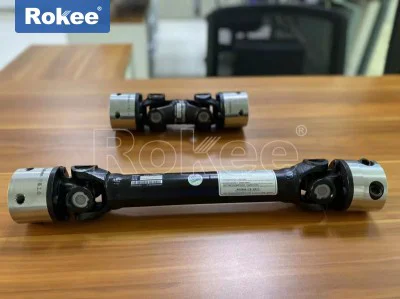
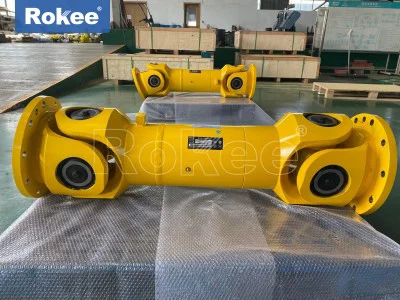
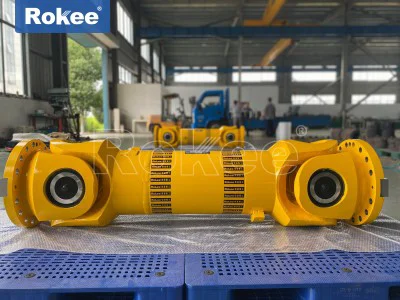
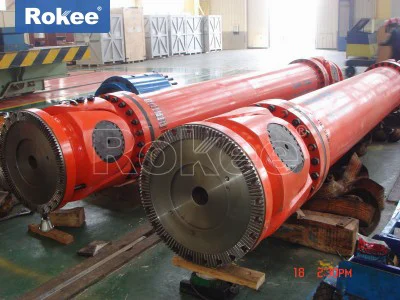
Universal joint coupling is a core component widely used in the field of mechanical transmission, mainly used to connect transmission shafts with different axes or angular deviations, achieving reliable transmission of power and motion. Its unique structural design enables it to exhibit good adaptability and functionality under complex working conditions.
Core functions and typical uses
Axis deviation compensation
Angle compensation: allows the transmission of torque between two axes within a range of 5 ° -45 °, suitable for scenarios where the axes are not aligned, such as articulated parts of construction machinery or ship propulsion systems.
Displacement adaptation: It can compensate for axial, radial, and angular displacements, and solve shaft offset problems caused by installation errors, thermal expansion, or vibration.
Multi domain power transmission
Heavy industry: equipment such as metallurgical rolling mills and mining crushers transmit high torque and withstand impact loads.
Transportation: The power connection between automobile transmission shafts and rail transit vehicles ensures power continuity during steering.
Energy equipment: Suitable for complex centering conditions in wind turbines and water pump units.
Precision Machinery: Machine tools, robot joints, and other applications that require high-precision transmission, such as ball cage universal couplings, can reduce speed fluctuations.
Universal joint couplings, with their flexible axis compensation capability and high reliability, have become indispensable components in modern industrial transmission systems. From heavy machinery to precision instruments, their diverse designs meet the needs of different scenarios.
In the intricate web of mechanical power transmission systems that underpin modern industry, transportation, and precision machinery, the universal joint coupling stands as a seemingly unassuming yet irreplaceable component. Unlike rigid couplings that demand perfect shaft alignment and offer no flexibility, this specialized mechanical device is engineered to address one of the most persistent challenges in power transmission: the efficient transfer of torque and rotational motion between two shafts that are not collinear, whether due to fixed angular misalignment, dynamic positional shifts during operation, or inherent design constraints of the mechanical assembly. Its core purpose extends far beyond simple shaft connection, encompassing angular compensation, vibration damping, load distribution, and the preservation of system integrity across a vast spectrum of operating conditions. To fully grasp its significance, one must delve into the multifaceted roles it fulfills, the mechanical principles that govern its functionality, and the critical impact it has on the performance, durability, and reliability of countless mechanical systems worldwide.
At its most fundamental level, the primary purpose of a universal joint coupling is to enable the uninterrupted transmission of torque and rotary motion between shafts with intersecting or offset axes. In idealized mechanical designs, shafts would align perfectly along a single straight line, eliminating the need for flexible coupling solutions, but real-world engineering rarely allows for such precision. Manufacturing tolerances, assembly errors, structural deflection under load, thermal expansion and contraction, and operational movement all create scenarios where driving and driven shafts deviate from perfect alignment. A rigid coupling installed in such a setup would bind, generate excessive friction, and transfer destructive stresses to adjacent components, leading to premature wear, component failure, and catastrophic system breakdown. The universal joint coupling solves this dilemma by accommodating angular misalignment—typically ranging from a few degrees to more substantial offsets—while maintaining a consistent transfer of mechanical power. It acts as a flexible hinge within the transmission chain, allowing one shaft to rotate freely and drive the second shaft without interruption, even as the angle between the two shafts shifts continuously during operation. This ability to transmit motion across non-aligned axes is the cornerstone of its design and the reason it has become a staple in nearly every branch of mechanical engineering.
Beyond basic torque transmission across misaligned shafts, a key secondary purpose of the universal joint coupling is to compensate for both static and dynamic positional variations in mechanical systems. Static misalignment arises during initial installation, where even the most meticulous assembly processes cannot achieve flawless shaft alignment; the universal joint coupling absorbs these minor to moderate angular, radial, and axial deviations, preventing the buildup of residual stresses that would compromise system performance over time. Dynamic misalignment, by contrast, occurs during active operation, as machinery vibrates, loads fluctuate, or components move in response to operational demands. For instance, in mobile machinery, the relative position of driving and driven shafts shifts constantly as the equipment navigates uneven terrain, adjusts its working position, or experiences suspension movement. The universal joint coupling adapts to these real-time changes, maintaining a secure, flexible connection that preserves power flow without imposing harmful mechanical loads on the shafting, bearings, gears, or housings. This compensatory capability not only safeguards individual components but also extends the overall service life of the entire transmission system, reducing maintenance frequency, minimizing downtime, and lowering long-term operational costs for industrial and mobile equipment alike.
Another vital purpose served by universal joint couplings is the mitigation of vibration, shock loads, and mechanical noise within power transmission systems. Rotating machinery inherently generates vibration due to imbalances, gear meshing, fluctuating torque loads, and external impacts; in systems with rigid shaft connections, these vibrations are amplified and transferred directly along the shaft line, causing resonance, excessive noise, and accelerated wear on precision components. The universal joint coupling, with its inherent structural flexibility, acts as a buffer against these harmful forces. It absorbs and disperses shock loads that occur during sudden starts, stops, or load spikes, preventing these transient stresses from damaging delicate gears, bearings, or motor assemblies. Additionally, it dampens resonant vibration by breaking the direct path of vibrational energy between the driving and driven sides of the system, reducing noise levels and creating a smoother, more stable operating environment. This vibration-dampening function is particularly critical in high-speed machinery, precision equipment, and heavy-duty industrial systems where even minor vibrations can compromise operational accuracy, product quality, or worker safety. By isolating vibration and mitigating shock, the universal joint coupling enhances the smoothness of operation and reinforces the structural resilience of the entire mechanical assembly.
Universal joint couplings also play a pivotal role in optimizing the design flexibility and functional versatility of mechanical systems, a purpose that empowers engineers to create more compact, efficient, and application-specific machinery. Prior to the widespread adoption of these flexible couplings, mechanical designers were constrained by the need to arrange shafts in perfectly straight, collinear configurations, limiting the layout and functionality of equipment. With the integration of universal joint couplings, designers gain the freedom to position shafts at angles, route power transmission paths around obstacles, and create more compact, space-efficient assemblies that better suit the demands of specific applications. This design flexibility is invaluable across diverse sectors: in automotive engineering, it enables the transfer of power from the transmission to the drive wheels while accommodating suspension movement and steering angles; in industrial machinery, it allows for the integration of multi-axis drive systems that power complex manufacturing equipment; in agricultural machinery, it facilitates power transfer to auxiliary implements that move and adjust during field operation; and in aerospace and precision instrumentation, it supports compact, lightweight transmission setups that operate reliably in constrained spaces. By eliminating the constraints of perfect shaft alignment, universal joint couplings unlock innovative engineering solutions, making it possible to develop machinery that is more adaptable, space-efficient, and tailored to the unique challenges of real-world operational environments.
In heavy-duty and high-torque mechanical applications, the universal joint coupling fulfills the critical purpose of maintaining consistent power transmission efficiency while withstanding extreme operational stresses. Industrial machinery, construction equipment, marine propulsion systems, and heavy manufacturing assemblies often operate under high torque loads, high rotational speeds, or prolonged continuous use—conditions that place immense strain on power transmission components. A well-designed universal joint coupling is engineered to handle these demanding conditions, featuring robust construction that resists fatigue, wear, and deformation under heavy loads. Unlike less durable flexible coupling alternatives, it maintains efficient torque transfer without significant power loss, even when accommodating substantial angular misalignment. This efficiency is paramount in industrial settings, where power waste translates directly to increased energy costs and reduced operational productivity. Furthermore, the durable design of universal joint couplings ensures reliable performance in harsh operating environments, including exposure to dust, moisture, temperature extremes, and mechanical debris. Whether operating in a bustling factory floor, a rugged construction site, or a remote agricultural field, these couplings retain their functional integrity, ensuring that power transmission remains consistent and reliable even in the harshest conditions. This ability to balance high efficiency with exceptional durability solidifies their role as a cornerstone component in heavy-duty mechanical systems.
The universal joint coupling also serves the essential purpose of reducing maintenance complexity and enhancing the serviceability of mechanical systems, a benefit that resonates across both industrial and commercial applications. Many designs feature a straightforward, modular construction with minimal moving parts, simplifying inspection, lubrication, and replacement processes when maintenance is required. Unlike complex transmission components that demand specialized tools or extensive downtime for servicing, universal joint couplings can be accessed and maintained with relative ease, minimizing the disruption to daily operations. Additionally, by protecting adjacent components from misalignment-related stress, vibration, and shock, these couplings reduce the likelihood of unexpected component failures, eliminating the need for emergency repairs and unscheduled downtime. This proactive protection not only lowers maintenance costs but also improves overall system uptime, a critical factor in industries where operational continuity directly impacts productivity and profitability. Even in precision-driven applications where downtime is costly, the reliability and low-maintenance nature of universal joint couplings make them a preferred choice for engineers seeking to balance performance with practicality.
Across diverse industrial and commercial sectors, the purpose of the universal joint coupling adapts to meet the unique demands of each application, yet its core value remains consistent: enabling reliable, flexible, and efficient power transmission in systems where perfect shaft alignment is unattainable. In automotive and transportation systems, it facilitates smooth power delivery to drive wheels, accommodating the constant movement of suspension and steering components to ensure stable vehicle handling and ride quality. In industrial manufacturing equipment, from machine tools to conveyor systems, it supports precise power transfer in multi-axis setups, ensuring the accuracy and consistency of production processes. In agricultural machinery, it connects tractors to implements, transferring power efficiently even as equipment moves across uneven ground and adjusts its working position. In aerospace and marine systems, it provides lightweight, reliable power transmission in compact, high-performance assemblies. In precision instrumentation and medical devices, it enables delicate, accurate motion transfer in compact, space-constrained designs. In every instance, the universal joint coupling fulfills a tailored purpose that aligns with the operational needs of the system, proving its versatility and indispensability across the entire spectrum of mechanical engineering.
It is also important to recognize that the purpose of the universal joint coupling extends beyond immediate functional performance to encompass long-term system sustainability and cost-effectiveness. By reducing wear on bearings, gears, shafts, and other critical transmission components, these couplings minimize the need for frequent part replacements, lowering material costs and reducing the environmental impact associated with component manufacturing and disposal. Their ability to improve power transmission efficiency reduces energy consumption, supporting more sustainable operational practices and lowering carbon footprints for industrial and mobile equipment. Additionally, the extended service life of systems equipped with universal joint couplings reduces the frequency of full equipment replacements, further enhancing sustainability and economic efficiency. In an era where operational sustainability and cost control are top priorities for businesses and engineers alike, the long-term value delivered by these couplings reinforces their status as a vital investment in mechanical system design.
In summary, the purpose of the universal joint coupling is far more comprehensive than mere shaft connection; it is a multifunctional component that addresses the core challenges of mechanical power transmission in real-world systems. It enables torque transmission across misaligned shafts, compensates for static and dynamic positional variations, dampens vibration and shock loads, enhances design flexibility, maintains high efficiency under heavy loads, simplifies maintenance, and supports sustainable, cost-effective operation. Without this unassuming yet critical component, countless mechanical systems that power modern life—from passenger vehicles and industrial machinery to agricultural equipment and precision devices—would be prone to frequent failure, inefficient operation, and limited functionality. The universal joint coupling’s ability to bridge the gap between idealized engineering design and real-world operational constraints cements its role as an indispensable element in mechanical engineering, a testament to the power of simple, innovative design to solve complex technical challenges and drive reliability across every corner of the mechanical landscape.