Classification Of Universal Joint Couplings
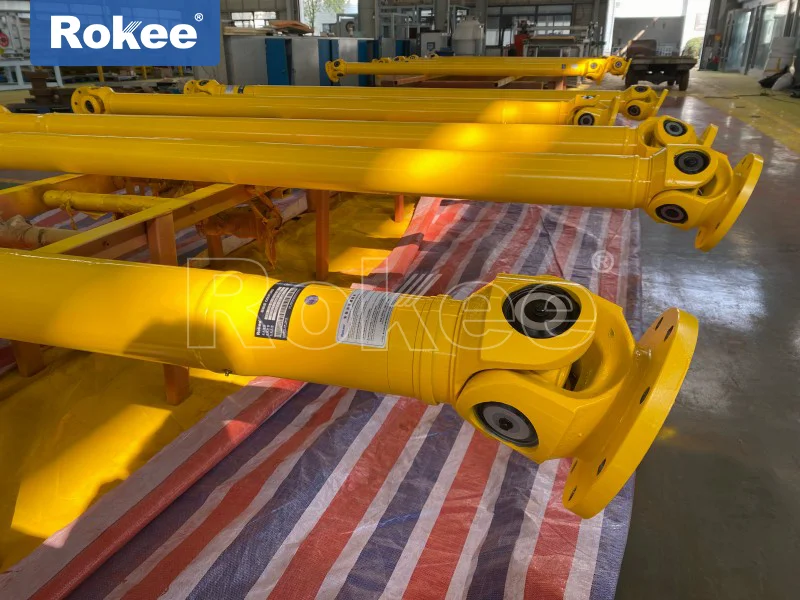
Universal joint couplings are classified according to their structural principles
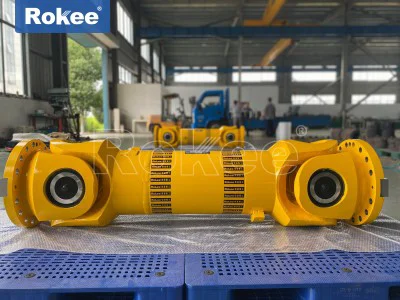
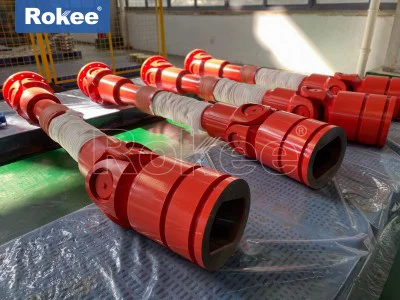
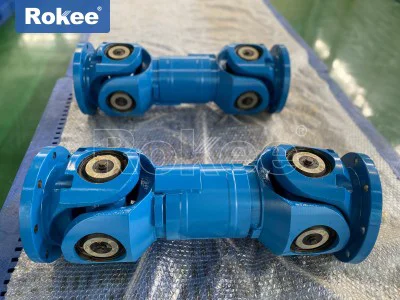
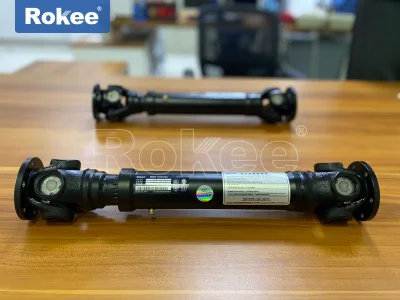
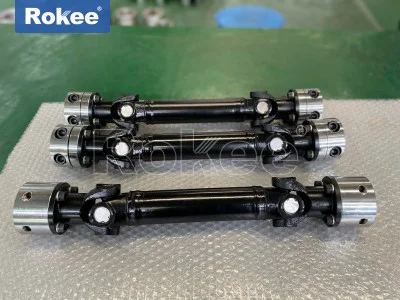
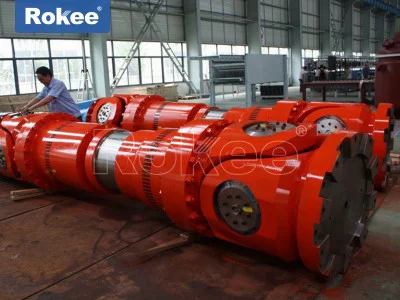
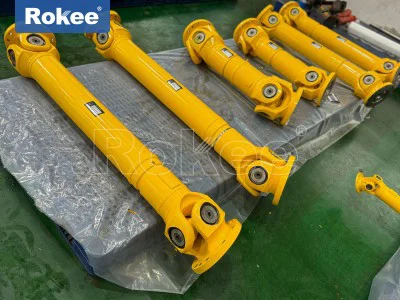
Features of the cross axis universal joint coupling: It consists of two fork shaped joints and a cross axis, allowing an axis angle of 5 ° -45 °, and transmitting torque ranging from 11.2-1120N · m (small) to 25000N · m (heavy). Application: Automotive transmission shafts, metallurgical rolling mills, lifting equipment, requiring dual configuration to eliminate speed fluctuations. National standard models: SWC (integral fork head), SWP (partial bearing seat), WS (small double cross shaft), etc.
Features of ball cage universal joint coupling: It adopts a spherical raceway design to achieve constant speed transmission, with an intersection angle of up to 42.5 ° and excellent high-speed performance. Application: Car drive shaft, wind power yaw system.
Characteristics of ball fork universal joint coupling: simple structure but low load-bearing capacity, suitable for light load and low-speed scenarios, such as agricultural machinery. Disadvantage: It is easy to produce gaps after wear and tear, and needs to be replaced regularly.
Features of the three pin universal joint coupling: quasi constant speed transmission, compensating for large angular deviations through a three pin structure, and torque transmission capacity between the cross shaft and cage type. Application: Engineering vehicle steering system.
Universal joint couplings classified by functional characteristics
Rigid universal joint coupling
Unequal speed type: cross shaft type, with significant instantaneous angular velocity fluctuations; Quasi constant velocity type: double cross axis or three pin type, which needs to meet the conditions of co planar main and secondary axes, intermediate axis and other angle conditions; Constant speed type: cage/fork type, transmission efficiency>98%.Features of flexible universal joint coupling: It uses rubber or polyurethane elastic elements to compensate for radial/angular deviations and has significant vibration reduction effect. Application: Connection between servo motor and screw.
Special derivative types
Scalable universal joint
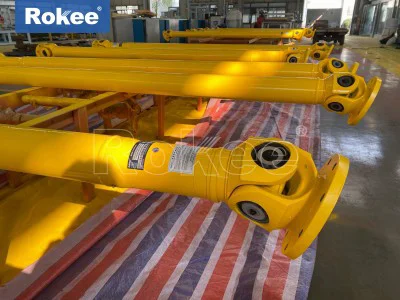
Integrated spline shaft structure, axial compensation of ± 50mm (such as WSD series), used for long wheelbase transmission systems.The flange universal joint is connected by bolted flanges, making it easy to disassemble and assemble heavy equipment.