Advantages And Disadvantages Of Universal Shaft Couplings
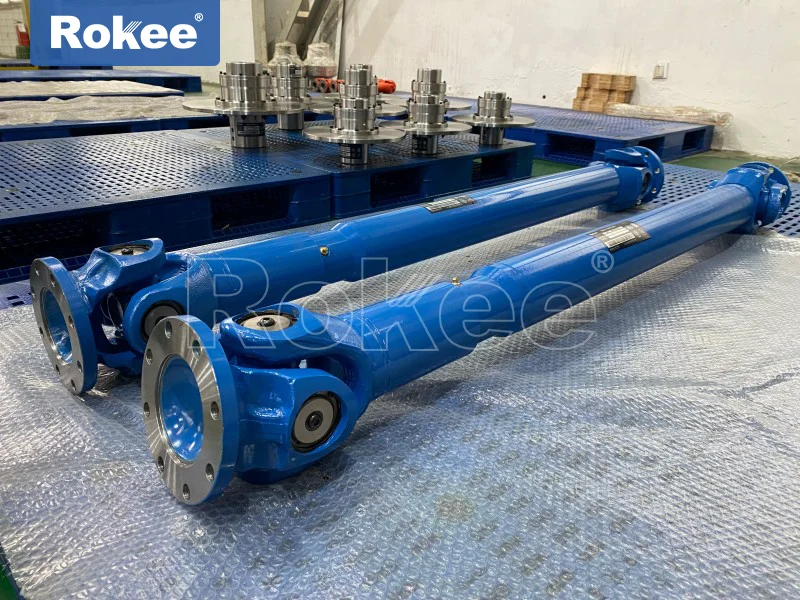
Advantages of universal shaft coupling
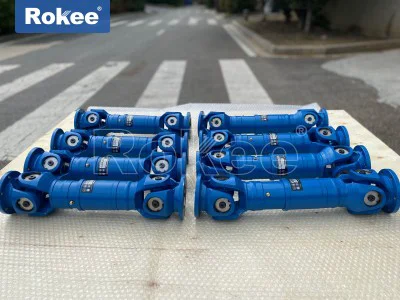
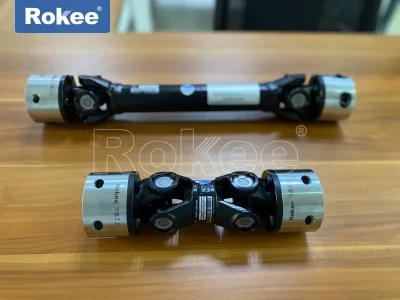
Powerful angle compensation capability allows for a large angle between the two axes (usually 5 ° -45 °), adapting to installation errors or dynamic deflection during operation, especially in heavy industry, automotive transmission and other scenarios. For example, in the transmission system of a vehicle, it can cope with changes in the angle between axles caused by vehicle body bumps.
High transmission efficiency
The transmission efficiency can reach 98% -99.8%, with low energy loss, suitable for high-power transmission, such as metallurgical and mining equipment.Compact structure and strong load-bearing capacity
High strength materials (such as 45 steel and alloy steel) are used, with small volume but high torque transmission capacity, suitable for heavy-duty equipment with limited space. Cross axis universal couplings are particularly common in heavy machinery.Job stability and adaptability: It can absorb some vibrations and impacts, improve the dynamic performance of the shaft system, and is suitable for working conditions with slight vibrations. Some types (such as cage type) can also achieve constant speed transmission to reduce speed fluctuations.
Relatively easy to maintain
Modular design of the structure (such as SWC type integral fork head) facilitates disassembly and replacement of vulnerable parts (such as cross bearings).
Disadvantages of universal shaft couplings
When there is an angle between the two axes, the cross axis coupling will produce periodic velocity fluctuations, resulting in vibration and noise, especially under high-speed conditions.
Quick wear
The sliding friction between the cross shaft and the bearing is prone to wear, and regular lubrication is necessary to shorten the service life. For example, frequent maintenance is required in mining equipment.Unequal speed problem
The output shaft speed of the single cross shaft coupling is not constant under the angle, and it needs to be solved by dual configuration or using a ball cage (constant speed type) instead.High manufacturing and installation requirements
Precision machining (such as dynamic balancing) push up costs; During installation, it is necessary to control the initial deviation, otherwise it will exacerbate wear and tear.High speed performance is limited. Centrifugal force may cause imbalance at high speeds, and strict dynamic balancing treatment is required. Although the cage type is better, the cost is higher.
Application suggestions
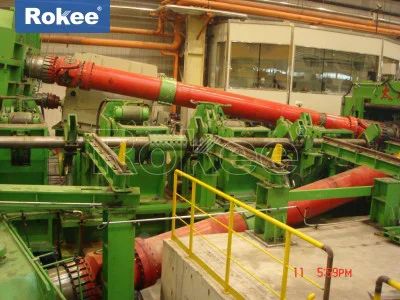
Prioritize the use of cross axis universal couplings: for heavy-duty, low-speed, and budget limited scenarios such as cranes and rolling mills.
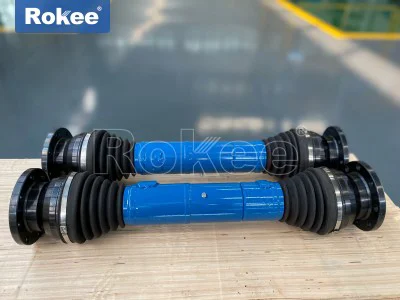
Priority should be given to ball cage universal couplings: for high-speed, constant speed transmission or large angle applications (such as car drive shafts).
Maintenance precautions: Regularly lubricate the cross bearings and monitor vibration; It is recommended to choose models with high dynamic balance levels for high-speed equipment.
The selection of universal joint requires a comprehensive consideration of torque, speed, deflection angle, and environmental conditions, weighing the advantages and disadvantages of its compensation capability and dynamic performance.