Material Of Universal Shaft Coupling
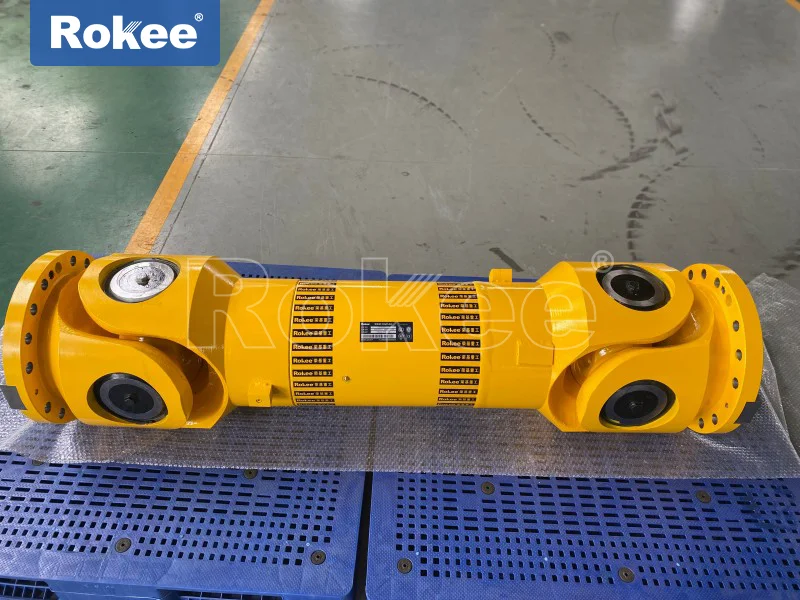
The material selection of universal shaft coupling directly affects its load-bearing capacity, wear resistance, and service life.
Classification of Core Component Materials
Cross axis component
Mainstream materials: 42CrMo alloy steel (commonly used), 40Cr, 20CrMnTi, etc. After tempering or carburizing heat treatment, these materials have both high strength and wear resistance.
Process characteristics: Forging processes such as free forging or die forging are usually used to eliminate casting defects and improve material density.Fork/flange components
Common materials: 45 steel, 35CrMo, cast iron (for light load scenarios).
Manufacturing process: The plug part is mostly cast, while the fork head for heavy-duty applications is made of forged steel to improve fatigue resistance.Bearing components
Needle roller bearings: commonly used high carbon steel or carburized bearing steel, suitable for high-speed and high load working conditions.
Sliding bearings: available in bronze alloy or self-lubricating composite materials for maintenance free environments.
Special application material optimization
Corrosion resistant environment: using stainless steel (such as 304/316) or surface nickel/zinc plating treatment, commonly found in ships and chemical equipment.
Lightweight requirements: Some small couplings use aluminum or titanium alloys, but some strength needs to be sacrificed.
High temperature scenario: For metallurgical equipment, choose 35CrMo or 42CrMo and add high-temperature resistant coatings.
The material of the universal shaft coupling should be selected comprehensively based on load, speed, environment, etc. For heavy-duty applications, alloy steel such as 42CrMo should be preferred, while for economical scenarios, 45 steel can be considered. Special working conditions require targeted optimization of material and process combinations.
Universal shaft couplings stand as indispensable mechanical components in modern power transmission systems, tasked with connecting two misaligned shafts to transfer torque and rotational motion efficiently across diverse industrial scenarios. Unlike rigid couplings that demand perfect shaft alignment, universal shaft couplings excel at compensating for angular, axial, and radial misalignments, making them vital for machinery operating under dynamic loads, variable speeds, and harsh environmental conditions. At the core of their performance, durability, and reliability lies the careful selection of materials, a decision that hinges on a multitude of operational factors rather than arbitrary choices. Every material used in crafting universal shaft couplings brings a unique set of mechanical, physical, and chemical properties, directly shaping the component’s load-bearing capacity, wear resistance, fatigue life, corrosion tolerance, and overall service lifespan.
Before dissecting specific materials, it is essential to outline the core criteria that govern material selection for universal shaft couplings, as these parameters act as a guiding framework for engineers and manufacturers. First and foremost is mechanical strength, encompassing tensile strength, yield strength, and torsional strength, which determine the coupling’s ability to withstand transmitted torque without deformation or fracture. Heavy-duty applications, such as those in industrial machinery, construction equipment, and marine propulsion systems, require materials with exceptional torsional strength to handle high torque loads without compromising structural integrity. Second is fatigue resistance, a key attribute for couplings subjected to cyclic loading, repeated start-stop operations, and fluctuating torque levels. Fatigue failure is a common culprit behind premature coupling breakdown, so materials with robust fatigue endurance are non-negotiable for long-term, reliable operation. Third is wear resistance, as the moving parts of universal shaft couplings—including yokes, cross shafts, and bearing surfaces—experience constant friction and contact during operation; poor wear resistance leads to rapid material loss, increased clearances, and diminished transmission precision. Fourth is environmental adaptability, covering resistance to corrosion, high and low temperatures, moisture, and chemical exposure. Couplings deployed in marine environments, chemical plants, or outdoor industrial settings must withstand corrosive agents and extreme temperatures without degradation. Additional factors include machinability, weldability, and formability, which impact manufacturing efficiency, cost-effectiveness, and design flexibility, as well as weight considerations for applications where lightweight construction is prioritized, such as automotive and aerospace systems.
Carbon steel emerges as the most widely utilized material for universal shaft couplings, dominating general-purpose and moderate-load applications due to its balanced performance and cost-efficiency. Plain carbon steel, particularly medium carbon steel variants, offers a commendable combination of strength, toughness, and machinability, making it ideal for couplings used in standard industrial settings with moderate torque, steady speeds, and non-corrosive environments. Medium carbon steel can be easily forged, machined, and heat-treated to enhance its mechanical properties, with processes like quenching and tempering boosting its hardness and wear resistance while maintaining adequate ductility to absorb minor shocks and vibrations. For applications requiring slightly higher strength than plain carbon steel, low-alloy carbon steel is a preferred upgrade, incorporating small amounts of alloying elements to refine grain structure and improve tensile and fatigue strength without sacrificing machinability. Carbon steel couplings are highly versatile, finding use in conveyor systems, pump drives, general manufacturing machinery, and light-duty automotive components, where operational conditions are relatively mild and cost efficiency is a priority. However, plain carbon steel has notable limitations: it lacks inherent corrosion resistance, making it unsuitable for humid, marine, or chemically active environments without protective coatings, and its high-temperature stability is limited, with mechanical properties deteriorating under sustained elevated temperatures. Despite these drawbacks, its widespread availability and favorable mechanical profile keep it as the backbone material for standard universal shaft coupling designs.
Alloy steel represents a step up in performance, engineered to meet the demands of heavy-duty, high-load, and high-stress applications where carbon steel falls short. Alloy steels are formulated with targeted alloying elements such as chromium, molybdenum, nickel, and vanadium, each contributing to enhanced mechanical properties that address the rigors of extreme operation. Chromium boosts hardenability, wear resistance, and mild corrosion resistance, while molybdenum improves high-temperature strength and fatigue resistance, making the material less prone to creep and fracture under prolonged cyclic loading. Nickel enhances toughness and ductility, even at low temperatures, ensuring the coupling can withstand sudden shocks and impact loads without brittle failure. Vanadium refines grain size, further elevating strength and fatigue life, creating a material that excels in the most demanding transmission scenarios. Common alloy steel grades used for universal shaft couplings offer exceptional torsional strength, far surpassing carbon steel, making them the go-to choice for heavy machinery such as metallurgical rolling mills, mining equipment, large-scale construction machinery, and marine propulsion systems. These couplings can handle extreme torque loads, high rotational speeds, and continuous operation without succumbing to deformation, wear, or fatigue failure. Alloy steel components are typically subjected to precision heat treatment, including normalized forging, quenching, and tempering, to optimize their internal structure and unlock their full mechanical potential. While alloy steel is more costly and less malleable than carbon steel, its superior performance justifies the investment in applications where downtime and component failure carry severe consequences. Additionally, alloy steel can be coated or surface-treated to enhance corrosion resistance, expanding its usability to moderately harsh environments beyond the scope of plain carbon steel.
Stainless steel is a specialized material choice tailored for universal shaft couplings operating in corrosive, hygienic, or temperature-sensitive environments, where corrosion resistance and cleanliness are paramount. Unlike carbon and alloy steels, stainless steel contains a high percentage of chromium, which forms a passive, self-repairing oxide layer on the surface, effectively preventing rust, oxidation, and degradation from moisture, saltwater, acids, and alkaline substances. This inherent corrosion resistance eliminates the need for protective coatings, making stainless steel ideal for marine equipment, food and beverage processing machinery, pharmaceutical manufacturing, chemical processing plants, and wastewater treatment systems. There are multiple grades of stainless steel used in coupling manufacturing, each designed for specific environmental conditions: austenitic stainless steel grades offer excellent corrosion resistance, high ductility, and good low-temperature performance, suitable for highly corrosive and hygienic settings; martensitic stainless steel grades can be heat-treated to achieve higher strength and hardness, balancing corrosion resistance with mechanical durability for moderately corrosive and load-bearing applications. Stainless steel couplings also exhibit good thermal stability, retaining their structural integrity across a wide range of temperatures, from sub-zero conditions to moderate heat. While stainless steel is not as strong as high-grade alloy steel for extreme heavy-duty loads, its unique corrosion-resistant properties make it irreplaceable in environments where metallic degradation would compromise operational safety and hygiene. The primary tradeoffs of stainless steel are its higher material cost and lower machinability compared to carbon steel, requiring specialized cutting and forming tools, but these are offset by its extended service life and minimal maintenance requirements in corrosive applications.
Aluminum alloys and other non-ferrous metals carve out a niche in universal shaft coupling design for applications prioritizing lightweight construction, low inertia, and moderate corrosion resistance. Aluminum alloys are significantly lighter than steel, reducing the overall weight of the transmission system, lowering rotational inertia, and minimizing energy consumption—critical benefits for automotive, aerospace, precision instrumentation, and portable machinery. Despite their lower density, high-strength aluminum alloys offer respectable tensile and torsional strength, sufficient to handle moderate torque loads and operating speeds. Many aluminum alloys also possess natural corrosion resistance, forming a protective oxide layer similar to stainless steel, making them suitable for outdoor or mildly corrosive environments without additional surface treatment. These alloys are highly machinable, allowing for intricate and precise coupling designs, and their thermal conductivity helps dissipate heat generated during operation, preventing overheating in high-speed applications. However, aluminum alloys have clear limitations: they lack the high-temperature stability of steel, with mechanical properties declining sharply under elevated temperatures, and their wear resistance is relatively poor, requiring surface treatments or bearing inserts for high-friction contact areas. As such, aluminum alloy universal shaft couplings are not intended for heavy-duty, high-torque, or high-temperature operation, but they shine in lightweight, high-speed, and low-to-moderate load scenarios where weight reduction and energy efficiency are top priorities. Other non-ferrous metals, such as brass and bronze, are occasionally used for specific coupling components, leveraging their excellent machinability, corrosion resistance, and anti-friction properties for bearing surfaces and small-scale precision couplings, though their high cost and lower strength restrict widespread use in full coupling assemblies.
Beyond metallic materials, non-metallic and composite materials play a supplementary role in universal shaft coupling design, particularly for flexible couplings and components requiring vibration damping, noise reduction, or electrical insulation. While the primary structural components of most universal shaft couplings remain metallic, non-metallic materials such as high-performance engineering plastics, reinforced composites, and elastomers are integrated into flexible coupling designs to enhance misalignment compensation and reduce transmission noise and vibration. Engineering plastics with high mechanical strength, wear resistance, and chemical stability are used for insulating components and low-load coupling parts, offering lightweight, corrosion-free alternatives to metals in specific applications. Reinforced fiber composites, combining polymer matrices with high-strength fibers, deliver an exceptional strength-to-weight ratio, suitable for specialized lightweight couplings in aerospace and high-precision machinery. Elastomeric materials, including various rubber compounds and polyurethane, are valued for their excellent elasticity, vibration absorption, and shock dampening capabilities, used in flexible coupling inserts to cushion torque fluctuations, reduce noise, and protect connected machinery from impact loads. These non-metallic materials excel in applications where electrical insulation is required, as they do not conduct electricity, preventing stray currents from damaging sensitive transmission components. It is important to note that non-metallic materials have inherent limitations: they cannot withstand the high torque and heavy loads of metallic couplings, and their temperature resistance is restricted, with performance degrading at extreme high or low temperatures. As such, they are not suitable for primary structural components of heavy-duty universal shaft couplings but serve as valuable complementary materials to optimize the performance and versatility of flexible and specialized coupling designs.
The processing and heat treatment of materials are equally critical to the performance of universal shaft couplings, as even the highest-quality materials will fail to deliver optimal performance without proper manufacturing and thermal processing. For metallic materials, forging is a preferred manufacturing process for key components such as yokes and cross shafts, as it refines the grain structure, aligns metal fibers, and enhances strength, toughness, and fatigue resistance compared to casting or machining from solid bar stock. Precision machining ensures tight tolerances, smooth surface finishes, and accurate fitment of mating components, reducing friction and wear during operation. Heat treatment is a transformative step for steel couplings: normalized forging relieves internal stresses and improves machinability; quenching hardens the material to boost wear and load resistance; tempering reduces brittleness, restores ductility, and balances hardness and toughness. The specific heat treatment regimen is tailored to the material grade and intended application, with heavy-duty alloy steel couplings undergoing more rigorous thermal processing to achieve peak mechanical properties. Surface treatments, such as phosphating, blackening, or protective coating, are applied to carbon and alloy steel couplings to enhance corrosion resistance and extend service life in harsh environments, while stainless steel and aluminum alloy components may receive passivation treatments to reinforce their natural corrosion-resistant oxide layers. For non-metallic components, injection molding, compression molding, and precision cutting are common processing methods, ensuring consistent quality and dimensional accuracy for flexible inserts and composite parts.
In practical application, the selection of universal shaft coupling materials is a holistic decision that balances operational requirements, environmental conditions, and economic factors, with no single material serving as a universal solution. For standard industrial settings with moderate loads and mild environments, carbon steel remains the most practical and cost-effective choice, offering reliable performance at a manageable cost. For heavy-duty, high-torque, and high-stress applications in mining, metallurgy, and marine propulsion, alloy steel is indispensable, providing the strength and fatigue resistance needed to withstand extreme operational rigors. For corrosive, hygienic, or outdoor environments, stainless steel is the optimal selection, delivering long-term durability without corrosion-related failures. For lightweight, high-speed, and energy-efficient applications, aluminum alloys offer unmatched advantages in weight reduction and low inertia. Non-metallic and composite materials, meanwhile, enhance flexibility, vibration damping, and electrical insulation for specialized coupling designs. Engineers must conduct thorough assessments of torque loads, operating speeds, environmental factors, and misalignment levels to select the most appropriate material, ensuring the coupling not only meets performance specifications but also delivers a long service life with minimal maintenance.
Looking ahead, the evolution of materials for universal shaft couplings is closely tied to advancements in materials science and manufacturing technology, with ongoing innovations aimed at enhancing performance, durability, and sustainability. Researchers are developing advanced high-strength alloys with improved strength-to-weight ratios, corrosion resistance, and high-temperature stability, pushing the boundaries of heavy-duty coupling performance. Surface engineering technologies, such as plasma spraying and laser cladding, are being refined to create ultra-hard, wear-resistant coatings on metallic components, further extending service life in harsh conditions. Sustainable and eco-friendly materials, including recycled metals and bio-based composites, are gaining traction as the industry shifts toward greener manufacturing practices, reducing environmental impact without compromising performance. Additionally, digital tools such as finite element analysis (FEA) are enabling more precise material selection and component design, simulating operational conditions to optimize material usage and performance. As industrial machinery continues to evolve toward higher efficiency, greater durability, and more extreme operating conditions, the role of material science in universal shaft coupling design will only grow more critical, ensuring these humble yet essential components keep pace with the demands of modern power transmission systems.
In conclusion, the material composition of universal shaft couplings is a cornerstone of their functionality, directly influencing every aspect of performance from torque transmission to service life. From the cost-effective versatility of carbon steel to the extreme durability of alloy steel, the corrosion resistance of stainless steel, the lightweight efficiency of aluminum alloys, and the flexible properties of non-metallic composites, each material serves a distinct purpose in addressing the diverse needs of industrial transmission systems. Successful material selection demands a deep understanding of both material properties and operational requirements, paired with expert manufacturing and heat treatment processes to unlock the material’s full potential. As a vital link in power transmission, the universal shaft coupling’s reliability hinges on this meticulous material choice, making it a critical consideration for engineers, manufacturers, and end-users alike. By prioritizing material suitability and quality, universal shaft couplings can deliver consistent, efficient, and long-lasting performance, supporting the seamless operation of machinery across countless industrial sectors worldwide.