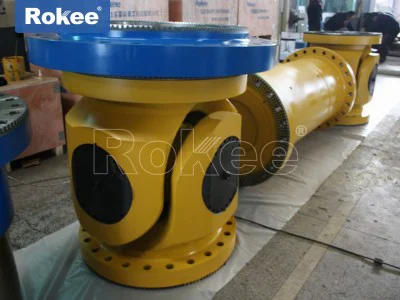
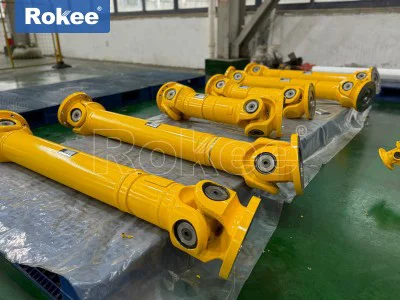
Internal Structure Of Cross Axis Universal Shaft Coupling

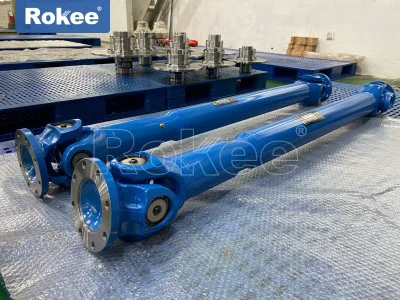
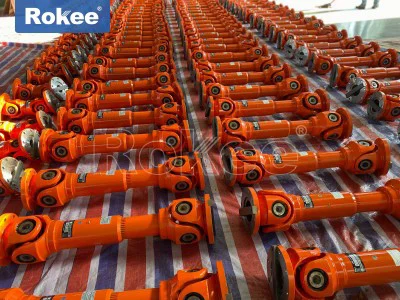
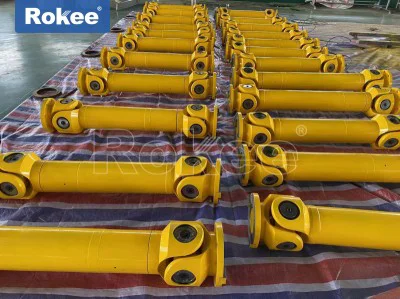
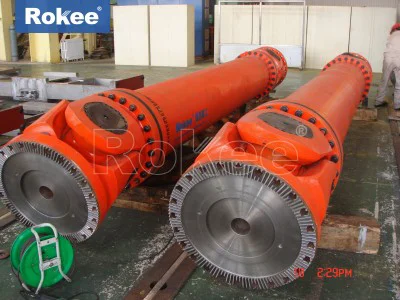
Cross axis universal shaft coupling is a mechanical device that allows two shafts to transmit rotational motion under conditions of angular variation. The core internal structure consists of the following key components:
Cross shaft (cross joint): A cross shaped structure composed of two perpendicular shaft necks, which is the core component of a universal shaft coupling
Bearing components: usually include needle roller bearings or sliding bearings, installed on the four journals of the cross shaft
Fork shaped component (universal shaft coupling fork): one at each end, connected to the cross shaft through bearings
Lubrication system: including oil nozzle, oil passage, and sealing device
Dust cover: protects internal structures from pollutant intrusion
Cross shafts are usually forged from alloy steel and undergo heat treatment to improve wear resistance and strength. The four journal surfaces are precision ground to ensure a precise fit with the bearings. The cross axis in modern design often adopts a hollow structure, which not only reduces weight, but also serves as a lubricating oil channel.
Bearing system design
Needle roller bearing: a common type of bearing consisting of needle rollers, retainers, and outer rings, with high load-bearing capacity and compact structure
Sliding bearings: used in some applications, made of self-lubricating materials, with low maintenance requirements
Sealing design: including rubber oil seals or metal dust covers to prevent lubricant leakage and contamination from entering
Fork shaped components are usually connected to the drive shaft through splines or flanges, and their ears have precise bearing seat holes for installing bearing components. Modern fork shaped components are often forged to ensure strength and reduce weight.
When there is an angle deviation between the two axes, the cross axis universal shaft coupling achieves motion transmission through the following methods:
The active fork drives the cross axis to rotate
The cross axis transmits motion to the driven fork
The bearing system allows the cross shaft to freely swing within the fork shaped component
When the angle changes, the cross axis rotates and adjusts itself
It should be noted that a single cross axis universal shaft coupling may cause speed fluctuations during angular transmission, so in practical applications, a double universal shaft coupling arrangement is often used to eliminate such fluctuations.
To ensure the long-term reliable operation of the internal structure of the cross axis universal shaft coupling, attention should be paid to:
Regular lubrication and maintenance, using designated lubricating grease
Avoid exceeding the allowable working angle in the design
Pay attention to checking the condition of the seals to prevent lubricant leakage
Ensure the alignment accuracy of the two end shafts during installation
Regularly check the bearing clearance and replace worn parts in a timely manner