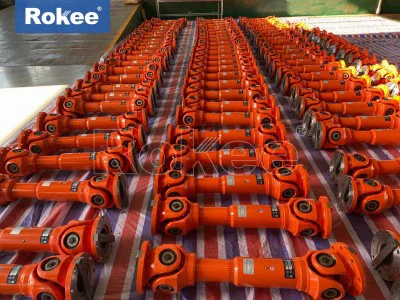
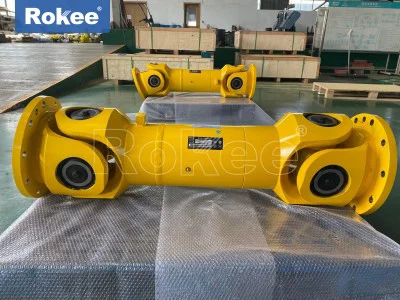
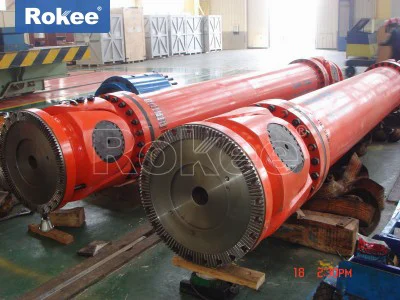
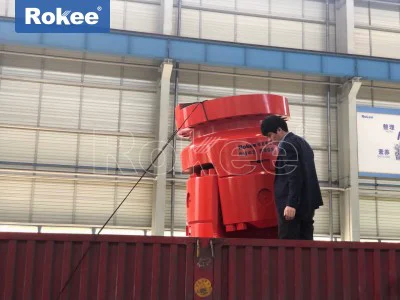
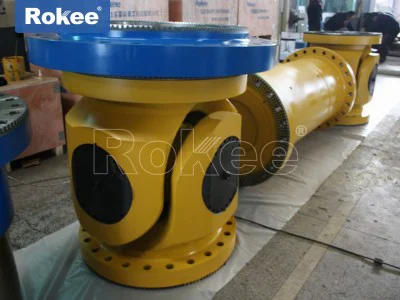
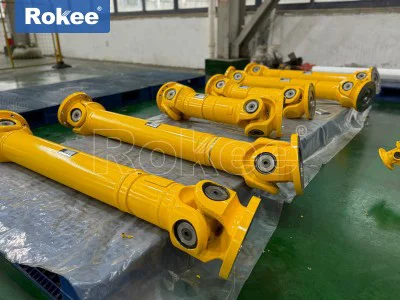
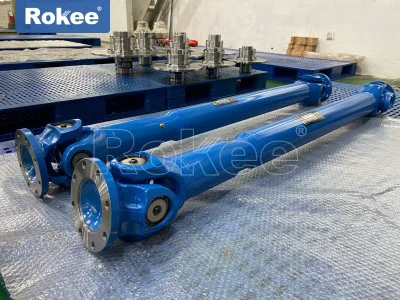
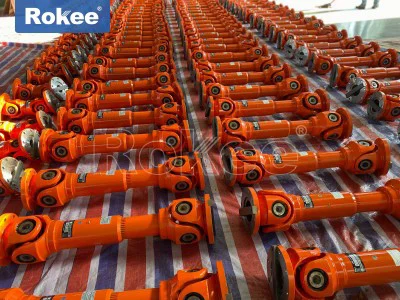
Advantages And Disadvantages Of Universal Joint Couplings
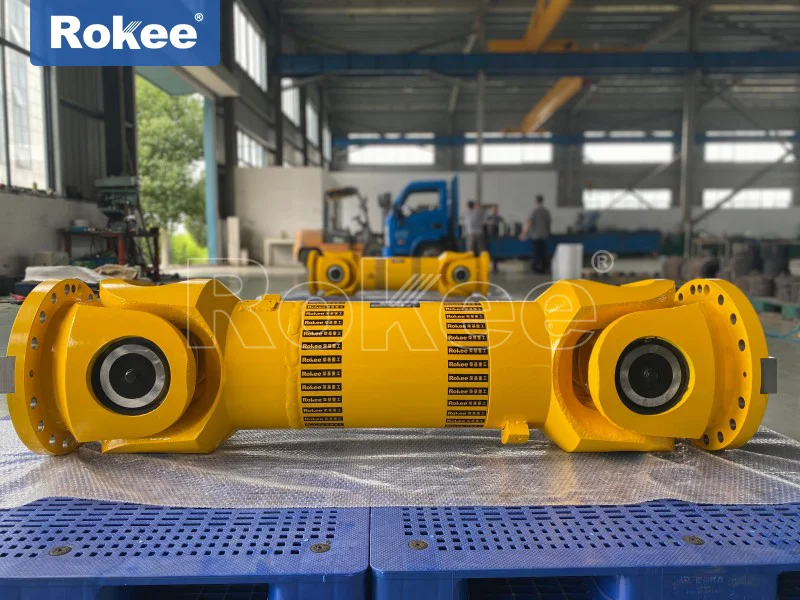
Main advantages
Strong angle compensation capability
Universal joint couplings (especially cross axis couplings) can adapt to larger axis deflection angles, far superior to rigid or elastic couplings, and are suitable for scenarios such as construction machinery and ships that require dynamic angle adjustment.High transmission torque
Made of high-strength alloy steel material, it can withstand heavy load conditions and is suitable for high torque transmission requirements such as metallurgical equipment and mining machinery.Compact structure
Small in size and light in weight, especially the cage type universal joint takes up less space under the same rotation diameter, making it suitable for installation environments with limited space.High transmission efficiency
The efficiency of the cross axis type can reach over 90%, while the cage type has higher efficiency and lower power loss due to its constant velocity characteristics.Adapt to complex working conditions
High temperature resistance and impact resistance, suitable for harsh environments such as metallurgical rolling mills, reducing maintenance requirements.
Main drawbacks
Non constant speed transmission problem (cross shaft type)
When the input shaft rotates at a constant speed, the output shaft speed of a single cross axis universal joint will fluctuate periodically, which can easily cause vibration and additional loads. It needs to be used in pairs and strictly installed (double universal joint structure) to eliminate this problem.High maintenance requirements
Bearings and cross shafts require regular lubrication and wear out quickly; Although the cage type has good sealing performance, the cost of repair is relatively high once it is damaged.Noise and vibration
Cross axis type may generate noise due to its non constant speed characteristics, especially during high-speed operation; Although the cage type improves this problem, it requires extremely high machining accuracy.High speed performance is limited
Compared to diaphragm couplings, universal joint couplings have greater difficulty in dynamic balancing in ultra high speed scenarios. Although ball cage couplings have been optimized through precision manufacturing, they are still limited by structural complexity.Cost factors
High performance ball cage universal joints are expensive due to their complex manufacturing process, while ordinary cross axis joints may increase total investment due to maintenance costs during long-term use.
In the realm of mechanical power transmission, universal joint couplings stand as one of the most widely utilized and time-tested components, serving as critical connectors between rotating shafts that are not aligned in a straight line. These mechanical assemblies, engineered to transmit torque and rotational motion across angularly displaced shafts, have cemented their place in countless industrial, automotive, and machinery systems due to their unique functional capabilities. Unlike rigid couplings that demand perfect shaft alignment and offer no flexibility for misalignment, or flexible couplings that rely on elastic elements to absorb minor displacements, universal joint couplings operate on a distinct mechanical principle, leveraging pivoting and articulating components to accommodate angular offsets between driving and driven shafts. To fully grasp their value and limitations in engineering design, it is essential to conduct a comprehensive analysis of their advantages and disadvantages, exploring how their structural design shapes performance, reliability, maintenance needs, and suitability across diverse operating conditions. This deep dive into the pros and cons of universal joint couplings reveals not only their unparalleled strengths in specific applications but also the inherent tradeoffs that engineers must weigh when selecting them for power transmission systems, ensuring that every design choice aligns with the operational demands, environmental constraints, and long-term performance goals of the machinery at hand.
One of the most prominent advantages of universal joint couplings is their exceptional ability to compensate for angular misalignment between shafts, a feature that sets them apart from many other coupling types in the market. In real-world mechanical setups, achieving perfect collinearity between two rotating shafts is often impractical or even impossible, whether due to manufacturing tolerances, assembly errors, structural deflection under load, or dynamic movement during operation. Universal joint couplings excel in this regard, as they can reliably transmit torque across significant angular offsets without compromising power delivery or causing excessive stress on connected components. Single universal joints can typically accommodate angles ranging from a few degrees up to around 45 degrees between shaft axes, while double universal joint configurations expand this capability further, handling combined angular misalignments of up to 90 degrees in some designs. This flexibility eliminates the need for ultra-precise shaft alignment during installation, reducing assembly complexity, shortening setup time, and lowering the risk of premature component failure caused by forced alignment. Unlike rigid couplings that transfer misalignment-induced stress directly to shafts, bearings, and gearboxes, leading to accelerated wear, noise, and catastrophic damage, universal joint couplings absorb these angular discrepancies through their articulating cross-shaped hubs and pivot points, distributing stress evenly across the joint structure. This misalignment compensation is invaluable in systems where shafts experience dynamic movement, such as mobile machinery, vehicle drivetrains, and industrial equipment with vibrating or shifting components, as it maintains consistent power transmission even as shaft positions shift during operation.
Complementing their misalignment tolerance, universal joint couplings boast impressive torque transmission capacity and torsional rigidity, making them ideal for heavy-duty industrial and mechanical applications. Constructed from robust, high-strength materials such as alloy steel, carbon steel, and hardened metal alloys, these couplings are built to withstand substantial torsional loads without deformation, slippage, or structural failure. The solid, interlocking design of the cross and yoke components ensures that torque is transferred directly and efficiently from the driving shaft to the driven shaft, with minimal wind-up or torsional flex that plagues some flexible coupling designs. This torsional stiffness is critical in applications where precise motion control and consistent power delivery are non-negotiable, such as heavy manufacturing machinery, mining equipment, construction tools, and marine propulsion systems. Unlike elastomeric flexible couplings that may degrade under high torque or lose their damping properties over time, universal joint couplings maintain their torque-carrying capabilities consistently, even under prolonged heavy load conditions. Additionally, their torque transmission efficiency is remarkably high, with most standard designs achieving efficiency rates of 90% or more under optimal operating conditions; constant-velocity variants of universal joint couplings push this efficiency even higher, minimizing power loss through friction and mechanical play. This combination of high torque capacity and exceptional efficiency reduces energy waste in power transmission systems, lowering operational costs and enhancing the overall performance of the machinery they integrate into.
Another key advantage of universal joint couplings is their compact, space-efficient structural design, which makes them highly adaptable to installation environments with limited spatial clearance. In many modern mechanical systems, engineers face the challenge of integrating complex components into tight, constrained spaces, and bulky power transmission parts can derail entire design plans. Universal joint couplings feature a streamlined, symmetric profile with a small rotational diameter, allowing them to fit into narrow gaps between shafts and adjacent machinery components that would be inaccessible to larger, more cumbersome coupling types. Despite their compact size, they do not sacrifice performance, retaining the ability to handle substantial loads and angular misalignments— a rare balance of form and function in mechanical coupling design. This space-saving attribute extends their usability across a vast array of applications, from small-scale precision instruments and medical devices to large industrial assemblies and automotive drivetrains where space optimization is paramount. Furthermore, universal joint couplings are relatively simple to install, dismantle, and service compared to more complex coupling assemblies. Their straightforward mechanical construction, devoid of intricate electronic components, fragile elastic elements, or specialized hydraulic parts, means that assembly and disassembly require only basic hand tools and minimal technical expertise. This ease of installation reduces downtime during setup or maintenance, boosting overall operational productivity and reducing labor costs associated with equipment assembly and repair.
Universal joint couplings also exhibit strong resilience to harsh operating environments, further enhancing their versatility and practicality in demanding industrial settings. Unlike some precision couplings that are sensitive to dust, moisture, temperature fluctuations, and mechanical shock, standard universal joint designs are built to endure tough conditions without a significant drop in performance. The durable metal construction resists corrosion, abrasion, and impact damage, allowing them to operate reliably in environments with high levels of particulate matter, humidity, or extreme temperatures—such as steel mills, construction sites, agricultural machinery, and marine applications. While proper sealing can boost their environmental resistance even further, even basic universal joint couplings offer greater durability than plastic or elastomer-based alternatives in harsh conditions. This ruggedness translates to longer service life under challenging operating conditions, reducing the frequency of replacements and minimizing unplanned equipment downtime. Moreover, universal joint couplings are highly versatile in terms of configuration and adaptation, with a range of designs available to suit specific operational needs. From single joint setups for moderate misalignment to double joint assemblies for larger angular offsets, and from standard cross-shaft designs to constant-velocity variants for smoother motion, these couplings can be tailored to meet the unique requirements of nearly any power transmission system. This adaptability makes them a go-to choice for engineers across diverse industries, as they can be integrated into everything from light-duty consumer machinery to heavy-duty industrial equipment with minimal customization.
Despite these numerous advantages, universal joint couplings are not without significant disadvantages, the most notable of which is the non-uniform rotational velocity output inherent to standard single cross-shaft designs. When a single universal joint operates at any angle other than zero degrees (perfect shaft alignment), the driven shaft does not rotate at a constant speed, even when the driving shaft rotates at a steady, uniform rate. Instead, the driven shaft experiences periodic speed fluctuations, accelerating and decelerating with each full rotation of the joint; the magnitude of these fluctuations increases directly with the operating angle between the shafts, becoming particularly pronounced at angles above 30 degrees. This non-constant velocity motion generates unwanted vibration, dynamic imbalance, and torsional shock throughout the power transmission system, which can lead to a cascade of issues over time. Excessive vibration accelerates wear on bearings, shafts, gears, and other connected components, shortening their service life and increasing the risk of unexpected mechanical failure. It can also create disruptive noise, compromising the operational comfort of equipment and potentially violating workplace noise regulations in industrial settings. In precision-sensitive applications, such as optical machinery, laboratory equipment, or high-precision manufacturing tools, these speed fluctuations and resulting vibrations can ruin product quality, disrupt measurement accuracy, and render the machinery ineffective for its intended purpose. While double universal joint setups, when properly phased and aligned, can mitigate this issue by canceling out speed fluctuations between the two joints, this solution adds complexity to the design, increases spatial requirements, and raises overall assembly costs—limiting its feasibility in compact or budget-constrained systems.
A second major drawback of universal joint couplings is their ongoing maintenance requirements and susceptibility to wear at pivot and bearing points. Unlike maintenance-free rigid couplings or some sealed elastic couplings that require no regular upkeep, universal joint couplings rely on moving, pivoting components that generate friction during operation. The cross-shaped trunnions, needle bearings, and yoke interfaces are all prone to gradual wear over time, especially if not properly lubricated. Regular lubrication is essential to reduce friction, prevent metal-on-metal contact, and dissipate heat generated by rotational movement; without consistent lubrication, wear accelerates rapidly, leading to increased backlash, reduced torque transmission efficiency, and eventual joint failure. This maintenance demand is a significant consideration for equipment operating in remote, hard-to-access locations or in continuous production environments where downtime for servicing is costly and disruptive. Additionally, even with proper maintenance, the moving parts of universal joint couplings have a finite service life and will eventually require replacement, adding to the long-term operational costs of the machinery. The wear and tear are exacerbated in high-speed applications, as increased rotational speeds amplify friction and heat buildup, further shortening the lifespan of bearing components and pivot points. This limitation restricts the suitability of standard universal joint couplings for ultra-high-speed machinery, where dynamic balance and minimal wear are critical; while precision-machined constant-velocity joints can improve high-speed performance, they come with higher manufacturing costs and tighter tolerance requirements.
Universal joint couplings also have limited ability to compensate for other forms of shaft misalignment beyond angular displacement, creating a narrow scope of misalignment tolerance compared to some flexible coupling alternatives. While they excel at handling angular misalignment, they offer little to no flexibility for axial misalignment (shaft movement along the longitudinal axis) or parallel misalignment (offset shafts that remain parallel to one another). In systems where axial shaft movement is unavoidable—such as thermal expansion of shafts under high temperatures or slight longitudinal shifting during operation—universal joint couplings cannot absorb this movement, leading to increased axial stress on the joint and connected components. This stress can cause binding, premature wear, or even structural damage to the coupling or shafts over time. Similarly, parallel misalignment between shafts places excessive lateral load on the universal joint’s pivot points, accelerating wear and reducing its ability to transmit torque efficiently. This narrow misalignment focus means that engineers must carefully assess all potential forms of shaft displacement in a system before selecting universal joint couplings; in applications where axial or parallel misalignment is present alongside angular misalignment, additional components such as telescoping shafts or specialized adaptive couplings may be required, increasing system complexity and cost. In contrast, many modern flexible couplings are designed to handle a combination of angular, parallel, and axial misalignment, making them a more versatile choice for systems with multiple displacement challenges.
Furthermore, the performance of universal joint couplings is heavily dependent on manufacturing precision and material quality, with lower-quality variants suffering from significant performance deficits and reliability issues. The articulating components of the joint—including the cross, yokes, and bearings—must be machined to extremely tight tolerances to ensure smooth articulation, minimal backlash, and consistent torque transmission. Even minor deviations in machining accuracy can lead to uneven wear, increased vibration, reduced efficiency, and premature failure. High-performance universal joint couplings, particularly constant-velocity designs, require advanced manufacturing techniques and precision engineering, driving up production costs; budget-friendly, low-precision alternatives may seem cost-effective upfront but often fail to deliver reliable performance, requiring frequent replacements and ultimately increasing total cost of ownership. Additionally, while standard universal joint couplings are cost-effective for basic applications, specialized variants designed for extreme loads, high speeds, or harsh environments come with a substantial price premium, making them less accessible for cost-sensitive projects. Another limitation is the potential for increased backlash in worn or poorly manufactured universal joint couplings. Backlash, the slight free play between mating components, can disrupt motion accuracy, especially in reversible drive systems where direction changes frequently. This backlash can lead to delayed response, reduced positioning precision, and increased mechanical shock during speed or direction shifts, making universal joint couplings a less-than-ideal choice for high-precision motion control systems that demand zero-backlash performance.
When evaluating the suitability of universal joint couplings for a given application, it is crucial to balance these advantages and disadvantages against the specific operational needs of the system. For applications where angular misalignment is prevalent, high torque transmission is required, space is limited, and operating speeds are moderate—such as vehicle drivetrains, heavy industrial machinery, agricultural equipment, and construction tools—universal joint couplings are an excellent choice, offering unmatched functionality and reliability. Their rugged construction, high torque capacity, and misalignment compensation make them indispensable in these scenarios, where other coupling types would fail quickly or require overly complex design workarounds. However, for high-speed precision machinery, systems with minimal misalignment tolerance, applications requiring zero vibration or constant velocity output, or equipment operating in maintenance-poor environments, universal joint couplings may not be the optimal selection. In these cases, alternative coupling designs such as constant-velocity couplings, diaphragm couplings, or elastomeric flexible couplings may better meet performance requirements, despite their own limitations.
In conclusion, universal joint couplings remain a cornerstone of mechanical power transmission due to their unique combination of angular misalignment compensation, high torque capacity, compact design, and environmental resilience. Their ability to transmit power efficiently across angled shafts has made them a staple in countless industries, offering practical solutions to common engineering challenges related to shaft alignment and power delivery. Nevertheless, their inherent drawbacks—including non-uniform velocity output, maintenance demands, limited misalignment versatility, and wear susceptibility—cannot be overlooked, as these factors directly impact system performance, longevity, and operational costs. Successful integration of universal joint couplings into mechanical systems requires a thorough understanding of both their strengths and limitations, allowing engineers to make informed design choices that maximize the benefits of these couplings while mitigating their inherent tradeoffs. As mechanical engineering continues to evolve, universal joint couplings will likely remain a vital component in power transmission design, with ongoing advancements in materials, manufacturing, and design refinement working to address their limitations and enhance their performance. Ultimately, the true value of universal joint couplings lies in their ability to fill a unique niche in mechanical power transmission, providing a reliable, efficient, and adaptable solution for connecting misaligned shafts in applications where no other coupling type can deliver comparable performance.