Compensation Capability Of Universal Joint Coupling

As a key component in mechanical transmission systems, universal joint couplings play an irreplaceable role in modern industrial applications. Its unique angular compensation capability enables it to effectively solve the problem of axis misalignment, ensuring the continuity and stability of power transmission. The outstanding feature of universal joint couplings is their excellent angular deviation compensation ability, which makes them an ideal choice for solving shaft misalignment problems. Depending on the structure and model, modern universal joint couplings can compensate for two axis angles typically ranging from 5 ° to 45 °.
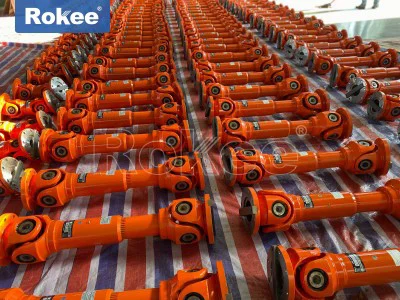
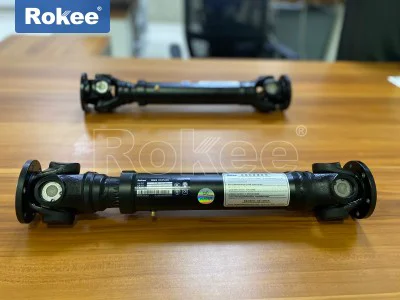
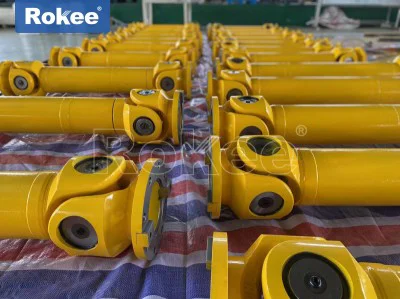
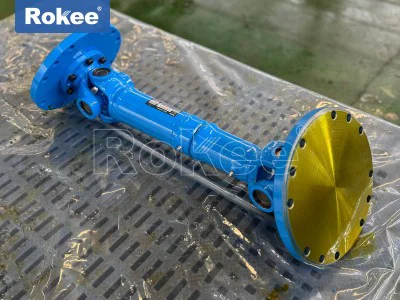
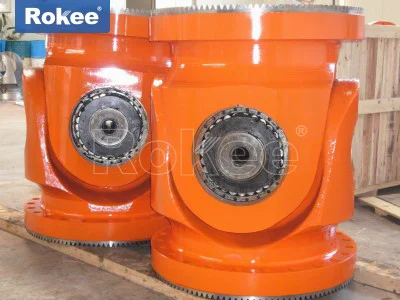
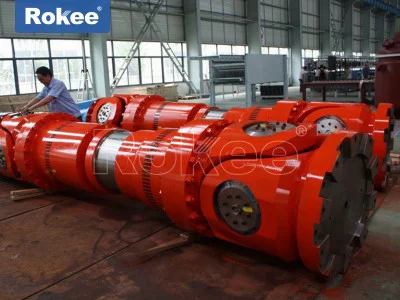
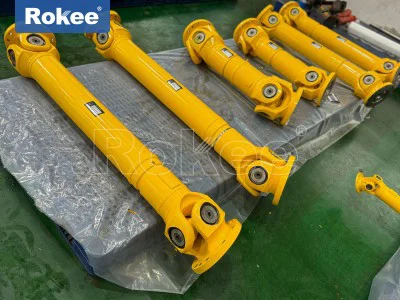
The angular compensation capability mainly depends on the structural design of the coupling. As a common type, the cross axis universal joint can transmit torque that is completely different from the same axis by connecting the flanges at both ends through cross bearings. The SWC type integral fork cross axis universal joint adopts an integral fork layout and is mainly used in heavy equipment fields such as steel rolling machinery and lifting and transportation machinery. Its turning diameter can reach 1600mm, torque transmission distance exceeds 30 meters, and compensation angle is usually between 15 ° -25 °. The SWP type split fork universal joint is mainly used in the field of heavy-duty large equipment, with a rotation diameter of up to 1200mm.
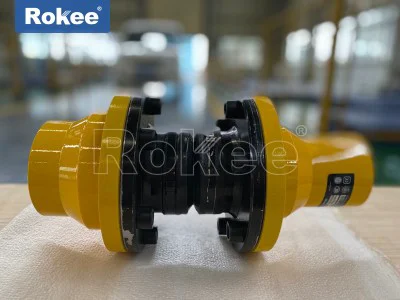
In addition to angle compensation, universal joint couplings also have a certain degree of axial displacement compensation capability. By adopting a spline connection design, it is possible to achieve axial displacement compensation over a large distance, which enables the universal joint coupling to work reliably even when the equipment experiences axial displacement due to thermal expansion, contraction, or installation errors.
It is worth noting that the compensation capability of universal joint couplings is not necessarily better with larger capacity. Excessive compensation angle can lead to increased speed fluctuations, decreased transmission efficiency, and accelerated component wear. Therefore, in practical applications, it is necessary to choose the appropriate model and installation angle according to specific working conditions. It is generally recommended to control the working angle within 15 ° to achieve better performance and service life.