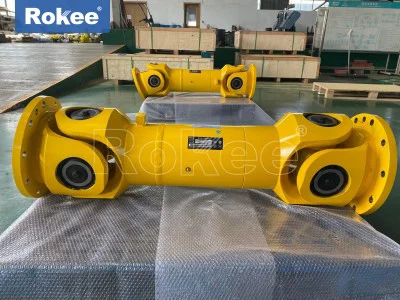
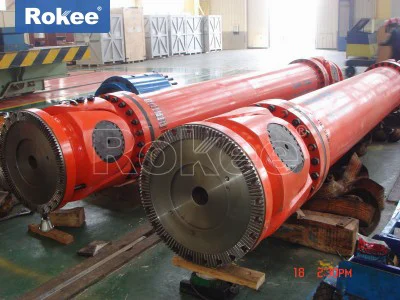
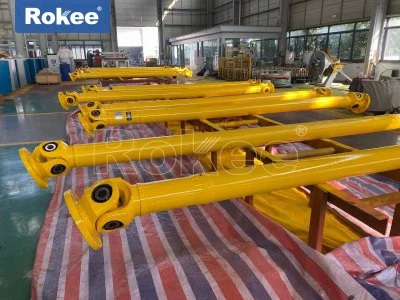
Transmission Principle Of Universal Joint Coupling
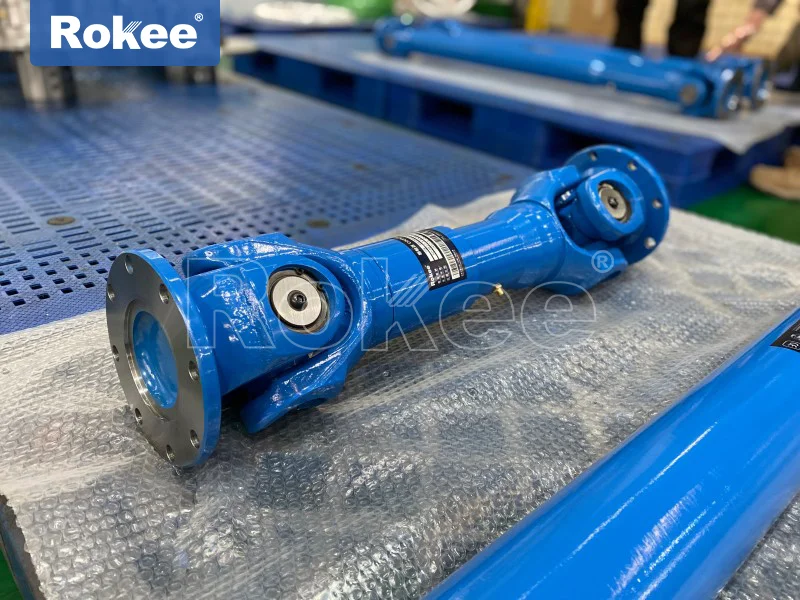
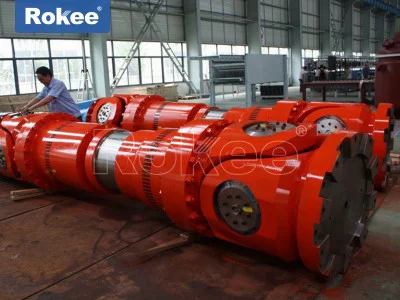
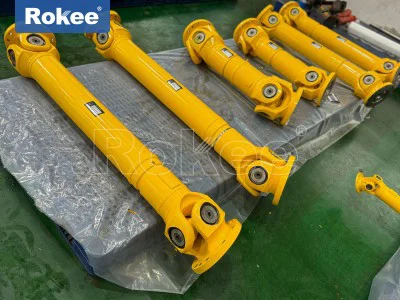
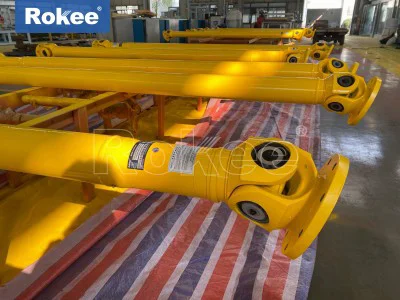
Universal joint coupling is a key component widely used in mechanical transmission systems, which can achieve power transmission between different axes, especially suitable for situations where there is angle deviation or position change between two axes. Universal joint coupling is a mechanical device that utilizes its structural characteristics to achieve continuous rotation of the connected shafts and reliable transmission of torque and motion when the two shafts are not on the same axis and there is an angle between the axes. Its characteristics are large angular compensation capability, compact structure, and high transmission efficiency. The allowable angle between the two axes of universal joint couplings of different structural types varies, generally between 5 ° -45 °. The universal joint coupling is mainly composed of universal joints, transmission shafts, and intermediate supports. Its core function is to compensate for the angular deviation between the two axes and solve the problem of misalignment of the shaft system caused by manufacturing and installation errors or position changes during operation.
In mechanical transmission systems, universal joint couplings play an irreplaceable role:
Connect the active and passive shafts in different mechanisms to rotate together and transmit torque
Provide buffering and damping functions in high-speed heavy-duty power transmission
Improve the dynamic performance of the shaft system and adapt to the transmission requirements of relative position changes
The core working principle of the universal joint coupling is based on the multi-directional rotation ability of the cross axis structure. When the driving shaft rotates, it drives the driven shaft to rotate through the cross shaft, while allowing for a certain degree of angular deviation between the two shafts. This design allows power to be transmitted from one axis direction to another axis in a different direction.
The cross axis universal joint consists of the following main components:
Universal joint fork: a component that connects the driving shaft and the driven shaft
Cross axis: a core rotating component with four mutually perpendicular shaft necks
Needle roller bearing: installed on the cross shaft neck to reduce friction
Oil seal and lubrication structure: ensuring long-term normal operation of bearings
Universal joint couplings are widely used in many industrial fields due to their unique performance:
Automotive Industry
Transmission System: Connecting Transmission and Drive Axle
Steering System: Connecting Steering Column and Steering Gear
Drive Shaft: Half Shaft Universal Joint of Front Drive Vehicle
Four Wheel Drive System: Transmission between Transfer Case and AxleIndustrial equipment
Steel rolling machinery: compensating for the adjustment displacement of rolling rolls
Paper making machinery: long-distance multi support transmission
Ship propulsion: connection between main engine and propeller shaft
Pump and compressor: transmission connection between motor and pump bodyOther fields
Aerospace: Transmission of flight control systems
Robotics technology: Power transmission at joints
Energy equipment: Wind turbine yaw system
Construction machinery: Excavators, cranes and other equipment
The universal joint, as a key component in the mechanical transmission system, achieves power transmission through its unique design that changes the angle between the axes. From basic cross axis type to precision ball cage type, different types of universal joint couplings meet the needs of various industrial applications. Understanding its working principle, transmission characteristics, and selection points is crucial for designing efficient and reliable transmission systems. With the development of new materials, new processes, and intelligent technologies, universal joint couplings will continue to play an irreplaceable role in a wider range of fields, providing more flexible and efficient solutions for mechanical transmission. In practical applications, correctly selecting, installing, and maintaining universal joint couplings can not only ensure the smooth operation of the transmission system, but also significantly extend the service life of the equipment and reduce maintenance costs.