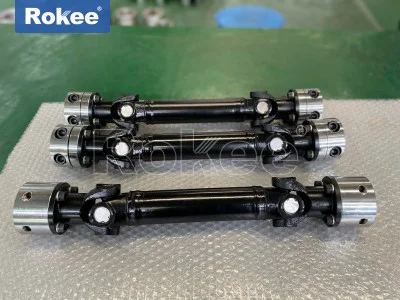
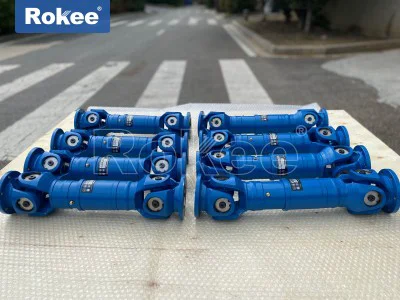
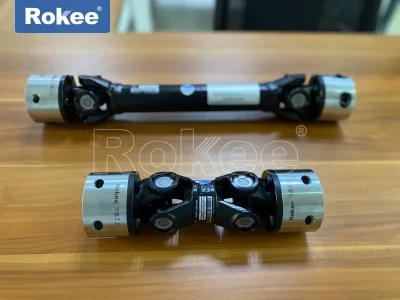
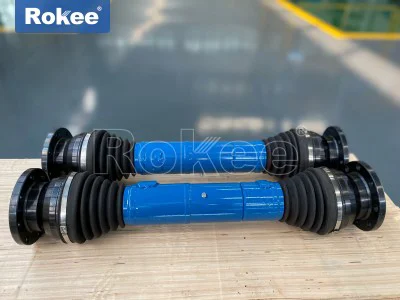
Welded Universal Joint Coupling
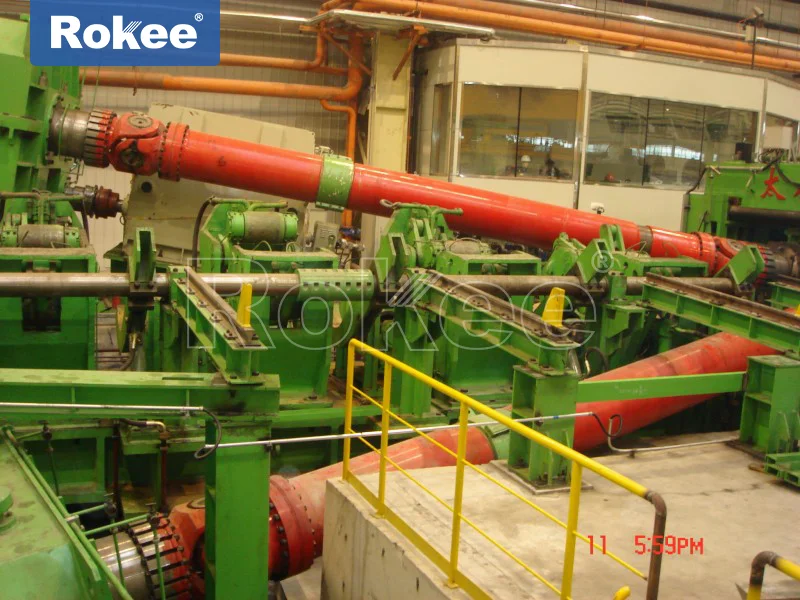
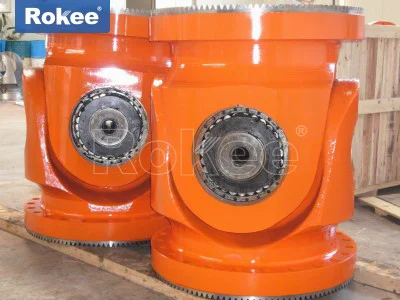
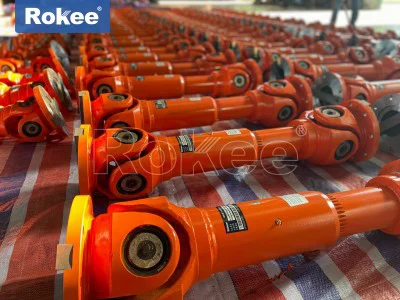
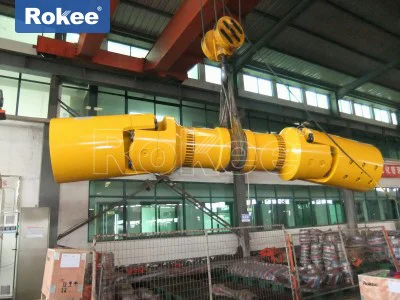
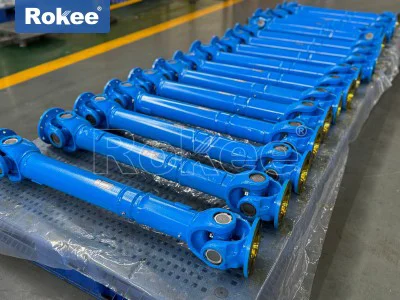
Welded universal joint coupling is a mechanical transmission device that connects components through welding technology. It is mainly used to connect two shafts on different axes, achieving effective transmission of torque and rotational motion. Its core lies in the ability to compensate for relative displacement between two axes, including axial, radial, and angular deviations. This type of coupling, through its unique structural design, allows the driving shaft and the driven shaft to maintain constant angular velocity and continuous rotation even in the presence of an axial angle.
The cross axis structure is a common design form of welded universal joint, consisting of two welded fork heads and a cross axis. The four necks of the cross shaft are connected to two fork heads through needle roller bearings, forming a hinged structure. When one axis is fixed, the other axis can be tilted at a certain angle. This structure enables the coupling to adapt to various complex installation conditions and working environments. In practical applications, to eliminate speed fluctuations, a double coupling form is usually used, which connects two universal couplings through an intermediate shaft to form a universal transmission shaft system.
The material selection of welded cardan shaft directly affects its performance and service life. Common materials include 45 steel, 45 forged steel, 40 chromium alloy steel, and 35CrMo. These materials have undergone quenching and high-frequency quenching processes to meet the strength requirements under different working conditions. For example, fork components are often quenched and tempered with 35CrMo alloy steel, while spline shafts undergo high-frequency quenching to improve wear resistance and load-bearing capacity.
Compared with traditional flange or bolted universal couplings, welded design has the advantages of compact structure, light weight, and high reliability. Due to the elimination of flanges and connecting bolts, the potential risk of loosening is reduced, making it particularly suitable for high-speed and heavy-duty working conditions. At the same time, the welding structure eliminates the connection gap, improves the transmission accuracy, and performs excellently in strict requirements such as metallurgical rolling mills and heavy machinery. However, the welded design also brings the limitation of non disassembly, and once damaged, it needs to be replaced as a whole, which is slightly insufficient in terms of maintenance convenience.
A welded universal joint coupling is a critical mechanical component designed to transmit rotational motion and torque between two shafts that are not aligned on the same axis, or that experience significant angular deviation, radial displacement, or axial movement during operation. Unlike other types of couplings that rely on bolts, flanges, or detachable connectors for assembly, this coupling features a welded construction that integrates key components into a unified, rigid structure, ensuring enhanced stability, high torque-bearing capacity, and resistance to mechanical stress in demanding industrial environments. Its unique design combines the flexibility of universal joints, which allow for angular compensation, with the structural integrity of welded connections, making it an indispensable part of countless mechanical transmission systems across various industries. Whether in heavy-duty manufacturing, transportation, or specialized equipment, the welded universal joint coupling plays a vital role in ensuring smooth, efficient, and reliable power transmission, even under extreme operating conditions.
The fundamental design of a welded universal joint coupling revolves around several core components that work in tandem to achieve its primary function of torque transmission and misalignment compensation. At the heart of the coupling is the cross shaft, also known as the spider, a central component with four mutually perpendicular trunnions that serve as the pivot points for rotational movement. Each trunnion is fitted with a bearing assembly, typically consisting of needle bearings or ball bearings, which reduces friction between the cross shaft and the yokes, allowing for smooth angular movement while minimizing wear and energy loss. The bearings are enclosed within bearing caps or seats, which are welded directly to the yokes, creating a sealed environment that protects the internal components from dust, debris, moisture, and other contaminants that could compromise performance or shorten service life. The yokes themselves are the connecting elements that attach the coupling to the driving and driven shafts; they are precision-welded to the cross shaft assembly, forming a rigid connection that eliminates the play or backlash commonly found in bolted or detachable couplings. In some configurations, the coupling may also include a telescopic spline sleeve, which allows for axial displacement compensation, enabling the coupling to adapt to changes in shaft length caused by thermal expansion, vibration, or installation errors.
The materials used in the construction of welded universal joint couplings are carefully selected based on the specific application requirements, including torque capacity, operating speed, environmental conditions, and resistance to wear, corrosion, and high temperatures. Carbon steel and alloy steel are the most commonly used materials for the main components, such as the yokes, cross shaft, and trunnions, due to their exceptional tensile strength, fatigue resistance, and durability. Carbon structural steel, for example, is often used in medium-load, medium-speed applications where cost-effectiveness is a priority, while alloy steels—reinforced with elements such as chromium, molybdenum, or nickel—are preferred for heavy-duty and high-stress applications, as they offer improved hardenability, high-temperature strength, and resistance to mechanical fatigue. These steel components are typically subjected to heat treatment processes, such as quenching and tempering, to enhance their hardness and toughness, ensuring they can withstand the extreme forces and repeated stress encountered during operation. For applications in corrosive environments, such as marine, chemical, or food processing industries, stainless steel is often used, as it contains chromium that forms a passive oxide layer, resisting rust and oxidation. Austenitic stainless steel, in particular, is valued for its excellent corrosion resistance in chloride-rich environments and its ability to maintain toughness at both high and low temperatures. In some specialized applications, lightweight materials such as high-strength aluminum alloys or engineering plastics may be used to reduce overall weight, making the coupling suitable for precision equipment, aerospace systems, or robotic joints where weight reduction is critical without compromising performance.
The welding process itself is a critical factor in determining the performance, reliability, and service life of the welded universal joint coupling. Unlike bolted connections, which can loosen over time due to vibration or thermal cycling, welded connections create a permanent bond between components, ensuring structural integrity and eliminating the risk of disassembly or failure under high torque or dynamic loads. The most common welding techniques used in the manufacturing of these couplings include gas metal arc welding (GMAW), shielded metal arc welding (SMAW), and submerged arc welding (SAW), each selected based on the material type, component size, and desired weld quality. GMAW, also known as MIG welding, is widely used for its high welding speed, versatility, and ability to produce consistent, high-quality welds on both carbon steel and alloy steel components. SMAW, or stick welding, is preferred for on-site repairs or for welding thick-walled components, as it can operate in harsh environments and does not require a continuous supply of shielding gas. SAW is used for large-scale production, particularly for welding heavy-duty components, as it produces deep, uniform welds with high strength and minimal defects. Regardless of the welding technique used, strict quality control measures are implemented to ensure that the welds are free from defects such as cracks, porosity, or incomplete fusion, which could weaken the coupling and lead to premature failure. Post-welding heat treatment is often performed to relieve residual stresses in the welded components, reducing the risk of distortion or cracking and improving the overall mechanical properties of the coupling.
The working principle of a welded universal joint coupling is based on the ability of the cross shaft and bearing assembly to allow for angular misalignment between the driving and driven shafts while maintaining continuous torque transmission. When the driving shaft rotates, it transfers torque to the connected yoke, which in turn rotates the cross shaft. The cross shaft’s trunnions, supported by the bearings in the opposite yoke, allow the driven yoke to rotate at the same speed as the driving yoke, even when the two shafts are at an angle to each other. This angular compensation capability is one of the key advantages of universal joint couplings, as it allows for flexibility in equipment design and accommodates installation errors, thermal expansion, or dynamic movement of shafts during operation. The maximum allowable angular deviation varies depending on the coupling design and size, but typically ranges from 5 degrees to 45 degrees, with some heavy-duty models capable of accommodating even larger angles. In addition to angular compensation, many welded universal joint couplings are also capable of compensating for radial and axial displacements. Radial displacement compensation is achieved through the flexibility of the bearing assembly, while axial displacement is often handled by a telescopic spline sleeve, which allows the coupling to expand or contract along the axis of rotation without affecting torque transmission. This multi-directional compensation capability makes the welded universal joint coupling highly versatile, suitable for a wide range of applications where shaft misalignment is common.
One of the key advantages of a welded universal joint coupling over other types of couplings is its high torque transmission capacity. The welded construction eliminates the weak points associated with bolted or keyed connections, allowing the coupling to withstand higher torque loads without deformation or failure. This makes it particularly suitable for heavy-duty applications, such as industrial machinery, construction equipment, and marine propulsion systems, where large amounts of torque need to be transmitted between non-aligned shafts. Another advantage is its compact design; the welded components are integrated into a single unit, reducing the overall size and weight of the coupling compared to bolted alternatives. This compactness is especially beneficial in applications where space is limited, such as in automotive drivetrains, small industrial machines, or precision equipment. Additionally, the welded construction provides excellent rigidity and stability, minimizing vibration and backlash during operation. Backlash, which is the play between connected components, can cause noise, wear, and reduced precision in transmission systems, but the welded universal joint coupling’s rigid design eliminates this issue, ensuring smooth, precise torque transmission. The sealed bearing assembly also contributes to the coupling’s reliability by protecting internal components from contaminants, reducing maintenance requirements and extending service life.
Welded universal joint couplings find applications in a wide range of industries, each with unique operating requirements and challenges. In the metallurgical industry, they are used in steel rolling mills, where they transmit torque between the motor and the rolling stands, accommodating the angular misalignment and axial movement caused by the adjustment of the rolls. The high torque capacity and durability of these couplings make them ideal for this application, where they must withstand continuous operation under extreme loads and high temperatures. In the construction industry, they are used in excavators, cranes, and bulldozers, where they connect the hydraulic motors to the drive shafts, allowing for the flexible transmission of torque while the equipment moves over uneven terrain. The ability to compensate for large angular deviations and withstand shock loads makes them well-suited for these harsh operating conditions. In the marine industry, welded universal joint couplings are used in ship propulsion systems, connecting the engine to the propeller shaft. Here, they must withstand high torque loads, corrosive saltwater environments, and constant vibration, making stainless steel or corrosion-resistant alloy constructions essential. The automotive industry also uses these couplings in rear-wheel drive and four-wheel drive vehicles, where they are part of the drivetrain, transmitting torque from the transmission to the rear axle. In this application, the coupling must be compact, lightweight, and capable of compensating for the angular movement of the axle as the vehicle travels over bumps and uneven surfaces. Other applications include agricultural machinery, such as tractors and harvesters, where the coupling connects the engine to various implements; industrial pumps and compressors, where it transmits torque between the motor and the pump shaft; and renewable energy systems, such as wind turbines, where it connects the generator to the rotor, accommodating the misalignment caused by wind-induced vibration.
Proper installation and maintenance are essential to ensure the optimal performance and longevity of a welded universal joint coupling. During installation, it is critical to ensure that the shafts are aligned as closely as possible to the coupling’s allowable misalignment limits. Misalignment beyond the recommended range can cause excessive stress on the bearings and cross shaft, leading to premature wear, vibration, and eventual failure. Before installation, the shaft ends, keyways, and coupling inner holes should be thoroughly cleaned to remove oil, grease, burrs, or rust, which can affect the fit and performance of the coupling. The coupling should be welded to the shafts using the appropriate welding technique and materials, ensuring a strong, defect-free bond. After installation, a alignment check should be performed using tools such as dial gauges or laser alignment devices to verify that the radial and axial deviations are within the allowable limits. Regular maintenance is also important to extend the service life of the coupling. This includes periodic visual inspections to check for signs of wear, corrosion, or damage, such as cracks in the yokes or cross shaft, leaking lubricant, or excessive vibration. The bearing assembly should be lubricated regularly with the appropriate type of lubricant, as specified by the application requirements. Lubrication helps to reduce friction between the trunnions and bearings, preventing overheating and wear. The frequency of lubrication depends on the operating conditions, but it is typically recommended every 2 to 3 months for most industrial applications. If the coupling is used in a corrosive environment, more frequent inspections and maintenance may be required to check for signs of corrosion and replace damaged components as needed. Additionally, operational parameters such as vibration and temperature should be monitored regularly using sensors, as abnormal levels can indicate potential issues, such as bearing failure or misalignment. If vibration exceeds the recommended limits or if the temperature rises significantly, the equipment should be shut down for inspection and repairs to prevent further damage.
Despite their many advantages, welded universal joint couplings are not suitable for all applications. One of the main limitations is their lack of flexibility in terms of disassembly; once welded, the coupling cannot be easily removed or adjusted, making maintenance or replacement of components more difficult and time-consuming. This makes them less ideal for applications where regular disassembly is required, such as in equipment that requires frequent maintenance or part replacement. Another limitation is their sensitivity to excessive misalignment; while they can accommodate a certain degree of angular, radial, and axial deviation, misalignment beyond the recommended limits can significantly reduce the coupling’s service life and lead to premature failure. Additionally, welded universal joint couplings are not suitable for high-speed applications where precision and minimal vibration are critical, as the rigid construction can transmit vibration and noise more effectively than flexible couplings. In such applications, ball cage universal joints or other types of flexible couplings may be more appropriate. However, for most heavy-duty, low-to-medium speed applications where torque transmission capacity, durability, and structural integrity are the primary concerns, the welded universal joint coupling remains the preferred choice.
The future development of welded universal joint couplings is focused on improving their performance, durability, and versatility, while addressing their current limitations. Advances in materials science are leading to the development of new alloys and composite materials that offer higher strength, better corrosion resistance, and lighter weight, making the couplings suitable for a wider range of applications. For example, the use of high-strength, lightweight alloys can reduce the overall weight of the coupling, making it more suitable for automotive and aerospace applications where weight reduction is critical. Improvements in welding technology, such as the use of robotic welding and laser welding, are also helping to enhance the quality and consistency of welds, reducing the risk of defects and improving the overall mechanical properties of the coupling. Robotic welding systems offer greater precision and control, ensuring that welds are uniform and free from cracks or porosity, while laser welding allows for faster welding speeds and deeper weld penetration, making it suitable for thick-walled components. Additionally, advances in bearing technology are leading to the development of more durable, high-performance bearings that can withstand higher loads, speeds, and temperatures, reducing friction and extending the service life of the coupling. The integration of smart technologies, such as sensors and monitoring systems, is also becoming more common, allowing for real-time monitoring of the coupling’s operating conditions, such as temperature, vibration, and lubrication status. This predictive maintenance capability can help to identify potential issues before they lead to failure, reducing downtime and maintenance costs.
In conclusion, the welded universal joint coupling is a vital mechanical component that plays a crucial role in power transmission systems across a wide range of industries. Its unique combination of welded construction and universal joint flexibility provides high torque transmission capacity, structural integrity, and misalignment compensation, making it ideal for heavy-duty, demanding applications. The careful selection of materials, precise welding techniques, and proper installation and maintenance are essential to ensuring the coupling’s optimal performance and longevity. While it has certain limitations, such as the lack of easy disassembly and sensitivity to excessive misalignment, its advantages far outweigh these drawbacks in most industrial applications. With ongoing advances in materials, welding technology, and smart monitoring systems, the welded universal joint coupling is expected to become even more versatile and reliable, continuing to meet the evolving needs of modern mechanical systems. As industries continue to demand higher performance, greater durability, and more efficient power transmission, the welded universal joint coupling will remain an indispensable component in the global manufacturing and engineering landscape.