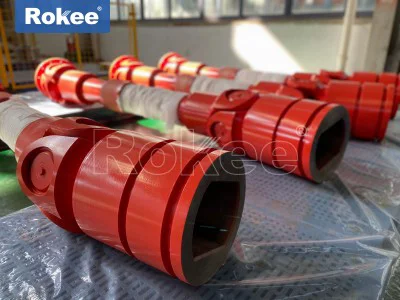
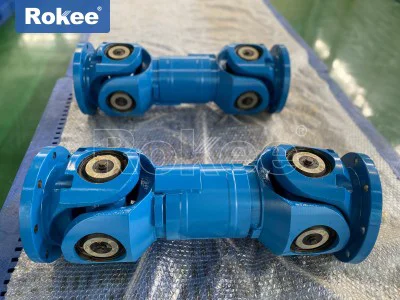
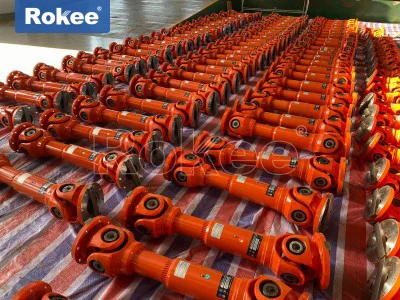
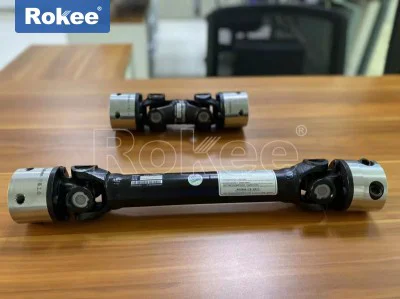
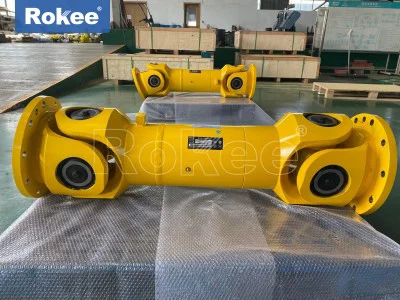
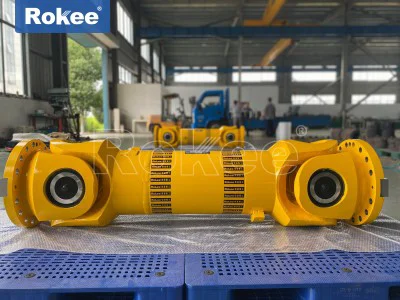
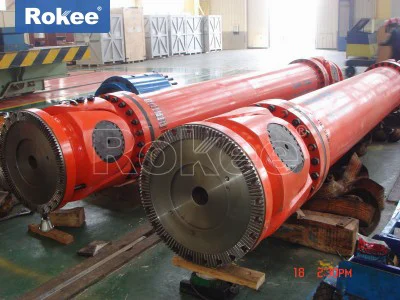
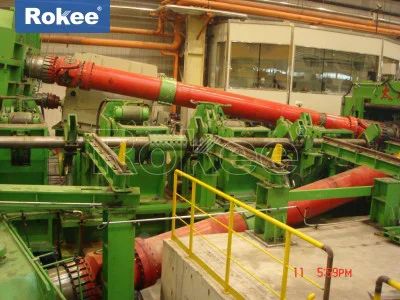
Expansion And Contraction Of Cross Cardan Shaft

As a key component in mechanical transmission systems, the extension and contraction characteristics of the cross cardan shaft directly affect the performance of the transmission system. The expansion and contraction amount refers to the relative displacement allowed by the coupling in the axial direction, which is crucial for compensating for possible axial deviations in the transmission system.
In engineering applications, the expansion and contraction of a cross cardan shaft usually consists of two main parts: structural expansion and elastic expansion. The amount of structural expansion and contraction comes from the movable structure designed by the coupling itself, such as the axial displacement allowed by components such as key sleeves; The elastic expansion and contraction amount comes from the elastic deformation of the material under stress. The combination of these two factors determines the total compensation capability of the coupling under actual working conditions.
Key factors affecting the amount of expansion and contraction
Structural design parameters
Spline pair design: The tooth shape, length, and fit clearance of the spline directly affect the achievable expansion and contraction
Bearing arrangement: The arrangement of the cross shaft bearing affects the distribution of degrees of freedom
Lubrication system: Good lubrication can ensure smooth expansion and contraction movementMaterial properties
Elastic modulus determines the magnitude of elastic expansion
Wear resistance affects the stability of expansion after long-term use
Thermal expansion coefficient is related to the dimensional stability under temperature changesWorking conditions
Speed: Centrifugal force may affect actual expansion and contraction at high speeds
Load: Heavy loads may increase elastic deformation
Environmental temperature: Extreme temperatures affect material properties and gap changes
The expansion and contraction control of the cross cardan shaft will be more precise and intelligent, providing a more reliable solution for complex transmission systems. Engineers should consider both static and dynamic requirements when selecting and designing, ensuring that the coupling maintains good expansion compensation performance throughout its entire lifecycle.