Function Of Cross Cardan Shaft

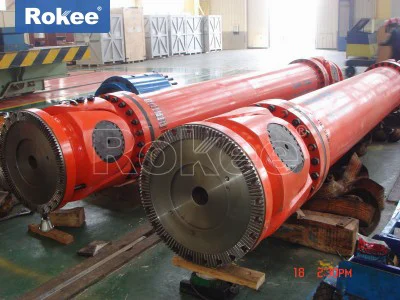
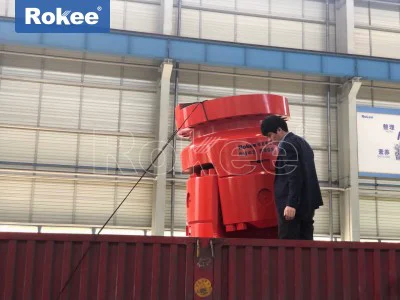
As a key component in mechanical transmission systems, the cross cardan shaft plays an irreplaceable role in modern industrial equipment. This sophisticated mechanical device can effectively solve the problem of power transmission when the axis is not aligned, and is widely used in various fields such as metallurgy, heavy machinery, petrochemicals, engineering machinery, and rail transit.
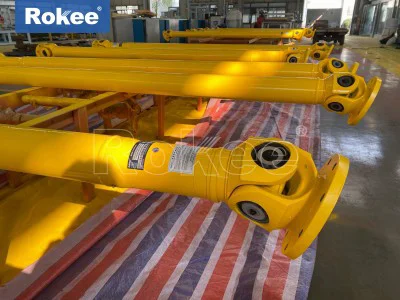
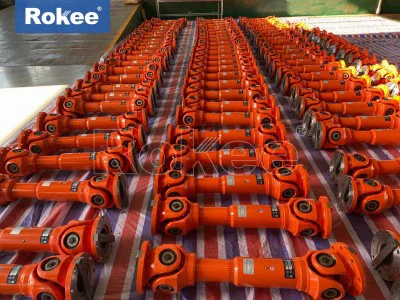
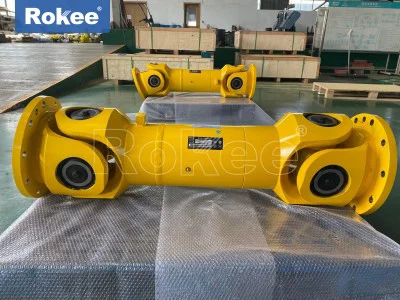
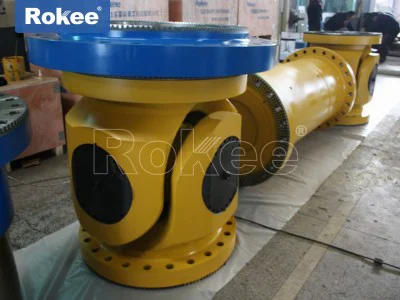
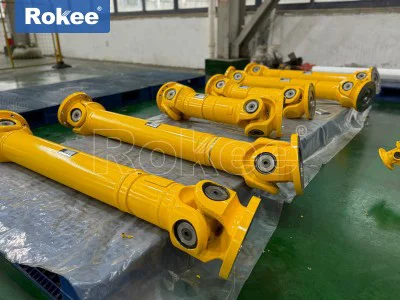
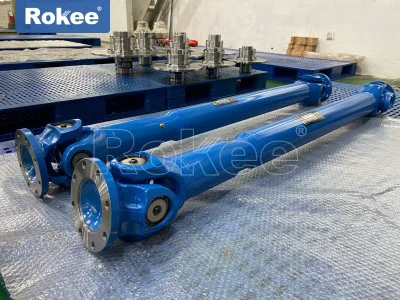
cross cardan shaft is a special type of coupling, mainly used to connect transmission shafts with different axes or with certain angles. Its name comes from its core component - the cross shaft structure, which allows the coupling to flexibly rotate within a certain angle range, thereby achieving power transmission.
From the perspective of structural composition, the cross cardan shaft mainly consists of two fork shaped components (also known as universal joint forks) and a cross axis. Two fork shaped components are respectively connected to the driving shaft and the driven shaft, while the cross shaft connects the two fork shaped components through bearings, forming a hinge structure that can rotate in multiple directions. This design based on the Hooke hinge principle gives the coupling unique motion characteristics.
The allowable angle range between the two shafts of the cross cardan shaft is between 5 ° and 45 °, depending on different models and designs. This ability makes it an ideal choice for solving shaft misalignment problems, avoiding the problem of excessive stress caused by traditional rigid couplings when the axis is misaligned.
According to different structural characteristics, universal couplings also include various forms such as cage type, fork type, and convex block type. However, in practical industrial applications, the cross axis type has become a more widely used type due to its simple structure, high reliability, and strong load-bearing capacity.