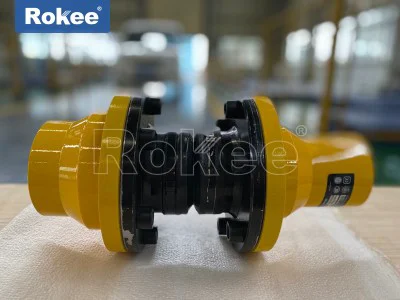
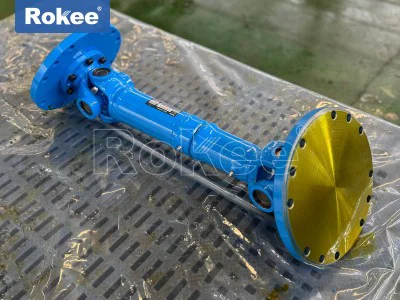
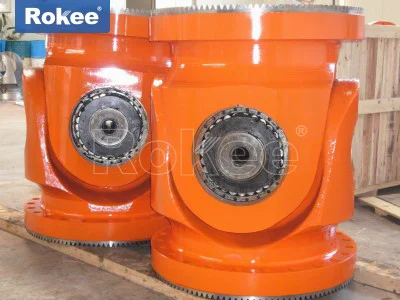
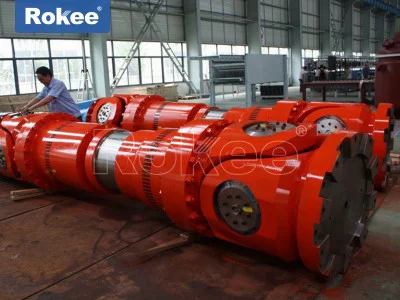
Applicable Occasions For Cross Axis Universal Coupling

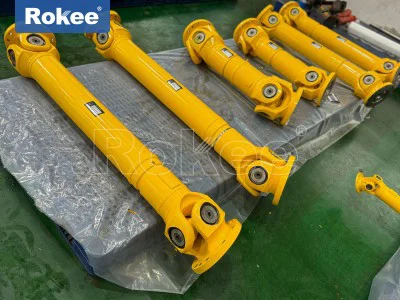
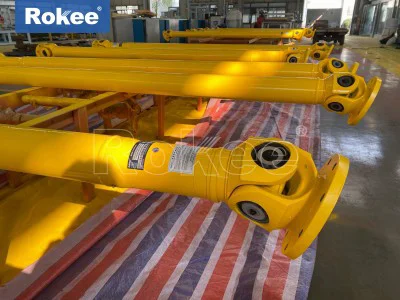
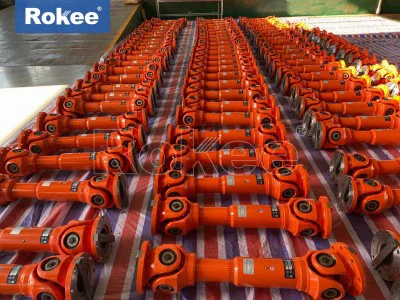
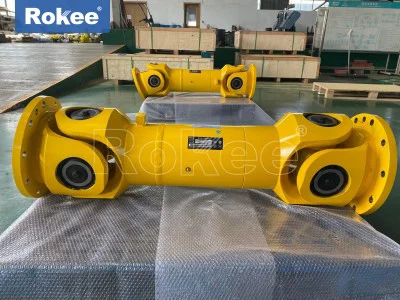
Cross axis universal coupling is a mechanical device widely used in the field of industrial transmission. Its unique structural design enables it to achieve constant angular velocity continuous rotation and reliably transmit torque and motion in situations where there is a large angle or non coaxial between the two axes.
Main applicable scenarios and characteristics
Heavy Machinery and Metallurgical Industry
Application scenarios: rolling mills, cold bed equipment, medium and thick plate rolling mills, etc.
Advantages: Able to withstand high torque, suitable for high-power transmission, and has high transmission efficiency. For example, the SWC type cardan shaft coupling adopts an integral fork head design, which is suitable for heavy-duty equipment with a rotation diameter of up to 1600mm.Engineering Transportation and Mining Machinery
Application scenarios: Conveyor systems, crushers, lifting equipment, etc.
Advantages: It has a large angular compensation capability and can adapt to installation errors and dynamic displacements. The SWP-E type coupling also has a telescopic function, suitable for situations with large axial movement.Petrochemical and Shipbuilding Industry
Application scenarios: ship propulsion systems, pump unit transmissions, drilling equipment, etc.
Advantages: Compact structure, corrosion-resistant materials that can adapt to harsh environments, and improved wear resistance through multi row needle roller bearing design.Rail Transit and Rolling Stock
Application scenarios: locomotive drive shaft, bogie transmission, etc.
Advantages: It can absorb vibration and impact, reduce the impact load of the gearbox, and extend the service life of the equipment.General Machinery and Light Industry
Application scenarios: Paper making machinery, rubber processing equipment, textile machinery, etc.
Advantages: Low noise, easy maintenance, WS/WSD small couplings are suitable for transmitting light equipment with nominal torque of 11.2-1120 N · m.Special working condition requirements
High speed occasions: It is necessary to choose models with high balance accuracy.
Frequent forward and reverse scenarios: It is necessary to consider the load correction factor and strengthen lubrication.
Precautions for use
Paired arrangement: To eliminate angular velocity fluctuations, it is necessary to ensure that the angle between the main and driven shafts and the intermediate shaft is equal, and that the fork shaped joints at both ends of the intermediate shaft are located in the same plane.
Maintenance requirements: Regular lubrication, the cross axis can be rotated 180 ° during disassembly to balance wear.
The cross axis universal joint coupling has become an indispensable key component in industrial transmission due to its high reliability, long life, and adaptability, especially in situations that require large angle compensation and heavy-duty transmission.
In the complex and diverse field of mechanical transmission, the cross axis universal coupling plays an irreplaceable role as a key component that connects two shafts with different axes and compensates for relative displacements. Its unique structural design and excellent performance make it widely used in various industrial fields, from heavy machinery and equipment to precision instruments, from ordinary production lines to special working environments. Unlike rigid couplings that require strict coaxiality between two shafts, the cross axis universal coupling can realize stable power transmission even when there is an angular deviation, parallel displacement or axial movement between the driving shaft and the driven shaft, which solves the technical pain points that many traditional couplings cannot overcome. To fully understand the value of cross axis universal coupling, it is necessary to deeply explore its applicable occasions, and combine its structural characteristics and performance advantages to analyze its application logic in different fields, so as to provide a more clear reference for the rational selection and efficient use of this component in practical engineering.
The core advantage of the cross axis universal coupling lies in its strong ability to compensate for axis deviation, which is mainly derived from its unique cross shaft structure. It is composed of two fork-shaped parts and a cross-shaped universal joint, and the connection between the cross shaft and the fork-shaped parts is realized through bearings, which allows the two connected shafts to rotate at a certain angle while transmitting torque. This structural feature determines that it is particularly suitable for occasions where the installation position of the equipment is limited, or the two shafts cannot be strictly aligned due to manufacturing errors, installation deviations, or structural deformation during operation. In industrial production, many mechanical equipment will have different degrees of axis deviation due to factors such as foundation settlement, thermal expansion and contraction during long-term operation. If a rigid coupling is used, the deviation will cause additional stress on the shaft, bearing and other components, leading to increased wear, reduced equipment life, and even serious failures such as shaft breakage. The cross axis universal coupling can effectively absorb and compensate for these deviations, reduce the impact of uncoaxiality on the transmission system, ensure the stable operation of the equipment, and reduce maintenance costs and downtime losses.
One of the most typical application occasions of cross axis universal coupling is the heavy machinery industry, including construction machinery, mining machinery, metallurgical machinery and other fields. In construction machinery such as excavators, loaders, cranes and bulldozers, the power transmission between the engine and the working mechanism often needs to cross different spatial planes, and there will be continuous angular changes during the working process. For example, the excavator's boom, arm and bucket need to move in multiple directions during operation, which requires the transmission system to adapt to frequent angle adjustments while transmitting large torque. The cross axis universal coupling can well meet this demand. Its strong load-bearing capacity and angle compensation capacity enable it to stably transmit the power of the engine to the working mechanism, ensuring the flexibility and reliability of the equipment's operation. In mining machinery such as coal mining machines, conveyors and crushers, the working environment is harsh, with large vibration, dust and other factors, and the two shafts of the transmission system are often difficult to maintain strict coaxiality due to the impact of the working load. The cross axis universal coupling has the characteristics of impact resistance and wear resistance, which can adapt to the harsh working environment, compensate for the axis deviation caused by vibration and load changes, and ensure the continuous and stable operation of the mining equipment. In the metallurgical industry, equipment such as rolling mills, continuous casting machines and smelting furnaces need to transmit large torque under high temperature and high pressure conditions, and the axis deviation may occur due to thermal expansion of the equipment. The cross axis universal coupling can not only bear large torque, but also compensate for the thermal expansion displacement, avoiding the damage of the transmission system caused by thermal stress, and ensuring the normal operation of the metallurgical production line.
In addition to the heavy machinery industry, the cross axis universal coupling also has a wide range of applications in the field of general machinery. General machinery includes pumps, fans, compressors, reducers and other equipment, which are widely used in industrial production, municipal engineering, environmental protection and other fields. In these equipment, the connection between the motor and the working machine often has a certain degree of axis deviation due to installation errors or space constraints. For example, in the pipeline system of water supply and drainage, the installation position of the water pump and the motor may be limited by the pipeline layout, resulting in the inability to align the two shafts strictly. The cross axis universal coupling can solve this problem well. It can realize stable power transmission under the condition of a certain axis deviation, and at the same time reduce the vibration and noise of the equipment, improve the operation efficiency of the equipment. For fans and compressors that need to operate continuously for a long time, the reliability of the transmission system is particularly important. The cross axis universal coupling has a simple structure, easy maintenance, and can operate stably for a long time under normal working conditions, reducing the frequency of equipment maintenance and improving the continuity of production. In addition, in the connection between the reducer and the working machine, the cross axis universal coupling can compensate for the installation deviation between the output shaft of the reducer and the input shaft of the working machine, ensuring the efficient transmission of torque and reducing the wear of the reducer and the working machine.
The field of precision machinery is another important application occasion of cross axis universal coupling. Although precision machinery has high requirements for transmission accuracy, the cross axis universal coupling with precision processing technology can fully meet this demand. In precision machine tools such as CNC lathes, milling machines and grinders, the transmission between the spindle and the feed mechanism needs high precision to ensure the processing accuracy of the parts. The cross axis universal coupling processed by precision technology has the characteristics of small transmission error and high precision, which can realize the synchronous rotation of the two shafts and ensure the stability of the transmission process. At the same time, due to the installation space constraints of precision machine tools, the two shafts are often difficult to align strictly. The cross axis universal coupling can compensate for the small axis deviation, avoid the impact of deviation on the processing accuracy, and improve the quality of the processed parts. In addition, in precision instruments such as measuring instruments and testing equipment, the cross axis universal coupling is also used to connect the transmission components. Its compact structure and stable transmission performance can ensure the accuracy and reliability of the instrument's operation, avoiding the measurement error caused by transmission instability.
The cross axis universal coupling also plays an important role in the transportation industry, especially in the field of automobile manufacturing and railway transportation. In automobiles, the cross axis universal coupling is widely used in the transmission system of rear-wheel drive and four-wheel drive vehicles, such as the connection between the transmission and the drive axle. During the driving process of the vehicle, the drive axle will move up and down with the road surface, resulting in changes in the angle and distance between the transmission output shaft and the drive axle input shaft. The cross axis universal coupling can compensate for these changes, ensure the stable transmission of power, and improve the driving performance and stability of the vehicle. In addition, in the steering system of some vehicles, the cross axis universal coupling is also used to connect the steering wheel and the steering gear, which can adapt to the angle change between the steering wheel and the steering gear, ensuring the flexibility and accuracy of the steering. In railway transportation, the cross axis universal coupling is used in the transmission system of railway locomotives and rail vehicles. It can compensate for the axis deviation caused by the vibration of the train during operation, ensure the stable transmission of power, and improve the safety and reliability of railway transportation.
Special working environments also put forward special requirements for mechanical components, and the cross axis universal coupling, through appropriate material selection and structural design, can adapt to a variety of special working environments. In the high-temperature environment, such as the transmission system of industrial furnaces and steam turbines, the cross axis universal coupling made of high-temperature resistant materials can maintain stable performance under high-temperature conditions, avoid deformation and damage caused by high temperature, and ensure the normal operation of the equipment. In the low-temperature environment, such as the mechanical equipment in cold storage and polar regions, the cross axis universal coupling made of low-temperature resistant materials can avoid brittle fracture caused by low temperature, ensuring the reliability of the transmission system. In the corrosive environment, such as the chemical industry and marine environment, the cross axis universal coupling made of corrosion-resistant materials can resist the corrosion of chemical media and seawater, extend the service life of the component, and reduce the maintenance cost. In addition, in the environment with high dust and vibration, such as the construction site and mining area, the cross axis universal coupling with sealed structure can prevent dust from entering the internal components, reduce wear, and ensure the stable operation of the transmission system.
Another important application occasion of cross axis universal coupling is the field of agricultural machinery. Agricultural machinery such as tractors, harvesters, and seeders often work in complex farmland environments, with uneven ground and large vibration, and the transmission system between the engine and the working mechanism needs to adapt to frequent angle changes and axis deviations. The cross axis universal coupling has the characteristics of strong impact resistance, wear resistance and good angle compensation, which can adapt to the harsh working environment of agricultural machinery. For example, in the harvester, the power of the engine needs to be transmitted to the cutting mechanism, conveying mechanism and other components, and there is a certain angle between these components and the engine. The cross axis universal coupling can realize stable power transmission, ensure the normal operation of the harvester, and improve the efficiency of agricultural production. In addition, agricultural machinery often needs to be disassembled and maintained, and the cross axis universal coupling has a simple structure, easy disassembly and maintenance, which can reduce the labor intensity of maintenance personnel and improve the maintenance efficiency.
It should be noted that although the cross axis universal coupling has a wide range of applicable occasions, its selection and use also need to be combined with specific working conditions. Different working conditions have different requirements for the performance of the cross axis universal coupling, such as torque, speed, angle deviation, working environment temperature, etc. Therefore, in practical applications, it is necessary to accurately calculate the working parameters, select the appropriate type and specification of the cross axis universal coupling, and carry out correct installation and maintenance to ensure its performance and service life. For example, in occasions requiring large torque transmission, it is necessary to select a cross axis universal coupling with strong load-bearing capacity; in occasions requiring high transmission accuracy, it is necessary to select a precision cross axis universal coupling processed by high-precision technology; in special working environments such as high temperature, low temperature and corrosion, it is necessary to select a cross axis universal coupling made of corresponding special materials.
With the continuous development of industrial technology, the performance requirements of mechanical transmission systems are getting higher and higher, and the cross axis universal coupling is also constantly improving and upgrading. Through the optimization of structural design, the improvement of processing technology and the innovation of material selection, the performance of the cross axis universal coupling is constantly improved, and its applicable occasions are also constantly expanding. In the future, with the development of intelligent manufacturing, automation and other technologies, the cross axis universal coupling will play a more important role in more fields, providing more reliable and efficient power transmission solutions for the development of various industries.
In summary, the cross axis universal coupling, with its unique structural advantages and excellent performance, is widely used in heavy machinery, general machinery, precision machinery, transportation, agriculture and special working environments. It solves the technical problems of axis deviation in power transmission, ensures the stable operation of equipment, improves production efficiency, and reduces maintenance costs. In practical applications, it is necessary to fully understand the applicable occasions and performance characteristics of the cross axis universal coupling, select and use it reasonably, so as to give full play to its maximum value. With the continuous progress of technology, the cross axis universal coupling will continue to adapt to the new market demand, and make greater contributions to the development of the global manufacturing industry.