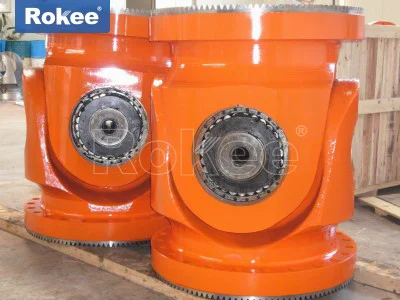
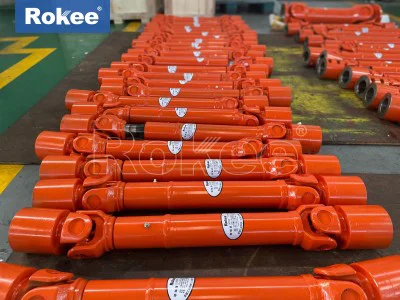
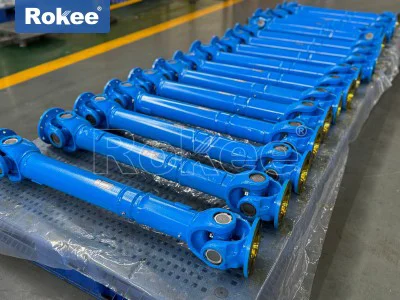
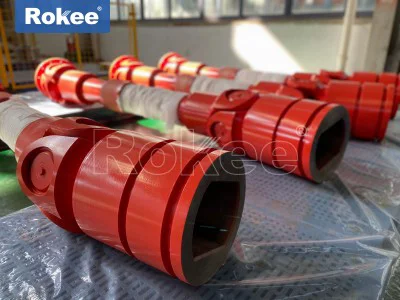
Cardan Coupling for Heavy Haulage

In the field of heavy haulage engineering, reliable power transmission stands as the core guarantee for the stable operation of various heavy-duty mechanical equipment and transportation systems. As a classic and highly adaptable transmission component, the cardan coupling has become an indispensable part of heavy haulage equipment driveline systems by virtue of its unique mechanical structure and excellent comprehensive performance. It effectively solves the power transmission difficulties caused by shaft misalignment, dynamic displacement and complex load changes in harsh heavy-load working environments, and provides continuous and stable torque output for large-scale haulage machinery, mining transportation equipment, engineering construction vehicles and other core heavy haulage facilities. Different from ordinary transmission couplings used for light-load and fixed working conditions, the cardan coupling designed for heavy haulage scenarios is optimized and upgraded in structural rigidity, load resistance and dynamic adaptability, fully matching the high-intensity operation requirements of heavy-load equipment.
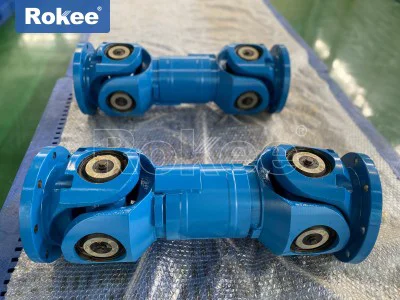
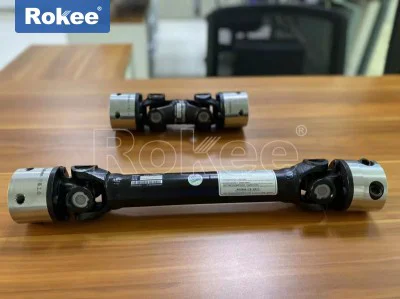
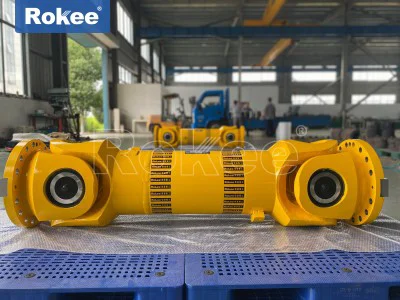
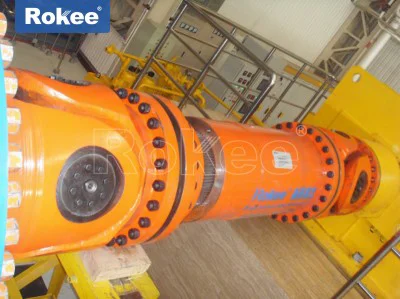
The basic mechanical structure of the cardan coupling lays a solid foundation for its excellent heavy-load transmission capacity. The core structure consists of two fork-shaped yokes and a central cross-shaped spider component, with precision matching bearing structures installed at the connection positions of the cross shaft and the yokes. This simple and robust articulated structure enables the coupling to realize flexible connection between the driving shaft and the driven shaft, and fundamentally breaks the limitation that traditional rigid couplings can only transmit power under complete coaxial conditions. In actual heavy haulage operation scenarios, mechanical equipment is inevitably affected by installation errors, frame deformation, road vibration and load impact, resulting in angular deviation, axial displacement and radial offset between the power input shaft and output shaft. The cardan coupling can effectively compensate for these three-dimensional displacements within a certain range. It can adapt to a large angular deflection between the connected shafts, and the spline matching structure equipped with most heavy-duty models can also absorb long-distance axial displacement changes, ensuring that the power transmission path remains smooth and continuous even when the equipment operating state changes dynamically.
The working principle of the cardan coupling determines its unique application value in heavy haulage conditions. When the driving shaft rotates, the cross spider rotates synchronously with the driving yoke, and drives the driven yoke and the driven shaft to rotate through the flexible rotation of the bearing pair. Although a single cardan joint will produce slight angular velocity fluctuation during operation under a certain deflection angle, this inherent mechanical characteristic can be effectively eliminated by adopting a double-joint combined structure. By arranging two cardan joints symmetrically on the intermediate shaft and keeping the deflection angles of the two joints consistent during operation, the speed fluctuation generated by the front joint can be completely offset by the rear joint, realizing constant-speed and stable torque transmission. This optimized working mode is particularly critical for heavy haulage equipment. Heavy-load machinery bears huge inertial load and impact load during starting, running and stopping, and unstable speed transmission will cause severe vibration of the driveline system, accelerate component fatigue damage, and even affect the overall operation stability of the equipment. The double cardan coupling structure perfectly avoids this problem, maintaining uniform power output and stable operation of the transmission system under complex heavy-load dynamic conditions.
Heavy haulage working environments are typically characterized by heavy load impact, continuous high-intensity operation, severe vibration and complex environmental interference, which put forward extremely strict requirements on the mechanical performance of transmission components. The cardan coupling is highly compatible with these harsh working conditions by virtue of its outstanding structural advantages. First of all, its overall structure is compact and sturdy, with high structural rigidity and torsional strength. The core load-bearing components are designed with thickened structures and optimized force-bearing paths, which can bear huge instantaneous impact torque and long-term stable working torque generated by heavy haulage equipment during operation, and avoid structural deformation or fracture failure under extreme load conditions. Secondly, the flexible connection mode of the cardan coupling can effectively buffer and absorb the vibration and impact generated during the operation of heavy-load equipment. In the process of heavy cargo transportation and large machinery operation, the equipment will generate frequent impact load due to uneven stress and external terrain changes. The articulated structure of the coupling can decompose and consume part of the impact force, reduce the rigid collision between the driving and driven shafts, and protect the key components such as gearboxes, engines and axles in the transmission system from impact damage.
In addition to excellent load resistance and shock absorption performance, the strong displacement compensation capability of the cardan coupling is another key reason for its wide application in heavy haulage fields. For large heavy haulage vehicles and fixed heavy-duty transmission equipment, long-term high-load operation will lead to subtle deformation of the frame and mechanical base, and the suspension structure of mobile haulage equipment will also produce continuous telescopic displacement with driving and vibration. These changes will lead to real-time misalignment of the transmission shaft system, which is difficult to avoid through precise installation and debugging. Rigid transmission components will generate additional bending stress and friction loss under such misalignment conditions, leading to accelerated wear of parts, increased transmission energy consumption, and even shaft system jamming and equipment shutdown. The cardan coupling can adapt to dynamic changes of shaft misalignment in real time through its flexible articulated movement, eliminate additional stress caused by displacement deviation, ensure that the transmission system always operates in a low-loss and stable state, and greatly improve the operational reliability of heavy haulage equipment.
The application scenarios of cardan couplings in heavy haulage fields cover mobile transportation equipment and fixed industrial transmission equipment, showing strong universal adaptability. In the field of heavy-duty road transportation, large cargo haulage vehicles, engineering transport vehicles and special heavy-duty trailers all rely on cardan couplings to complete power transmission between the engine, gearbox and drive axle. These vehicles often carry ultra-heavy loads and operate on complex road surfaces, facing frequent acceleration, deceleration and bumpy vibration working conditions. The cardan coupling can stably transmit power under variable load and variable deflection angle conditions, ensuring sufficient power output for vehicle climbing, heavy-load starting and long-distance driving. In the field of mining and bulk material haulage, large-scale conveyor equipment, mining haulage locomotives and underground transportation machinery need to operate continuously for a long time under heavy-load and dusty harsh environments. The simple and durable structure of the cardan coupling is not easy to accumulate sundries and fail, and can maintain stable transmission performance in long-term uninterrupted operation, reducing equipment downtime caused by transmission component failure.
In large engineering machinery and port haulage equipment, the application advantages of cardan couplings are also fully reflected. Engineering machinery such as heavy-duty excavators, loaders and bulldozers often work in complex working conditions with alternating loads and frequent start-stop operations, and the power transmission system needs to bear huge instantaneous torque changes. Port container haulage equipment and bulk cargo handling machinery need to maintain high-efficiency and stable operation for a long time to meet the demands of high-intensity cargo turnover. The cardan coupling can adapt to the frequent load changes and dynamic displacement of the shaft system in these scenarios, maintain the accuracy and stability of power transmission, and effectively improve the overall working efficiency of the equipment. At the same time, in the transmission system of large industrial heavy-load production lines and metallurgical haulage equipment, cardan couplings also undertake the important task of connecting multi-stage transmission shafts, realizing long-distance and high-power torque transmission, and providing reliable power support for large-scale industrial production and heavy material handling.
In terms of operational economy and durability, cardan couplings have significant advantages over other types of heavy-duty transmission components. Its overall structural design is simple, with fewer precision matching parts, which reduces the difficulty of daily maintenance and later replacement. The core wear parts are mainly bearing pairs and friction matching surfaces, which are convenient for regular inspection, lubrication and local replacement. In the long-term high-intensity operation process, the failure rate of cardan couplings is far lower than that of complex elastic couplings and precision gear couplings, avoiding frequent equipment shutdown maintenance caused by transmission component failure, and effectively improving the operating rate and production efficiency of heavy haulage equipment. In addition, the high transmission efficiency of the cardan coupling can minimize power loss in the torque transmission process. For heavy haulage equipment with high power consumption, stable and efficient power transmission can effectively reduce energy consumption in the operation process, realizing energy-saving and efficient operation of the equipment.
It is worth noting that the performance of cardan couplings in heavy haulage applications is closely related to structural design optimization and daily maintenance management. In the design and manufacturing process of heavy-duty cardan couplings, manufacturers will optimize the structural size, material performance and bearing matching structure according to the characteristics of heavy-load working conditions. High-strength wear-resistant materials are used for core force-bearing parts to improve fatigue resistance and impact resistance, and the structural rationality is optimized to reduce stress concentration, so as to ensure that the coupling can maintain stable mechanical performance under long-term heavy-load operation. In daily use, standardized maintenance operations such as regular lubrication of bearing parts, inspection of connection tightness and observation of operation vibration state can effectively delay component wear, avoid fatigue failure and abnormal vibration problems, and greatly extend the service life of the coupling.
With the continuous development of heavy haulage industry towards large-scale, high-efficiency and intelligent direction, the performance requirements for transmission components are constantly improving. Modern heavy haulage equipment has higher requirements on load-bearing capacity, dynamic adaptability, operation stability and service life of couplings under ultra-heavy load and complex working conditions. The cardan coupling is also constantly optimized and upgraded in structural design and manufacturing technology. Through finite element mechanical analysis and structural optimization design, the torsional rigidity and impact resistance of the coupling are further improved, and the dynamic balance performance is optimized to adapt to higher-speed and heavier-load operation scenarios. At the same time, the optimized sealing structure design enables the coupling to adapt to more harsh working environments such as high dust, high humidity and low temperature, expanding its application scope in extreme heavy haulage scenarios.
As a mature and efficient power transmission component, the cardan coupling has irreplaceable application value in the heavy haulage field. Its unique flexible connection structure, excellent displacement compensation ability, strong heavy-load resistance and stable operation performance solve many pain points in the power transmission of heavy haulage equipment, and provide a reliable core guarantee for the safe, stable and efficient operation of various heavy-duty transportation and engineering machinery. In the future, with the continuous progress of mechanical manufacturing technology and the continuous upgrading of heavy haulage equipment, cardan couplings will continue to complete technological iteration and performance optimization, adapt to more complex and extreme heavy-load working conditions, and play a more important role in promoting the high-quality development of the heavy haulage industry and large-scale engineering construction.