Cardan Shaft for Construction Equipment
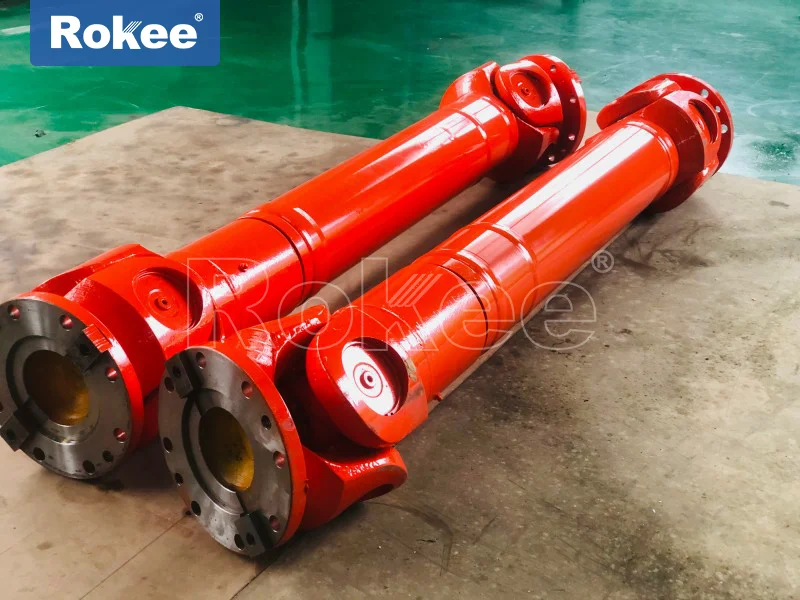
As an indispensable core component in the power transmission system of modern construction equipment, the cardan shaft undertakes the critical task of transferring torque and rotational power between discrete driving and driven mechanical components. Unlike rigid transmission structures that rely on precise axis alignment, this articulated transmission component features unique structural flexibility, enabling stable and efficient power output even when connected parts produce angular deviation, axial displacement and radial offset during equipment operation. Construction scenarios are always characterized by complex working conditions, frequent load fluctuations, and continuous mechanical vibration, which put forward extremely high requirements on the adaptability, stability and fatigue resistance of power transmission components. The widespread application of cardan shafts in excavators, loaders, bulldozers, road rollers, pavers and other construction machinery effectively solves the transmission problems caused by installation errors, equipment vibration and structural displacement during long-term operation, becoming a key guarantee for the continuous and efficient operation of construction equipment.
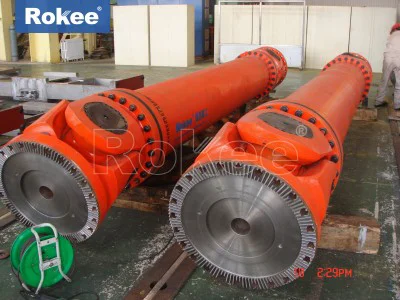
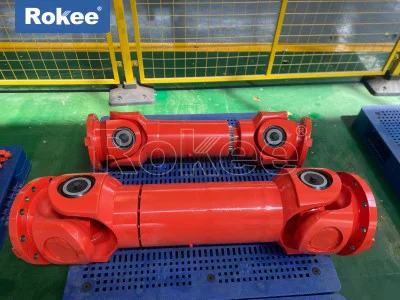
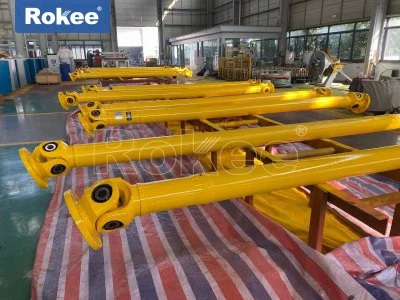
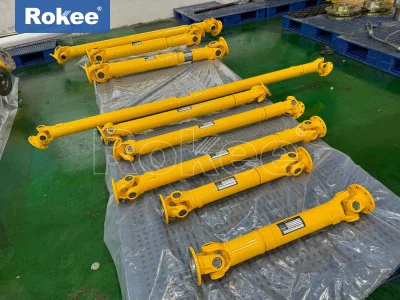
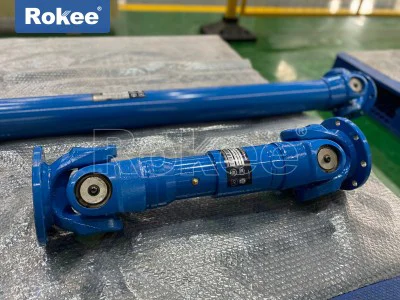
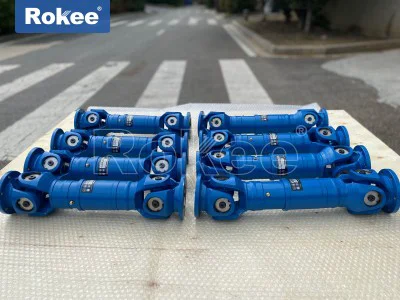
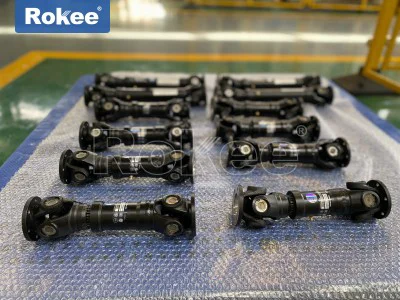
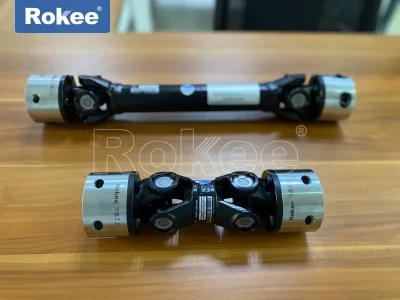
The basic structural composition of the cardan shaft is derived from mature mechanical transmission principles, mainly including universal joint assemblies, intermediate shaft body, telescopic spline structures and precision bearing components. Each part coordinates and restricts each other to form a complete flexible transmission system. The universal joints installed at both ends of the shaft body are the core functional units of the cardan shaft, which are composed of fork-shaped joints and cross shaft structures. The cross shaft connects the two groups of fork joints in a mutually perpendicular manner, forming a flexible rotation hinge that allows the driving end and the driven end to generate angular deflection within a certain range while maintaining continuous power transmission. The deflection angle range of this structure can adapt to the dynamic changes of mechanical poses in construction operations, avoiding the power interruption and structural damage caused by rigid transmission jamming. The intermediate shaft body is usually made of high-strength alloy materials through integral forging and special heat treatment processes. The hollow shaft body design is widely adopted in heavy-duty construction equipment, which effectively reduces the self-weight of the component while ensuring overall structural rigidity, avoiding additional energy consumption and vibration interference caused by excessive self-load during high-speed rotation.
The telescopic spline structure matched with the shaft body is another key functional design of the cardan shaft, which mainly undertakes the axial length compensation function. In the assembly and actual operation of construction equipment, affected by mechanical installation tolerances, thermal expansion and contraction of components after long-term high-load operation, and frame deformation caused by complex road conditions, the linear distance between the driving source and the executing mechanism often changes dynamically. The spline sliding structure can freely stretch and retract within a fixed stroke, effectively absorbing axial displacement changes, eliminating additional mechanical stress generated by dimensional changes, and preventing component deformation and fatigue damage caused by stress accumulation. The precision bearings built into the universal joints ensure the flexibility and stability of the rotational hinge movement. Through optimized friction matching design, they reduce rotational resistance and mechanical wear during power transmission, maintain high transmission efficiency for a long time, and avoid power loss caused by poor component coordination.
The working principle of the cardan shaft centers on flexible torque transmission and multi-dimensional displacement compensation. When the power source drives the driving end of the cardan shaft to rotate, the cross shaft structure of the universal joint converts the fixed-axis rotation of the driving end into flexible rotation with angular adaptability. Even if there is an obvious angle difference between the driving shaft and the driven shaft, the special geometric movement relationship between the cross shaft and the fork joint can still ensure the continuous output of rotational torque, realizing non-intermittent power transmission. In the actual operation of construction equipment, mechanical structures often produce multi-directional displacement including angular deflection, axial movement and radial swing under the action of bumpy road surfaces, alternating loads and working impact forces. The cardan shaft integrates the compensation capabilities of the three displacement forms, which can always maintain a stable transmission state under dynamic working conditions, avoid rigid collision and stress concentration between transmission components, and greatly improve the overall operational stability of the equipment.
The unique structural performance of the cardan shaft makes it highly adaptable to the harsh working environment of construction engineering. Construction sites are mostly open-air and unstructured operation scenarios, with widespread dust, sediment, moisture and corrosive substances. Long-term exposure to such environments will cause erosion and wear on mechanical transmission components. The cardan shaft for construction equipment is designed with enhanced structural sealing and surface protection. The external protective structure can effectively block the invasion of external impurities, prevent dust and sediment from entering the universal joint and spline matching gaps, avoid abrasive wear of precision moving parts, and reduce the risk of mechanical jamming and transmission failure. At the same time, the optimized surface treatment process improves the oxidation resistance and corrosion resistance of the component, enabling it to maintain stable mechanical performance in humid, saline and corrosive working environments, and extend the overall service life of the transmission system.
In terms of functional application, cardan shafts cover the core power transmission links of almost all types of construction equipment. In earth-moving machinery such as excavators and loaders, they are responsible for connecting the engine power output end with the walking mechanism and working hydraulic system, transmitting high-power torque to support high-intensity operations such as excavation, shoveling and material handling. Such equipment often faces sudden load changes and impact loads during operation, and the flexible transmission characteristics of cardan shafts can effectively buffer instantaneous impact force, protect the engine and core transmission components from instantaneous overload damage. In road construction machinery such as road rollers and pavers, the stable and uniform power transmission performance of cardan shafts ensures the consistent operating speed of the equipment, avoiding uneven power output that affects the flatness and compactness of road construction, and providing reliable technical support for high-precision road operation.
In large-scale hoisting and engineering machinery, cardan shafts bear higher torque transmission tasks. The heavy-duty cardan shaft structure adopts reinforced fork joints and thickened shaft body design, which can withstand ultra-high load torque output, and maintain structural stability and transmission accuracy during long-term high-load continuous operation. Different from industrial ordinary cardan shafts, construction machinery cardan shafts focus more on fatigue resistance and impact resistance in performance design, adapting to the frequent start-stop, sudden load change and continuous vibration working modes of construction equipment. This targeted performance design makes it always maintain efficient transmission state in complex and variable working conditions, and reduce the failure rate of mechanical transmission system.
Transmission efficiency and operational stability are the core advantages of cardan shafts in construction machinery applications. In the whole mechanical transmission system, power loss will directly affect the operating efficiency and energy consumption level of the equipment. The cardan shaft adopts a low-friction precision matching structure, with minimal mechanical resistance during operation, and the power transmission efficiency remains at a high level in the full load range. Compared with other flexible transmission components, its structural design avoids elastic deformation and power hysteresis during torque transmission, ensuring that the power output of the power source can be accurately transmitted to the executing mechanism, reducing invalid energy consumption. In addition, the symmetrical structural layout and balanced dynamic performance enable the cardan shaft to maintain stable rotation at different speeds, effectively suppressing mechanical vibration and resonance phenomena, reducing the operational noise of the equipment, and improving the overall operation comfort and structural stability of the machinery.
Although the cardan shaft has excellent working performance, its long-term operation in harsh construction conditions will still produce natural wear and aging, and regular maintenance and scientific use are important prerequisites to ensure its long-term stable operation. In daily equipment operation, the most common wear parts of the cardan shaft are universal joint bearings and spline matching surfaces. Long-term friction and impact load will cause bearing clearance to increase and surface wear of spline teeth, resulting in increased transmission vibration, unstable power output and even abnormal noise. Timely lubrication maintenance can effectively reduce such wear. The use of high-performance lubricating grease can form a stable protective film on the surface of moving parts, isolate metal direct friction, and reduce wear and heat generation during operation.
Regular structural inspection is also an essential part of cardan shaft maintenance. It is necessary to check the tightness of each connecting part, the integrity of the sealing structure, and whether there are cracks, deformation and corrosion on the shaft body and fork joint surface. The construction equipment will produce continuous vibration during operation, which may cause loose connection fasteners. If not checked and tightened in time, it will lead to increased structural vibration of the cardan shaft, aggravate component wear, and even cause structural fracture in severe cases. The damaged sealing structure will lose the protective effect, resulting in the entry of external dust and impurities, accelerating the wear and aging of internal precision parts. Timely replacement of damaged sealing parts and repair of slight structural defects can effectively extend the service life of the cardan shaft and avoid sudden equipment failure during construction operations.
With the continuous upgrading of construction machinery towards large-scale, high-efficiency and intelligent development, the performance requirements for supporting cardan shafts are also constantly improving. Modern engineering construction puts forward higher demands on equipment load capacity, continuous operation time and environmental adaptability, which promotes the continuous optimization and innovation of cardan shaft design and manufacturing technology. In terms of material selection, new high-strength and tough alloy materials are gradually applied, which have higher fatigue resistance and impact resistance while maintaining light weight, and can adapt to more severe high-load and high-frequency operation scenarios. In structural design, through finite element mechanical simulation and dynamic balance optimization, the structural stress distribution is more uniform, the problem of local stress concentration is solved, and the overall structural stability and service life are further improved.
At the same time, the lightweight optimization design of cardan shafts has become an important development direction. Under the premise of ensuring load-bearing performance, by optimizing the shaft body structure and adopting hollow lightweight design, the self-weight of the component is effectively reduced, which helps to reduce the overall self-load of construction equipment, reduce energy consumption during walking and operation, and improve the comprehensive energy-saving performance of the equipment. In addition, the integrated and modular design of cardan shafts simplifies the assembly and later maintenance process, reduces the difficulty of equipment maintenance, and improves the operational efficiency of construction equipment. The optimized sealing structure and self-lubricating component design also reduce the frequency of daily maintenance, reduce the operating cost of construction machinery, and improve the overall operational economy of the equipment.
In the whole field of construction machinery transmission systems, the irreplaceable advantages of cardan shafts in flexible transmission and multi-dimensional displacement compensation determine their core application status. All construction links from earthwork construction, road paving to large-scale hoisting operations rely on the stable operation of cardan shaft transmission systems. It not only solves the technical problems of power transmission under complex working conditions, but also effectively improves the overall operational reliability and service life of construction equipment, and reduces the failure shutdown rate of engineering construction. With the continuous progress of mechanical manufacturing technology, the performance of cardan shafts will continue to be optimized, adapting to the increasingly complex and diversified construction operation needs, and providing more solid technical support for the efficient and stable operation of modern construction equipment.