Technical Requirements Of Cross Cardan Shaft In PU Sandwich Panel Line
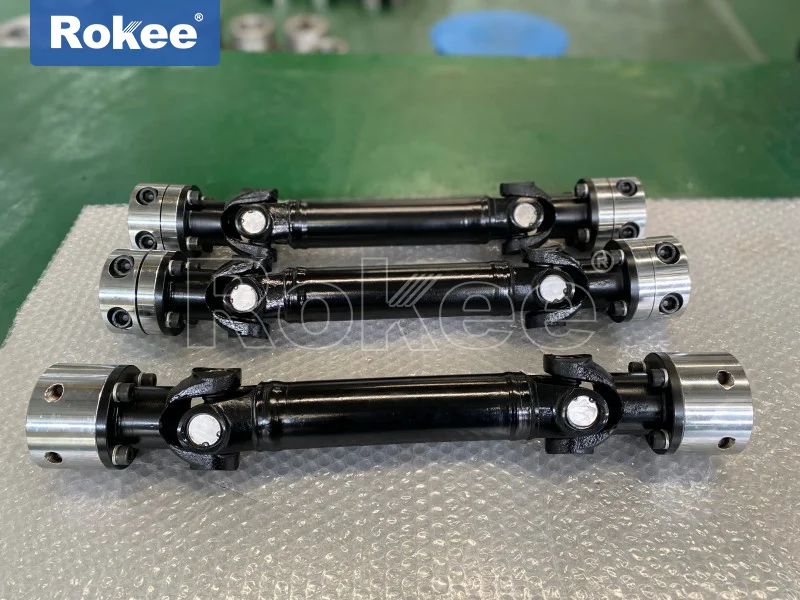
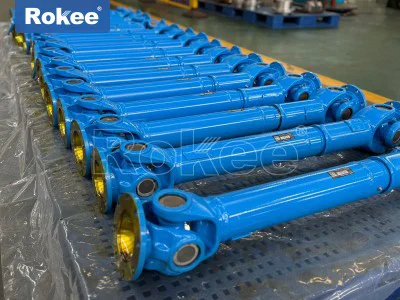
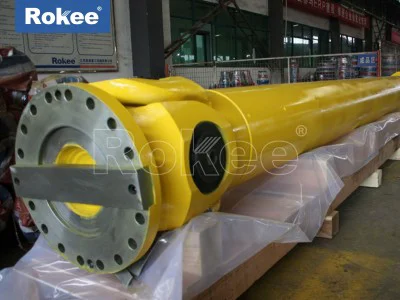
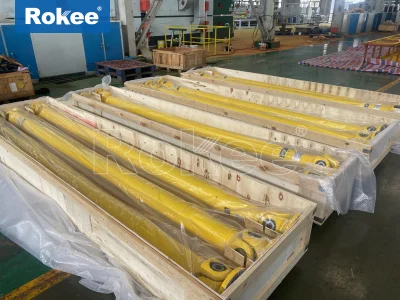
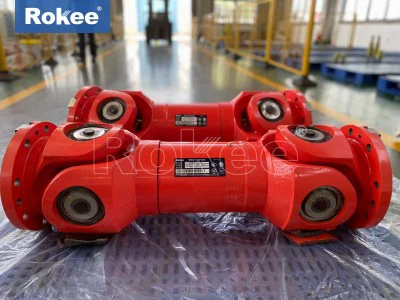
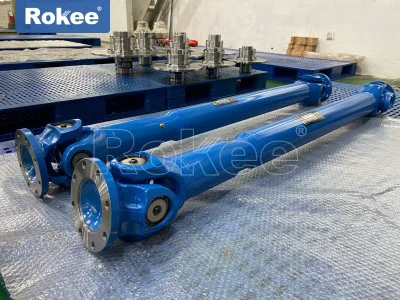
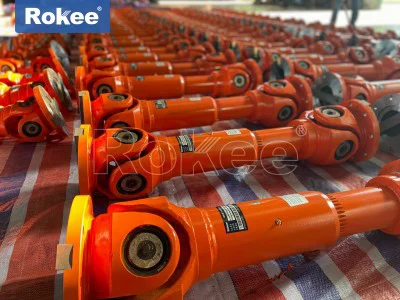
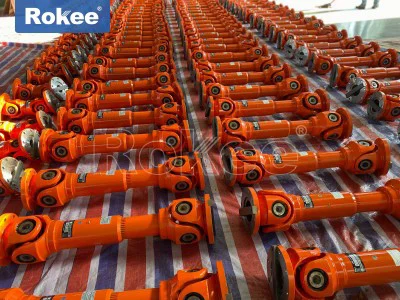
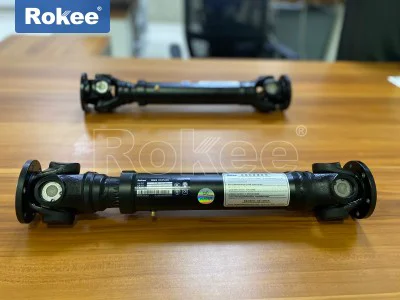
In the continuous and automated operation of PU sandwich panel production lines, the cross cardan shaft serves as a core transmission component responsible for stably transferring power between various driving and driven equipment units throughout the production process. Its operational performance directly determines the continuity, stability and processing accuracy of the entire production line, making standardized and rigorous technical requirements essential for its design, manufacturing, assembly and application. Different from cardan shafts used in general mechanical equipment, the cross cardan shaft for PU sandwich panel lines needs to adapt to long-duration continuous operation, frequent load fluctuations, multi-angle displacement compensation and stable low-vibration transmission, all of which put forward targeted technical standards for its structural design, material selection, processing precision, dynamic performance and service stability.
In terms of displacement and angle compensation performance, the cross cardan shaft needs to meet the special operating conditions of PU sandwich panel line. In actual production operation, the installation positions of driving motors, reduction gearboxes and conveying rollers often produce minor axial, radial and angular deviations due to equipment assembly errors, long-term operational vibration and foundation slight deformation. The cross cardan shaft relies on its cross bearing structure to realize multi-dimensional displacement compensation, and it is required to maintain stable transmission state within a certain deflection angle range without generating additional vibration and noise. The universal joint structure should support effective angle compensation for non-coaxial transmission, ensuring that power transmission remains smooth even when the connected equipment produces regular position offset during reciprocating operation. In addition, the spline connection part of the cardan shaft needs to provide reliable axial displacement compensation capacity to adapt to the thermal expansion and contraction of equipment components caused by long-term continuous operation and the position changes of transmission parts during equipment debugging and operation, preventing transmission jamming and component wear caused by axial position deviation.
Material performance requirements are crucial to the long-term service life and operational stability of cross cardan shafts in PU sandwich panel production environments. The production workshop of PU sandwich panels maintains a fixed temperature and humidity environment for a long time, and there are trace volatile chemical components generated by PU raw material foaming and curing in the air, which puts forward anti-corrosion, anti-fatigue and wear-resistant requirements for shaft body materials. The main shaft body needs to adopt high-strength alloy materials with excellent comprehensive mechanical properties, which can withstand long-term alternating load impact and avoid fatigue fracture and structural deformation under continuous cyclic operation. The cross bearing and needle roller components, as the key friction and force-bearing parts, need to have high surface hardness and wear resistance to reduce friction loss during high-frequency rotating operation. All structural materials should have stable mechanical performance under continuous constant-temperature operation conditions, without obvious strength attenuation and structural aging. Meanwhile, the materials need to have certain environmental adaptability to resist slight chemical corrosion and humid air erosion in the production workshop, ensuring that the surface structure and internal mechanical properties of components do not change significantly during long-term service.
Processing precision and structural manufacturing requirements directly affect the assembly accuracy and dynamic operation effect of cross cardan shafts. In the machining process of the shaft body, strict control of dimensional tolerance and geometric tolerance is required. The concentricity and runout error of the shaft body surface must be controlled within a tiny range to avoid eccentric rotation during operation, which would cause equipment vibration and unstable transmission. The matching size of the spline part needs to ensure precise fit, with uniform gap distribution, to prevent axial shaking and power transmission lag caused by excessive fit gap, and avoid assembly jamming and flexible rotation failure caused by excessive tight fit. The cross universal joint fork and cross shaft need to achieve high-precision matching, with smooth contact surfaces and no processing burrs or uneven wear marks, to ensure uniform stress on each force-bearing point during rotation. The flange connection structure at both ends of the cardan shaft needs to have flat and smooth assembly surfaces, with uniform bolt hole distribution and consistent aperture precision, ensuring stable connection with equipment end faces and no deflection or loose displacement during high-speed operation.
Dynamic balance performance is an indispensable technical index for cross cardan shafts supporting high-speed continuous operation of PU sandwich panel lines. Long-term high-speed rotating operation requires the cardan shaft to maintain excellent dynamic balance state to reduce centrifugal force generated by unbalanced mass. Unbalanced dynamic performance will cause periodic vibration during shaft body operation, which will not only accelerate the wear of bearings and connecting parts, shorten component service life, but also transmit vibration to the entire production line equipment, affecting the flat molding and dimensional accuracy of PU sandwich panels. All finished cross cardan shafts must undergo strict dynamic balance testing and correction after processing, to eliminate unbalanced mass generated in the machining and assembly process. The dynamic balance level needs to meet the requirements of long-term continuous industrial operation, ensuring that the vibration amplitude and noise value of the shaft body are kept within a low and stable range during full-load operation, and no abnormal vibration occurs even under long-term uninterrupted working conditions.
Lubrication and sealing performance requirements ensure the long-term stable operation and low maintenance cost of cross cardan shafts. The internal friction pairs of universal joints and spline moving parts need continuous and stable lubrication to reduce metal friction and wear and avoid dry friction damage during high-frequency operation. The cardan shaft structure should be equipped with reasonable lubrication channels and filling ports, which facilitate regular lubrication maintenance and ensure that lubricating grease can fully cover all friction surfaces. Meanwhile, reliable sealing structures must be installed at all movable connection parts to prevent external dust, debris and workshop floating impurities from entering the internal friction pairs. In the PU sandwich panel production environment, fine powder impurities generated by panel cutting and residual tiny foam particles in the air may adhere to the shaft body and enter the internal structure, causing accelerated wear and transmission jamming. The sealing components need to have stable sealing performance under long-term rotating friction, with good aging resistance and wear resistance, to avoid lubricant leakage and external impurity infiltration, and maintain the long-term lubrication state of internal components.
Fatigue resistance and service stability requirements are formulated for the long-cycle operation characteristics of PU sandwich panel production lines. Most production lines adopt uninterrupted continuous production mode, and the cross cardan shaft needs to bear long-term cyclic alternating load without fatigue failure. The structural design should optimize the stress distribution of key force-bearing parts, avoid local stress concentration, and improve the overall fatigue resistance of the component. The transition parts of the shaft body and the connection parts of universal joints need smooth structural transition to prevent crack initiation and expansion caused by stress concentration under long-term load circulation. After heat treatment and surface strengthening processes, the shaft body can obtain stable structural toughness and surface strength, resisting alternating load impact and micro deformation accumulation in long-term operation. It is required that the cardan shaft can maintain stable transmission performance within the specified service cycle, without abnormal noise, vibration aggravation, torque attenuation and other failure phenomena, and ensure the continuous and consistent operation of the production line.
Assembly and installation technical requirements are key links to ensure the operational performance of cross cardan shafts. During the assembly process of the cardan shaft, all components need to be cleaned strictly to remove processing oil stains, metal debris and dust impurities, ensuring that the matching surfaces are clean and free of foreign matters, so as to avoid abrasive wear of friction pairs caused by residual impurities after assembly. The assembly sequence and fastening torque of connecting bolts need to follow standardized process requirements, realizing uniform stress of flange connection surfaces and reliable fastening. During on-site installation, the relative position and installation angle of the driving and driven ends should be adjusted reasonably to control the operating deflection angle of the cardan shaft within the optimal working range, avoiding long-term operation at excessive deflection angle which will increase friction loss and reduce service life. The installation coaxiality error should be minimized to ensure that the shaft body operates in a stable state and avoids eccentric wear and additional load caused by installation deviation.
Operational adaptability and fault tolerance requirements further optimize the application effect of cross cardan shafts in complex production conditions. In the actual production process of PU sandwich panels, sudden load changes may occur due to raw material feeding fluctuation, equipment start-stop switching and process parameter adjustment. The cross cardan shaft needs to have good load impact resistance, which can adapt to instantaneous load fluctuation without structural damage and transmission failure. At the same time, it has certain operational fault tolerance, which can maintain normal transmission function under minor installation deviation and slight equipment position offset, reducing the equipment failure rate caused by tiny parameter changes. The overall structure should have strong working condition adaptability, which can meet the stable operation requirements of different production speeds and different panel processing specifications, and realize flexible matching with the multi-working-condition operation mode of PU sandwich panel production lines.
Maintenance and durability technical requirements focus on the long-term economic operation of production line equipment. The structural design of the cross cardan shaft should follow the principle of convenient maintenance, with standardized and universal component structure, which is convenient for daily inspection, lubrication replacement and later component maintenance. The wearing parts should have stable wear resistance and long service cycle, reducing frequent replacement and maintenance downtime. Under normal working conditions and standardized maintenance, the overall service life of the cardan shaft should match the long-term operation cycle of the production line, avoiding frequent equipment shutdown and maintenance caused by premature failure of transmission components. Meanwhile, the structural design should avoid vulnerable parts with unreasonable stress, reduce failure points in long-term operation, and improve the overall operational reliability and durability of the component.
In summary, the technical requirements of cross cardan shafts for PU sandwich panel production lines cover multiple dimensions including transmission performance, structural design, material technology, dynamic performance, sealing and lubrication, assembly operation and long-term durability. All technical indicators are formulated around the continuous, stable and high-precision operation characteristics of PU sandwich panel production processes. Only by strictly implementing the above technical requirements in design, manufacturing and application can the cross cardan shaft maintain efficient and stable power transmission state for a long time, effectively avoid equipment vibration, transmission failure and component wear problems caused by non-compliant technical indicators, and provide reliable core transmission guarantee for the stable production of high-quality PU sandwich panels. With the continuous improvement of automation level of sandwich panel production lines, the technical requirements for cross cardan shafts will further develop towards higher precision, stronger durability and lower energy consumption, adapting to the upgrading and iterative development of modern panel production technology.