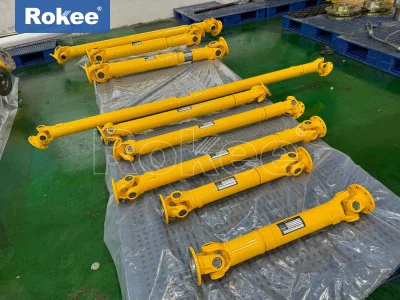
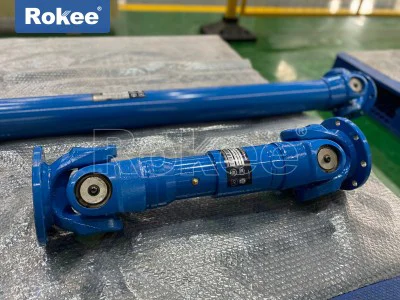
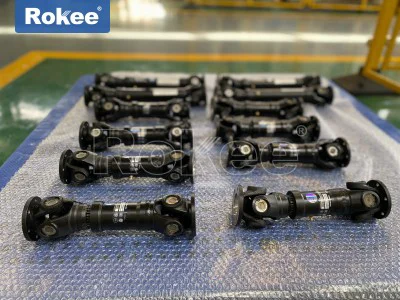
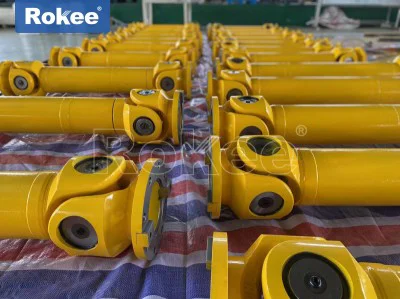
Troubleshooting Process And Method Of Industrial Cardan Shaft In PU Sandwich Panel Line
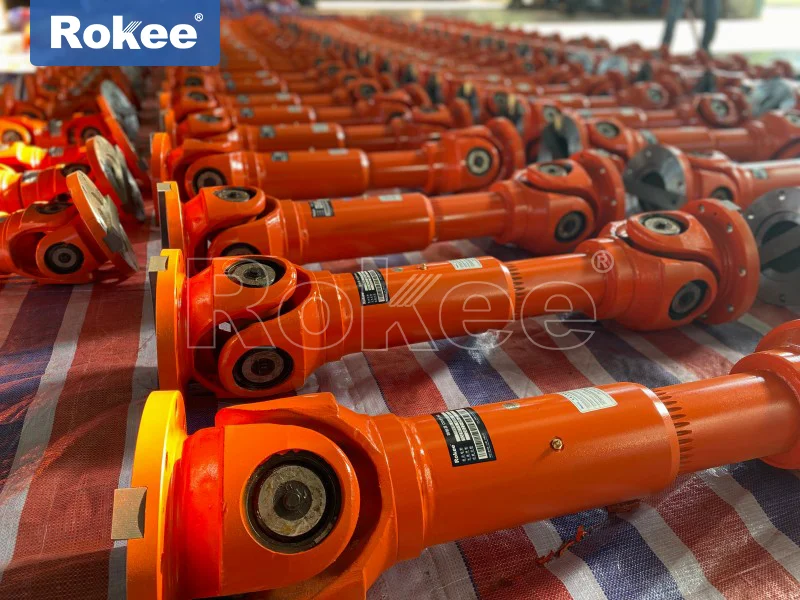
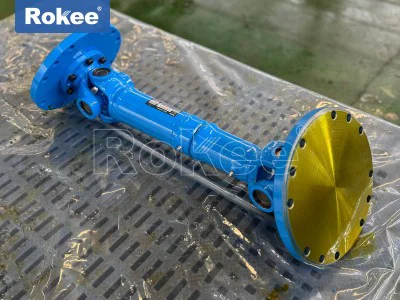
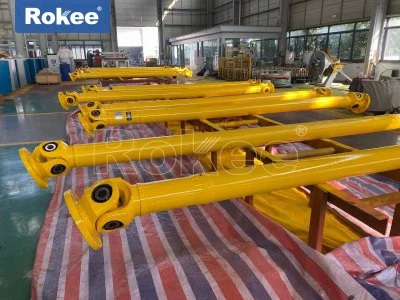
The industrial cardan shaft serves as a core power transmission component in PU sandwich panel production lines, undertaking the critical task of transferring rotational torque and operating power between driving and driven equipment. In the continuous production process of PU sandwich panels, the production line maintains long-term high-load operation with frequent start-stop cycles and alternating torque changes, which makes the cardan shaft susceptible to various operational abnormalities under the combined effects of mechanical friction, environmental interference and operational fatigue. Minor faults of the cardan shaft will lead to unstable equipment operation and reduced product processing accuracy, while severe failures will cause production line shutdown, material waste and increased operational loss. Therefore, standardized and systematic troubleshooting and scientific maintenance methods are essential to ensure the stable and efficient operation of PU sandwich panel production lines. This paper comprehensively analyzes the common failure manifestations, root causes, standardized troubleshooting procedures and targeted improvement methods of industrial cardan shafts in PU sandwich panel production scenarios, providing practical technical guidance for on-site equipment operation and maintenance management.
In the operational environment of PU sandwich panel line, the working conditions of cardan shafts have obvious industrial particularities, which are the fundamental inducements of most equipment faults. Different from general mechanical transmission equipment, the PU sandwich panel production process involves continuous board feeding, foaming molding, cutting and trimming and other linked processes, requiring the transmission system to maintain stable torque output and uniform rotating speed for a long time. The cardan shaft needs to adapt to frequent dynamic load changes during the production process. When the production line processes thickened sandwich panels or high-density PU core materials, the transmission load increases instantaneously, causing instantaneous torque impact on the universal joint and spline structure of the cardan shaft. Meanwhile, the production workshop environment of PU sandwich panels contains trace chemical volatile substances and fine dust particles generated by material cutting and processing. These tiny impurities are easy to adhere to the moving clearance of the cardan shaft, penetrate into the bearing structure and universal joint gap, and accelerate the wear and aging of internal components. In addition, the long-term continuous operation mode of industrial production makes the cardan shaft lack of intermittent heat dissipation time, resulting in cumulative temperature rise of components, deterioration of lubrication state and gradual attenuation of mechanical transmission performance, which eventually induces various operational faults.
Abnormal vibration is one of the most frequent faults of cardan shafts in PU sandwich panel production lines, and it is also the early warning signal of most mechanical failures. In normal operating conditions, the cardan shaft maintains stable and low-amplitude rotational vibration synchronized with the equipment speed. Once abnormal vibration occurs, the vibration frequency and amplitude will increase significantly, accompanied by regular jitter of the transmission mechanism, which will directly affect the running stability of the roller table and processing equipment of the production line, leading to uneven board surface flatness and inconsistent dimensional accuracy of finished PU sandwich panels. Through on-site fault summary, the main causes of abnormal vibration include component wear, installation misalignment and structural unbalance. Long-term friction operation will cause wear, pitting and micro-spalling on the surface of the cross shaft, needle roller bearings and spline teeth of the cardan shaft, increasing the matching clearance between moving parts. Excessive clearance will make the shaft body produce irregular swing and impact during high-speed rotation, forming continuous vibration. Installation misalignment is another key factor. In the daily operation and maintenance process, equipment vibration and base settlement will cause the driving end and driven end of the cardan shaft to produce angular deviation and axial offset, breaking the coaxiality of the transmission system. The offset shaft body will bear asymmetric load during operation, resulting in periodic forced vibration. In addition, long-term load fatigue operation will cause slight deformation of the shaft body, and uneven wear of local components will destroy the dynamic balance of the cardan shaft, further amplifying the vibration amplitude, and the vibration fault will gradually deteriorate from low-speed slight vibration to high-speed severe jitter with the extension of operation time.
Operational noise abnormality is another typical fault feature of cardan shafts in PU sandwich panel line, which can intuitively reflect the internal structural state of the transmission component. Different fault states correspond to distinct noise characteristics, which can be used as an important basis for preliminary fault judgment in on-site troubleshooting. The dry friction noise with high-frequency screeching is mostly caused by insufficient lubrication or failure of the sealing structure. When the lubricating grease in the universal joint and bearing cavity is completely consumed or deteriorated and invalid, direct dry friction occurs between metal moving surfaces, producing continuous sharp noise. Meanwhile, the failure of the sealing ring will lead to the invasion of workshop dust and impurities, which will mix with residual lubricating oil to form abrasive particles, aggravating metal friction and making the noise more obvious. The periodic clattering and impact noise is mainly related to excessive matching clearance and loose structural assembly. The wear of spline teeth and cross shaft bearings will increase the axial and radial clearance of the cardan shaft, and regular impact friction will occur between components during torque transmission, forming rhythmic impact noise. In addition, local deformation and crack damage of the shaft body or universal joint yoke will also cause unstable operation of the transmission structure, resulting in irregular noise. Long-term abnormal noise operation will further accelerate component wear, form a vicious cycle of fault deterioration, and even cause structural fracture of parts in severe cases.
Overheating failure of cardan shaft components often occurs in the high-load continuous production stage of PU sandwich panel lines, which is a hidden dangerous fault that is easy to be ignored in daily inspection. In normal operation, the operating temperature of the cardan shaft is kept within a stable range through self-heat dissipation and lubrication and heat reduction. When abnormal overheating occurs, the surface temperature of the shaft body and universal joint assembly rises continuously, which will accelerate the aging of lubricating materials, reduce the hardness and mechanical strength of metal components, and seriously affect the service life of the transmission shaft. The core cause of overheating is the poor heat dissipation condition caused by abnormal friction. Insufficient lubrication, deteriorated lubricating grease and blocked lubrication channels will lead to increased friction resistance between moving parts, and a large amount of friction heat accumulates inside the structure and cannot be dissipated in time. Continuous overload operation of the production line is also an important inducement. When the production line runs at overload for a long time to improve output, the cardan shaft bears excessive torque load, the operating friction and power consumption increase sharply, and the heat generation rate far exceeds the natural heat dissipation rate. In addition, installation jamming and unsmooth structural movement will cause local stress concentration and friction intensification, resulting in local overheating of the cardan shaft. Long-term overheating operation will cause thermal deformation of the shaft body, burning of bearing components and even locking failure of the transmission system, leading to sudden stop of the production line.
Transmission power attenuation and torque output instability are functional faults that directly affect the production quality of PU sandwich panels. The core function of the cardan shaft is to stably transmit rotational torque and power. When functional faults occur, the transmission efficiency decreases, resulting in insufficient power output of the production line equipment, unstable operating speed of the roller table, and jitter in the board conveying process, which will cause problems such as uneven foaming density, inconsistent board thickness and surface wrinkling of PU sandwich panels, seriously affecting product qualification rate. The main causes of power attenuation include serious wear of spline structures, fatigue damage of universal joint components and structural deformation of the shaft body. The spline shaft and spline sleeve undertake the telescopic adjustment and torque transmission work of the cardan shaft. Long-term telescopic friction and torque impact will cause serious wear of spline teeth, reduce the matching precision, and produce sliding friction and power loss during torque transmission. The fatigue crack and deformation of the cross shaft and universal joint yoke will reduce the structural rigidity of the transmission part, unable to bear stable torque transmission, resulting in torque loss and output fluctuation. In addition, the adhesion of dirt and impurities on the shaft body and unbalanced stress distribution will also affect the stability of power transmission, making the running speed of production line equipment fluctuate periodically.
The troubleshooting of industrial cardan shafts in PU sandwich panel production lines needs to follow a standardized, step-by-step detection process, combining visual inspection, manual detection, operational test and precise measurement to realize comprehensive fault location and cause analysis, avoiding misjudgment and missing judgment caused by single detection method. The first step is offline preliminary inspection, which is carried out after the production line is shut down and the equipment is completely powered off to ensure operation safety. Firstly, conduct overall visual inspection on the cardan shaft body, universal joint assembly, flange connection and spline telescopic structure to check for obvious surface cracks, deformation, rust, oil leakage and dirt accumulation. Focus on observing the sealing state of the bearing and universal joint, check whether the sealing ring is aging, damaged or deformed, and confirm whether there is lubricating grease leakage and impurity invasion. Then conduct manual flexible detection, shake the cardan shaft body vertically and horizontally to sense whether there is abnormal looseness and obvious backlash, push and pull the spline structure axially to check whether the telescopic movement is smooth and stuck, and judge whether the internal matching clearance is abnormal through hand feeling resistance and looseness.
The second step is precise clearance measurement and component performance detection, which is the core link to quantify fault degree. Use professional measuring tools to detect the radial clearance of cross shaft journal, needle roller bearing fit clearance and spline tooth matching clearance, record all detection data, and compare with the standard fit range of industrial cardan shaft components to judge whether the wear degree exceeds the normal allowable range. For worn components with excessive clearance, further observe the surface state of the parts to check for pitting, spalling, scratch and fatigue crack damage. For the flange connection part, check the fastening state of connecting bolts to confirm whether there is bolt looseness, missing or thread slipping, and detect the flatness of the flange joint surface to avoid transmission unbalance caused by uneven connection. In addition, conduct lubrication state detection, check the filling amount, uniformity and deterioration degree of internal lubricating grease, judge whether the lubrication failure is caused by grease aging, pollution or insufficient filling, and sort out the lubrication system problems existing in the cardan shaft operation.
The third step is on-site operational test and fault verification. After completing the offline inspection and maintenance reset, start the production line for no-load and load test operation respectively. Firstly, conduct no-load operation test, observe the running state of the cardan shaft at different speeds, monitor the vibration amplitude, operating noise and temperature change of the shaft body, and record the operational data under stable no-load state. Then carry out load test according to the actual production working conditions, simulate the conventional production load and high-load working state of PU sandwich panels, detect the stability of torque transmission and speed consistency of the cardan shaft under load operation, and verify whether the abnormal faults such as vibration, noise and overheating disappear completely. For intermittent and occasional faults that cannot be reproduced in no-load state, extend the load operation monitoring time, track the fault occurrence rules, and combine with the working condition changes to accurately locate the fault inducement.
Aiming at different fault types of cardan shafts in PU sandwich panel production lines, targeted repair and solution methods should be adopted to ensure thorough fault elimination and restore the optimal operating performance of equipment. For abnormal vibration faults caused by component wear and excessive clearance, replace severely worn cross shafts, needle roller bearings and spline components in a timely manner, and conduct overall cleaning and debugging of the transmission structure after replacement to ensure that the matching clearance of all parts meets the industrial standard. For vibration faults caused by installation misalignment, adjust the installation position of the cardan shaft, calibrate the coaxiality of the driving end and driven end, eliminate angular deviation and axial offset, and fix the installation base firmly to avoid displacement deviation caused by equipment vibration. For shaft body unbalance faults caused by deformation and uneven wear, conduct dynamic balance correction on the cardan shaft to offset the unbalanced torque generated by component wear and deformation, and ensure stable rotation of the shaft body at all operating speeds.
For operational noise and overheating faults dominated by lubrication failure and sealing damage, first replace all aging and failed sealing components to block the channel of external dust and impurities invading the interior of the structure. thoroughly clean the deteriorated and polluted residual lubricating grease inside the universal joint and bearing cavity, inject high-performance industrial lubricating grease suitable for high-load and continuous operation working conditions, and ensure that the lubricating grease fills the internal clearance uniformly without dead angles. For local friction and overheating caused by structural jamming, disassemble and debug the telescopic spline structure and universal joint rotating part, eliminate foreign body jamming and structural friction resistance, and ensure flexible and unobstructed operation of all moving structures. For noise faults caused by loose assembly, fasten all connecting bolts and positioning parts, eliminate assembly clearance and impact friction, and restore the compactness and stability of the transmission structure.
For power transmission attenuation and torque instability faults caused by fatigue damage and structural deformation, replace the components with fatigue cracks and permanent deformation completely, and avoid secondary faults caused by repairing damaged parts. Recheck and calibrate the assembly precision of the cardan shaft after component replacement, ensure the accurate matching of spline structure and universal joint assembly, and eliminate power loss caused by poor matching precision. For the transmission efficiency reduction caused by long-term accumulated dirt and friction resistance, conduct overall deep cleaning of the cardan shaft transmission structure, remove surface dirt, oxide scale and abrasive particles, reduce operating friction resistance, and restore the power transmission efficiency of the equipment.
To reduce the recurrence of cardan shaft faults and realize long-term stable operation of PU sandwich panel production lines, it is necessary to establish a scientific daily maintenance and periodic inspection mechanism on the basis of troubleshooting and fault repair. Formulate regular lubrication maintenance rules according to the operating load and environmental characteristics of the production line, regularly replace lubricating grease and check the lubrication state of key parts, appropriately shorten the lubrication cycle for high-load and high-frequency operation periods, and avoid equipment faults caused by lubrication failure. Establish a daily inspection log, focusing on checking the operating vibration, noise, temperature and sealing state of the cardan shaft every day, and find and dispose of minor abnormal problems in time to prevent fault escalation. Conduct regular disassembly and inspection and precision detection every production cycle, quantitatively detect component wear clearance and structural deformation degree, and carry out preventive replacement of aging and worn parts in advance. In addition, standardize the equipment operation process, avoid frequent overload operation and sudden start-stop operation, reduce instantaneous torque impact and mechanical fatigue loss of the cardan shaft, and fundamentally extend the service life of transmission components and ensure the continuous and stable operation of PU sandwich panel production lines.