Cardan Shaft for Test Benches
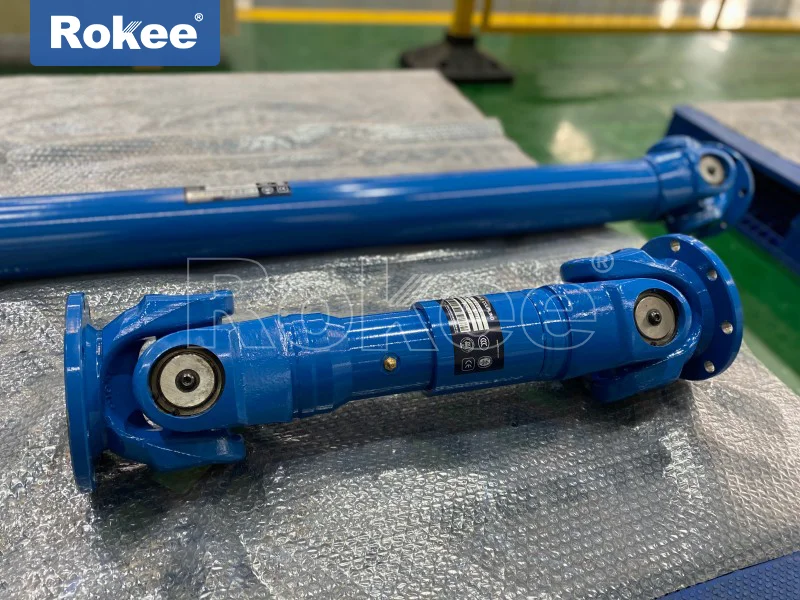
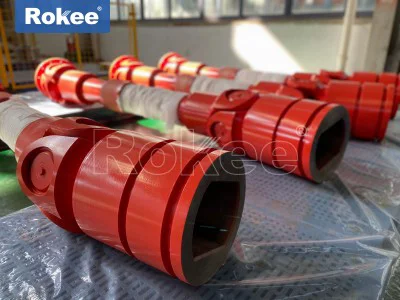
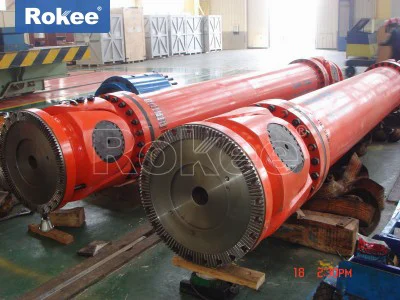
A cardan shaft, also commonly referred to as a universal drive shaft, serves as a critical component in test bench systems, playing an indispensable role in transmitting torque and rotational motion between non-collinear shafts while accommodating angular, axial, and radial misalignments. Test benches are designed to simulate real-world operating conditions for a wide range of mechanical components, and the performance of the cardan shaft directly impacts the accuracy, reliability, and efficiency of these test systems. Unlike standard industrial cardan shafts, those specifically engineered for test benches must meet stricter requirements for precision, durability, and adaptability, as they are tasked with operating under controlled yet varied test parameters, including varying speeds, torques, and environmental conditions. These specialized cardan shafts are tailored to bridge the gap between the test bench’s drive unit and the component under test (CUT), ensuring that the transmitted motion and torque are consistent and accurate, thus enabling precise measurement and analysis of the CUT’s performance.
The fundamental function of a cardan shaft in a test bench setup is to transfer rotational power from the drive motor to the CUT, even when the two shafts are not perfectly aligned. This misalignment can occur due to the design of the test bench, the geometry of the CUT, or the need to simulate specific operating conditions that involve angular offsets. Unlike rigid couplings that require perfect collinearity, cardan shafts use one or more universal joints to allow for flexibility, ensuring smooth power transmission without introducing excessive stress or vibration. In test bench applications, this flexibility is crucial because it allows engineers to configure the test setup to replicate the exact conditions the CUT will encounter in real-world use, whether it be in automotive, industrial, or aerospace applications. For example, in automotive powertrain testing, the cardan shaft may need to accommodate the angular movement of a driveshaft as it would in a vehicle’s suspension system, enabling accurate testing of the driveshaft’s fatigue life, torsional stiffness, and vibration characteristics.
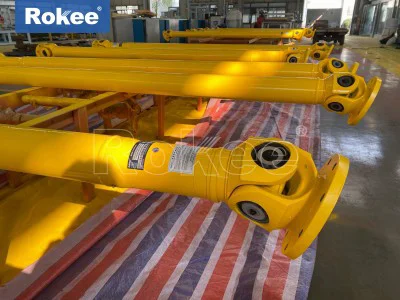
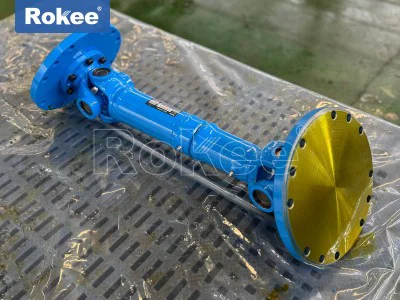
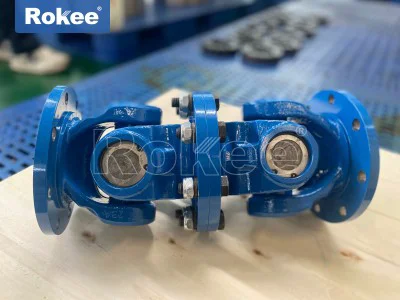
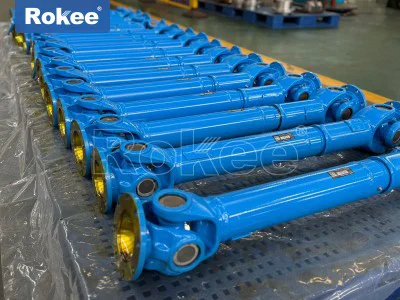
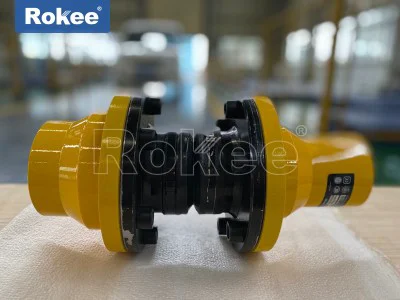
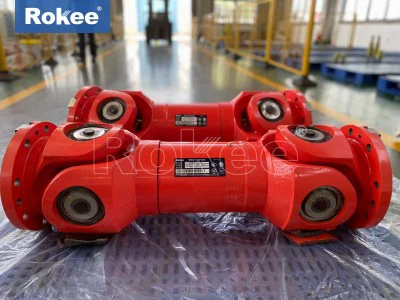
The design and construction of cardan shafts for test benches are optimized to meet the unique demands of test environments. These shafts are typically composed of several key components: universal joints (often cross-type joints), a central shaft body, fork heads, cross shafts, precision bearings, and fastening hardware. The universal joint, which is the heart of the cardan shaft, consists of a cross-shaped pivot that connects two perpendicular fork heads attached to the input and output shafts. Each end of the cross shaft is fitted with high-precision bearings, usually needle roller bearings or sliding bearings, which reduce frictional resistance and enable smooth rotational movement even under high loads and varying angles. The central shaft body, often made from high-grade alloy steel or carbon steel, is subjected to specialized heat treatment processes to enhance its strength, fatigue resistance, and durability. This heat treatment may include quenching and tempering to achieve a balance of hardness and toughness, ensuring the shaft can withstand the repeated stress of continuous test cycles without deformation or failure.
Precision is a key consideration in the design of cardan shafts for test benches, as any deviation in torque or rotational speed transmission can lead to inaccurate test results. To achieve this precision, the components of the cardan shaft are machined to tight tolerances, with surface finishes that minimize friction and ensure smooth operation. The universal joints are designed to maintain constant angular velocity, even when operating at maximum angular misalignment, to prevent fluctuations in the transmitted motion that could skew test data. Additionally, the central shaft is often balanced to reduce centrifugal vibration at high speeds, as excessive vibration can not only affect test accuracy but also damage the test bench or the CUT. Dynamic balancing processes are used to ensure that the shaft rotates uniformly, with minimal vibration, even at the upper limits of its speed range.
Adaptability is another critical feature of cardan shafts for test benches, as these systems are often used to test a wide variety of components with different sizes, shapes, and performance requirements. Many test bench cardan shafts are designed with telescopic central shafts, which allow for adjustment of the shaft length to accommodate different test setups. This telescopic design is typically achieved through spline connections or sliding sleeves, which enable axial movement while maintaining the ability to transmit torque. The fork heads and universal joints may also be designed to be interchangeable, allowing engineers to quickly reconfigure the cardan shaft for different CUTs without the need for extensive modifications to the test bench. This adaptability not only improves the versatility of the test bench but also reduces downtime between tests, increasing overall testing efficiency.
In test bench applications, cardan shafts are exposed to a wide range of operating conditions, including varying temperatures, humidity levels, and load profiles. As a result, these shafts must be designed to withstand environmental stressors while maintaining performance. Sealed bearing cavities are often used to prevent contamination from dust, moisture, or debris, which can cause premature wear of the bearings and other components. In some cases, cardan shafts for test benches may also be equipped with specialized coatings or surface treatments to enhance corrosion resistance, particularly in test environments that involve exposure to chemicals or extreme temperatures. For example, in high-temperature testing, the cardan shaft may be treated with heat-resistant coatings to prevent thermal degradation, while in humid environments, corrosion-resistant materials or platings may be used to protect against rust and oxidation.
The role of cardan shafts in test bench systems extends beyond simple power transmission; they also contribute to the safety and reliability of the testing process. Test benches often operate at high speeds and torques, and any failure of the cardan shaft could result in damage to the test equipment, the CUT, or even injury to personnel. To mitigate this risk, cardan shafts for test benches are designed with safety features such as reinforced fork heads, which eliminate weak points that could fail under dynamic stress, and safety housing options that enclose the universal joints and other moving components. Additionally, the materials and construction methods used ensure that the cardan shaft can withstand the maximum load and speed requirements of the test bench, with a safety margin to account for unexpected fluctuations in test conditions.
One of the key applications of cardan shafts in test benches is in the testing of automotive components, such as driveshafts, axles, and transmissions. In these tests, the cardan shaft is used to connect the test bench’s drive unit to the component being tested, simulating the rotational motion and torque that the component would experience in a vehicle. For example, in endurance testing, the cardan shaft transmits repeated cycles of torque and rotational speed to the CUT, allowing engineers to evaluate its fatigue life and durability. In torsional stiffness testing, the cardan shaft ensures that the torque applied to the CUT is accurate and consistent, enabling precise measurement of the component’s ability to resist torsional deformation. Similarly, in vibration testing, the cardan shaft must operate smoothly to avoid introducing extraneous vibration that could interfere with the test results.
Another important application of cardan shafts for test benches is in industrial machinery testing, where they are used to test components such as gearboxes, pumps, and motors. In these tests, the cardan shaft accommodates the misalignment between the test bench’s drive system and the industrial component, ensuring that the transmitted power is consistent and accurate. For example, in gearbox testing, the cardan shaft transfers torque from the drive motor to the gearbox, allowing engineers to evaluate the gearbox’s efficiency, noise levels, and durability under different load conditions. The flexibility of the cardan shaft also enables the simulation of real-world operating conditions, such as the angular misalignment that may occur due to the installation of the gearbox in a industrial machine.
Maintenance and care are essential to ensure the long-term performance and reliability of cardan shafts for test benches. Regular inspection of the shaft and its components is necessary to identify any signs of wear, damage, or misalignment that could affect test accuracy or lead to failure. Key inspection items include checking the wear of the cross pin journal, bearing outer ring, and roller surfaces, measuring the radial clearance of the bearings, and ensuring that the spline connections are sliding freely. Any signs of wear, such as indentations, pitting, or cracking, should be addressed immediately to prevent further damage. Additionally, the bearings and splines require regular lubrication to reduce friction and wear, with the type and frequency of lubrication depending on the operating conditions of the test bench. Under normal operating conditions, lubrication may be required once a week for the first six months, followed by less frequent lubrication intervals, while in high-load or high-temperature applications, more frequent lubrication may be necessary.
When performing maintenance on cardan shafts for test benches, it is important to follow proper disassembly and assembly procedures to avoid misalignment or damage to the components. During disassembly, dirt and oil should be removed from the shaft to prevent contamination of the bearings and splines, and all joint parts should be marked to ensure correct alignment during reassembly. Bearings and cross shafts should be cleaned separately to avoid cross-contamination, and any worn or damaged components should be replaced with precision-machined parts that meet the original specifications. After reassembly, the cardan shaft should be balanced and tested to ensure that it operates smoothly and accurately, with minimal vibration and consistent torque transmission.
The performance of a cardan shaft in a test bench system is also influenced by the alignment of the shaft and the test bench components. While cardan shafts are designed to accommodate misalignment, excessive misalignment can lead to increased vibration, reduced efficiency, and premature wear of the components. Proper alignment of the cardan shaft, drive unit, and CUT is therefore essential to ensure optimal performance. This alignment can be achieved using precision alignment tools, which help to minimize angular and parallel offsets between the shafts. In complex test setups, laser alignment may be used to achieve the highest level of precision, ensuring that the cardan shaft operates within its design limits and transmits torque and motion accurately.
Advancements in materials and manufacturing technologies have led to the development of more advanced cardan shafts for test benches. Modern cardan shafts may incorporate composite materials, such as carbon fiber, which offer a high strength-to-weight ratio, reducing the overall weight of the shaft while maintaining its strength and durability. This lightweight design is particularly beneficial in high-speed test applications, where reduced weight can minimize centrifugal forces and vibration. Additionally, the use of advanced machining technologies, such as CNC machining and 3D printing, allows for the production of complex components with tight tolerances, improving the precision and performance of the cardan shaft. Digital twin technology is also being used to simulate the performance of cardan shafts in test bench applications, allowing engineers to optimize the design and predict potential issues before the shaft is manufactured.
In conclusion, cardan shafts are essential components in test bench systems, enabling accurate and reliable power transmission between non-collinear shafts while accommodating misalignment and varying operating conditions. Their design and construction are optimized to meet the strict requirements of test environments, with a focus on precision, durability, and adaptability. From automotive component testing to industrial machinery evaluation, cardan shafts play a critical role in ensuring that test results are accurate and representative of real-world performance. Proper maintenance, alignment, and care are essential to maximize the lifespan of these shafts and ensure the continued reliability of the test bench system. As test bench technologies continue to advance, the development of more advanced cardan shafts, incorporating new materials and manufacturing methods, will further enhance the accuracy and efficiency of testing processes, enabling engineers to develop more reliable and high-performance mechanical components.