Universal Drive Shaft

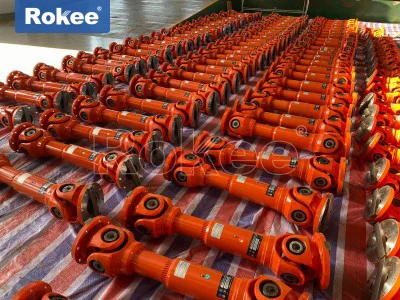
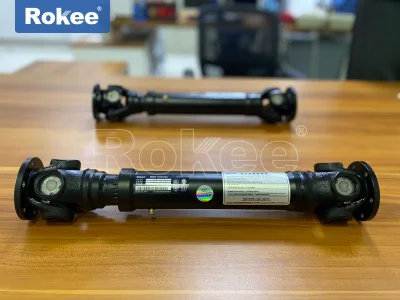
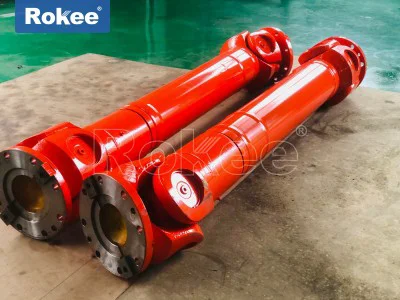
A universal drive shaft, often referred to simply as a universal shaft or Cardan shaft in technical contexts, is a fundamental mechanical power transmission component that serves as a critical link between rotating shafts that are not aligned on a single straight axis, whether due to fixed angular misalignment, dynamic movement during operation, or physical separation between driving and driven components. Unlike rigid shaft couplings that require perfect coaxial alignment to function efficiently and avoid premature wear, universal drive shafts are engineered to accommodate angular, parallel, and axial offsets between connected shafts while consistently transferring torque and rotational motion without significant power loss or mechanical failure. This unique adaptability makes them indispensable across nearly every sector of mechanical engineering, from light-duty passenger vehicles to heavy industrial machinery, marine propulsion systems, agricultural equipment, and construction apparatus.
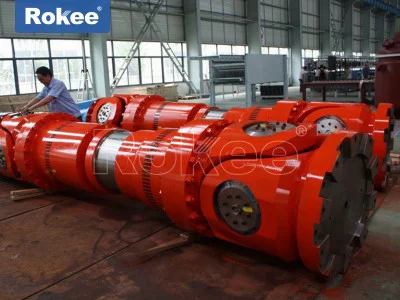
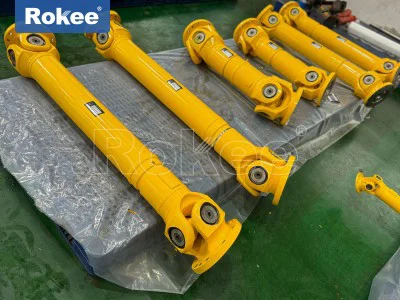
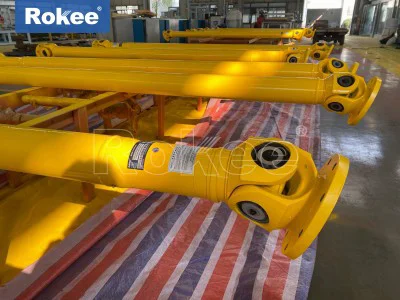
At its most basic level, a complete universal drive shaft assembly consists of three primary interconnected components: the central transmission shaft tube or solid shaft, two universal joint assemblies positioned at each end of the central shaft, and in many designs, a telescopic sliding mechanism to compensate for axial length changes during operation. The universal joint, the heart of the entire assembly, is the component that enables angular flexibility and smooth power transfer across misaligned shafts. The most widely used universal joint design globally is the cross-type universal joint, also known as the Cardan joint, which features a rigid cross-shaped central spider, four needle roller bearings fitted into each arm of the cross, and two yoke assemblies—one attached to the driving shaft and the other to the driven shaft. The needle roller bearings are critical here, as they reduce friction between the cross spider and the yokes, allowing free rotational movement and angular deflection while supporting heavy radial and thrust loads. The central shaft, which connects the two universal joints, is typically manufactured from high-strength seamless steel tubing for light to medium-duty applications, as this material offers an optimal balance of rigidity, torsional strength, and lightweight properties; solid steel shafts are used for heavy-duty, high-torque scenarios where extra load-bearing capacity is required. Many universal drive shafts also integrate a telescopic spline section, usually located between the two universal joints or integrated into one end of the central shaft, which allows the overall length of the shaft to adjust slightly as the connected components move relative to each other—this is especially vital in applications where suspension travel, frame flex, or thermal expansion causes small changes in the distance between driving and driven parts. Additional structural elements include protective dust covers or sealing boots around the universal joints, which prevent contamination from dust, dirt, moisture, and debris, and retain lubricants within the bearing assemblies to extend service life and maintain smooth operation. Some heavy-duty designs also include intermediate support bearings for longer drive shafts, which reduce shaft deflection, minimize vibration at high rotational speeds, and prevent bending or warping under continuous load.
The performance of a universal drive shaft is defined by a set of core mechanical and operational characteristics that determine its suitability for specific applications, with no single design capable of meeting all performance requirements across different industries. Key performance metrics include torque transmission capacity, allowable angular misalignment, rotational speed limit, torsional stiffness, vibration resistance, durability, and operational efficiency. Torque capacity is perhaps the most critical factor, referring to the maximum rotational force the shaft can transmit continuously without deformation, breakage, or joint failure; this is heavily influenced by material strength, cross-sectional area of the central shaft, and the size and design of the universal joint bearings. Allowable angular misalignment varies widely between designs, with standard cross-type joints accommodating angles of up to 15 to 30 degrees between connected shafts, while specialized constant velocity (CV) joints and heavy-duty universal joints can handle angles exceeding 45 degrees in extreme applications. Rotational speed limit is another vital parameter, as high-speed operation can generate centrifugal force, imbalance, and excessive vibration, leading to bearing wear and shaft failure; lightweight, dynamically balanced shafts with precision-machined joints are engineered for high-speed use, while heavy, reinforced designs are optimized for low-speed, high-torque operation. Torsional stiffness ensures that the shaft does not twist excessively under load, which would cause power loss, delayed response, and inconsistent rotation, while vibration resistance is achieved through precise dynamic balancing, high-quality bearings, and intermediate supports for long shafts. Durability is measured by the component’s ability to withstand continuous operation, shock loads, and environmental stress without premature wear, and operational efficiency refers to the percentage of input power that is successfully transferred to the driven shaft, with minimal friction loss from the universal joints and bearings. High-quality universal drive shafts maintain efficiency levels above 95% under normal operating conditions, with losses only increasing slightly under maximum angular misalignment or heavy load.
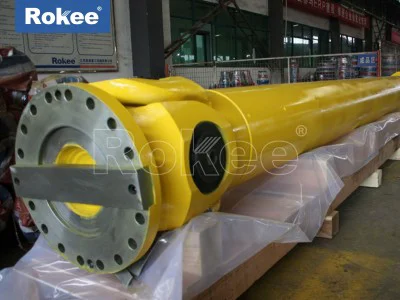
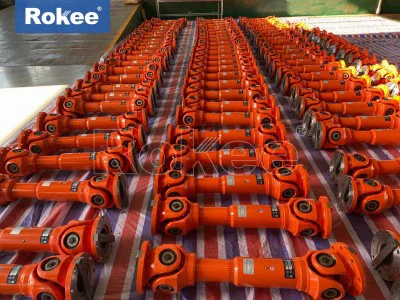
Universal drive shafts are classified into distinct types based on three primary criteria: the design of the universal joint, the structural configuration of the central shaft, and the intended load and application type, each with unique advantages and limitations that make them suitable for specific use cases. The most common classification is based on universal joint design, which divides them into two main categories: standard Cardan (cross-type) universal drive shafts and constant velocity (CV) universal drive shafts. Standard Cardan shaft assemblies feature the classic cross-and-yoke joint design, which is simple to manufacture, easy to maintain, and highly durable under heavy torque loads, but has a notable limitation: at angles greater than 10 to 15 degrees, they produce slight fluctuations in rotational speed and minor vibration, as the driven shaft rotates at a slightly variable speed compared to the driving shaft. This design is ideal for low to medium-speed applications with moderate angular misalignment, where minor speed variation is acceptable. Constant velocity universal drive shafts, by contrast, are engineered to eliminate speed fluctuations and vibration even at large operating angles, making them perfect for high-speed, precision applications. CV shafts use advanced joint designs such as ball-and-socket Rzeppa joints, tripod joints, or double Cardan joints with a centering mechanism, which ensure that the driven shaft rotates at the exact same speed as the driving shaft regardless of angular offset. This smooth, consistent power transfer is critical for applications requiring precise motion control and high-speed operation. The second classification is based on central shaft structure, separating universal drive shafts into single-piece solid shafts, single-piece tubular shafts, two-piece shafts with intermediate support, and telescopic shafts. Single-piece shafts are compact and rigid, suitable for short-distance power transmission; tubular shafts are lightweight and cost-effective for medium-length applications; two-piece shafts with center supports are used for long-distance power transfer to prevent sagging and vibration; and telescopic shafts are designed for applications where axial length adjustment is necessary. The third classification is based on load capacity, dividing shafts into light-duty, medium-duty, and heavy-duty variants. Light-duty universal drive shafts are used in small appliances, office machinery, and light automotive components, with low torque capacity and compact size; medium-duty shafts are common in passenger vehicles, light industrial machinery, and agricultural equipment, balancing torque capacity and flexibility; heavy-duty shafts are built with reinforced materials, oversized joints, and thick solid shafts, designed for extreme torque loads in industrial machinery, construction equipment, marine vessels, and heavy commercial vehicles.
Beyond these primary categories, there are specialized universal drive shaft designs tailored for unique operating conditions, such as high-temperature resistant shafts for industrial furnaces and manufacturing equipment, corrosion-resistant shafts with protective coatings for marine and agricultural use in wet or corrosive environments, and compact miniature universal shafts for precision instruments, medical devices, and small-scale mechanical systems. Each specialized variant retains the core functional principle of accommodating shaft misalignment but is modified with specific materials, seals, and joint designs to meet the unique demands of its operating environment, whether that involves exposure to moisture, chemicals, extreme temperatures, or tight spatial constraints. This adaptability in design and classification is what makes universal drive shafts one of the most versatile components in mechanical engineering, capable of fulfilling roles that no other rigid coupling or fixed shaft can perform.
The applications of universal drive shafts span virtually every industry that relies on mechanical power transmission, with their usage extending from everyday transportation to heavy industrial production, agricultural operations, marine navigation, construction, and even specialized aerospace and medical equipment. In the automotive industry, universal drive shafts are a cornerstone of vehicle drivetrains, serving multiple essential functions. In rear-wheel-drive and four-wheel-drive vehicles, they connect the transmission or transfer case to the rear axle differential, compensating for the vertical movement of the rear suspension and the fixed position of the transmission, ensuring consistent power delivery to the wheels even as the vehicle travels over uneven surfaces. In front-wheel-drive vehicles, constant velocity universal drive shafts (commonly called CV axles) connect the transaxle to the front drive wheels, accommodating both the large steering angles of the front wheels and the vertical suspension travel, providing smooth, vibration-free power transfer at all steering positions and driving speeds. Without universal drive shafts, automotive drivetrains would be unable to handle the dynamic movement of suspension components, resulting in rigid, unstable, and quickly failing power transmission systems.
In the industrial sector, universal drive shafts are widely used in manufacturing machinery, material handling equipment, and production line systems, where they connect motors, gearboxes, and driven components that are often misaligned due to machine layout, installation tolerances, or operational movement. They are commonly found in conveyor systems, packaging machinery, textile equipment, printing presses, and metalworking machinery, transmitting torque across fixed or variable angular offsets while maintaining consistent production speed and efficiency. Heavy industrial applications, such as steel mills, mining equipment, and cement production facilities, rely on heavy-duty universal drive shafts to transmit extremely high torque levels between large motors and processing machinery, often operating under continuous heavy loads, shock stress, and harsh environmental conditions including dust, vibration, and high temperatures. These heavy-duty shafts are built to withstand extreme mechanical stress without failure, ensuring uninterrupted production in critical industrial operations.
Agricultural machinery is another major application area for universal drive shafts, where they power a wide range of farm equipment including tractors, harvesters, plows, seeders, and irrigation systems. Agricultural universal drive shafts are designed to be rugged and durable, capable of withstanding exposure to dirt, mud, water, and crop debris, and accommodating the frequent movement and misalignment between tractor power take-off (PTO) systems and attached implements. They allow farmers to connect various implements to a single tractor, transmitting power efficiently even as the implement moves up and down or angles during field operation, making them essential for modern mechanized farming. Similarly, construction equipment such as excavators, loaders, bulldozers, graders, and concrete mixers depends on heavy-duty universal drive shafts to transfer power from the engine to the drive tracks, wheels, and working components. These shafts must handle extreme shock loads, continuous vibration, and large angular misalignments caused by the rough terrain and heavy-duty operation of construction machinery, providing reliable power delivery in demanding job site conditions.
Marine applications also utilize universal drive shafts extensively, particularly in boat and ship propulsion systems, where they connect the engine and transmission to the propeller shaft. Marine universal drive shafts are designed with corrosion-resistant materials and watertight seals to withstand exposure to saltwater, moisture, and marine contaminants, and they accommodate the slight misalignment and movement between the engine mount and the propeller shaft caused by wave action and hull flex. Smaller watercraft, such as personal watercraft and small fishing boats, use compact universal drive shafts, while large commercial vessels and ships rely on heavy-duty, high-torque universal shaft assemblies for reliable propulsion. Additionally, universal drive shafts are used in marine auxiliary equipment such as winches, pumps, and steering systems, providing flexible power transmission in tight marine engine compartments.
Other specialized applications include aerospace support equipment, medical diagnostic and surgical machinery, fitness equipment, food processing machinery, and even amusement park rides, where their ability to transfer power across misaligned shafts while maintaining smooth operation is essential. In food processing, for example, universal drive shafts are made with food-grade materials and sealed to prevent lubricant contamination, meeting strict hygiene standards while powering conveyor belts, mixing equipment, and packaging machinery. In fitness equipment, they provide smooth, quiet power transfer for treadmills, elliptical machines, and strength training equipment, accommodating the movement of user-operated components. The widespread use of universal drive shafts across such diverse industries highlights their irreplaceable role in modern mechanical engineering, as they solve the universal problem of power transmission between non-aligned rotating shafts, a challenge that arises in nearly every mechanical system design.
When selecting a universal drive shaft for a specific application, engineers must carefully evaluate the core performance requirements, including torque load, operating speed, allowable angular misalignment, environmental conditions, and space constraints, to choose the appropriate type, material, and design. Proper installation and regular maintenance are also critical to maximizing the service life and performance of universal drive shafts, including routine lubrication of universal joint bearings, inspection of sealing boots for damage, checking for excessive wear or play in the joints, and ensuring dynamic balance is maintained. Even the highest-quality universal drive shaft will fail prematurely if subjected to loads beyond its capacity, operated at speeds exceeding its design limit, or exposed to unprotected contamination. With proper selection, installation, and maintenance, however, universal drive shafts provide long-lasting, reliable power transmission, making them a cost-effective and essential component in countless mechanical systems worldwide.
In summary, the universal drive shaft is a masterclass in mechanical engineering simplicity and versatility, combining a straightforward structural design with exceptional functional adaptability to address a universal challenge in power transmission. Its core structure, centered around the flexible universal joint and robust central shaft, enables it to overcome shaft misalignment that would render rigid couplings useless, while its diverse types and performance profiles allow it to be tailored for every conceivable load, speed, and environmental condition. From everyday passenger vehicles keeping drivers connected to the road, to heavy industrial machinery powering global manufacturing, to agricultural equipment feeding communities, universal drive shafts operate quietly and reliably behind the scenes, forming an essential link in the mechanical systems that drive modern society. As mechanical engineering continues to advance and new applications emerge, the fundamental design of the universal drive shaft will evolve alongside them, with improved materials, precision manufacturing, and optimized joint designs enhancing its performance, but its core purpose—transferring power efficiently across misaligned shafts—will remain unchanged, solidifying its place as one of the most important and enduring components in the history of mechanical engineering.