Cardan Joint Shaft
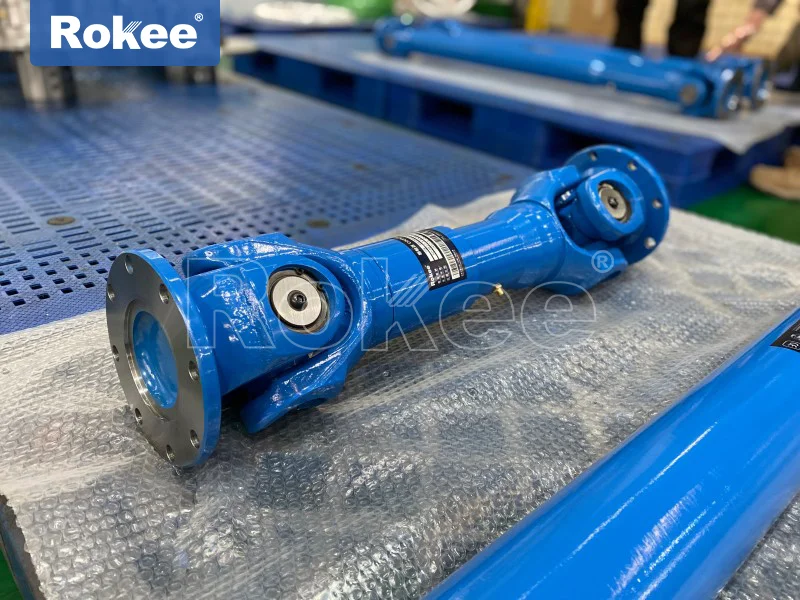
A Cardan joint shaft, widely referred to as a universal joint shaft in mechanical engineering, is a fundamental power transmission component designed to transfer rotational torque and motion between two shafts that are not collinear, have angular misalignment, or experience axial displacement during operation. Unlike rigid shaft couplings that require perfect alignment between driving and driven shafts, this flexible transmission assembly overcomes geometric and operational limitations that would disrupt power delivery in complex mechanical systems, making it indispensable across countless industrial and mobile machinery applications. At its core, the assembly integrates a universal joint mechanism with a shaft body, combining structural rigidity for torque transmission and adaptive flexibility for misalignment compensation, creating a balance between strength and versatility that few other transmission components can match. The evolution of Cardan joint shaft design has been driven by the need to address varying operational demands, from low-speed, high-torque heavy-duty tasks to high-speed, smooth-running precision applications, with each structural variation tailored to optimize performance for specific working conditions without compromising durability or efficiency.
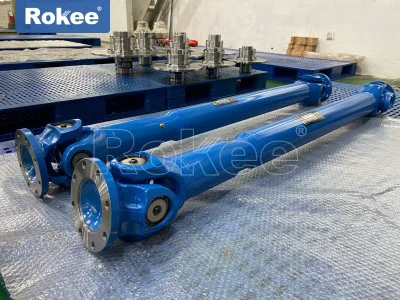
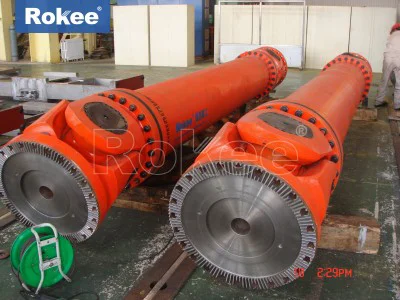
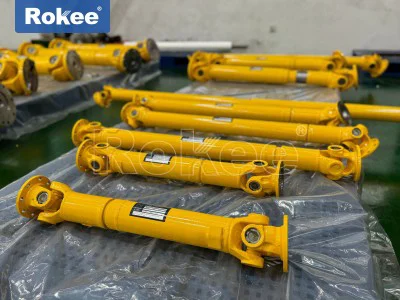
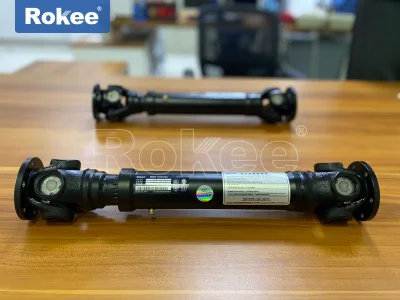
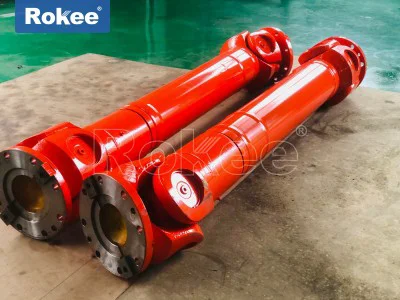
The basic structural composition of a standard Cardan joint shaft revolves around a few core components that work in tandem to enable flexible power transmission, with no overly complex auxiliary parts that would reduce reliability in harsh environments. The central element of the joint section is the cross-shaped spider, a rigid metal component with four perpendicular journal ends that connect to the yokes on the driving and driven shafts. Each journal of the spider is fitted with precision bearing components, typically needle roller bearings or roller bearings, which reduce friction between the spider and the yokes, allowing smooth rotation even under heavy radial and axial loads. These bearings are housed within the yoke arms, which are forged or machined to form a U-shaped structure attached firmly to the end of each shaft segment; one yoke connects to the input shaft from the power source, while the opposite yoke links to the output shaft that drives the working mechanism. The main shaft body, which connects two joint assemblies in most practical configurations, is often a hollow or solid steel shaft, selected based on the required torque capacity and weight constraints. Many Cardan shafts also feature a telescopic or splined section between the two universal joints, which allows for axial length adjustment to accommodate changes in the distance between the driving and driven components during operation, such as suspension movement in vehicles or thermal expansion in fixed industrial machinery. This telescopic design eliminates the need for additional axial compensation components, streamlining the overall transmission system and enhancing its adaptability to dynamic working conditions. The entire structure is engineered to distribute stress evenly across all load-bearing parts, preventing premature wear or failure at critical connection points, and the materials used are typically high-strength alloy steels that undergo heat treatment to boost hardness, toughness, and resistance to fatigue, ensuring long service life even under continuous heavy use.
Performance characteristics of Cardan joint shafts are defined by their ability to handle multiple forms of misalignment, torque transmission efficiency, operational speed limits, and resistance to wear and vibration, with each performance parameter directly tied to the structural design and material selection. The primary performance advantage is the capacity to compensate for angular misalignment between two shafts, with standard single joint designs accommodating angles ranging from a few degrees to over 45 degrees in specialized configurations, depending on the application requirements. This angular flexibility ensures uninterrupted power transmission even when shafts shift position due to mechanical movement, installation tolerances, or operational wear, a feature that is critical in systems where perfect alignment is impossible to maintain. In terms of torque transmission, these shafts can handle a wide spectrum of load capacities, from small-scale precision machinery requiring minimal torque to heavy industrial equipment and large mobile vehicles that demand extreme torque output without slippage or component failure. The efficiency of torque transfer is exceptionally high across most operating conditions, with minimal power loss due to friction, especially when the joint is properly lubricated; the bearing design plays a key role here, as low-friction needle bearings reduce energy waste and heat generation during rotation. Another key performance trait is the ability to handle both steady and fluctuating loads, maintaining stable rotation even when subjected to shock loads or variable torque demands, which is vital for machinery that experiences sudden changes in workload, such as construction equipment or agricultural machinery. However, it is important to note that single Cardan joints exhibit a slight non-uniform rotational velocity when operating at significant angles, causing minor fluctuations in output speed that can lead to vibration at high speeds; this limitation is addressed through advanced joint designs that optimize velocity consistency. Durability performance is equally notable, as the robust structural design and high-grade materials resist abrasion, corrosion, and fatigue cracking, even in harsh operating environments with dust, moisture, or extreme temperatures. Maintenance requirements are relatively modest, with regular lubrication being the primary upkeep task to preserve bearing performance and prevent premature wear, making these shafts a cost-effective and low-maintenance transmission solution for long-term use.
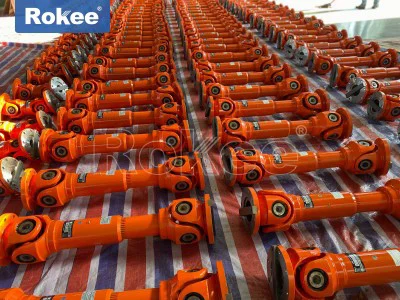
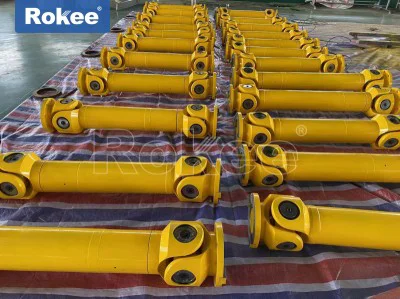
Cardan joint shafts are classified into distinct categories based on structural configuration, joint design, load capacity, and functional features, each developed to fulfill specific operational needs and overcome unique transmission challenges. The most basic and widely used classification is based on the number of universal joint assemblies integrated into the shaft, namely single Cardan joint shafts and double Cardan joint shafts. A single Cardan joint shaft consists of one universal joint connected to a solid or hollow shaft, designed for applications with moderate angular misalignment and low to medium operating speeds, where minor speed fluctuations are acceptable and do not impact overall machinery performance. This type is simple in structure, easy to manufacture and install, and cost-effective to produce, making it suitable for light-duty applications where space is limited and load requirements are not extreme. A double Cardan joint shaft, by contrast, features two universal joints linked by an intermediate shaft segment, arranged in a paired configuration that cancels out the non-uniform velocity output of a single joint, resulting in consistent rotational speed at the driven end even at larger operating angles. This design eliminates high-speed vibration and ensures smooth power delivery, making it ideal for high-speed applications where precision and stability are critical, such as automotive drive systems and precision industrial machinery. Beyond joint count, classification also occurs based on load-bearing capacity, separating shafts into light-duty, medium-duty, and heavy-duty variants. Light-duty Cardan shafts are compact in size, with smaller diameter shafts and smaller joint components, designed for low-torque, high-speed applications such as small industrial tools, office machinery, and precision instruments. Medium-duty shafts strike a balance between torque capacity and speed, suitable for general industrial machinery, automotive systems, and agricultural equipment that handle moderate loads and consistent operation. Heavy-duty Cardan shafts feature reinforced joint structures, larger cross-section shafts, and heavy-duty bearings, engineered to transmit extremely high torque levels at relatively low speeds, commonly used in large industrial equipment, construction machinery, mining machinery, and marine propulsion systems. Another important classification is based on axial adjustability, distinguishing between fixed-length Cardan shafts and telescopic (slip) Cardan shafts. Fixed-length shafts are used in applications where the distance between driving and driven shafts remains constant, offering maximum rigidity and torque capacity; telescopic shafts, equipped with a splined inner shaft and outer sleeve, can extend or retract to accommodate axial movement, making them essential for vehicles, mobile machinery, and systems with thermal expansion or dynamic positional shifts. Additionally, some specialized Cardan shafts are designed with sealed bearing assemblies for use in harsh, contaminated environments, preventing dust and moisture from entering the joint and reducing maintenance needs in demanding settings.
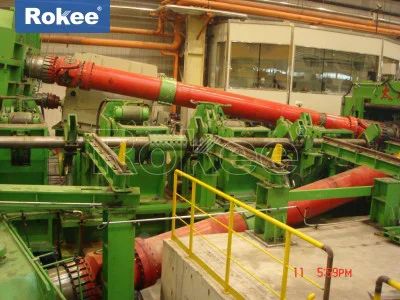
The versatility of Cardan joint shafts has led to their widespread adoption across nearly every sector of mechanical engineering, with applications spanning automotive and transportation, agricultural machinery, industrial manufacturing, construction and mining, marine engineering, aerospace, and specialized precision equipment. In the automotive and transportation industry, these shafts are a core component of drive train systems, connecting the transmission to the differential in rear-wheel-drive and four-wheel-drive vehicles, compensating for the vertical movement of the rear axle and maintaining consistent power delivery to the wheels even as the vehicle travels over uneven terrain. They are also used in steering systems and auxiliary drive components, ensuring reliable motion transfer in compact, space-constrained vehicle layouts. For agricultural machinery, Cardan shafts are integral to power take-off (PTO) systems, linking tractors to a wide range of attached implements such as mowers, balers, plows, and harvesters, transmitting high torque from the tractor’s engine to the working parts while accommodating the movement and angle changes of the attached equipment. The telescopic design is particularly valuable here, allowing for quick attachment and adjustment of different implements without complex realignment procedures. In industrial manufacturing, these shafts are used in conveyor systems, pumping equipment, mixing machines, textile machinery, and metalworking equipment, providing flexible power transmission between motors and working components that may not be perfectly aligned due to installation or operational factors. Heavy-duty industrial Cardan shafts are also employed in steel rolling mills, paper manufacturing equipment, and large conveyor systems, where they endure continuous heavy loads and harsh operating conditions without failure. In construction and mining machinery, such as excavators, loaders, bulldozers, and mining drills, heavy-duty Cardan shafts transmit extreme torque between engine and hydraulic systems or working attachments, withstanding shock loads, vibration, and exposure to dust, dirt, and debris common on job sites. Marine engineering relies on specialized Cardan shafts for propulsion systems, connecting the engine to the propeller shaft in boats and ships, compensating for the slight movement and misalignment that occurs in the vessel’s hull during navigation, and operating efficiently in marine environments with high humidity and salt exposure. In aerospace applications, lightweight yet high-strength Cardan shafts are used in aircraft control systems, engine accessories, and landing gear mechanisms, where precise motion transfer and low weight are critical, and components must meet strict performance standards for reliability and safety. Even in specialized precision equipment, such as medical machinery, robotic arms, and laboratory testing devices, compact light-duty Cardan shafts enable smooth, accurate power transmission in small-scale systems where misalignment compensation and minimal vibration are essential. This broad range of applications underscores the adaptability of Cardan joint shafts, as their design can be modified to suit the unique demands of each industry, from compact precision tasks to heavy-duty industrial operations.
In summary, the Cardan joint shaft remains a cornerstone of modern mechanical power transmission due to its unique combination of structural simplicity, adaptive flexibility, high performance, and broad applicability. Its core design, centered on the universal joint principle, has been refined over decades to address the limitations of early models, with advancements in material science, bearing technology, and manufacturing processes enhancing torque capacity, speed stability, durability, and resistance to harsh environments. The diverse classification of these shafts ensures that there is a suitable variant for every conceivable transmission challenge, whether the application requires high-speed precision, heavy-duty torque, angular misalignment compensation, or axial length adjustment. As mechanical engineering continues to evolve toward more efficient, compact, and durable machinery designs, the role of Cardan joint shafts remains irreplaceable, as they solve a fundamental problem in power transmission—connecting misaligned shafts without sacrificing performance or reliability. Ongoing developments in material technology, such as high-strength lightweight alloys and low-friction bearing coatings, will further improve the performance and service life of these shafts, expanding their potential use in emerging industries and advanced machinery. While alternative transmission components exist for specific applications, the Cardan joint shaft’s combination of versatility, cost-effectiveness, and robust performance ensures it will continue to be a vital component in global industrial, automotive, agricultural, and engineering systems for years to come, supporting the operation of countless machines that drive modern production, transportation, and technology.