Scheme Of Cardan Shaft Coupling Adapting To Different Specifications Of Sandwich Panel Production Lines
In the modern construction and industrial fields, sandwich panels have become an indispensable core material due to their excellent thermal insulation, structural stability, light weight, and easy installation. These panels are widely used in external walls, roofs, cold storage facilities, prefabricated buildings, and various industrial workshops, which has driven the continuous development and diversification of sandwich panel production lines. Different application scenarios have put forward diverse requirements for the specifications of sandwich panels, including varying thicknesses, widths, core material types, and surface materials, which directly leads to differences in the structural design, operating parameters, and power transmission requirements of production lines. As a key component in the power transmission system of sandwich panel production lines, the cardan shaft coupling undertakes the important task of transmitting torque between non-coaxial components, compensating for installation deviations, and ensuring the stable and efficient operation of the entire production line. However, the differences in production line specifications bring great challenges to the adaptability of cardan shaft couplings. It is particularly important to design a reasonable adaptation scheme to ensure that the cardan shaft coupling can stably match production lines of different specifications, maintain excellent transmission performance, and avoid problems such as equipment wear, production efficiency reduction, and product quality defects caused by poor adaptation.
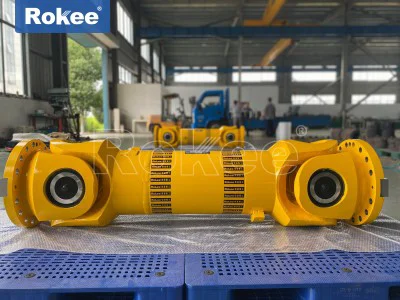
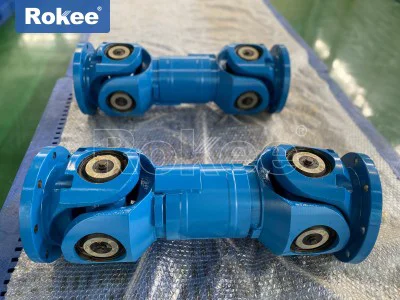
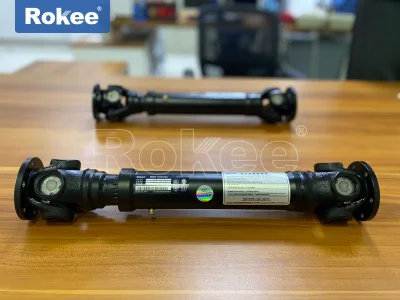
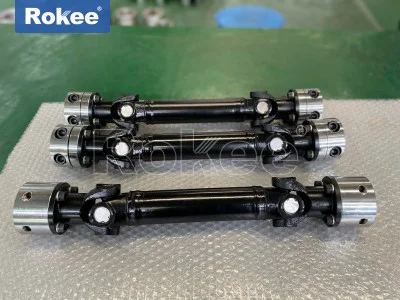
First, it is necessary to clarify the structural characteristics of cardan shaft couplings and the core requirements of sandwich panel production line for power transmission, which is the foundation for formulating the adaptation scheme. A typical cardan shaft coupling, also known as a universal joint coupling, is mainly composed of forks, a cross shaft, needle roller bearings or plain bearings, and connecting flanges or clamping devices. The forks are respectively fixed on the two drive shafts, the cross shaft is located at the center of the coupling and serves as the core component for torque transmission, and the bearings ensure that the cross shaft can rotate freely, reducing friction and wear during operation. The unique structural design of the cardan shaft coupling enables it to transmit torque and rotational motion between two shafts that are not on the same straight line, and has the ability to compensate for angular misalignment, parallel offset, and axial displacement, which is particularly suitable for the complex layout of sandwich panel production lines. Sandwich panel production lines are complex integrated systems involving multiple processes, including uncoiling of surface materials, roll forming, preheating, core material foaming or filling, lamination, curing, and cutting. Each process is driven by an independent power source, and the power needs to be accurately and stably transmitted to various executive components to ensure the synchronization and consistency of the entire production line operation. The core requirements of the production line for power transmission include stable torque transmission, strong adaptability to load changes, good compensation for installation and operation deviations, low noise and vibration, and long service life. These requirements directly determine the key indicators that the cardan shaft coupling needs to meet in the adaptation process, such as torque bearing capacity, angular compensation range, telescopic movement capacity, wear resistance, and fatigue resistance.
The differences in the specifications of sandwich panel production lines are mainly reflected in the differences in production capacity, panel size, core material properties, and process layout, which in turn lead to differences in the power transmission parameters and installation conditions of the production line, requiring the cardan shaft coupling to have corresponding adaptation capabilities. In terms of production capacity, small and medium-sized production lines are usually used for small-batch, multi-specification sandwich panel production, with low operating speed and small torque demand, while large-scale production lines are used for mass production, with high operating speed and large torque load, which requires the cardan shaft coupling to have different torque bearing capacities and speed adaptation ranges. In terms of panel size, the width of sandwich panels can range from 1 meter to 2.5 meters, and the thickness can range from 50 millimeters to 300 millimeters. The increase in panel width and thickness will lead to an increase in the load of the transmission system, requiring the cardan shaft coupling to have higher torque-bearing capacity and structural strength. At the same time, the change in panel size will also affect the layout of the production line, leading to changes in the offset angle and distance between the drive shaft and the driven shaft, which requires the cardan shaft coupling to have a flexible angle and axial compensation capacity. In terms of core material properties, sandwich panels with different core materials such as polyurethane (PU), polystyrene (EPS), and rock wool have different forming temperatures and pressure requirements. For example, PU sandwich panels require high-temperature foaming, which will cause thermal expansion of the production line equipment, leading to changes in the relative position of the shafts. The cardan shaft coupling needs to have good high-temperature resistance and thermal expansion compensation capacity to avoid performance degradation or damage under high-temperature conditions. In terms of process layout, some production lines adopt a linear layout, and the shafts of each process are relatively coaxial, with small offset angles; while some production lines adopt a non-linear layout due to space constraints or process requirements, resulting in large angular deviations between the shafts, which requires the cardan shaft coupling to have a larger angular compensation range to ensure stable power transmission.
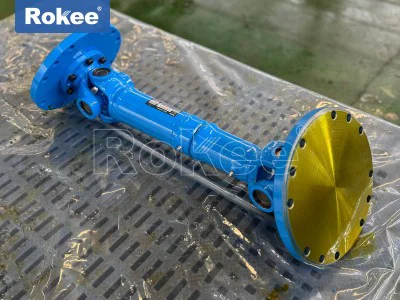
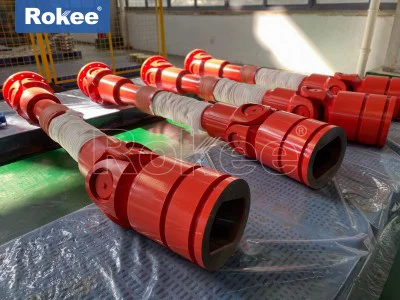
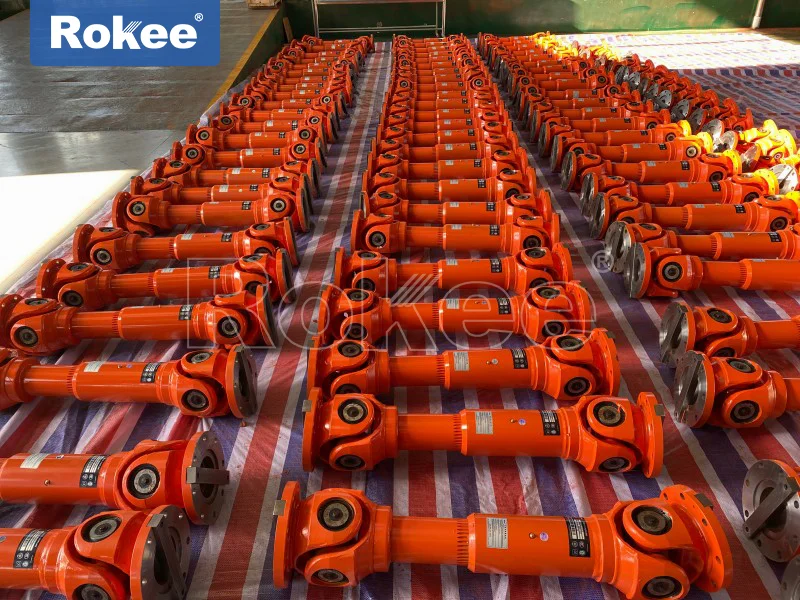
Against the background of the above differences in production line specifications, formulating a scientific and reasonable adaptation scheme for cardan shaft couplings needs to start from the aspects of structural optimization, parameter matching, installation adjustment, and maintenance management, so as to realize the comprehensive adaptation of cardan shaft couplings to different production lines. In terms of structural optimization, it is necessary to design cardan shaft couplings with different structural forms according to the characteristics of different production lines to improve their adaptation. For small and medium-sized production lines with small torque and small offset angle, a single-section cardan shaft coupling can be adopted. Its simple structure, small size, and low cost can meet the basic power transmission needs, and the angular compensation range of 3° to 15° can meet the installation deviation requirements of small-scale production lines. For large-scale production lines with large torque, high speed, and large offset angle, a double-section cardan shaft coupling should be adopted. By arranging two sections of universal joints at equal angles, the fluctuation of angular velocity during single-section transmission can be eliminated, realizing constant-speed transmission, and the angular compensation range can reach more than 25°, which can effectively compensate for the large angular deviation between the shafts of large-scale production lines. At the same time, the cross shaft and fork of the cardan shaft coupling should be made of high-strength alloy steel or heat-treated steel, and undergo precision machining and surface treatment to improve structural strength, wear resistance, and fatigue resistance, so as to adapt to the high-load and long-term continuous operation of large-scale production lines. In addition, for production lines with large axial displacement, a cardan shaft coupling with a spline connection can be adopted. The spline connection can realize telescopic movement within a certain range, compensate for axial displacement caused by equipment vibration or thermal expansion, and avoid damage to the coupling or transmission system due to axial stress.
Parameter matching is the key link in the adaptation scheme of cardan shaft couplings, which directly determines whether the coupling can stably transmit power and adapt to the operating characteristics of the production line. The core parameters of cardan shaft couplings that need to be matched include torque, speed, angular compensation angle, axial telescopic amount, and structural size. In terms of torque matching, it is necessary to calculate the maximum torque required by the production line according to the production capacity, panel size, and process requirements of the sandwich panel production line, and select a cardan shaft coupling with a torque-bearing capacity greater than the maximum operating torque, leaving a certain safety margin to avoid coupling damage caused by torque overload. For example, the maximum torque of small and medium-sized production lines is usually between 1000 N·m and 5000 N·m, while the maximum torque of large-scale production lines can reach more than 10000 N·m, which requires the selection of cardan shaft couplings with corresponding torque levels. In terms of speed matching, the cardan shaft coupling should have a speed range that matches the operating speed of the production line. The operating speed of small and medium-sized production lines is usually between 100 rpm and 500 rpm, while large-scale production lines can reach 1000 rpm or more. It is necessary to ensure that the cardan shaft coupling can operate stably within the corresponding speed range, without obvious vibration, noise, or performance degradation. In terms of angular compensation angle matching, the maximum angular deviation between the drive shaft and the driven shaft of the production line should be measured first, and a cardan shaft coupling with an angular compensation range greater than the maximum angular deviation should be selected. For production lines with linear layout, the angular deviation is usually less than 10°, and a single-section cardan shaft coupling can be selected; for production lines with non-linear layout, the angular deviation may reach 15° to 30°, and a double-section cardan shaft coupling is required. In terms of axial telescopic amount matching, the axial displacement of the production line caused by vibration, thermal expansion, or installation error should be considered, and a cardan shaft coupling with a corresponding telescopic amount should be selected to ensure that the coupling can freely stretch and contract during operation, avoiding axial stress. In terms of structural size matching, the length, flange size, and connection mode of the cardan shaft coupling should be matched with the installation space and connection form of the production line, ensuring that the coupling can be smoothly installed and connected to the drive shaft and driven shaft, without interference with other components of the production line.
Installation adjustment is an important guarantee for the adaptation of cardan shaft couplings to different production lines. Even if the structural design and parameter matching of the cardan shaft coupling are reasonable, improper installation and adjustment will lead to poor adaptation, affecting the transmission performance and service life of the coupling. In the installation process, first of all, it is necessary to ensure the cleanliness of the installation surface of the coupling, remove oil stains, rust, and debris to avoid affecting the connection accuracy and transmission stability. Secondly, the coaxiality and angular deviation between the drive shaft and the driven shaft should be adjusted according to the requirements of the production line. A protractor or coordinate measuring machine can be used to measure the angular deviation, and a laser alignment instrument can be used to adjust the coaxiality, ensuring that the deviation is within the allowable range of the cardan shaft coupling. For double-section cardan shaft couplings, it is necessary to ensure that the angles of the two universal joints are equal and the forks are in phase, so as to realize constant-speed transmission and avoid speed fluctuation and vibration. In addition, the tightening torque of the connecting bolts should be controlled during installation, and the bolts should be evenly tightened to avoid uneven stress on the coupling, which may lead to bolt loosening or coupling damage during operation. After installation, a trial run should be carried out to check the operation status of the cardan shaft coupling, including whether there is abnormal noise, vibration, overheating, or oil leakage. If any problems are found, timely adjustment and maintenance should be carried out to ensure that the coupling can operate stably.
Maintenance management is an important part of the adaptation scheme of cardan shaft couplings, which can effectively extend the service life of the coupling and ensure its long-term stable adaptation to different production lines. The maintenance of cardan shaft couplings mainly includes regular lubrication, inspection, and replacement of wearing parts. In terms of lubrication, according to the operating conditions of the production line and the requirements of the coupling, an appropriate lubricant should be selected, and regular lubrication should be carried out. The lubrication frequency should be determined according to the operating speed and load of the production line. For high-speed and high-load production lines, the lubrication frequency should be increased to ensure that the bearings and other moving parts are fully lubricated, reducing friction and wear. At the same time, the lubrication system should be checked regularly to ensure that there is no oil leakage, and the lubricant should be replaced in time when it deteriorates. In terms of regular inspection, the operation status of the cardan shaft coupling should be checked regularly, including whether the forks, cross shaft, and bearings are worn, cracked, or deformed, whether the connecting bolts are loose, and whether the spline connection is smooth. For worn or damaged parts, they should be replaced in time to avoid further damage to the coupling and transmission system. In addition, according to the changes in the specifications of the production line (such as adjusting the panel size, production capacity, etc.), the cardan shaft coupling should be adjusted or replaced in time to ensure that it can always adapt to the new operating conditions of the production line. For example, when the production line increases the panel thickness and load, the cardan shaft coupling with higher torque-bearing capacity should be replaced; when the layout of the production line is adjusted and the angular deviation increases, the double-section cardan shaft coupling should be replaced to meet the new adaptation requirements.
In practical application, the adaptation scheme of cardan shaft couplings for different specifications of sandwich panel production lines needs to be flexibly adjusted according to the actual situation of the production line, and the combination of theoretical design and practical operation should be emphasized to ensure the rationality and feasibility of the scheme. Taking a small and medium-sized PU sandwich panel production line as an example, the production line is mainly used to produce sandwich panels with a width of 1.2 meters and a thickness of 50-100 millimeters, with an operating speed of 200-300 rpm and a maximum torque of 3000 N·m. The production line adopts a linear layout, and the angular deviation between the shafts is less than 8°. For this production line, a single-section cardan shaft coupling with a torque-bearing capacity of 4000 N·m, an angular compensation range of 0°-15°, and a spline telescopic amount of 50-100 mm can be selected. The coupling is made of medium-strength alloy steel, with simple structure and low cost, which can meet the power transmission needs of the production line. During installation, the coaxiality of the shafts is adjusted by laser alignment, and regular lubrication is carried out every 100 hours of operation. The wearing parts such as bearings are inspected every 500 hours, which ensures the stable operation of the coupling and the production line. For a large-scale rock wool sandwich panel production line, the production line is used to produce sandwich panels with a width of 2.4 meters and a thickness of 150-300 millimeters, with an operating speed of 500-800 rpm and a maximum torque of 12000 N·m. The production line adopts a non-linear layout, and the angular deviation between the shafts is about 20°. For this production line, a double-section cardan shaft coupling with a torque-bearing capacity of 15000 N·m, an angular compensation range of 0°-30°, and a spline telescopic amount of 100-150 mm is selected. The cross shaft and fork of the coupling are made of high-strength heat-treated steel, with high structural strength and wear resistance. During installation, the angles of the two universal joints are adjusted to be equal, and the forks are kept in phase to realize constant-speed transmission. Regular lubrication is carried out every 50 hours of operation, and comprehensive inspection is carried out every 300 hours, which effectively ensures the stable operation of the coupling under high load and high speed, and meets the production needs of the large-scale production line.
In addition, with the continuous development of sandwich panel production technology, the specifications of production lines are becoming more and more diverse, and the requirements for the adaptability of cardan shaft couplings are also getting higher and higher. In the future, the adaptation scheme of cardan shaft couplings should be combined with intelligent technology to realize real-time monitoring and adaptive adjustment of the coupling's operating status. For example, sensors are installed on the cardan shaft coupling to monitor parameters such as torque, speed, vibration, and temperature in real time. Through the data analysis system, the operating status of the coupling is judged, and the lubrication frequency, installation deviation, and other parameters are adjusted in time to improve the adaptation performance of the coupling. At the same time, the application of new materials and new processes should be strengthened. For example, the use of composite materials with high strength, light weight, and high temperature resistance to manufacture cardan shaft couplings can reduce the weight of the coupling, improve its wear resistance and high temperature resistance, and further expand its adaptation range to different specifications of production lines. In addition, the modular design of cardan shaft couplings can be carried out, and different modules can be combined according to the needs of different production lines, so as to quickly adapt to the changes of production line specifications, reduce the cost of replacement and adjustment, and improve the efficiency of production line transformation.
In conclusion, the cardan shaft coupling, as a key power transmission component of sandwich panel production lines, its adaptation to different specifications of production lines directly affects the stable operation, production efficiency, and product quality of the production line. The adaptation scheme of cardan shaft couplings should be formulated from the aspects of structural optimization, parameter matching, installation adjustment, and maintenance management, according to the differences in production capacity, panel size, core material properties, and process layout of different production lines. Through scientific structural design, accurate parameter matching, standardized installation adjustment, and regular maintenance management, the cardan shaft coupling can be ensured to stably match production lines of different specifications, realize efficient and reliable power transmission, and provide strong support for the development of the sandwich panel industry. With the continuous progress of technology, the adaptation scheme of cardan shaft couplings will be more intelligent and flexible, better meeting the diverse needs of sandwich panel production lines, and promoting the sustainable development of the industry.