Dynamic Performance Test And Analysis Of Universal Shaft Coupling In PIR Sandwich Panel Production Line

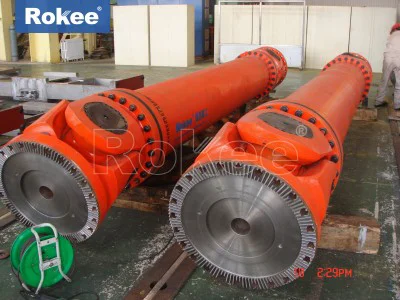
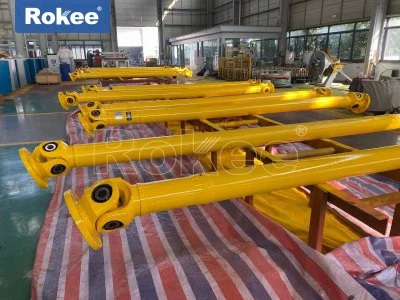
In modern industrial production, the PIR sandwich panel production line is widely recognized for its high efficiency, energy-saving characteristics, and the excellent thermal insulation performance of its products, which are extensively applied in construction, cold storage, and industrial insulation fields. As a core transmission component in the PIR sandwich panel production line, the universal shaft coupling undertakes the key task of transmitting torque and rotational motion between different equipment units, such as the extruder, conveyor, and cutting machine. Due to the complex working environment of the PIR sandwich panel production line, the universal shaft coupling is often subjected to variable loads, speed fluctuations, and angular deviations, which may lead to performance degradation, vibration, noise, or even sudden failure over long-term operation. These problems not only affect the stability and continuity of the production line but also increase maintenance costs and reduce production efficiency. Therefore, conducting in-depth dynamic performance tests and analysis on the universal shaft coupling in the PIR sandwich panel production line is of great practical significance for ensuring the stable operation of the production line, extending the service life of the coupling, and optimizing the overall performance of the transmission system.
The dynamic performance of the universal shaft coupling refers to its comprehensive performance in transmitting torque and motion under dynamic working conditions, including torque transmission accuracy, vibration characteristics, fatigue resistance, speed adaptation, and angular deviation compensation capability. Unlike static performance, dynamic performance is more closely related to the actual working state of the production line, as it directly reflects the coupling's ability to adapt to the dynamic changes of the production process. In the PIR sandwich panel production process, the production line needs to adjust the operating parameters according to different product specifications, resulting in frequent changes in the load and speed of the transmission system. At the same time, due to the installation errors of equipment, the settlement of the production line foundation, and the wear of mechanical components, the connected shafts of the universal shaft coupling often have a certain angular deviation and axial displacement. These factors put higher requirements on the dynamic performance of the universal shaft coupling. Therefore, it is necessary to design a scientific and reasonable dynamic performance test scheme, simulate the actual working conditions of the PIR sandwich panel production line, and accurately measure and analyze the key dynamic performance indicators of the universal shaft coupling.
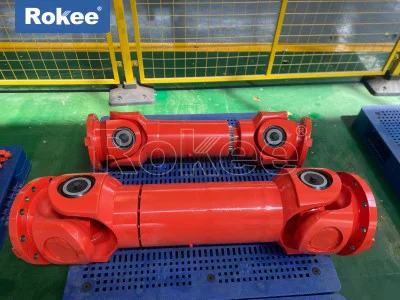
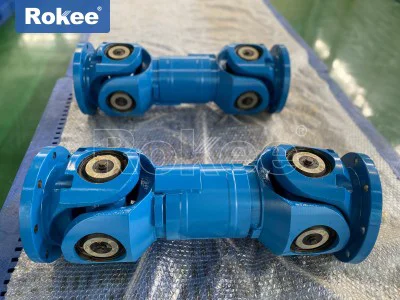
Before conducting the dynamic performance test, it is necessary to carry out sufficient preparation work, including the selection of test samples, the construction of the test platform, the installation and calibration of test equipment, and the formulation of test procedures. The test samples are selected according to the universal shaft coupling models commonly used in the PIR sandwich panel production line, ensuring that the structural parameters, material properties, and working parameters of the samples are consistent with the actual application scenarios. The material of the universal shaft coupling is usually alloy steel, which has good mechanical properties and wear resistance to meet the requirements of high torque transmission and long-term operation. The test platform is built by simulating the actual layout of the PIR sandwich panel production line, including the driving device, load device, universal shaft coupling installation seat, and related auxiliary equipment. The driving device adopts a variable frequency motor, which can adjust the speed within a certain range to simulate the speed changes in the actual production process. The load device uses an electromagnetic brake to apply different loads to the coupling, simulating the variable load conditions caused by the extrusion, conveying, and cutting of PIR sandwich panels. The installation of the universal shaft coupling strictly follows the technical requirements, ensuring that the coaxiality of the connected shafts is within the allowable range, and the angular deviation can be adjusted according to the test needs.
The test equipment used in the dynamic performance test mainly includes torque sensors, speed sensors, vibration sensors, temperature sensors, data acquisition systems, and computer analysis software. The torque sensor is installed between the driving device and the universal shaft coupling to measure the real-time torque transmitted by the coupling, with a measurement range covering the rated torque and maximum overload torque of the coupling, ensuring the accuracy and reliability of the torque data. The speed sensor is installed on the input and output shafts of the coupling to measure the rotational speed of the two shafts, so as to analyze the speed transmission accuracy and speed fluctuation of the coupling. The vibration sensor is attached to the shell and end face of the coupling to collect the vibration acceleration, vibration velocity, and vibration displacement of the coupling under different working conditions, which is used to evaluate the vibration characteristics of the coupling. The temperature sensor is installed on the bearing and key transmission parts of the coupling to monitor the temperature rise during the operation of the coupling, so as to judge the friction state and lubrication effect of the coupling. The data acquisition system is responsible for collecting, converting, and storing the signals from various sensors, and transmitting the data to the computer analysis software in real time. The computer analysis software is used to process and analyze the collected data, including data filtering, curve fitting, spectrum analysis, and statistical calculation, so as to obtain the key dynamic performance indicators of the universal shaft coupling.
The test process is carried out in accordance with the pre formulated test procedures, and the test conditions are set to simulate the actual working conditions of the PIR sandwich panel production line as much as possible. The test is divided into several working conditions, including no-load test, rated load test, overload test, variable speed test, and angular deviation test. In the no-load test, the driving device is started, and the speed is adjusted from the minimum to the maximum within the rated speed range of the coupling. The speed, vibration, and temperature data of the coupling are collected and recorded to check whether the coupling operates smoothly under no-load conditions, and whether there are abnormal noises or vibrations. In the rated load test, the load device is adjusted to apply the rated load to the coupling, and the speed is maintained at the rated speed. The torque, speed, vibration, temperature, and other data are collected continuously for a certain period of time to analyze the torque transmission accuracy, vibration stability, and temperature rise of the coupling under rated working conditions. In the overload test, the load is gradually increased to 120%, 130%, and 150% of the rated load, and the operation state of the coupling is observed. The torque and vibration data are recorded to evaluate the overload capacity and reliability of the coupling. In the variable speed test, the load is maintained at the rated load, and the speed is continuously adjusted within the rated speed range. The speed fluctuation and torque change data are collected to analyze the adaptability of the coupling to speed changes. In the angular deviation test, the angular deviation between the input and output shafts of the coupling is adjusted to 5°, 10°, 15°, and 20° respectively, and the rated load and rated speed are maintained. The torque transmission accuracy and vibration data are collected to evaluate the angular deviation compensation capability of the coupling.
During the test, strict quality control and safety protection measures are adopted to ensure the smooth progress of the test. The test equipment is checked and calibrated before each test to ensure the accuracy of the measurement data. During the test, the operation state of the coupling and test equipment is observed in real time, and if abnormal phenomena such as excessive vibration, abnormal noise, or excessive temperature rise are found, the test is stopped immediately, and the cause is checked and handled. After the test, the test equipment is shut down in accordance with the specifications, and the test site is sorted out. The collected test data is sorted out and verified to eliminate invalid data and ensure the authenticity and reliability of the data. The data processing and analysis are carried out by using computer analysis software, and the dynamic performance indicators of the universal shaft coupling are calculated, including torque transmission error, speed fluctuation rate, vibration acceleration peak, temperature rise value, overload capacity, and angular deviation compensation rate.
The analysis of the test results focuses on the key dynamic performance indicators of the universal shaft coupling, and combines the actual working requirements of the PIR sandwich panel production line to evaluate the performance of the coupling. The torque transmission error is an important indicator reflecting the torque transmission accuracy of the coupling. The test results show that under the rated load and rated speed, the torque transmission error of the universal shaft coupling is within 2%, which meets the requirements of the PIR sandwich panel production line for torque transmission accuracy. When the load increases to 150% of the rated load, the torque transmission error increases to about 3.5%, which is still within the allowable range, indicating that the coupling has good torque transmission stability under overload conditions. The speed fluctuation rate reflects the stability of the coupling in transmitting rotational motion. Under the rated working conditions, the speed fluctuation rate of the coupling is less than 1%, which shows that the coupling can maintain stable speed transmission, ensure the consistency of the PIR sandwich panel production process, and avoid the quality problems caused by speed fluctuations. The vibration characteristics of the coupling are closely related to the noise and service life of the production line. The test results show that under the rated working conditions, the vibration acceleration peak of the coupling is less than 2.5 m/s², and the vibration frequency is mainly concentrated in the low-frequency range, which will not cause obvious noise and vibration of the production line. When the angular deviation increases to 20%, the vibration acceleration peak increases to about 4.0 m/s², but it is still within the safe range, indicating that the coupling has good angular deviation compensation capability and can adapt to the installation errors and position changes of the production line.
The temperature rise of the universal shaft coupling during operation is an important indicator reflecting its friction state and lubrication effect. The test results show that under the rated load and rated speed, the temperature rise of the coupling after continuous operation for 4 hours is less than 35℃, which indicates that the lubrication system of the coupling is effective, and the friction between the components is within the normal range. When the overload reaches 150% and the operation time is extended to 6 hours, the temperature rise increases to about 45℃, which is still within the allowable temperature range of the coupling material, indicating that the coupling has good high-temperature resistance and can adapt to the long-term continuous operation of the PIR sandwich panel production line. The overload capacity test shows that the universal shaft coupling can withstand 150% of the rated load for a short time (30 minutes) without obvious deformation or damage, and can return to normal operation after the load is reduced to the rated load, which meets the requirements of the PIR sandwich panel production line for occasional overload during the production process. The angular deviation compensation test shows that when the angular deviation between the input and output shafts is within 20°, the coupling can still maintain stable torque transmission, and the torque transmission error and vibration amplitude do not increase significantly, which is suitable for the installation errors and position changes of the production line caused by long-term operation.
Based on the test results, it is found that the universal shaft coupling has good dynamic performance in the PIR sandwich panel production line, which can basically meet the requirements of the production line for torque transmission, speed stability, and angular deviation compensation. However, there are still some problems that need to be optimized. For example, when the angular deviation exceeds 20%, the vibration amplitude of the coupling increases significantly, which may affect the stability of the production line; in the long-term overload operation, the temperature rise of the coupling is relatively obvious, which may accelerate the wear of the components and reduce the service life of the coupling. In view of these problems, corresponding optimization suggestions are put forward. First, the structure of the universal shaft coupling can be optimized, such as increasing the stiffness of the cross shaft and improving the wear resistance of the bearing, so as to enhance the angular deviation compensation capability and reduce the vibration amplitude under large angular deviation. Second, the lubrication system of the coupling can be improved, using high-temperature resistant and wear-resistant lubricating oil, and increasing the lubrication frequency, so as to reduce the friction between the components and reduce the temperature rise during operation. Third, in the actual installation and use process, the coaxiality of the connected shafts should be adjusted as much as possible to reduce the angular deviation, and the load of the production line should be controlled to avoid long-term overload operation, so as to extend the service life of the coupling.
In addition, the dynamic performance of the universal shaft coupling is also affected by many factors, such as the material properties of the coupling, the manufacturing precision, the installation quality, and the working environment. Therefore, in the production and application of the universal shaft coupling, it is necessary to strictly control the material selection and manufacturing process to ensure the manufacturing precision and mechanical properties of the coupling; pay attention to the installation quality, ensure the coaxiality of the connected shafts, and reduce the installation errors; strengthen the daily maintenance and inspection of the coupling, regularly check the lubrication state, wear degree, and connection tightness of the coupling, and timely handle the potential faults, so as to ensure the stable operation of the coupling and the production line. At the same time, with the continuous development of the PIR sandwich panel production technology, the production line is developing towards higher speed, higher efficiency, and more automation, which puts forward higher requirements on the dynamic performance of the universal shaft coupling. Therefore, it is necessary to carry out continuous research and innovation on the dynamic performance of the universal shaft coupling, optimize the structure design and material selection, and develop a universal shaft coupling with better dynamic performance to adapt to the development needs of the PIR sandwich panel production line.
In conclusion, the dynamic performance test and analysis of the universal shaft coupling in the PIR sandwich panel production line is an important means to ensure the stable operation of the production line and improve the production efficiency. Through the scientific test scheme and accurate data analysis, the key dynamic performance indicators of the universal shaft coupling are obtained, which provides a reliable basis for the selection, use, and optimization of the coupling. The test results show that the universal shaft coupling used in the PIR sandwich panel production line has good torque transmission accuracy, speed stability, vibration characteristics, overload capacity, and angular deviation compensation capability, which can meet the basic needs of the production line. However, there are still some areas that need to be optimized. Through the structural optimization, lubrication improvement, and standardized installation and maintenance, the dynamic performance of the universal shaft coupling can be further improved, which will help to promote the stable and efficient operation of the PIR sandwich panel production line, reduce the maintenance cost, and improve the economic benefits of the enterprise. In the future, with the continuous progress of testing technology and material science, the dynamic performance test and analysis of the universal shaft coupling will be more accurate and comprehensive, providing stronger support for the development of the PIR sandwich panel industry.