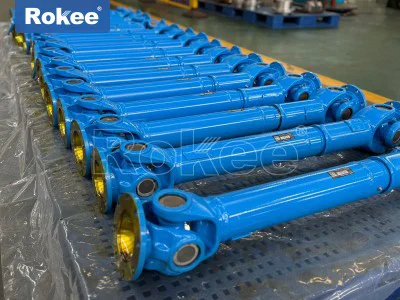
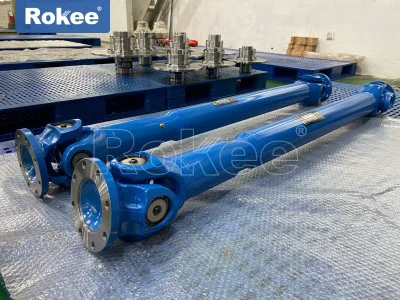
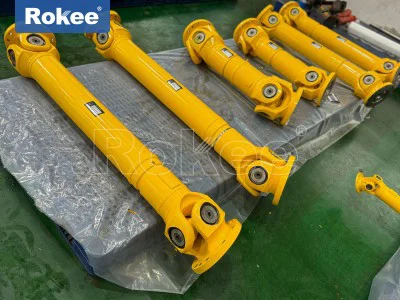
Low Torque Telescopic Universal Shaft
In the field of mechanical power transmission, the low torque telescopic universal shaft is a specialized component designed to address the needs of systems requiring flexible rotation transfer with limited torque demands. Unlike heavy-duty universal shafts that handle high load conditions, this type of shaft prioritizes precision, adaptability, and smooth operation in low torque scenarios, making it indispensable in a wide range of light to medium-duty industrial and mechanical applications. Its unique combination of telescopic functionality and universal joint design allows it to accommodate misalignments between connected shafts while maintaining efficient power transmission, even when the distance between the driving and driven components varies during operation.
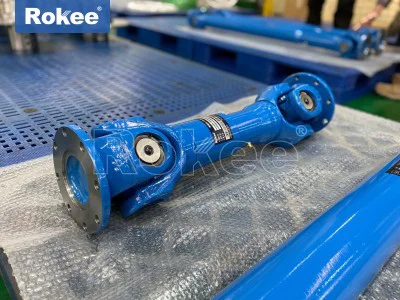
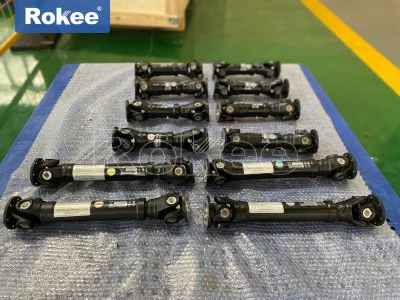
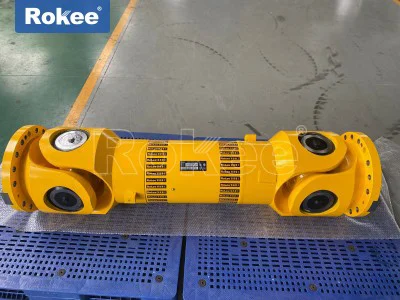
The core structure of a low torque telescopic universal shaft consists of three key components: universal joints, a telescopic shaft assembly, and connecting elements, each playing a critical role in its overall functionality. Universal joints, the heart of the shaft, enable rotation transfer between shafts that are not perfectly aligned, accommodating both angular and parallel misalignments. For low torque applications, these joints are typically designed with a simple cross-shaft structure, featuring four bearings that allow smooth rotation while minimizing friction and wear. The bearings used in these universal joints are often precision-manufactured to ensure low rotational resistance, which is crucial for maintaining efficiency in systems with limited torque output. Unlike high-torque joints that require heavy-duty bearings to withstand extreme loads, low torque universal joints prioritize compactness and precision, making them suitable for applications where space is constrained and smooth operation is paramount.
The telescopic shaft assembly is responsible for adjusting the length of the universal shaft, allowing it to adapt to changes in the distance between the driving and driven shafts. This assembly usually comprises an outer sleeve and an inner shaft, with a sliding mechanism that enables axial movement while maintaining rotational integrity. The sliding interface between the outer sleeve and inner shaft is often designed with splines, which provide a secure connection that prevents relative rotation between the two components while allowing smooth axial movement. Spline profiles for low torque applications are typically involute or parallel-sided, chosen for their ability to transmit torque evenly and reduce wear. In some cases, square or hexagonal profiles may be used for simpler applications, offering a cost-effective solution without compromising performance in low torque scenarios. To further enhance the performance of the telescopic assembly, the sliding surfaces are often treated with specialized coatings or lubricants to minimize friction and prevent corrosion, ensuring long-term reliability.
Connecting elements, such as flanges or yokes, are used to attach the low torque telescopic universal shaft to the driving and driven components of the transmission system. These elements are designed to be lightweight yet durable, matching the low torque requirements of the shaft while ensuring a secure connection. Flange connections are commonly used in applications where precision alignment is needed, as they provide a rigid and stable attachment that minimizes vibration. Yoke connections, on the other hand, are more flexible and are often used in systems where angular misalignment is more pronounced. The design of these connecting elements is tailored to the specific application, with considerations given to the size of the shafts, the type of misalignment, and the operating conditions, ensuring that the universal shaft integrates seamlessly with the rest of the transmission system.
The working principle of a low torque telescopic universal shaft revolves around the coordinated operation of its universal joints and telescopic assembly. When the driving shaft rotates, the universal joints transfer this rotation to the telescopic shaft assembly, which in turn transmits it to the driven shaft. The universal joints accommodate angular misalignment by allowing the cross-shaft to rotate within the bearings, ensuring that rotation is transferred smoothly even when the driving and driven shafts are not perfectly aligned. The telescopic assembly, meanwhile, adjusts to changes in axial distance by allowing the inner shaft to slide within the outer sleeve, ensuring that the shaft remains properly engaged with both the driving and driven components. This combination of flexibility and adaptability makes the low torque telescopic universal shaft ideal for applications where shaft misalignment and axial movement are common, such as in precision machinery, automotive auxiliary systems, and light industrial equipment.
One of the key considerations in the design and manufacturing of low torque telescopic universal shafts is material selection, which directly impacts their performance, durability, and cost. Since these shafts operate under low torque conditions, they do not require the high-strength alloys used in heavy-duty shafts, but instead prioritize materials that offer a balance of strength, precision, and corrosion resistance. Common materials used for the telescopic shaft assembly include carbon steel, alloy steel, and aluminum alloys. Carbon steel is a cost-effective option for basic applications, offering sufficient strength and durability for low torque scenarios. Alloy steel, however, provides enhanced mechanical properties, such as improved wear resistance and fatigue strength, making it suitable for applications that require longer service life or operate under slightly more demanding conditions. Aluminum alloys are used in applications where weight reduction is a priority, such as in automotive and aerospace auxiliary systems, as they offer a lightweight solution without compromising structural integrity.
The universal joints and connecting elements are also manufactured from materials that complement the telescopic shaft, ensuring compatibility and overall system reliability. The cross-shaft of the universal joint is often made from hardened alloy steel to resist wear, while the bearings may be constructed from stainless steel or other corrosion-resistant materials to extend service life. Connecting flanges and yokes are typically made from the same material as the telescopic shaft, ensuring consistent mechanical properties and reducing the risk of stress concentrations at the connection points. In addition to material selection, manufacturing processes also play a critical role in the performance of low torque telescopic universal shafts. Precision machining techniques, such as turning, milling, and grinding, are used to ensure tight tolerances, which is essential for maintaining smooth operation and minimizing vibration. Heat treatment processes, such as annealing and quenching, may also be applied to enhance the mechanical properties of the components, improving their strength and wear resistance.
Low torque telescopic universal shafts find applications in a wide range of industries, each with unique requirements that the shaft is designed to meet. In the automotive industry, for example, these shafts are used in auxiliary systems such as power steering, air conditioning compressors, and windshield wiper motors. In these applications, the shaft must operate smoothly with minimal vibration, as any irregularities can affect the performance of the auxiliary system and impact the overall driving experience. The telescopic functionality is particularly useful in automotive applications, as it allows the shaft to adapt to the movement of engine components during operation, such as those caused by thermal expansion or suspension travel. Additionally, the lightweight design of these shafts helps to reduce the overall weight of the vehicle, contributing to improved fuel efficiency.
The precision machinery industry is another major user of low torque telescopic universal shafts, where they are used in equipment such as CNC machines, robotics, and textile machinery. In CNC machines, for example, the shaft is used to transfer rotation from the motor to the spindle or other moving components, requiring high precision and smooth operation to ensure accurate machining. The ability to accommodate misalignments is crucial in these applications, as even small deviations can affect the quality of the finished product. In robotics, low torque telescopic universal shafts are used in joint mechanisms, allowing for flexible movement while maintaining precise control. The compact design of these shafts is particularly beneficial in robotics, where space is often limited, and the lightweight construction helps to reduce the load on the robot's motors and actuators.
Light industrial equipment, such as packaging machines, conveyor systems, and small pumps, also relies on low torque telescopic universal shafts for power transmission. In packaging machines, the shaft must operate at consistent speeds with minimal vibration to ensure that products are packaged accurately and efficiently. The telescopic functionality allows the shaft to adapt to changes in the position of the packaging components, ensuring continuous operation. In conveyor systems, the shaft is used to connect motors to rollers, accommodating misalignments that may occur due to the length of the conveyor or minor adjustments in the system. The low maintenance requirements of these shafts make them ideal for industrial applications, where downtime must be minimized to maintain productivity.
Aerospace and defense applications also utilize low torque telescopic universal shafts, particularly in auxiliary systems of aircraft and spacecraft. In these applications, the shaft must meet strict requirements for reliability, weight, and performance, as failure can have serious consequences. The lightweight design of aluminum alloy shafts is particularly advantageous in aerospace applications, where weight reduction is critical for fuel efficiency and overall performance. The ability to withstand extreme operating conditions, such as high temperatures and pressure changes, is also essential, requiring the use of specialized materials and manufacturing processes to ensure the shaft's integrity.
Proper installation and maintenance are essential for optimizing the performance and extending the service life of low torque telescopic universal shafts. During installation, it is crucial to ensure that the shaft is properly aligned, as excessive misalignment can lead to increased friction, vibration, and premature wear. The alignment of the driving and driven shafts should be checked using precision tools such as laser alignment systems or dial indicators, ensuring that angular and parallel misalignments are within the recommended limits. For general applications, angular misalignment should not exceed 1 degree, while precision applications may require misalignment to be limited to 0.5 degrees or less. Additionally, the telescopic assembly should be checked to ensure that it slides smoothly without binding, and that the splines are properly lubricated to minimize friction.
Lubrication is a critical aspect of maintenance for low torque telescopic universal shafts, as it helps to reduce friction between moving components, prevent corrosion, and extend service life. The type of lubricant used should be selected based on the operating conditions, such as temperature, speed, and environment. For most low torque applications, a high-quality lithium-based grease is suitable, offering good lubrication properties and resistance to oxidation. In high-temperature environments, however, a bentonite-based grease may be more appropriate, as it can withstand higher temperatures without breaking down. The lubrication interval depends on the operating conditions, with general applications requiring lubrication every 500 to 1000 operating hours. In harsh environments, such as those with high levels of dust or moisture, the lubrication interval should be shortened to ensure that the components remain properly protected.
Regular inspection is also necessary to identify potential issues before they lead to failure. During inspection, the universal joints should be checked for signs of wear, such as excessive play or noise, which may indicate that the bearings are worn and need to be replaced. The telescopic assembly should be inspected for spline wear, corrosion, or damage, and the connecting elements should be checked to ensure that bolts and fasteners are properly tightened. Additionally, the shaft should be checked for vibration, which may indicate misalignment or worn components. Any issues identified during inspection should be addressed promptly to prevent further damage to the shaft or the rest of the transmission system.
When replacing components of a low torque telescopic universal shaft, it is important to use parts that are compatible with the original design, ensuring that they meet the same precision and performance requirements. Using substandard parts can lead to increased vibration, reduced efficiency, and premature failure. Additionally, the replacement process should follow the same installation guidelines as the original shaft, including proper alignment and lubrication, to ensure that the shaft operates correctly.
In conclusion, the low torque telescopic universal shaft is a versatile and essential component in mechanical power transmission systems, offering precision, adaptability, and smooth operation for low torque applications. Its unique structure, combining universal joints and a telescopic assembly, allows it to accommodate misalignments and axial movement, making it suitable for a wide range of industries, including automotive, precision machinery, light industry, and aerospace. Material selection and manufacturing processes play a critical role in determining the performance and durability of these shafts, with a focus on balancing strength, precision, and cost. Proper installation, lubrication, and regular inspection are essential for optimizing performance and extending service life, ensuring that the shaft contributes to the reliability and efficiency of the entire transmission system. As technology continues to advance, the design and manufacturing of low torque telescopic universal shafts are likely to evolve, with improvements in materials, precision machining, and lubrication technologies further enhancing their performance and expanding their range of applications.