Single Joint Universal Shaft
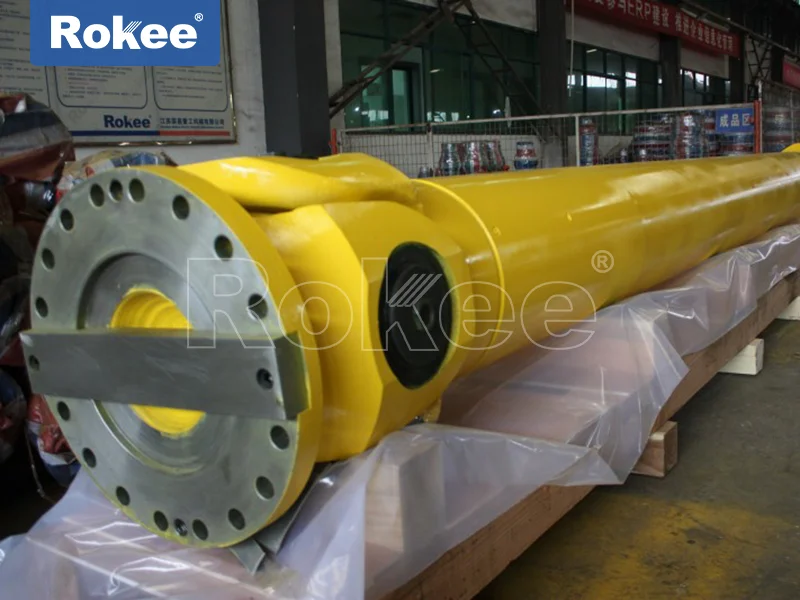
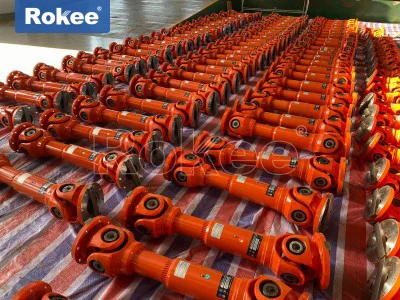
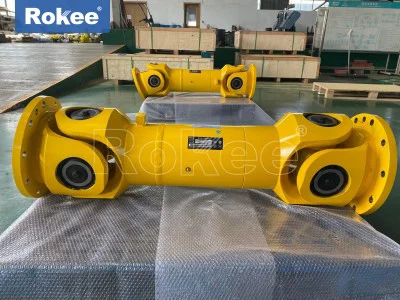
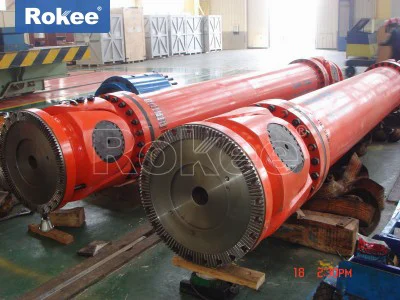
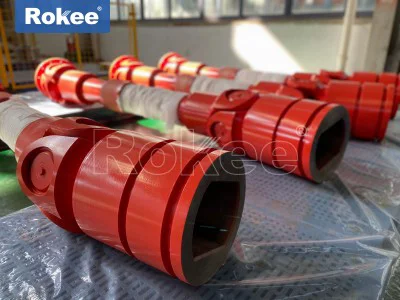
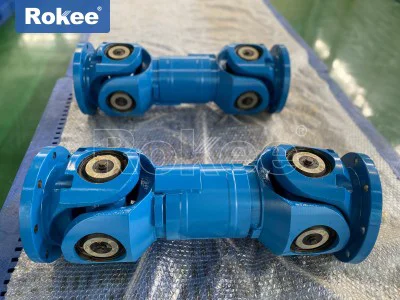
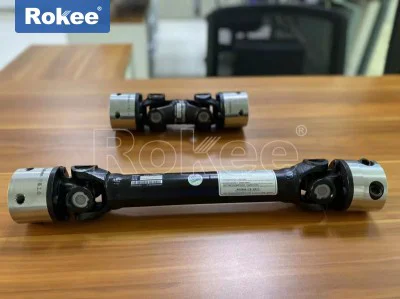
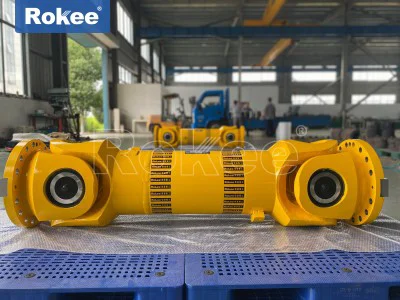
A single joint universal shaft, often referred to as a single u-joint or single cardan joint, is a fundamental mechanical component designed to transmit rotational motion and torque between two shafts that are not aligned on the same axis. Unlike double joint configurations that use an intermediate shaft to enhance flexibility, the single joint universal shaft features a compact, one-piece design with a single bending point, making it a versatile solution for numerous industrial and automotive applications where moderate angular misalignment needs to be accommodated. Its simplicity, reliability, and cost-effectiveness have solidified its position as an indispensable element in mechanical transmission systems, bridging the gap between misaligned shafts while ensuring efficient power transfer. This component operates on the principle of allowing angular movement in two perpendicular planes, enabling smooth torque delivery even when the connected shafts shift positions due to mechanical vibration, load changes, or structural adjustments.
The core structure of a single joint universal shaft is relatively straightforward, consisting of three main components: two yokes (also known as forks) and a cross-shaped connecting element called a spider or cross shaft. The yokes are typically attached to the ends of the two shafts that require connection, with each yoke featuring two arms oriented at 90 degrees to one another. The spider fits between these yokes, with its four arms (one extending in each direction) inserting into the openings of the yoke arms. Bearings are installed at the interface between the spider arms and the yoke openings to reduce friction during rotation, ensuring smooth movement even under load. These bearings are available in two primary types: plain bearings and needle roller bearings. Plain bearings are well-suited for low-speed applications, as they can withstand high torque, shock loads, and frequent motion reversals, making them ideal for heavy-duty industrial machinery that operates at moderate rotational speeds. Needle roller bearings, by contrast, are designed for high-speed operations, offering minimal friction and enhanced durability in scenarios where shafts rotate at thousands of revolutions per minute, such as in automotive drivelines or precision industrial equipment.
The design of the single joint universal shaft allows it to accommodate angular misalignment between the two connected shafts, with typical operating angles ranging from 5 degrees to 45 degrees, depending on the specific application and component dimensions. Some specialized designs can handle misalignment angles of up to 45 degrees, though standard models often operate most efficiently at angles between 25 degrees and 37 degrees. Unlike double joint universal shafts, which can compensate for both angular misalignment and parallel offset, the single joint variant is primarily designed to address angular misalignment, making it most suitable for short-distance torque transmission scenarios where parallel shaft offset is minimal. This limitation is balanced by its compact size and lightweight construction, which make it easy to install in space-constrained environments, such as within the engine bays of vehicles or the tight confines of industrial machinery.
The selection of materials for a single joint universal shaft is critical to its performance, durability, and suitability for specific operating conditions. The most commonly used materials include carbon steel, alloy steel, stainless steel, and in some cases, high-performance plastics. Carbon steel, such as 45# steel, is widely used for standard applications due to its excellent strength-to-weight ratio and cost-effectiveness, making it ideal for light to medium-duty torque transmission. Alloy steel, such as 42CrMo, is preferred for heavy-duty applications, as it offers enhanced tensile strength, fatigue resistance, and the ability to withstand high temperatures and extreme loads. Stainless steel is used in environments where corrosion resistance is essential, such as marine applications, food processing equipment, or chemical plants, as it prevents rust and degradation caused by exposure to moisture, chemicals, or harsh weather conditions. High-performance plastics are occasionally used for lightweight, low-torque applications, as they offer electrical and magnetic insulation, reduced noise, and lower maintenance requirements, though they are not suitable for heavy-duty or high-temperature operations.
The manufacturing process of a single joint universal shaft involves several key steps, each designed to ensure precision, durability, and consistent performance. The process typically begins with raw material selection, where the appropriate metal or plastic is chosen based on the intended application. The raw materials are then cut to the required size using techniques such as sawing or laser cutting, followed by forging to shape the yokes and spider into their approximate forms. Forging enhances the material’s structural integrity by aligning its grain structure, improving strength and fatigue resistance. After forging, the components undergo rough machining to remove excess material and refine their shape, using processes such as turning, milling, or drilling. Heat treatment is then applied to further enhance the material’s properties; this may include annealing to reduce stress, quenching to increase hardness, and tempering to improve toughness. Precision machining follows, where the components are finished to tight tolerances using computer numerical control (CNC) machines, ensuring that the yoke openings, spider arms, and bearing seats are perfectly aligned and sized for optimal performance. The final steps include cleaning to remove debris and contaminants, assembly of the components (including the installation of bearings and seals), and testing to verify torque capacity, rotational smoothness, and resistance to misalignment.
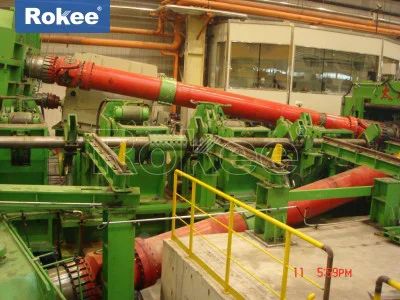
Single joint universal shafts are used in a wide range of applications across various industries, thanks to their versatility, compact design, and reliable performance. In the automotive industry, they are a key component of drivelines, connecting the transmission to the drive shaft in rear-wheel-drive vehicles and serving as part of the steering system in some models. They also find use in auxiliary systems, such as power steering pumps and air conditioning compressors, where they transmit torque between misaligned shafts. In industrial machinery, single joint universal shafts are used in conveyors, where they connect the motor to the conveyor belt drive, accommodating small angular misalignments caused by belt tension or structural movement. They are also used in centrifugal fans and pumps, metal forming machinery, agricultural equipment, and construction machinery, such as excavators and bulldozers, where they handle moderate torque loads and compensate for misalignment between moving components. Other applications include marine equipment, where stainless steel variants are used to connect engines to propellers, and robotics, where lightweight models are used in articulated arms to transmit motion between joints.
Despite their many advantages, single joint universal shafts have certain limitations that must be considered when selecting them for a specific application. One of the primary limitations is their non-uniform rotational speed, which occurs when the shafts are operating at an angle. This phenomenon, known as angular velocity fluctuation, causes the output shaft to rotate at a slightly different speed than the input shaft, leading to vibration and noise, especially at high angles or high rotational speeds. This can be problematic for precision applications, such as in machine tools or robotics, where consistent rotational speed is essential. To mitigate this issue, some applications use double joint universal shafts, which consist of two single joints connected by an intermediate shaft, or constant velocity (CV) joints, which provide uniform speed transmission even at large angles. Another limitation is their inability to compensate for parallel shaft offset, meaning they are only suitable for applications where the primary issue is angular misalignment. Additionally, single joint universal shafts require regular maintenance to ensure longevity, as the bearings and seals can wear out over time due to friction, contamination, or lack of lubrication.
Proper maintenance is essential to extend the service life of a single joint universal shaft and prevent premature failure. Regular inspection is a key part of maintenance, involving checks for signs of wear, damage, or misalignment. Common signs of wear include vibration during operation, clunking or squeaking noises (especially during acceleration or deceleration), difficulty turning (in steering applications), and grease leakage from the seals. Grease leakage indicates that the seals are damaged or that the component has been over-greased, which can lead to contamination and accelerated wear. Lubrication is another critical maintenance task; high-quality grease should be applied at regular intervals to reduce friction between the spider arms, bearings, and yokes, preventing overheating and wear. The type of grease used should be compatible with the material and operating conditions, with heavy-duty applications requiring high-temperature grease and corrosive environments requiring waterproof or chemical-resistant grease. If signs of wear or damage are detected, the universal shaft should be replaced immediately to prevent further damage to the connected machinery or components. Replacement components should be of the same size and material as the original, and installed with care to ensure proper alignment and torque distribution.
The performance of a single joint universal shaft is defined by several key parameters, which must be considered when selecting the component for a specific application. Torque capacity is one of the most important parameters, referring to the maximum amount of torque the joint can transmit without failure. Torque capacity ranges from a few newton-meters for light-duty applications to several thousand newton-meters for heavy-duty industrial use, with specialized models capable of handling up to 900,000 newton-meters. Rotational speed range is another critical parameter, with the maximum speed depending on the bearing type and material; plain bearing models are typically limited to lower speeds, while needle roller bearing models can operate at speeds of several thousand revolutions per minute. Allowable misalignment angle is also important, as it determines the maximum angle between the two shafts that the joint can accommodate without excessive wear or vibration. Axial compensation capability is relevant for expandable variants, which can compensate for axial displacement of 0 to 1000 millimeters, making them suitable for applications where installation distances may vary.
In recent years, advancements in materials and manufacturing technologies have led to improvements in the performance and versatility of single joint universal shafts. The use of advanced alloys and composite materials has enhanced strength and fatigue resistance, allowing for smaller, lighter components that can handle higher loads. Precision manufacturing techniques, such as CNC machining and 3D printing, have improved tolerances and consistency, reducing vibration and noise and extending service life. Additionally, the development of specialized coatings and surface treatments has enhanced corrosion resistance and reduced friction, making single joint universal shafts suitable for an even wider range of applications. These advancements have also led to the development of custom-designed universal shafts, tailored to specific application requirements, such as extreme temperatures, high corrosion environments, or ultra-precision motion control.
When selecting a single joint universal shaft for a specific application, several factors must be taken into account to ensure optimal performance and longevity. The first factor is torque capacity, which must match or exceed the maximum torque generated by the system to prevent component failure. The rotational speed of the system should also be considered, as it determines the appropriate bearing type (plain or needle roller). The maximum angular misalignment between the shafts must be within the joint’s allowable range, and any parallel offset should be minimal, as single joint universal shafts are not designed to compensate for this. The operating environment is another important factor; applications in corrosive, high-temperature, or dusty environments require specialized materials and seals to ensure durability. Finally, maintenance requirements should be considered, with some applications requiring low-maintenance components (such as sealed bearings or stainless steel construction) to reduce downtime and operational costs.
In conclusion, the single joint universal shaft is a versatile and essential mechanical component that plays a critical role in transmitting torque and motion between misaligned shafts across a wide range of industries. Its simple yet robust design, combined with the ability to accommodate moderate angular misalignment, makes it a cost-effective solution for light to heavy-duty applications. The selection of materials, manufacturing processes, and maintenance practices all contribute to its performance and longevity, ensuring that it can withstand the demands of its intended application. While it has limitations, such as non-uniform rotational speed and an inability to handle parallel offset, these can be mitigated through careful selection and, in some cases, the use of complementary components. As manufacturing technologies and materials continue to advance, the single joint universal shaft is likely to remain a key component in mechanical transmission systems, adapting to meet the evolving needs of industries such as automotive, manufacturing, and marine engineering.