Cross Universal Shafts
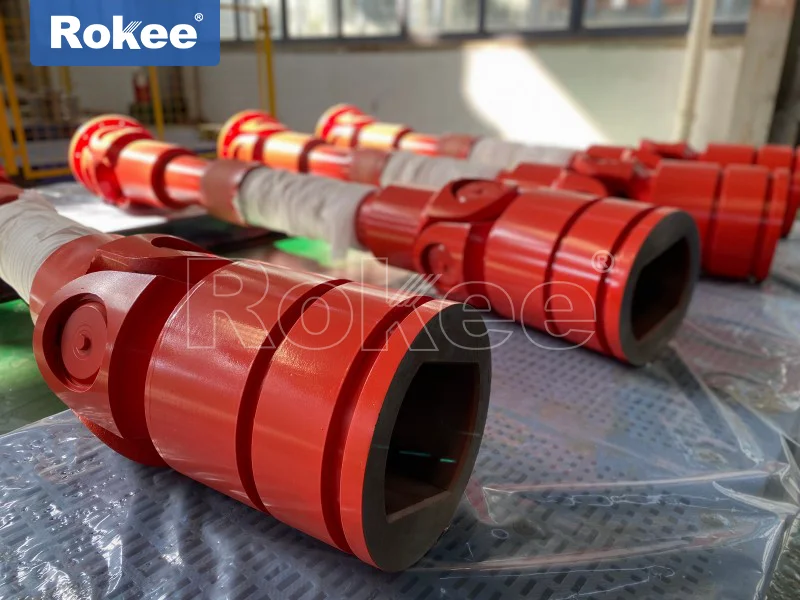
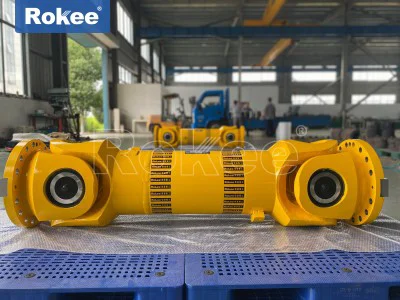
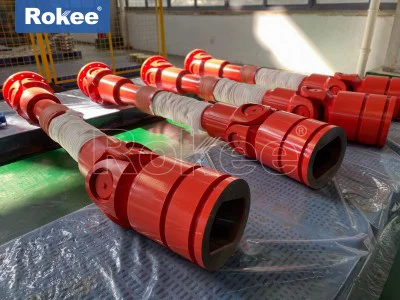
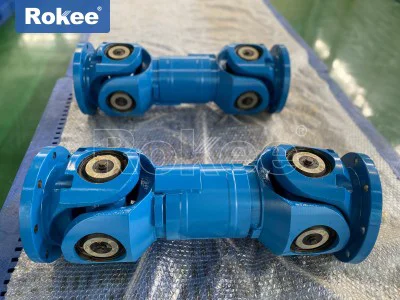
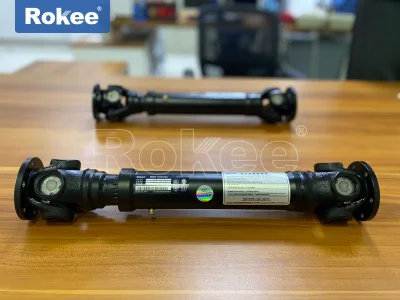
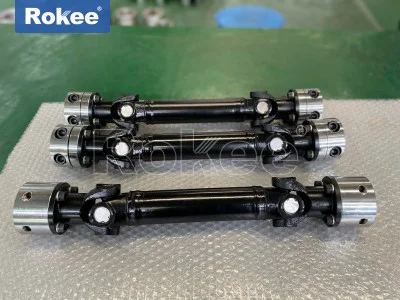
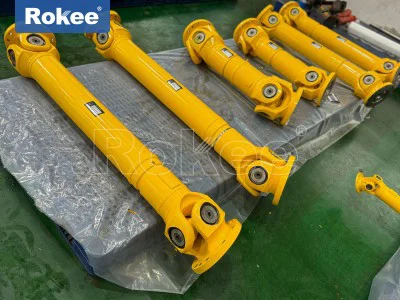
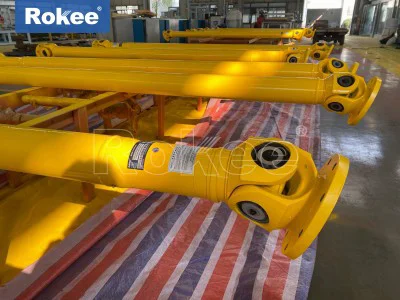
Cross universal shaft is a mechanical device used to connect two shafts that are not on the same straight line and achieve power transmission. It consists of two fork shaped joints and a cross shaped bearing, which can achieve flexible torque transmission within a certain angle range.
A typical cross universal shaft consists of the following key components:
Universal joint fork: usually a forged or cast U-shaped component, with one end connected to the drive shaft or driven shaft, and the other end connected to the cross shaft through a bearing
Cross shaft: The central component is in a cross shape, with needle roller bearings installed at all four ends
Needle roller bearing: composed of needle rollers, retainers, and seals, reducing friction
Lubrication system: including oil nozzles, oil passages, and seals to ensure sufficient lubrication of bearings
Protective cover: rubber or metal sheath to prevent dust and moisture from entering
The cross universal shaft enables two shafts that are not on the same straight line to transmit torque through the rotational motion of the cross shaft. When the driving shaft rotates, the cross shaft also rotates, driving the driven shaft to rotate. Due to the presence of angular deviation, the rotational speed of the driven shaft will fluctuate during each rotation cycle, and this fluctuation will intensify with increasing angle.
The main features include:
The allowable angle deviation between two axes can usually reach 15-45 degrees
Can compensate for a small amount of axial and radial displacement
High transmission efficiency, generally up to 98-99%
Compact structure, high load-bearing capacity
Regular lubrication and maintenance are required
According to usage requirements, various variants of cross universal shafts have been developed:
Single cross universal shaft: basic type, suitable for small angle deviation
Double cross universal shaft: composed of two single universal joints and an intermediate shaft, it can eliminate speed fluctuations
Constant velocity universal joint: such as a cage type universal joint, to maintain consistent input and output shaft speeds
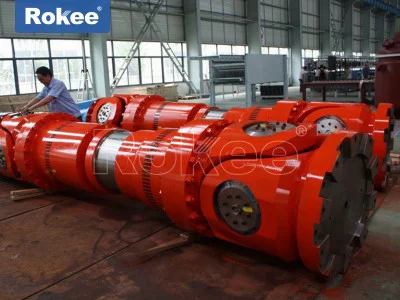
Heavy duty universal shaft: enlarged size and bearings, used for heavy-duty applications such as construction machinery
Micro universal joint: used for precision instruments and small equipment
Cross universal shafts are widely used in various situations where power transmission and axis deviation compensation are required:
Automotive industry: Transmission shaft connects gearbox and drive axle
Construction machinery: power transmission of excavators, loaders and other equipment
Metallurgical equipment: heavy machinery such as rolling mills and continuous casting machines
Shipbuilding industry: connection of propulsion shaft system
Aviation field: Helicopter rotor transmission system
Industrial Robots: Power Transmission in Joint Parts
As a fundamental component in the field of mechanical transmission, the design and manufacturing level of the cross universal shaft directly affects the performance and reliability of the entire transmission system. Understanding its principles and characteristics is of great significance for the correct selection and use of this important mechanical component.