Universal Coupling Adapts To Sandwich Panel Production Line To Improve Operation Stability
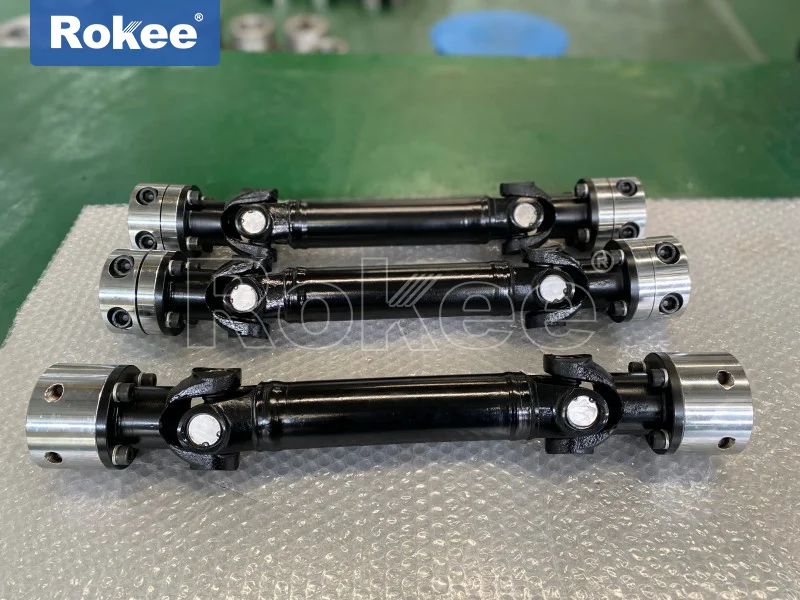
In the modern industrial production system, the sandwich panel production line plays an irreplaceable role in the construction, refrigeration, and other fields due to its efficient production capacity and stable product quality. As a core component of the power transmission system, the universal coupling directly affects the operation stability, production efficiency, and product precision of the entire production line. With the continuous development of industrial technology, the requirements for the operation stability of sandwich panel production lines are constantly improving. The traditional rigid coupling can no longer meet the complex working conditions of the production line, such as axial, radial, and angular deviations between shafts, which often lead to equipment vibration, component wear, and even production interruption. In this context, the universal coupling, with its unique structural advantages and excellent adaptive performance, has been widely applied in sandwich panel production lines, effectively solving the problems of unstable transmission and poor adaptability, and providing a reliable guarantee for the continuous and stable operation of the production line.
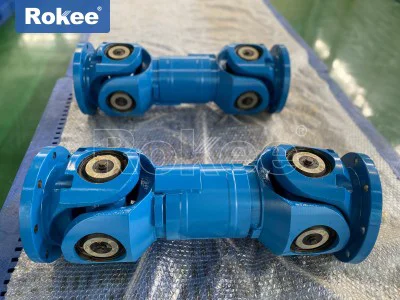
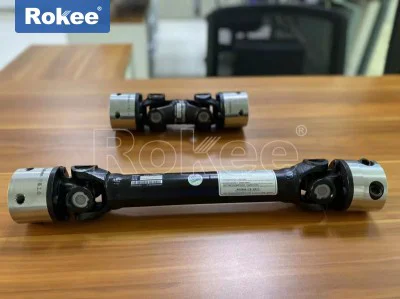
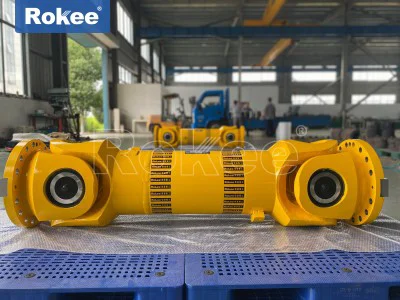
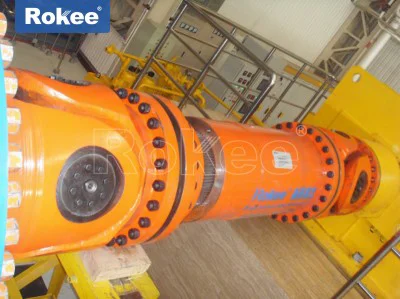
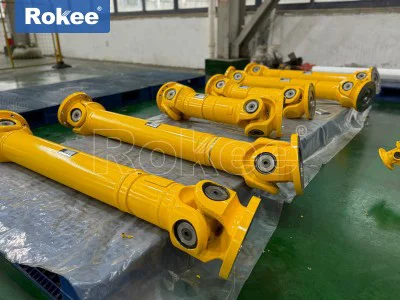
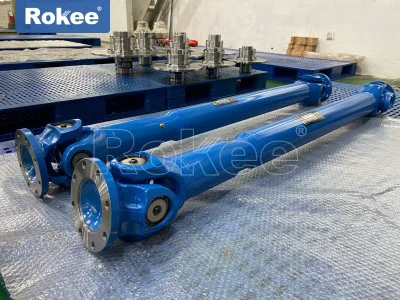
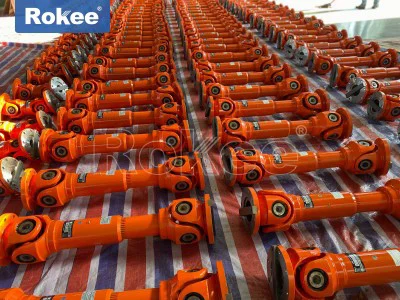
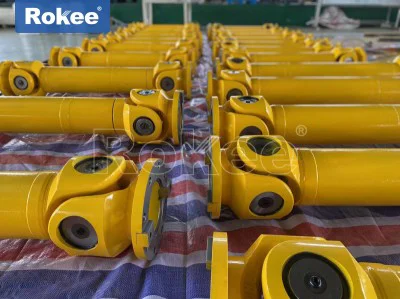
A universal coupling, also known as a universal joint, is a mechanical component used to connect two rigid shafts with inclined axes, enabling the stable transmission of rotary motion and torque between them. Its core structure consists of a pair of hinges placed close to each other, oriented at 90 degrees to each other and connected by a cross shaft, which gives it the ability to adapt to angular deviations between shafts. Unlike rigid couplings that require precise alignment between connected shafts, universal couplings can flexibly accommodate angular, axial, and radial misalignments, making them ideal for complex transmission scenarios where perfect shaft alignment is difficult to maintain. This unique structural design allows the universal coupling to compensate for the relative displacement between shafts caused by various factors in the sandwich panel production line, thereby reducing the impact of misalignment on the transmission system and improving the overall operation stability of the equipment.
The sandwich panel production line is a complex integrated system composed of multiple functional units, including uncoiling, leveling, cutting, forming, bonding, and finished product collection. Each unit is connected by a transmission shaft, and the power generated by the motor is transmitted to each working unit through the coupling to ensure the coordinated operation of the entire production line. In the actual production process, the sandwich panel production line often faces various factors that affect the stability of the transmission system. For example, during the long-term operation of the equipment, the frame and transmission shaft will produce slight deformation due to factors such as vibration and temperature changes; the installation error of the equipment will lead to the misalignment of the axes of the connected shafts; the uneven stress during the processing of sandwich panels will cause instantaneous impact on the transmission system, resulting in unstable power transmission. These problems will not only affect the production efficiency of the production line but also lead to the wear of key components such as bearings and gears, increasing the maintenance cost of the equipment and even causing production accidents in severe cases.
The application of universal couplings in sandwich panel production lines can effectively solve the above problems and significantly improve the operation stability of the production line. Firstly, the universal coupling has excellent angle compensation capacity, which can adapt to the angular deviation between the shafts of different units in the production line. In the sandwich panel production line, the uncoiling unit and the leveling unit, the leveling unit and the forming unit are often not on the same axis due to installation space limitations and equipment structure design. The traditional rigid coupling cannot adapt to such angular deviations, which will lead to uneven power transmission, equipment vibration, and other problems. The universal coupling, through its cross shaft and hinge structure, can flexibly adjust the angle between the two connected shafts, generally allowing an angular deviation of 5° to 45°, and some special types can even bear larger deflection angles, ensuring the stable transmission of torque between the shafts with misaligned axes. This angle compensation capacity enables the universal coupling to adapt to the complex installation environment of the sandwich panel production line, reducing the impact of installation errors and equipment deformation on the transmission system.
Secondly, the universal coupling has good axial and radial displacement compensation performance, which can effectively absorb the relative displacement between the shafts caused by equipment vibration and temperature changes. During the operation of the sandwich panel production line, the transmission shaft will produce axial expansion and contraction due to temperature changes, and radial vibration due to uneven load. The traditional rigid coupling has no displacement compensation capacity, so the axial expansion and contraction and radial vibration of the shaft will cause additional stress on the coupling and the shaft, leading to component wear and even shaft breakage. The universal coupling, through the flexible connection between the cross shaft and the hinge, can absorb the axial and radial displacement of the shaft, reduce the additional stress on the transmission system, and avoid the damage of components caused by displacement. At the same time, the universal coupling can also absorb the impact load generated during the production process, such as the impact caused by the uneven thickness of the sandwich panel raw materials and the instantaneous load change during the cutting process, thereby reducing the vibration of the equipment and ensuring the stable operation of the production line.
In addition, the universal coupling has the advantages of high load-bearing capacity and high transmission efficiency, which can meet the power transmission needs of the sandwich panel production line. The sandwich panel production line often needs to transmit large torque during the operation process, especially in the forming and bonding units, which require sufficient power to ensure the processing quality of the sandwich panels. The universal coupling is usually made of high-strength materials such as alloy steel and carbon steel, through optimized structural design, which can transmit large torque in a compact volume, and its transmission efficiency can reach more than 98%, with low energy loss. This high transmission efficiency not only reduces the energy consumption of the production line but also ensures the stable transmission of power, avoiding the problems of insufficient power and uneven transmission caused by the low efficiency of the coupling. At the same time, the high load-bearing capacity of the universal coupling enables it to adapt to the long-term heavy-load operation of the sandwich panel production line, reducing the frequency of component damage and extending the service life of the equipment.
The adaptation of the universal coupling to the sandwich panel production line is not only reflected in its structural advantages but also in its reasonable selection and correct installation and maintenance. In the process of selecting a universal coupling for the sandwich panel production line, it is necessary to comprehensively consider the working conditions of the production line, such as the transmitted torque, the rotating speed, the angle deviation between the shafts, and the working environment, to select the appropriate type and specification of the universal coupling. For example, in the units with large torque and small angle deviation, the cross-shaft universal coupling can be selected, which has the advantages of simple structure, low cost, and high load-bearing capacity; in the units with high rotating speed and high precision requirements, the constant velocity universal coupling can be selected, which can ensure the uniform transmission of speed and reduce the vibration of the equipment. At the same time, it is also necessary to consider the material of the universal coupling. In the harsh working environment with high temperature, dust, and corrosion, the universal coupling made of corrosion-resistant and high-temperature-resistant materials should be selected to ensure its stable operation in the harsh environment.
The correct installation and maintenance of the universal coupling are crucial to ensuring its performance and improving the operation stability of the sandwich panel production line. Before installation, it is necessary to check the core components of the coupling, including the cross shaft, universal joint fork, needle bearing, spline pair, and connecting bolts, to confirm that there are no cracks, deformation, rust, or excessive wear. At the same time, the surface of each component should be cleaned to remove oil, dust, and impurities to ensure the flatness and cleanliness of the installation surface. During the installation process, it is necessary to ensure that the shaft hole is properly fitted, and the connecting bolts are tightened in a diagonal step-by-step manner according to the specified torque value to prevent the bolts from loosening during operation. The alignment calibration of the two shafts is the key link of the installation. The angular deviation and radial deviation should be controlled within the allowable range. For high-speed or heavy-load working conditions, laser alignment instruments can be used for calibration to ensure the installation accuracy. After installation, manual rotation inspection should be carried out to ensure that the cross shaft can rotate flexibly without jamming, and the protective cover should be installed properly to avoid personnel injury or debris entering the interior during operation.
In the daily operation process of the sandwich panel production line, regular maintenance of the universal coupling is necessary to extend its service life and ensure its stable performance. Lubrication is an important part of maintenance. According to the working conditions, an appropriate lubricant should be selected. For ordinary working conditions, lithium-based grease can be used, and for high-temperature, heavy-load, or corrosive environments, high-temperature grease or anti-corrosion grease should be selected. The lubrication cycle should be adjusted according to the working conditions. For ordinary working conditions, lubrication should be carried out every 300-500 hours or every 3 months, and for harsh working conditions, the cycle should be shortened to 100-200 hours or every month. During lubrication, the lubricant should be injected through the oil injection nozzle until the old grease is squeezed out to ensure that the new grease fully fills the friction parts. Regular inspection of the wear of the universal coupling is also necessary. Every 3-6 months, key components such as the cross shaft, bearing, and spline pair should be inspected to check for wear, cracks, or corrosion. When the wear of the cross shaft exceeds 2%-3% of the diameter, or the spline backlash exceeds 1.5 times the initial value, the components should be replaced in time to avoid equipment failure caused by component damage.
The application of universal couplings in sandwich panel production lines has been verified in practice to significantly improve the operation stability of the production line. A number of actual application cases show that after replacing the traditional rigid coupling with a universal coupling, the vibration amplitude of the sandwich panel production line is reduced by more than 30%, the wear of key components such as bearings and gears is reduced by 40%, and the production interruption time caused by transmission system failure is reduced by more than 50%. At the same time, the production efficiency of the production line is improved by 10%-15%, and the qualification rate of sandwich panel products is increased by 8%-12%. These data fully show that the universal coupling can effectively solve the problems of unstable transmission and poor adaptability of the sandwich panel production line, and provide a strong guarantee for the efficient and stable operation of the production line.
With the continuous development of the sandwich panel industry, the production line is developing towards high speed, high precision, and automation, which puts forward higher requirements for the performance of the universal coupling. In the future, the universal coupling will be further optimized in terms of structure design, material selection, and manufacturing process. For example, the use of new composite materials can further improve the load-bearing capacity and corrosion resistance of the universal coupling; the optimization of the cross shaft and hinge structure can improve the angle compensation capacity and transmission efficiency of the coupling; the integration of intelligent monitoring technology can realize real-time monitoring of the operation state of the universal coupling, timely find potential faults, and carry out predictive maintenance, which will further improve the adaptability of the universal coupling to the sandwich panel production line and provide more reliable power transmission guarantee for the production line.
In conclusion, the universal coupling, with its unique structural advantages such as excellent angle compensation, displacement compensation, high load-bearing capacity, and high transmission efficiency, can well adapt to the complex working conditions of the sandwich panel production line. Through reasonable selection, correct installation, and regular maintenance, the universal coupling can effectively improve the operation stability of the sandwich panel production line, reduce equipment failure rate, extend equipment service life, improve production efficiency and product quality, and bring significant economic benefits to enterprises. In the context of the continuous development of industrial automation, the universal coupling will play a more important role in the sandwich panel production line, promoting the healthy and sustainable development of the sandwich panel industry.