Cardan Coupling Helps PU Sandwich Panel Line Achieve Continuous Production
In the modern manufacturing industry, the demand for efficient, stable, and continuous production has become increasingly prominent, especially in the field of building materials where PU sandwich panels are widely used. These panels, known for their excellent thermal insulation, soundproofing, and structural strength, have become indispensable materials in construction, cold storage, and industrial workshops. However, the production process of PU sandwich panels involves multiple complex links, from the uncoiling and forming of surface materials to the mixing and foaming of polyurethane, and finally to the cutting and stacking of finished products. Each link requires precise coordination and stable power transmission to ensure the continuity of the entire production line. Any interruption or instability in the transmission system can lead to production delays, increased material waste, and reduced product quality.
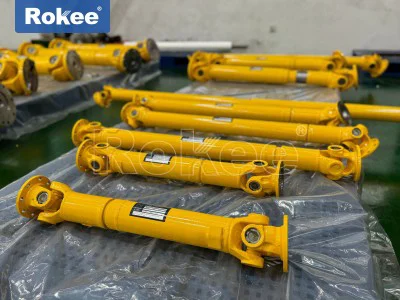
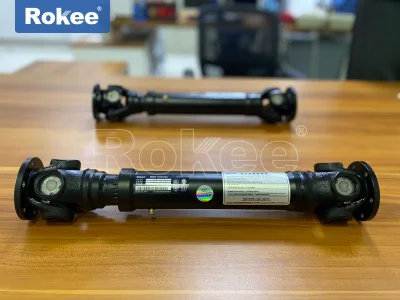
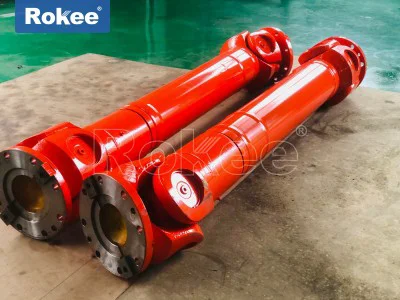
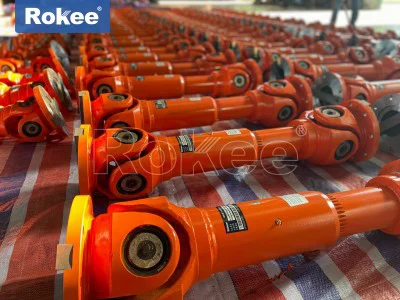
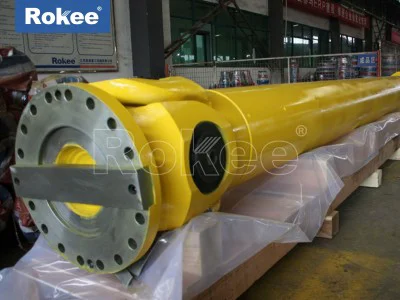
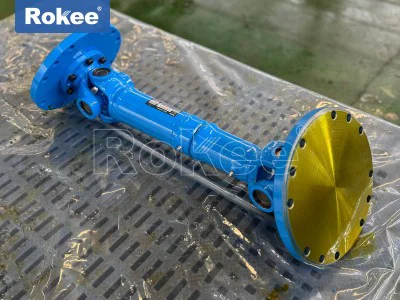
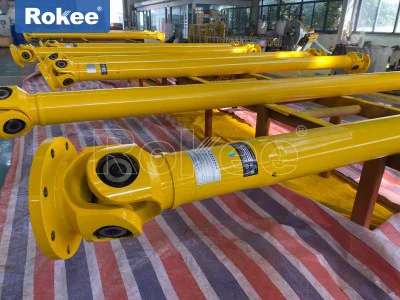
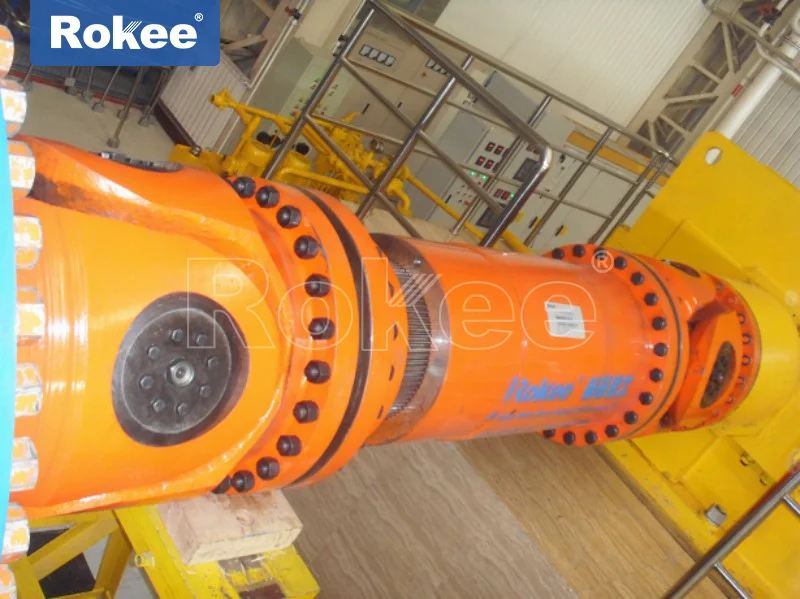
To understand the critical role of cardan couplings in PU sandwich panel production lines, it is first necessary to clarify the working principle and characteristics of cardan couplings. Also known as universal couplings, cardan couplings are mechanical devices designed to transmit torque and rotational motion between two shafts that are not perfectly aligned. Unlike rigid couplings that require strict coaxial alignment of the driving and driven shafts, cardan couplings can compensate for angular, radial, and axial deviations between shafts through their unique structural design. This flexibility makes them particularly suitable for complex industrial environments where equipment installation errors, thermal deformation, or foundation settlement may cause shaft misalignment. The basic structure of a cardan coupling typically includes two fork-shaped joints and a cross shaft, with bearings installed at the connection points to ensure smooth rotation. Some advanced cardan couplings also adopt spline connections to achieve large-distance axial displacement compensation, further enhancing their adaptability in complex transmission systems.
The working principle of cardan couplings is based on the clever combination of mechanical geometry and dynamics. When the driving shaft rotates, the cross shaft connects the two fork joints, allowing the driven shaft to rotate synchronously even when there is an angular deviation between the two shafts. The angular compensation capacity of cardan couplings can generally reach 5° to 45°, with some specially designed models capable of achieving more than 25° diagonal compensation. This large-angle compensation capability is crucial for PU sandwich panel production lines, as the multiple equipment components in these lines, such as uncoilers, forming machines, foaming machines, and cutting devices, are often installed in different positions, leading to inevitable shaft misalignment. Without a flexible coupling that can compensate for these deviations, the transmission system would suffer from severe vibration, increased wear, and even breakage, resulting in production interruptions.
The PU sandwich panel line is a complex automated system that integrates multiple processes, each of which relies on stable power transmission to ensure continuous operation. The production process typically starts with the uncoiling of surface materials, which are usually metal coils such as color steel plates. The uncoiler needs to provide stable tension to ensure that the surface material is fed into the forming machine smoothly without wrinkles or deviations. Next, the forming machine shapes the surface material into the desired cross-sectional shape through a series of rollers. The forming process requires precise control of the roller speed and pressure to ensure the uniformity and accuracy of the surface material. After forming, the upper and lower surface materials are fed into the compounding section, where polyurethane foam is injected between them. The polyurethane foam undergoes a rapid polymerization reaction, bonding the upper and lower surface materials together to form the sandwich structure. Finally, the formed PU sandwich panels are cut to the required length by a cutting machine and then stacked automatically. Each of these links requires synchronous operation, and any mismatch in speed or power transmission can disrupt the entire production process.
In the past, many PU sandwich panel production lines used rigid couplings or other types of flexible couplings, which often struggled to meet the requirements of continuous production. Rigid couplings, for example, cannot compensate for any shaft misalignment, leading to excessive vibration and wear when the equipment is running. This not only shortens the service life of the equipment but also causes frequent production interruptions due to component failure. Other flexible couplings, such as elastomeric couplings, have limited load-bearing capacity and angular compensation range, making them unsuitable for the heavy-duty and high-speed operation of PU sandwich panel production lines. In contrast, cardan couplings have the advantages of high load-bearing capacity, excellent transmission efficiency, and large-angle compensation, making them the ideal choice for power transmission in these production lines.
One of the key advantages of cardan couplings in PU sandwich panel production lines is their ability to ensure synchronous operation of multiple equipment components. The production line requires the uncoiler, forming machine, foaming machine, and cutting machine to operate at a consistent speed to avoid material accumulation or breakage. Cardan couplings can transmit torque stably and efficiently, ensuring that the power from the motor is transmitted to each equipment component without speed loss. Even when there is a slight deviation in the installation position of the equipment, the cardan coupling can compensate for this deviation through its angular adjustment capability, maintaining the synchronization of the entire production line. This synchronization is particularly important in the foaming and compounding section, where the speed of the surface materials and the injection speed of the polyurethane foam must be perfectly matched. If the speed is inconsistent, the foam may be unevenly distributed, leading to defects such as delamination, voids, or foam overflow in the finished panels. With the help of cardan couplings, the speed of each link can be precisely controlled, ensuring the quality and consistency of the PU sandwich panels.
Another important role of cardan couplings in PU sandwich panel production lines is their ability to absorb vibration and reduce impact loads. The operation of industrial equipment inevitably generates vibration, which can be transmitted through the transmission system to other components, affecting the stability of the production line and the quality of the products. Cardan couplings have a certain degree of elasticity due to their structural design, which allows them to absorb and dampen vibration during power transmission. This vibration absorption capability not only reduces the noise generated by the equipment but also protects the motor, bearings, and other key components from damage caused by excessive vibration. In addition, during the start-up and shutdown of the production line, or when the load changes suddenly, cardan couplings can buffer the impact load, preventing the transmission system from being damaged by instantaneous stress. This is particularly important for PU sandwich panel production lines, which often operate continuously for long periods of time, and any damage to the transmission system can lead to significant production losses.
The high load-bearing capacity of cardan couplings is also crucial for PU sandwich panel production lines. These production lines often operate under heavy loads, especially the forming machine and the compounding section, which need to bear the pressure of shaping the surface materials and the weight of the sandwich panels. Cardan couplings are usually made of high-strength alloy steel, which has excellent mechanical properties and can withstand large torques and loads. After special heat treatment processes, such as carburizing and quenching, the surface hardness and wear resistance of the cardan coupling components are further improved, ensuring their long-term stable operation under heavy-duty conditions. Some large-scale PU sandwich panel production lines have a production speed of 6 to 16 meters per minute, and the torque required for power transmission is extremely large. Cardan couplings can easily meet these torque requirements, ensuring that the production line operates smoothly and efficiently.
In addition to the above advantages, cardan couplings also have the characteristics of compact structure and easy maintenance, which are important for the continuous operation of PU sandwich panel production lines. The compact structure of cardan couplings allows them to be installed in limited spaces, making them suitable for the complex layout of PU sandwich panel production lines. Unlike some complex transmission components that require frequent and cumbersome maintenance, cardan couplings have a simple structure and few wearing parts, which reduces the maintenance workload and downtime. Regular maintenance of cardan couplings mainly includes lubrication, inspection of wear and damage, and alignment calibration. By regularly applying lubricating grease to the bearings and cross shaft, the friction between components can be reduced, extending the service life of the coupling. Regular inspection of the cross shaft, bearings, and flanges can help detect potential faults in a timely manner, preventing sudden failures that may cause production interruptions. The alignment calibration of cardan couplings is also relatively simple, and with the help of professional tools such as laser alignment instruments, the alignment accuracy can be ensured, further improving the stability of the transmission system.
The application of cardan couplings in PU sandwich panel production lines has significantly improved the continuity and efficiency of production. In practical applications, many production lines that previously suffered from frequent interruptions due to transmission problems have achieved stable continuous operation after replacing with cardan couplings. For example, a production line that originally had to stop 2-3 times a day due to coupling failure can now operate continuously for several days without interruption after using cardan couplings. This not only increases the output of PU sandwich panels but also reduces material waste caused by production interruptions. In addition, the stable operation of the production line also improves the quality of the finished products, reducing the number of defective panels caused by unstable transmission. The surface flatness, thickness uniformity, and bonding strength of the PU sandwich panels produced by the line equipped with cardan couplings are significantly improved, enhancing the market competitiveness of the products.
The performance of cardan couplings can also be further optimized according to the specific needs of PU sandwich panel production lines. For example, in production lines that operate in high-temperature or corrosive environments, cardan couplings can be made of special materials such as stainless steel and equipped with advanced sealing systems to prevent corrosion and damage. The sealing system can adopt a multi-level structure, such as a combination of special rubber seals and labyrinth seals, to effectively prevent dust, moisture, and other impurities from entering the coupling, ensuring its stable operation in harsh environments. In addition, intelligent cardan couplings integrated with sensor technology are also being gradually applied to PU sandwich panel production lines. These intelligent couplings can real-time monitor parameters such as temperature, vibration, and torque during operation, and send early warnings when abnormalities are detected. This predictive maintenance method can help maintenance personnel handle potential faults in advance, further reducing downtime and improving the reliability of the production line.
It is worth noting that the correct selection and installation of cardan couplings are crucial to ensuring their role in PU sandwich panel production lines. When selecting a cardan coupling, it is necessary to consider factors such as the torque required by the production line, the speed of the equipment, the angular deviation between shafts, and the working environment. The type and specification of the cardan coupling should be matched with the actual needs of the production line to avoid insufficient load-bearing capacity or excessive size. During installation, the alignment of the driving and driven shafts should be adjusted as much as possible to reduce the angular and radial deviations between the shafts, which can extend the service life of the cardan coupling and improve the stability of the transmission system. In addition, the installation of protective covers is also essential to prevent personnel injury and impurities from entering the coupling.
With the continuous development of the PU sandwich panel industry, the requirements for production efficiency and product quality are constantly increasing, which puts higher demands on the transmission system of the production line. Cardan couplings, with their unique advantages of flexible compensation, high load-bearing capacity, vibration absorption, and easy maintenance, will continue to play an important role in helping PU sandwich panel lines achieve continuous and efficient production. In the future, with the advancement of materials science and manufacturing technology, cardan couplings will be further improved in terms of performance and reliability. New materials with higher strength and corrosion resistance will be used in the production of cardan couplings, and intelligent technology will be more widely integrated to make cardan couplings more adaptable to the complex and changing needs of PU sandwich panel production lines.
In conclusion, the cardan coupling is a key component that enables PU sandwich panel lines to achieve continuous production. Its ability to compensate for shaft misalignment, transmit torque stably, absorb vibration, and bear heavy loads ensures the smooth operation of each link in the production line, reduces production interruptions, and improves production efficiency and product quality. As the PU sandwich panel industry continues to develop, the application of cardan couplings will become more widespread, and their role in promoting the development of the industry will become more prominent. For manufacturers of PU sandwich panels, choosing high-quality cardan couplings and conducting regular maintenance and management can not only ensure the continuous operation of the production line but also reduce production costs and enhance market competitiveness.