Upgrade Of Transmission System Of PU Sandwich Panel Line Prefer Universal Shaft Coupling
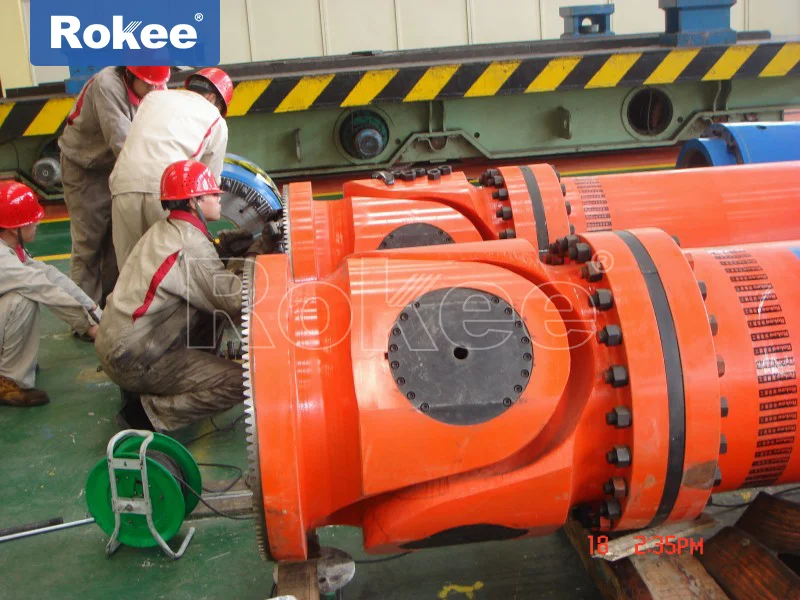
In the modern manufacturing industry, the continuous development of PU sandwich panel production technology has put forward higher requirements for the stability, efficiency and flexibility of the transmission system. As the core component that connects the power source and each functional unit of the production line, the transmission system directly determines the production quality, operation efficiency and service life of the entire PU sandwich panel line. With the increasing demand for high-quality, high-efficiency and low-energy-consumption production in the market, the upgrade of the transmission system of existing PU sandwich panel lines has become an inevitable trend for enterprises to improve their core competitiveness. Among various transmission components, the universal shaft coupling has gradually become the preferred choice for the upgrade of the transmission system of PU sandwich panel lines due to its unique structural advantages and excellent performance, which can effectively solve the pain points existing in the traditional transmission system and provide a reliable guarantee for the stable operation of the production line.
PU sandwich panel is a kind of composite material with excellent performance, which is widely used in construction, cold storage, transportation and other fields due to its good thermal insulation, sound insulation, fire prevention and load-bearing performance. The production process of PU sandwich panel involves multiple links such as uncoiling, roll forming, preheating, foaming, curing, cutting and stacking, and each link is closely connected by the transmission system. The traditional transmission system of PU sandwich panel lines often adopts rigid couplings or ordinary flexible couplings, which have obvious limitations in practical application. Rigid couplings require high coaxiality between the connected shafts. Once there is installation deviation, thermal deformation or vibration during operation, it will cause excessive stress on the shafts and bearings, leading to frequent wear of components, increased noise and even equipment failure. Ordinary flexible couplings have poor compensation capacity for angular deviation and axial displacement, and their load-bearing capacity is limited, which cannot meet the requirements of high-speed and heavy-load operation of the production line. In addition, the traditional transmission system has low transmission efficiency, high energy consumption, and difficult maintenance, which not only increases the production cost of enterprises, but also affects the stability and continuity of production, making it difficult to adapt to the needs of modern large-scale and high-efficiency production.
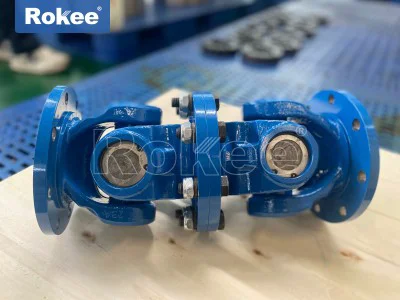
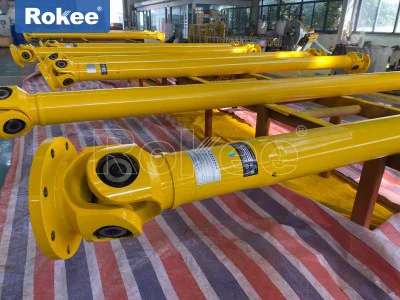
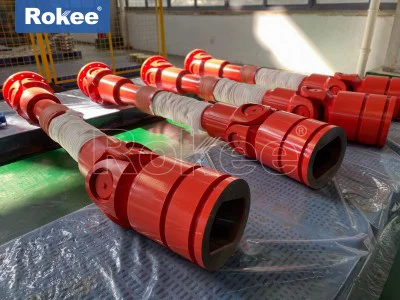
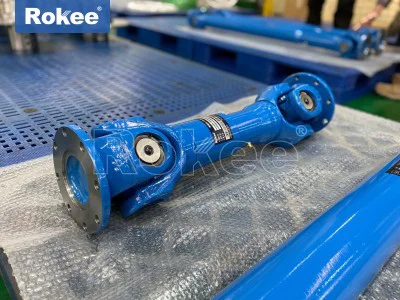
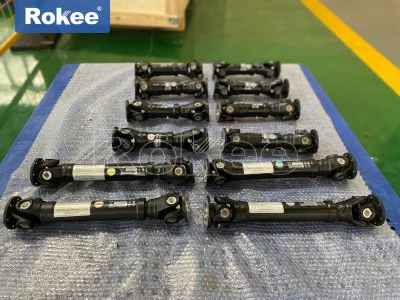
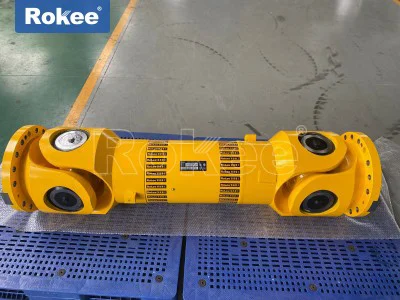
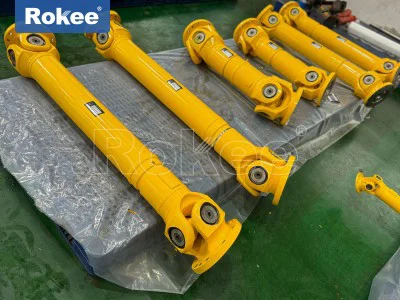
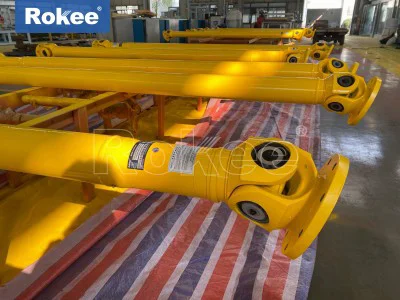
Against this background, the universal shaft coupling has attracted wide attention in the upgrade of the transmission system of PU sandwich panel lines due to its outstanding performance advantages. A universal shaft coupling, also known as a universal joint or U-joint, is a mechanical device used to connect two shafts that are not in line with each other. It is composed of two yokes, a center block and needle bearings. The yokes are connected to the shafts, while the center block allows for articulation and rotation, and the needle bearings reduce friction and enable smooth movement. This unique structural design enables the universal shaft coupling to have excellent compensation capacity for angular misalignment, axial displacement and radial offset, which can effectively solve the problems caused by installation deviation, thermal deformation and vibration in the transmission process of the PU sandwich panel line. Unlike rigid couplings that require perfect coaxiality, the universal shaft coupling can still transmit torque stably even when the connected shafts have a certain angular deviation, which greatly reduces the installation and debugging difficulty of the transmission system and improves the adaptability of the equipment.
The PU sandwich panel line has strict requirements on the stability and accuracy of the transmission system. In the roll forming link, the transmission system needs to provide stable and uniform power to ensure that the surface of the panel is smooth and the size is accurate; in the foaming and curing link, the stable operation of the transmission system directly affects the uniformity of the foaming layer and the curing effect of the panel; in the cutting and stacking link, the accurate transmission of power is related to the cutting precision and stacking order of the panels. The universal shaft coupling has the characteristics of stable transmission and high precision, which can ensure that the power is transmitted stably and uniformly in each link of the production line, avoid the impact and vibration caused by unstable transmission, and thus improve the production quality of PU sandwich panels. In addition, the universal shaft coupling has high transmission efficiency, and its transmission efficiency can reach more than 98% under normal working conditions, which is significantly higher than that of traditional flexible couplings. This can effectively reduce energy loss, lower the energy consumption of the production line, and help enterprises achieve the goal of energy conservation and emission reduction.
The working environment of the PU sandwich panel production line is relatively complex. There are often factors such as dust, temperature changes and mechanical vibration in the production site, which put forward high requirements for the durability and reliability of the transmission components. The universal shaft coupling is usually made of high-strength alloy steel or carbon steel, which has good wear resistance, corrosion resistance and impact resistance. After special heat treatment, the surface hardness and internal toughness of the components are greatly improved, which can withstand the harsh working environment of the production line and reduce the wear and failure rate of the components. At the same time, the structure of the universal shaft coupling is compact, small in size and light in weight, which is convenient for installation and maintenance. Compared with traditional transmission components, the universal shaft coupling has fewer wearing parts, simple maintenance procedures, and only needs regular lubrication and inspection to ensure its normal operation, which can effectively reduce the maintenance cost and downtime of the equipment, and improve the operation efficiency of the production line.
In the process of upgrading the transmission system of the PU sandwich panel line, the selection and installation of the universal shaft coupling need to be combined with the actual working conditions of the production line to ensure the best matching effect. First of all, it is necessary to comprehensively consider the power parameters, speed, torque and other factors of the production line, and select the universal shaft coupling of appropriate model and specification. Different types of universal shaft couplings have different performance characteristics. For example, the cross-axis universal shaft coupling has a simple structure and high cost performance, which is suitable for medium and low speed occasions; the ball cage universal shaft coupling has stable transmission and high precision, which is suitable for high-speed and high-precision transmission occasions. Enterprises need to select the appropriate type according to their own production needs. Secondly, in the installation process, it is necessary to strictly follow the installation specifications to ensure the accuracy of the installation position and the coaxiality of the connected shafts. Although the universal shaft coupling has good compensation capacity, excessive installation deviation will still affect its service life and transmission performance. In addition, it is necessary to pay attention to the lubrication of the universal shaft coupling. The needle bearings and other components need to be regularly filled with lubricating oil to reduce friction and wear, and ensure the smooth operation of the coupling.
The upgrade of the transmission system of the PU sandwich panel line with the universal shaft coupling can bring significant economic and social benefits to enterprises. From the economic point of view, the stable operation of the universal shaft coupling can reduce the failure rate of the equipment, reduce the maintenance cost and downtime, and improve the production efficiency. At the same time, its high transmission efficiency can reduce energy consumption, lower the production cost of enterprises, and improve the market competitiveness of products. From the social point of view, the energy conservation and emission reduction effect brought by the universal shaft coupling is in line with the requirements of green development, which helps enterprises achieve sustainable development and contribute to environmental protection. In addition, the upgrade of the transmission system can improve the production quality of PU sandwich panels, provide high-quality products for the market, and promote the healthy development of the PU sandwich panel industry.
With the continuous progress of industrial technology, the performance of the universal shaft coupling is also constantly improving. The combination of new materials, new processes and new technologies makes the universal shaft coupling have better performance and wider application scope. For example, the application of new wear-resistant and corrosion-resistant materials further improves the durability of the universal shaft coupling; the adoption of precision machining technology improves the transmission precision and stability of the coupling; the integration of intelligent monitoring technology enables enterprises to real-time monitor the operation status of the universal shaft coupling, predict potential faults in advance, and realize predictive maintenance, which further improves the reliability and service life of the transmission system. In the future, with the continuous development of the PU sandwich panel industry, the requirements for the transmission system will be higher and higher, and the universal shaft coupling, as an excellent transmission component, will play a more important role in the upgrade of the transmission system of the PU sandwich panel line.
It should be noted that the upgrade of the transmission system of the PU sandwich panel line is a systematic project, which not only involves the selection and installation of the universal shaft coupling, but also needs to coordinate with other components of the production line, such as motors, reducers, conveyors, etc., to ensure the overall performance of the transmission system. Enterprises should conduct a comprehensive investigation and evaluation of the existing production line before the upgrade, clarify the existing problems and upgrade needs, formulate a scientific and reasonable upgrade plan, and avoid blind upgrade. In the process of upgrade, professional technical personnel should be arranged to operate to ensure the quality and effect of the upgrade. After the upgrade, it is necessary to conduct a comprehensive test and commissioning of the transmission system, check whether each performance index meets the requirements, and timely adjust and optimize to ensure the stable and efficient operation of the transmission system.
In conclusion, the universal shaft coupling has become the preferred choice for the upgrade of the transmission system of PU sandwich panel lines due to its excellent compensation capacity, stable transmission performance, high efficiency, durability and easy maintenance. It can effectively solve the pain points existing in the traditional transmission system, improve the production efficiency and product quality of the PU sandwich panel line, reduce production costs and energy consumption, and help enterprises achieve sustainable development. With the continuous progress of technology, the application of the universal shaft coupling in the PU sandwich panel production line will be more extensive and in-depth, bringing new development opportunities for the PU sandwich panel industry. Enterprises should attach great importance to the upgrade of the transmission system, actively adopt advanced transmission components and technologies, continuously improve the technical level and core competitiveness of the production line, and adapt to the changing market demand.