Angle Compensation Function Of Cardan Coupling Adapting To Continuous PU Sandwich Panel Production Line
In the field of modern industrial manufacturing, continuous production lines have become the core equipment for improving efficiency, reducing costs and ensuring product consistency, especially in the production of PU sandwich panels. PU sandwich panels, with their excellent thermal insulation, sound insulation, light weight and high strength, are widely used in construction, cold storage, industrial workshops and other fields, and the continuous production line of PU sandwich panels has become the key to realizing large-scale and high-quality production of such products. The continuous operation of the production line relies on the stable transmission of power between various functional modules, including uncoiling of facing materials, roll forming, preheating, PU foaming, lamination, curing and cutting. Each link requires precise and synchronous power transmission to ensure that the production process is smooth and the product quality meets the standard. Among the numerous mechanical components that make up the power transmission system, the cardan coupling, with its unique angle compensation function, plays an irreplaceable role in adapting to the special working conditions of the continuous PU sandwich panel production line, solving the key problems of shaft misalignment in power transmission, ensuring the stability and efficiency of the production line, and providing a reliable guarantee for the high-quality production of PU sandwich panels.
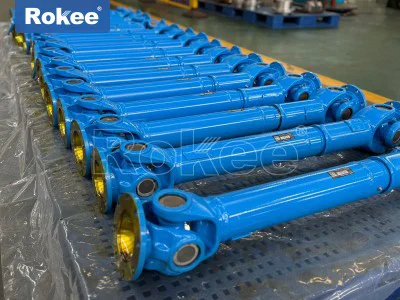
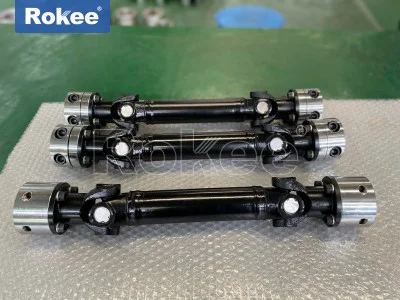
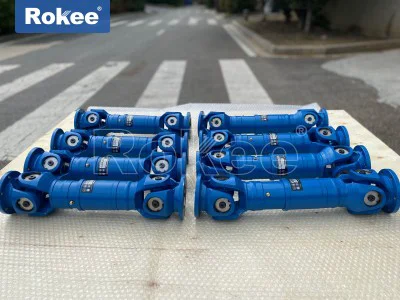
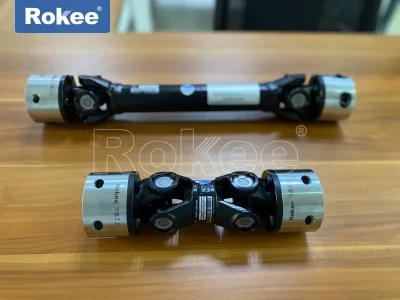
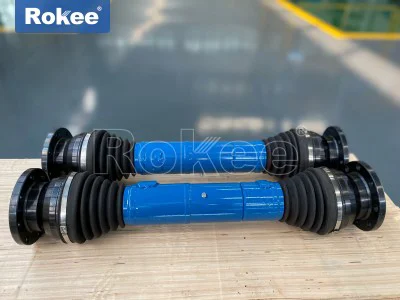
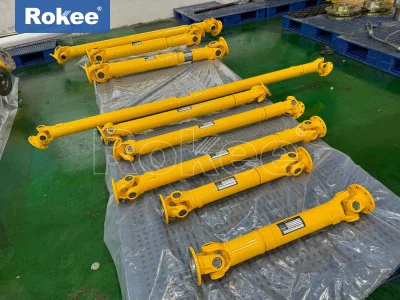
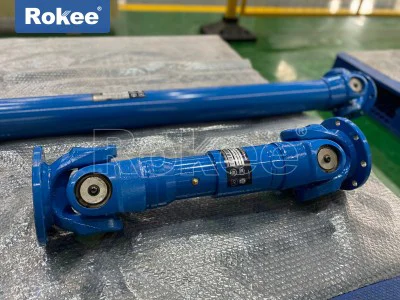
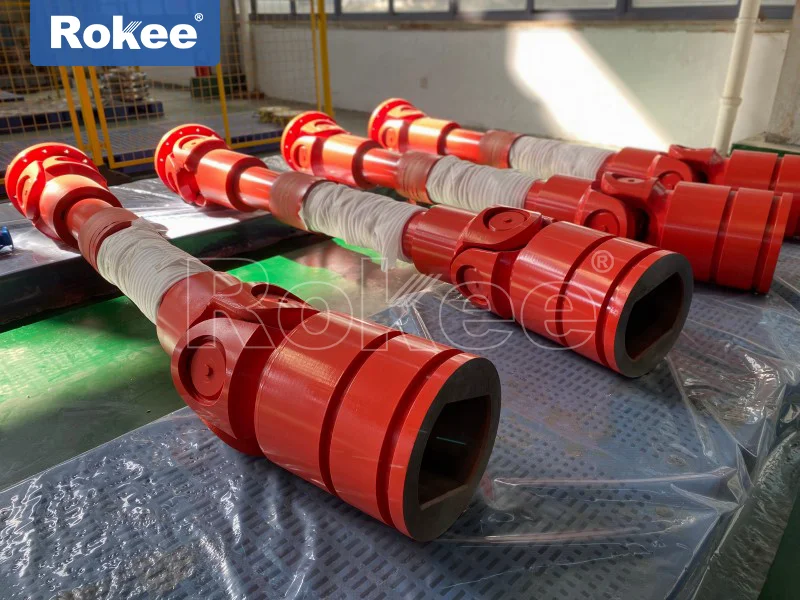
To understand the important role of the angle compensation function of the cardan coupling in the continuous PU sandwich panel production line, it is first necessary to clarify the structural characteristics and working principle of the cardan coupling, as well as the working characteristics and core challenges of the continuous PU sandwich panel production line. A cardan coupling, also known as a universal joint coupling, is a mechanical transmission component designed to connect two shafts that are not on the same axis and transmit torque and rotational motion reliably. Its basic structure is composed of two yoke-shaped end fittings, a central cross-shaped member (commonly known as a spider), and needle roller bearings or plain bearings installed at the connection between the yoke and the cross. The yokes are firmly connected to the driving shaft and the driven shaft respectively, and the cross, as the core component, connects the two yokes through bearings, allowing relative rotation and angular deflection between the yokes and the cross. This structural design gives the cardan coupling the ability to compensate for angular deviations between two shafts, which is the core of its angle compensation function. Unlike rigid couplings that require strict coaxial alignment of the driving and driven shafts, the cardan coupling can realize continuous rotation of the connected shafts and stable torque transmission even when there is an angular deviation between the two shafts, which is the fundamental reason why it can adapt to the complex working conditions of the continuous PU sandwich panel production line.
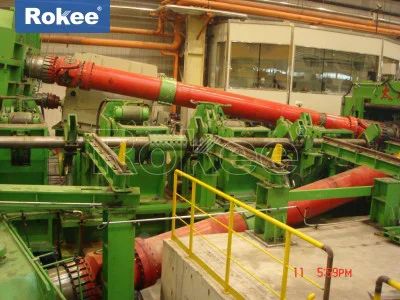
The continuous PU sandwich panel production line is a complex integrated system integrating mechanical, electrical, hydraulic and chemical reaction technologies. Its biggest feature is continuous and automated operation, which requires the coordinated operation of multiple subsystems, and each subsystem is driven by an independent power source. The power needs to be accurately and stably transmitted to various executive components to ensure the synchronous operation of the entire production line. However, in the actual operation process, the transmission system of the production line faces many challenges related to shaft misalignment, which puts forward high requirements for the angle compensation capacity of the transmission components. On the one hand, due to the limitations of the production process and the overall structure of the equipment, the installation and layout of each subsystem (such as uncoiling system, roll forming system and cutting system) are often not on the same axis, resulting in inherent angular deviations between the driving shaft and the driven shaft. On the other hand, during the long-term continuous operation of the production line, the equipment will generate vibration and thermal expansion due to factors such as high-speed operation, friction and PU foaming reaction heat, which will lead to changes in the relative position of the shafts, resulting in dynamic angular deviations. In addition, the production line needs to adapt to the production of PU sandwich panels of different specifications, which involves adjusting the speed and torque of each subsystem, and the adjustment process may also cause slight changes in the relative angle of the shafts. If the transmission component does not have sufficient angle compensation capacity, it will lead to unstable power transmission, increased equipment vibration, accelerated wear of components, and even affect the quality of PU sandwich panels, such as uneven foam density, poor bonding between the core and the facing materials, and irregular cutting size. Therefore, the angle compensation function of the cardan coupling is particularly important for the continuous PU sandwich panel production line.
The angle compensation function of the cardan coupling is realized through its unique mechanical structure and kinematic principle. When the driving shaft rotates, the yoke connected to the driving shaft drives the cross to rotate, and the cross further drives the yoke connected to the driven shaft to rotate, thereby realizing the transmission of torque and rotational motion. The key to angle compensation lies in the articulated structure between the cross and the yokes. The four perpendicular arms of the cross are accurately matched with the bearing housings in the yokes, and the bearings ensure smooth rotational and oscillatory movement between the cross and the yokes, minimizing friction and wear while maintaining mechanical rigidity. When there is an angular deviation between the driving shaft and the driven shaft, the cross can rotate around the bearing in the yoke, so that the two yokes can deflect at a certain angle relative to each other, thereby compensating for the angular deviation between the shafts. The angle compensation range of the cardan coupling varies according to its structural type, generally between 5° and 45°, which can fully adapt to the angular deviation caused by installation errors, thermal expansion and vibration in the continuous PU sandwich panel production line. For example, in the roll forming link of the production line, the roll forming machine needs to be adjusted according to the thickness and width of the PU sandwich panel, which may lead to a slight angular deviation between the driving shaft of the motor and the driven shaft of the roll. At this time, the cardan coupling can compensate for this deviation through its angle compensation function, ensuring that the power is stably transmitted to the roll, so that the roll can rotate at a constant speed, and the forming quality of the facing material is guaranteed.
In addition to the basic angle compensation capacity, the cardan coupling also has the characteristics of high transmission efficiency, strong load-bearing capacity and compact structure, which further enhances its adaptability to the continuous PU sandwich panel production line. The transmission efficiency of the cardan coupling can reach 98% to 99.8%, which has significant energy-saving effects in high-power transmission applications. This high efficiency comes from its precise mechanical structure and optimized force transmission path, which reduces energy loss during the transmission process. For the continuous PU sandwich panel production line, which needs to operate continuously for a long time, high transmission efficiency can not only reduce energy consumption, but also reduce the heat generated during the transmission process, avoiding equipment overheating and ensuring the stable operation of the production line. At the same time, the cardan coupling is made of high-strength materials such as alloy steel or heat-treated steel, which has strong load-bearing capacity and can withstand the large torque and impact load generated during the operation of the production line. In the lamination and curing links of the PU sandwich panel production line, the double-belt lamination system needs to apply a certain pressure to the sandwich panel to ensure the bonding effect between the PU foam core and the facing materials. This process will generate a certain impact load on the power transmission system, and the cardan coupling can effectively bear this load through its robust structure, avoiding component damage and ensuring the stability of the transmission system.
The angle compensation function of the cardan coupling also plays an important role in reducing equipment wear and extending the service life of the production line. In the continuous PU sandwich panel production line, if the transmission component cannot compensate for the angular deviation between the shafts, the uncompensated deviation will cause additional torque and vibration during the power transmission process, which will accelerate the wear of bearings, gears and other components, and even lead to shaft deformation and component damage. The cardan coupling, through its angle compensation function, can eliminate or reduce the additional torque and vibration caused by angular deviation, making the power transmission more stable and smooth. This not only reduces the wear of the cardan coupling itself, but also protects the connected motors, reducers, rolls and other equipment, reducing the maintenance frequency and maintenance cost of the production line. For example, in the cutting link of the production line, the cutting machine needs to move synchronously with the conveyor belt of the production line, and there may be a slight angular deviation between the driving shaft of the cutting machine and the driving shaft of the conveyor belt due to installation and operation errors. The angle compensation function of the cardan coupling can effectively compensate for this deviation, avoiding the vibration of the cutting machine during operation, ensuring the cutting accuracy, and reducing the wear of the cutting tool and the conveyor belt.
It is worth noting that the angle compensation effect of the cardan coupling in the continuous PU sandwich panel production line is also affected by factors such as its structural type, installation accuracy and maintenance level. In practical applications, single cardan couplings are suitable for occasions with small angular deviations (generally 3° to 15°), while for occasions with larger angular deviations or requiring constant speed output, double cardan couplings are usually used. By arranging two single cardan couplings in series and ensuring that the angles of the two joints are equal and the yokes are in the same phase, the non-uniformity of the angular velocity caused by a single cardan coupling can be compensated, realizing constant speed transmission. This is particularly important for the PU foaming link of the production line, where the stability of the transmission speed directly affects the foaming effect of the PU foam core. If the transmission speed fluctuates, it will lead to uneven foam density, affecting the thermal insulation performance and mechanical strength of the PU sandwich panel. Therefore, selecting the appropriate type of cardan coupling according to the actual working conditions of the production line is the key to giving full play to its angle compensation function.
In terms of installation, the correct installation of the cardan coupling is crucial to ensure its angle compensation effect. During installation, it is necessary to accurately measure the actual angular deviation between the driving shaft and the driven shaft, and ensure that the deviation is within the allowable compensation range of the cardan coupling. At the same time, the coaxiality of the two shafts should be adjusted as much as possible to reduce the load on the cardan coupling and avoid excessive angular deviation leading to increased wear and reduced service life. In addition, the connection between the cardan coupling and the shafts should be firm to avoid slippage during operation, which will affect the transmission effect and angle compensation capacity. In terms of maintenance, regular inspection and lubrication of the cardan coupling are required. The bearings and cross components of the cardan coupling need to be lubricated regularly to reduce friction and wear, ensure smooth movement, and maintain its angle compensation function. At the same time, it is necessary to check the wear of the yokes, cross and bearings regularly, and replace worn components in time to avoid equipment failure caused by component damage, which will affect the normal operation of the production line.
With the continuous development of the PU sandwich panel industry, the continuous production line is developing towards higher speed, higher automation and higher precision, which puts forward higher requirements for the angle compensation function of the cardan coupling. In response to these requirements, the design and manufacturing technology of cardan couplings are also constantly improving. Modern cardan couplings adopt more precise processing technology and advanced materials, which not only improve the angle compensation accuracy and range, but also enhance their wear resistance, corrosion resistance and service life. For example, some cardan couplings adopt advanced sealing systems to prevent dust, moisture and other impurities from entering the internal components, ensuring the stability of the angle compensation function in harsh working environments. At the same time, the modular design of the cardan coupling facilitates the replacement and maintenance of components, reducing the downtime of the production line.
In practical application cases, many continuous PU sandwich panel production lines have achieved significant results by adopting cardan couplings with excellent angle compensation functions. For example, in a large-scale PU sandwich panel production line, due to the long length of the production line and the large number of functional modules, the angular deviation between the shafts of each module is inevitable. After adopting the double cardan coupling, the angle compensation function of the coupling effectively solves the problem of shaft misalignment, making the power transmission of the entire production line more stable. The vibration of the equipment is significantly reduced, the wear of components is reduced, the maintenance frequency of the production line is reduced by 30% compared with the past, and the production efficiency is increased by 15%. At the same time, the quality of the PU sandwich panel is also significantly improved, the qualification rate of the product is increased to more than 98%, and the economic benefits of the enterprise are effectively improved. This fully shows that the angle compensation function of the cardan coupling plays a key role in adapting to the continuous PU sandwich panel production line, and can effectively solve the practical problems encountered in the power transmission process of the production line.
In conclusion, the angle compensation function of the cardan coupling is an indispensable key function for adapting to the continuous PU sandwich panel production line. Its unique structural design and working principle enable it to effectively compensate for the angular deviation between the shafts caused by installation errors, thermal expansion and vibration in the production line, ensuring the stable, efficient and accurate transmission of power. The high transmission efficiency, strong load-bearing capacity and long service life of the cardan coupling further enhance its adaptability to the continuous PU sandwich panel production line, reducing equipment wear and maintenance costs, and improving production efficiency and product quality. With the continuous progress of industrial technology, the cardan coupling will be further optimized and improved in terms of angle compensation performance, structural design and material selection, and will play a more important role in the continuous PU sandwich panel production line, promoting the sustainable development of the PU sandwich panel industry. In the future, with the integration of intelligent technology, the cardan coupling may also realize real-time monitoring of angle compensation parameters, further improving the stability and reliability of the power transmission system, and providing a more powerful guarantee for the high-quality development of the continuous PU sandwich panel production line.