Core Role Of Cardan Driveshaft In Sandwich Panel Making Equipment

In the realm of modern manufacturing, sandwich panels have emerged as a versatile and essential material, widely used in construction, transportation, energy, and various other industries due to their exceptional combination of structural strength, thermal insulation, soundproofing, and lightweight properties. The production of high-quality sandwich panels relies heavily on advanced automated equipment, where each component plays a critical role in ensuring efficiency, precision, and consistency. Among these components, the cardan driveshaft stands out as a fundamental and irreplaceable part, serving as the backbone of power transmission that connects different sections of the production line. Often referred to as a universal joint shaft or propeller shaft, the cardan driveshaft is designed to transmit rotational torque and motion between machinery components that are not perfectly aligned, a common scenario in complex manufacturing equipment like sandwich panel production lines. Its unique design and functional capabilities enable the seamless operation of various interconnected systems, ensuring that each stage of the sandwich panel manufacturing process—from raw material pretreatment to final cutting and finishing—operates in perfect synchronization. Without the reliable performance of cardan driveshafts, the entire production line would face frequent disruptions, compromised product quality, and reduced operational efficiency, highlighting their core role in sustaining the continuous and high-performance operation of sandwich panel making equipment.
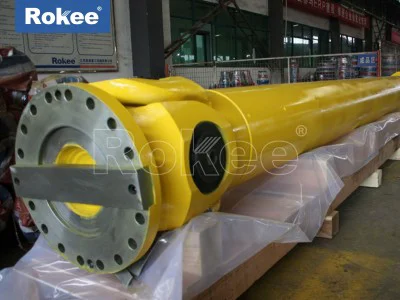
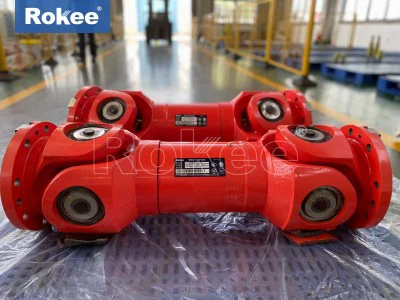
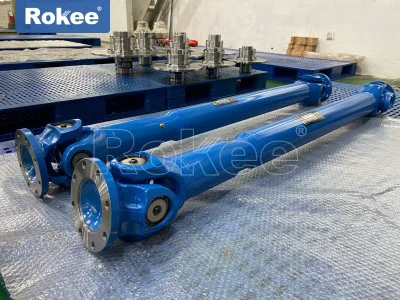
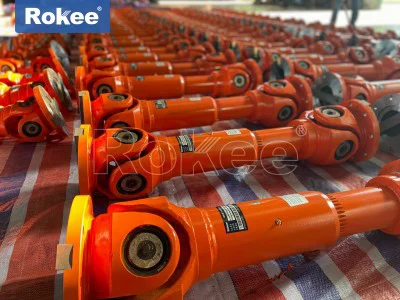
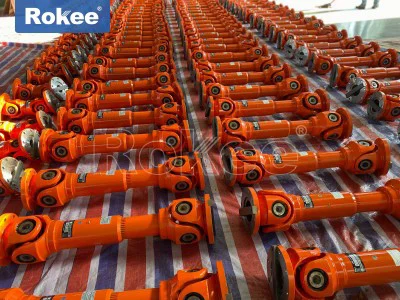
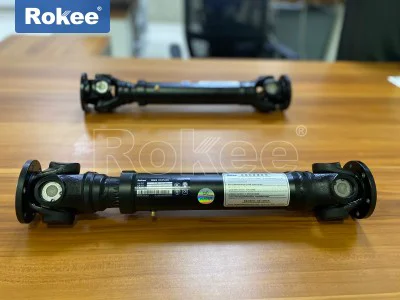
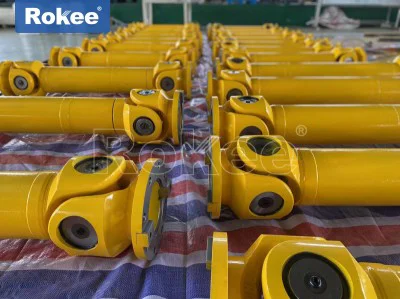
To fully understand the core role of cardan driveshafts in sandwich panel making equipment, it is first essential to grasp the basic structure and working principle of these mechanical components. A typical cardan driveshaft consists of several key elements, including universal joints (often called cardan joints) at both ends, a splined section for length compensation, and a balanced shaft body. The universal joint, which is the heart of the cardan driveshaft, is composed of a pair of hinges positioned close together at 90 degrees to each other, connected by a cross shaft. This ingenious design allows the driveshaft to accommodate angular misalignment between the driving and driven components, meaning that even when the two shafts are not perfectly coaxial, the cardan driveshaft can still transmit torque smoothly and efficiently. Additionally, the splined section of the driveshaft enables axial displacement compensation, allowing for adjustments in length that may occur due to thermal expansion, equipment vibration, or minor shifts in component positioning during operation. The shaft body itself is typically constructed from high-grade heat-treated alloy steel, which provides the necessary strength and durability to withstand the high torque loads and continuous operation demands of sandwich panel manufacturing equipment. Modern cardan driveshafts also incorporate advanced bearing systems and specialized lubricating mechanisms to minimize friction, reduce wear, and extend their service life, ensuring long-term reliability in harsh industrial environments.
Sandwich panel making equipment is a complex integrated system composed of multiple interconnected modules, each responsible for a specific stage of the production process. These modules include raw material pretreatment equipment (such as uncoilers and levelers), forming equipment, adhesive application systems, core filling mechanisms, hot pressing units, cutting equipment, and post-processing systems. Each of these modules relies on a power source to drive their operations, and the cardan driveshaft serves as the critical link that transfers power from the main drive motor to these various components. Unlike rigid couplings that require precise coaxial alignment between the driving and driven shafts, cardan driveshafts offer exceptional flexibility, allowing for the efficient transmission of torque even when there are slight misalignments, axial shifts, or angular deviations between the connected components. This flexibility is particularly important in sandwich panel production lines, where the various modules are often positioned at different angles and distances from each other to accommodate the sequential flow of the manufacturing process. For example, the raw material uncoiling and leveling module may be positioned at a slight angle relative to the forming equipment, and the cardan driveshaft ensures that power is transmitted smoothly between these two components without causing excessive vibration or wear.
One of the most critical roles of cardan driveshafts in sandwich panel making equipment is ensuring the synchronization of all production stages. The manufacturing of sandwich panels is a sequential process that requires precise coordination between each module to maintain product quality and production efficiency. For instance, after the raw material (typically pre-painted steel or stainless steel coils) is uncoiled and leveled, it is fed into the forming equipment, which shapes the metal sheets into the desired profile with tongue-and-groove edges. The forming process must be perfectly synchronized with the uncoiling and leveling process to ensure that the metal sheets are fed at a consistent speed and tension, preventing wrinkles, misalignment, or material waste. The cardan driveshaft plays a key role in this synchronization by transmitting power at a constant speed from the main drive to both the uncoiling/leveling module and the forming module. Even when there are minor variations in the load or slight misalignments between the components, the cardan driveshaft maintains a steady torque transmission, ensuring that both modules operate at the same speed and in perfect harmony. This synchronization is equally important in subsequent stages, such as adhesive application and core filling, where the speed of the conveyor system must be matched with the rate of adhesive dispensing and core material insertion to ensure uniform bonding and consistent panel thickness.
In the forming stage of sandwich panel production, the cardan driveshaft’s ability to transmit high torque while accommodating angular misalignment is particularly crucial. The forming equipment typically consists of a series of rollers that shape the metal sheets into the required profile. These rollers are driven by a power transmission system that relies on cardan driveshafts to transfer torque from the motor to the roller shafts. The forming process requires significant torque to bend and shape the metal sheets, especially when working with thicker or higher-strength materials. The cardan driveshaft is engineered to handle these high torque loads without deformation or failure, ensuring that the rollers maintain a consistent rotational speed and pressure. Additionally, the angular misalignment between the motor shaft and the roller shafts—often caused by the layout of the forming equipment—can be easily accommodated by the cardan driveshaft, eliminating the need for precise alignment during installation and reducing the risk of equipment damage. This flexibility not only simplifies the installation and maintenance of the forming equipment but also ensures that the forming process is consistent and reliable, resulting in sandwich panels with uniform dimensions and structural integrity.
Another key stage where cardan driveshafts play a vital role is the hot pressing process, which is critical for bonding the sandwich panel components together. After the core material (such as rock-wool blankets or foam) is inserted between the two metal facings and adhesive is applied, the assembly is fed into a hot pressing unit. The hot pressing unit uses controlled heat and pressure to cure the adhesive and bond the facings to the core, creating a strong and durable sandwich panel. The hot pressing process requires precise control of the conveyor speed, pressing pressure, and temperature, all of which rely on the reliable operation of the power transmission system. Cardan driveshafts are used to transmit power from the main drive to the conveyor system that moves the panel assembly through the hot pressing unit, as well as to the hydraulic or mechanical systems that apply the pressing pressure. The ability of the cardan driveshaft to maintain constant speed and torque transmission is essential here, as any fluctuations in speed could result in uneven curing of the adhesive, leading to weak bonds, delamination, or variations in panel thickness. Additionally, the hot pressing unit may experience thermal expansion during operation, which can cause slight axial shifts in the components. The splined section of the cardan driveshaft compensates for these axial displacements, ensuring that power transmission remains uninterrupted and the hot pressing process proceeds smoothly.
The cutting stage of sandwich panel production is another area where the performance of cardan driveshafts is critical. After the hot pressing and cooling processes, the continuous sandwich panel is cut into individual panels of the desired length using CNC cutting equipment or hydraulic shears. The cutting equipment requires precise and consistent power transmission to ensure clean, accurate cuts without damaging the panel edges or compromising the structural integrity of the product. Cardan driveshafts transfer power from the motor to the cutting blade or shear mechanism, ensuring that the cutting tool operates at a constant speed and with sufficient torque to cut through the sandwich panel material. The flexibility of the cardan driveshaft allows for the installation of the cutting equipment at various angles relative to the main conveyor line, adapting to the layout of the production facility and ensuring efficient material flow. Moreover, the cardan driveshaft’s ability to minimize vibration during operation helps to reduce wear on the cutting tool and ensure that each cut is precise and consistent, reducing material waste and improving overall product quality.
Beyond their role in power transmission and synchronization, cardan driveshafts also contribute to the overall reliability and durability of sandwich panel making equipment. The harsh operating environment of manufacturing facilities—characterized by dust, vibration, temperature fluctuations, and continuous operation—places significant stress on mechanical components. Cardan driveshafts are designed to withstand these challenging conditions, with robust construction, advanced sealing systems, and specialized lubrication mechanisms that protect against contamination and reduce wear. The use of high-grade materials and precision engineering ensures that cardan driveshafts can operate continuously for extended periods without frequent maintenance or replacement, minimizing downtime and reducing operational costs. Additionally, the modular design of modern cardan driveshafts facilitates easy maintenance and component replacement, allowing for quick repairs in the event of wear or damage, further enhancing the reliability of the production line.
It is important to note that the performance of cardan driveshafts in sandwich panel making equipment is closely linked to proper installation, maintenance, and operation. Incorrect installation, such as excessive angular misalignment or improper bolt tightening, can lead to premature wear, vibration, and even failure of the driveshaft. Regular maintenance, including lubrication, inspection of universal joints and splined sections, and alignment checks, is essential to ensure the long-term performance and reliability of cardan driveshafts. For example, lubrication is critical to reducing friction between the moving components of the driveshaft, and using the correct type of grease (such as lithium complex grease) at regular intervals can significantly extend the service life of the driveshaft. Additionally, regular inspections for signs of wear, such as excessive backlash, abnormal noise, or vibration, can help identify potential issues before they escalate into major failures, preventing unplanned downtime and costly repairs.
The versatility of cardan driveshafts also makes them suitable for various types of sandwich panel making equipment, regardless of the specific production capacity or panel specifications. Whether the equipment is designed for small-scale production of custom-sized panels or large-scale automated lines producing high volumes of standard panels, cardan driveshafts can be tailored to meet the specific torque, speed, and alignment requirements of the system. Their ability to accommodate different angular misalignments, axial displacements, and torque loads makes them a flexible and adaptable component, capable of integrating with various modules and configurations of sandwich panel making equipment. This versatility ensures that cardan driveshafts remain a core component in the evolution of sandwich panel manufacturing technology, as equipment becomes more advanced, efficient, and specialized.
In conclusion, the cardan driveshaft plays an indispensable core role in the operation of sandwich panel making equipment, serving as the critical link in power transmission, synchronization, and overall system reliability. Its unique design, which allows for the transmission of torque across angular misalignments and axial displacements, enables the seamless operation of the various interconnected modules in the production line. From raw material pretreatment and forming to hot pressing and cutting, the cardan driveshaft ensures that each stage of the manufacturing process operates in perfect synchronization, maintaining consistent product quality and production efficiency. The robust construction and durability of cardan driveshafts make them well-suited for the harsh operating conditions of manufacturing facilities, minimizing downtime and reducing operational costs. Proper installation, maintenance, and operation of cardan driveshafts are essential to maximizing their performance and extending their service life, ensuring that sandwich panel making equipment can operate continuously and efficiently. As the demand for high-quality sandwich panels continues to grow, the importance of cardan driveshafts in supporting the efficiency and reliability of manufacturing equipment will only become more pronounced, solidifying their status as a core component in the industry.